
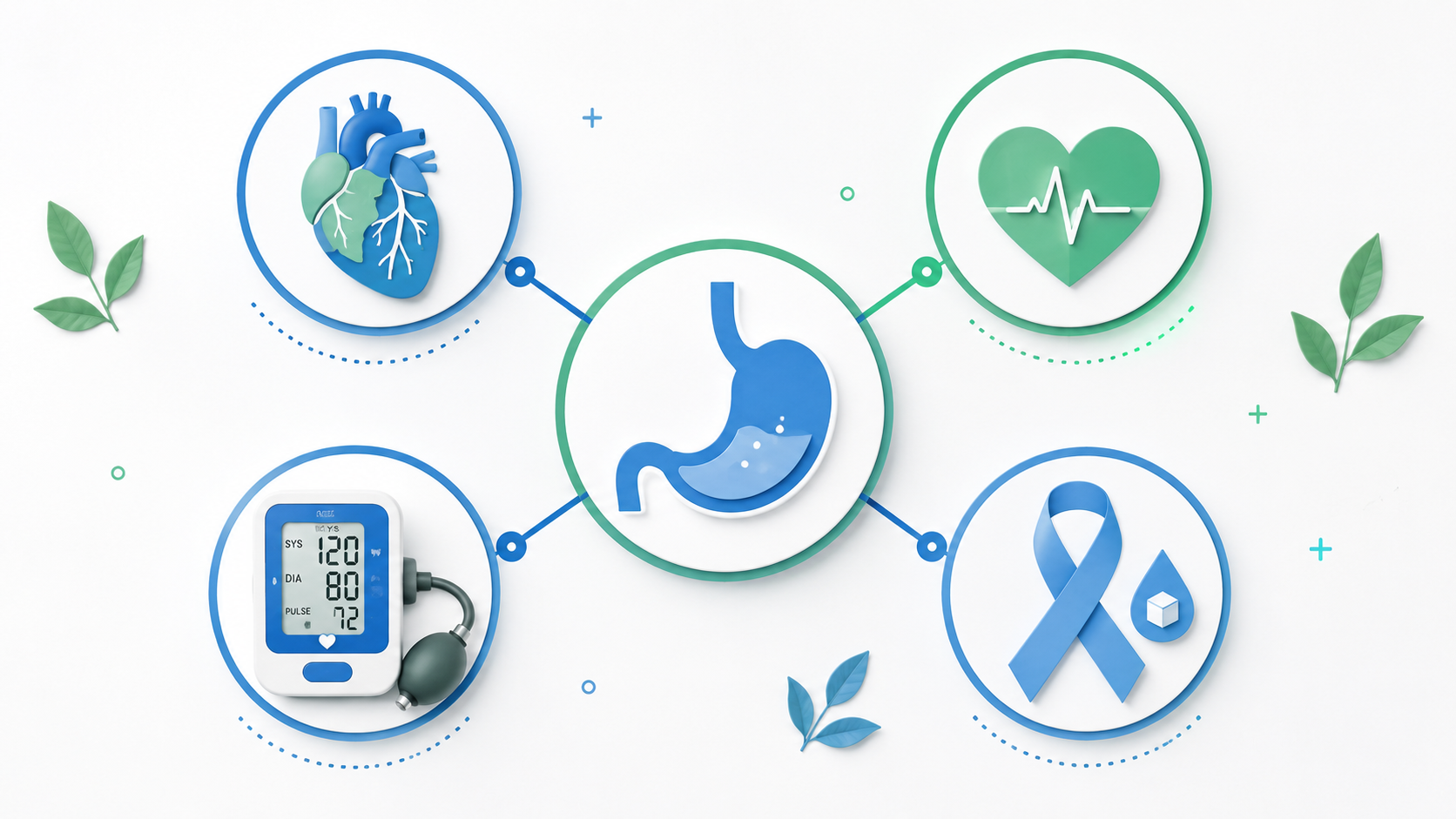
The benefits of bariatric surgery go far beyond losing weight. At BodEvolve Bariatric Surgery Center in Texas, Dr. Frenzel and Dr. Brian Holt have performed over 14,000 procedures across Texas. What patients consistently report after surgery isn’t just that they weigh less. They report that they feel like different people. They have energy they haven’t had in years. They no longer need medications. Conditions they were told were permanent have completely resolved.
This guide covers what bariatric surgery actually delivers, what the success rates look like what risks you should understand going in and how to decide whether surgery is the step for your situation.
What Are the Real Benefits of Bariatric Surgery?
Most people focus on the number on the scale. That makes sense. Patients who have had bariatric surgery at BodEvolve say that losing weight is just the start. Here is what bariatric surgery actually gives you:
- Long-lasting weight loss. Most patients lose 60 to 80% of their body weight in 12 to 18 months. Unlike diet plans bariatric surgery helps you keep the weight off. Studies show that 5 to 10 years later patients still keep most of the weight off.
- Getting rid of diseases related to obesity. This is what surprises patients the most. 80 To 85% of patients with Type 2 diabetes see it go away or get much better. Often days after surgery before they have lost much weight. High blood pressure, sleep apnea fatty liver disease and high cholesterol get better in a way.
- A better quality of life. Patients say they can walk without pain play with their kids travel without stress and sleep all night for the time in years. These aren’t effects. They’re the main reasons patients say the surgery was worth it.
- Living longer. Many large studies show that bariatric surgery reduces the risk of death from all causes by 30 to 40% compared to patients with obesity who don’t have surgery. The risk reduction comes from getting cardiovascular disease, diabetes and cancer risk.
- Mental health getting better. Most patients say they feel much better in terms of depression, anxiety and self-confidence after surgery. This isn’t from losing weight. The hormonal changes, from surgery affect mood and motivation directly.
Health Benefits of Bariatric Surgery Beyond Weight Loss
The health benefits of bariatric surgery* are some of the most well-documented outcomes in all of medicine. Here is what the research shows for conditions:
- Type 2 Diabetes: Surgery is the most effective treatment for type 2 diabetes in patients with obesity. Remission rates of 80 to 85% are consistent across procedure types. Gastric bypass surgery produces the dramatic diabetes outcomes because it reroutes the intestine in ways that change insulin sensitivity almost immediately. Refer our guide on which bariatric surgery is best for type 2 diabetes.
- High Blood Pressure: 75% of patients with hypertension see significant blood pressure reduction after surgery. Many come off blood pressure medications within 6 to 12 months. See our guide on bariatric surgery and high blood pressure.
- Sleep Apnea: sleep apnea resolves or dramatically improves in 80 to 85% of bariatric surgery patients. Most patients no longer need CPAP machines within 12 months of surgery. Learn more about bariatric surgery for sleep apnea.
- High Cholesterol: Abnormal cholesterol levels normalize in 70% of patients after bariatric surgery. Both LDL. HDL improvement occur, which directly reduces cardiovascular disease risk. See our post on bariatric surgery for high cholesterol.
- Fatty Liver Disease (NAFLD/MASH): Surgery resolves fatty liver disease in 65 to 90% of patients and resolves MASH (the more serious inflammatory form) in 50 to 85% of patients. See our complete guides on weight loss for fatty liver disease and MASH liver disease.
Is Bariatric Surgery Safe?
People often ask Dr. Frenzel and our team if bariatric surgery is safe. The answer is yes. Bariatric surgery these days is amongst the safest types of elective surgery there is. The complication rate for bariatric surgery at an accredited facility such as BodEvolve is lower than the complication rate associated with gallbladder removal, hip replacement, or appendectomy. Take a look at the following statistics:
- The mortality rate for bariatric surgery at accredited facilities is about 0.1% – lower than many other elective procedures
- Modern gastric sleeve surgery methods result in less invasive operations, quicker recovery and much lower complication risks compared to even just a decade ago
- BodEvolve is an ASMBS Center of Excellence- which means that they meet the highest criteria when it comes to results, experience and patient care
- The dangers of remaining severely obese are much greater than the danger of undergoing surgery, the mortality caused by obesity-related complications is far greater than the number of deaths linked to surgery complications
If you want to learn more about what is the safest form of weight loss surgery, see our separate guide to the subject. Is bariatric surgery safe compared to remaining obese? That is what patients need to ask themselves. It has been clearly demonstrated that in patients with BMI higher than 35 with obesity-related illnesses, the risk associated with non-surgical treatment greatly surpasses the risk associated with the surgery. Obese people have their life span shortened by five to twenty years, while the procedure increases the life span by 30% to 40%.
Bariatric Surgery Success Rates
High success rates characterize bariatric surgery; this especially applies to accredited facilities that perform the procedures regularly. Below is a summary of what the data reveals for different types of procedures:
| Procedure | Average Excess Weight Loss | Diabetes Remission | 5-Year Success Rate |
|---|---|---|---|
| Gastric Sleeve | 60–70% of excess weight | 60–80% | 85–90% |
| Gastric Bypass (RNY) | 70–80% of excess weight | 80–85% | 88–92% |
| Duodenal Switch | 75–85% of excess weight | 85–95% | 90–95% |
| SADI-S | 70–80% of excess weight | 85–90% | 88–93% |
Patients will have more success when:
- They adhere to post-operative dietary requirements
- They attend follow-up visits regularly
- They take prescribed vitamins and supplements
- They engage in physical exercise on a consistent basis
For comprehensive information on bariatric surgery success rates, please refer to our guide.
Understanding the Risks of Bariatric Surgery
Our practice and Dr. Frenzel strongly advocate patient education and full disclosure of risk factors as well. Though bariatric surgery is safe, it is a surgical procedure after all. It should be fully disclosed and explained. Immediate risks (occurring up to 30 days after the surgery):
- Infections at the incision points – very rare when using laparoscopic approach
- DVT – avoided by the use of compression garments and movement
- Anastomotic leakage – rare but dangerous, happens in less than 1% of all procedures at proficient facilities
- Adverse reactions to anesthesia – tested before the operation
Risks and adaptations in the long run:
- Nutritional deficiencies- can be avoided by taking vitamins all your life. Check out our guide the best vitamins to take after bariatric surgery
- Dumping syndrome- is caused by the gastric bypass procedure when you eat foods that contain much sugar. Learn more about what causes dumping syndrome
- Hair loss – is normal during the first 3 to 6 months. Check our guide on hair loss after bariatric surgery
- Acid reflux – is more common after the gastric sleeve operation rather than bypass. Check what is the best thing to take for acid reflux
- Loose skin – is the natural process of your body. Read about loose skin after weight loss surgery
- Psychological adjustment – some people experience depression after the surgery. Read how to deal with depression after bariatric surgery
Bariatric Surgery Procedures at BodEvolve
BodEvolve provides all types of bariatric surgery options according to patient health conditions and goals. 1. Gastric Sleeve Surgery This is the most frequently done bariatric surgery. It consists of removing about 80 percent of the stomach volume and makes the hormonal profile change drastically. There is no intestinal re-routing. This surgery works well for most patients. Check out the gastric sleeve before and after. 2. Gastric Bypass Surgery (RNY) The gold standard for diabetic or acid reflux patients. Gastric Bypass involves creating a small pouch from the stomach and then re-routing the small intestine. Provides the most intense hormonal changes among all types of bariatric surgeries. Check out gastric bypass before and after results. 3. Duodenal Switch Surgery The highest weight loss surgery option. Duodenal Switch is combined from the sleeve gastrectomy and intestinal re-routing. It is the best surgery option for patients with very high body mass index (BMI) or serious metabolic condition. Also available in Dallas and Plano. 4. SADI-S Surgery This is a relatively new single anastomosis surgery that provides the same benefits as the duodenal switch but with less complexity. 5. Revision Weight Loss Surgery For patients that have already undergone a prior bariatric surgical procedure requiring modification or correction. Also available specifically in Arlington and Texarkana. 6. Medical Weight Management For patients that want or require an initial non-surgical route to weight loss. Offers guided medical management and GLP-1 drugs prior to or as alternatives to surgery.
Is Bariatric Surgery Worth It?
That’s the bottom line that the patient wants to know when visiting for a consultation. The truth of the matter, according to Dr. Frenzel, remains consistent – for the correct patient, bariatric surgery is the most efficient health investment possible. These are the hard facts as per the numbers:
- Bariatric patients live longer than control patients without bariatric surgery
- Bariatric surgery proves to be cost-effective over 5 years – the cost of managing conditions related to obesity far outweighs the cost of the surgical procedure
- Improvements in quality of life are proved and sustained over long-term follow-up
- The incidence of regret in bariatric surgery is minimal in patients correctly prepared and evaluated
Why is it worth it for the majority of patients? The unique combination of sustained weight loss, cure, and regained energy cannot be found through other interventions like diet programs, pills, or behavior modification in severely obese patients. Those patients who had been struggling for a decade or two with their weight often admit after 1 year that they should have opted for the surgery earlier.
See our before and after bariatric photos and weight loss success stories from real BodEvolve patients.
Not Ready for Surgery? Other Options First
Dr. Frenzel and our team are aware that surgical procedures are not always the optimal course for our patients. BodEvolve offers all ranges of weight loss options. GLP-1 Receptor Agonists There is no question that semaglutide (Ozempic, Wegovy) and tirzepatide (Mounjaro, Zepbound) have revolutionized the space of non-surgical weight loss. GLP-1 medications lead to substantial weight loss and metabolic improvement. The GLP-1 weight loss program in Dallas-Fort Worth is GLP-1 medication therapy under medical supervision. More on how Ozempic works for weight loss and how tirzepatide works for more information. Non-Surgical Weight Loss Programs We offer our comprehensive non-surgical weight loss programs in Dallas-Fort Worth as a combination of nutrition counseling, behavior modification, and medication optimization. In addition, we offer medical weight loss programs at our weight loss clinic in Texas. The discussion of the surgery versus medication for weight loss: Those patients who have a BMI greater than 40 or more than 35 along with significant comorbidities will not be able to lose enough weight using only weight loss medications. They will experience more weight loss after surgery. Many patients utilize GLP-1 drugs as a bridge to bariatric surgery or alongside surgical intervention. Our GLP-1 receptor agonists weight loss overview.
How to Prepare for Bariatric Surgery
Preparation plays a critical role in ensuring that your bariatric surgery is a success. The preparation at BodEvolve involves the following:
- Medical evaluation – full medical history and tests
- Nutritional evaluation – appointment with a registered dietitian
- Bariatric surgery psychological evaluation – assessing your preparedness and support system
- Insurance verification – our team takes care of how to get insurance to pay for weight loss surgery
- Pre-bariatric surgery diet – usually two to four weeks prior to the surgery
- Liver shrinking diet – mandatory prior to any procedure
For patients who are self-paying, our team can walk through self-pay bariatric surgery options and bariatric surgery financing. For specific cost information see bariatric surgery cost without insurance.
What to Expect After Bariatric Surgery
Recovering from bariatric surgery takes less time than expected by most patients. Patients get home in 1 to 2 days. Patients go back to office work in 1 to 2 weeks. Here is the recovery schedule:
- Day 1 to 7: Liquid diet, light exercise, dealing with surgical cuts
- Week 2 to 4: Progressing through bariatric diet stages
- Month 1 to 3: Quick weight reduction, feeling better, best exercises after bariatric surgery
- Month 3 to 12: Weight reduction continues, diseases resolving themselves, wider dietary options
- Year 1 and beyond: Weight reduction maintained on post-bariatric surgery diet and post bariatric surgery lifestyle habits.
For full recovery details refer on our bariatric surgery recovery time page.
When to See a Bariatric Surgeon
Consultation with our board-certified bariatric doctor would be appropriate if you meet any of the following criteria:
- BMI above 40 with or without other medical conditions
- BMI 35 or more with type 2 diabetes, sleep apnea, hypertension or high cholesterol
- Unable to lose significant amount of weight despite proper diet and medications
- Told by your physician that obesity-related medical issues are getting worse
- Interested in knowing whether you qualify for surgical treatment
Our best bariatric surgeons in Texas – Clayton Frenzel and Dr. Brian Holt provide consultations at all our Texas locations. You can also see our weight loss surgeons in Dallas and weight loss doctors in Arlington pages for location-specific information.
Bariatric Care Across Texas
BodEvolve is for all the patients residing in the complete Dallas-Fort Worth Metroplex area. Main Locations:
- Richardson — 610 N. Coit Rd #2115 – Our head office
- Arlington – for the entire Tarrant County
- Dallas – central Dallas, including Lakewood, Oak Lawn, and Addison
- Texarkana – for East Texas and Southwest Arkansas
Time to take the first step? Schedule a consultation with Dr. Frenzel or Dr. Holt. Dial 817-342-0232 or Book Your Consultation today.
