
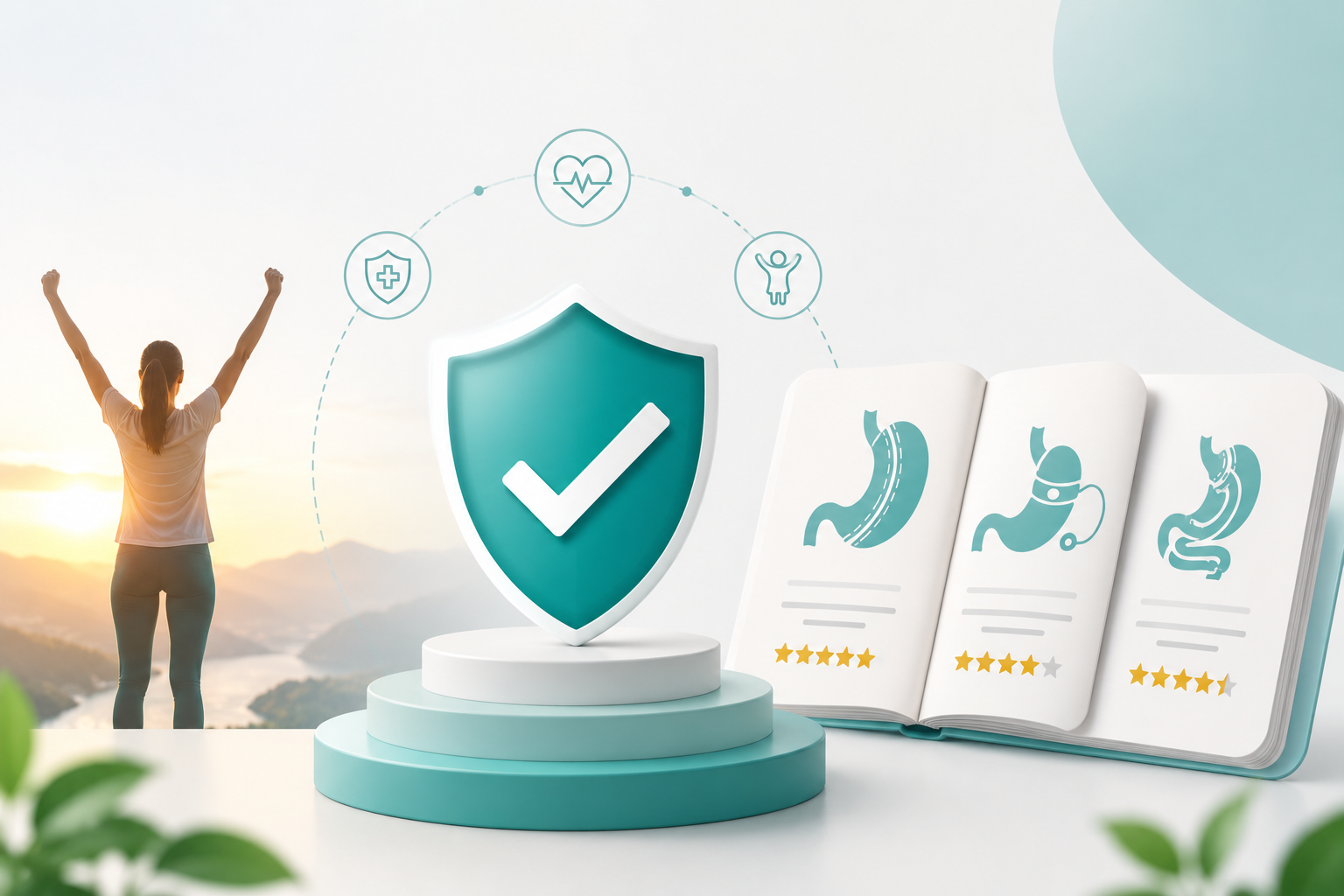
What is the safest form of weight loss surgery, for most patients is the gastric sleeve it removes about 75 to 80 percent of the stomach without rerouting the intestines, which keeps the procedure technically simpler and the complication profile lower than alternatives. That said, “safest” is not a single answer that applies across all bodies. A patient with significant acid reflux may actually be better served by gastric bypass, because a sleeve can worsen GERD considerably. Someone with a BMI above 55 may need a duodenal switch to achieve outcomes that genuinely protect their long-term health, even though that procedure carries a higher short-term risk.
Dr. Clayton Frenzel, triple board-certified bariatric surgeon and dual fellowship-trained makes this determination at BodEvolve Bariatric by evaluating each patient’s full medical picture before recommending any procedure. Complication rates, in his experience, have far more to do with surgical volume, facility accreditation, and pre-operative health optimization than they do with which procedure gets performed. This guide explains how each option compares, what the mortality data actually shows, and which factors matter more than most people realize when they start researching this decision.
The Four Procedures Most People Are Choosing Between
Bariatric surgery has evolved a lot. What patients faced fifteen or twenty years ago longer hospital stays, higher complication rates, more invasive techniques isn’t what’s happening in operating rooms today. Minimally invasive laparoscopic approaches have changed the risk profile across the board. Still, the procedures themselves are meaningfully different, and those differences matter.
Gastric Sleeve (Sleeve Gastrectomy)
The gastric sleeve is the most commonly performed bariatric procedure in the country right now, and the numbers make sense. About 75–80% of the stomach is removed during surgery, leaving a smaller, banana-shaped pouch. No intestinal rerouting happens the digestive tract stays exactly where it was. That simplicity is part of why complication rates tend to be lower than bypass, and why recovery usually moves faster.
Weight loss results are real most patients lose somewhere between 60–70% of their excess body weight in the first year. It’s not a light-touch procedure, but for a broad range of patients, the risk-to-benefit ratio lands in a good place.
Gastric Bypass (Roux-en-Y)
Gastric Bypass has been around long enough that there’s serious long-term data behind it decades worth. The surgery creates a small pouch from the stomach and reroutes part of the small intestine, which changes both how much you can eat and how your body processes what you do eat. For patients with type 2 diabetes or severe acid reflux, bypass often produces results that sleeve simply can’t match.
The tradeoff is real though. Rerouting the intestines means a slightly higher risk of things like dumping syndrome and nutritional deficiencies down the line. That doesn’t make bypass the “dangerous” option, in experienced hands, with the right patient, it’s a very safe surgery. It just requires more awareness and commitment to follow-up care than the sleeve does.
Duodenal Switch / SADI-S
Duodenal Switch and SADI-S procedures are for patients on the higher end of the BMI spectrum typically 50 and above or those dealing with serious metabolic conditions that haven’t responded to other approaches. The weight loss outcomes are the most dramatic of any bariatric option. The short-term surgical risk is also higher, and the nutritional management required afterward is a genuine lifetime commitment.
For patients who need this level of intervention, it can be genuinely life-changing. But it’s not where most people start, and it shouldn’t be presented as a casual option.
Which One Is Actually the Safest?
The gastric sleeve is generally considered the safest form of weight loss surgery for most patients. It removes roughly 75–80% of the stomach without rerouting the intestines, which keeps the procedure simpler and reduces the risk of complications like nutritional deficiencies or dumping syndrome. Among board-certified bariatric surgeons, it’s the most commonly recommended starting point for patients without complicating conditions.But that framing breaks down fast when you bring in individual medical history.
A patient with moderate GERD probably shouldn’t get a sleeve, sleeve surgery can make reflux significantly worse. A patient with a BMI of 67 may not lose enough with sleeve to resolve their sleep apnea or get their diabetes under control. In those cases, bypass or even duodenal switch might actually be the safer long-term choice, even if the surgery itself is technically more complex.
This is why the pre-operative evaluation isn’t bureaucratic box-checking. It’s where the real safety work happens. Safety is only one side of the decision. For how these procedures stack up on weight loss results and long-term effectiveness, see our breakdown of the most effective weight loss surgery.
What Actually Makes the Surgery Safer- Beyond Which Procedure You Pick
People spend a lot of time comparing procedures and not nearly enough time vetting the factors that arguably matter more.
The surgeon’s volume:
A bariatric surgeon who does 200+ cases a year has developed a level of technical efficiency that translates directly into patient outcomes. Complications go down when the hands doing the surgery have done it hundreds of times before. At BodEvolve Bariatric, Dr. Frenzel triple board-certified and dual fellowship-trained and Dr. Brian Holt bring exactly that kind of depth to every case. Those credentials aren’t resume decoration; they show up in what happens during and after surgery.
Accreditation:
MBSAQIP accreditation means the facility has met a national standard for bariatric care dedicated teams, consistent protocols, outcomes tracking. It’s the difference between a center that occasionally does bariatric cases and one that’s built its entire structure around them. Worth asking about before you commit anywhere.
What your body looks like going in:
Blood sugar control, blood pressure, treated sleep apnea all of these affect how you respond to anesthesia and how your body heals afterward. Pre-operative optimization isn’t a delay. It’s part of the safety plan.
What happens after you go home:
Most complications that occur in bariatric surgery show up in the weeks following discharge not in the OR. A program that stays actively engaged in your recovery, with real nutritional support and scheduled follow-up, dramatically changes your risk profile post-op.
What Is the Safest Form of Weight Loss Surgery And What Does It Cost?
Let’s talk money because pretending cost doesn’t matter does nobody any favors. This is a major medical decision, and knowing what you’re looking at financially is just as important as knowing which procedure fits your health profile.
Out-of-pocket costs vary depending on the procedure, the facility, and where you live. Broadly speaking (estimate):
- Gastric Sleeve: $10,000–$20,000
- Gastric Bypass: $15,000–$25,000
- Duodenal Switch / SADI-S: $20,000–$35,000
Those are wide ranges, and they shift based on things like anesthesia fees, pre-op testing, and your hospital or surgical center. But the bigger question for most people isn’t really the sticker price it’s whether insurance will cover it.
A lot of plans do. Medicare covers bariatric surgery in many cases, and so do a good number of private insurers, as long as medical necessity is documented. Generally, a BMI of 40 or above qualifies. So does a BMI of 35 if you’re also dealing with something like type 2 diabetes, high blood pressure, or sleep apnea. It’s worth a phone call to your insurer before you assume you’re paying out of pocket.
For patients who are self-paying, financing is available and more accessible than most people expect. The important thing is finding this out early before you’ve already picked a surgeon and mentally moved forward. Getting surprised by costs at the end of the process is stressful in a way that’s completely avoidable.
At BodEvolve Bariatric, the team helps patients work through insurance verification and get a realistic picture of costs before anything is scheduled. No guessing, no vague estimates handed over at the last minute.
What Changes Permanently After Weight Loss Surgery
Patients sometimes ask what they will never be able to do again after bariatric surgery. The honest answer is: less than they expect, but the changes are real and worth knowing before you commit.
Carbonated drinks are typically something patients move away from permanently. The gas expands in a significantly smaller stomach and causes genuine discomfort, sometimes pain. Most patients stop drinking them naturally within the first few weeks and do not miss them the way they anticipated.
Eating quickly or eating large amounts in a single sitting becomes physically impossible rather than just inadvisable. The stomach’s new capacity makes it immediate not a matter of willpower. Meals become smaller and slower, which most patients adapt to within a few months.
NSAIDs like ibuprofen and aspirin are generally avoided after gastric bypass in particular, because they increase the risk of ulcers at the surgical connection point. Most patients switch to acetaminophen for pain management and do not find this significantly limiting.
Alcohol deserves specific mention. After bariatric surgery, particularly bypass, alcohol enters the bloodstream faster and the effects are more intense on the same quantity consumed. This is a physiology change, not a lifestyle preference, and it is something patients need to understand before surgery rather than discover afterward.
None of these changes make the surgery less worthwhile for the right patient. But they are genuine, and a surgeon who doesn’t discuss them in a pre-operative consultation is leaving out something important.
Access to Your Care Team Matters More Than People Realize
Here’s something that doesn’t get talked about enough: surgery is one day. Everything after it is weeks and months of recovery, adjustment, nutritional monitoring, and check-ins. How well that part goes depends a lot on how easy it is to actually get to your care team when you need them.
People underestimate this. When you’re six weeks post-op, still adjusting to a completely different way of eating, and something feels off the last thing you want is a two-hour drive standing between you and your surgeon’s office. That friction is real, and for some patients it becomes the reason they skip follow-ups. Skipped follow-ups are where problems quietly grow.
BodEvolve Bariatric has locations spread across DFW and the surrounding region precisely because aftercare accessibility matters. Patients travel in from Arlington, Richardson, and Texarkana. For patients coming from further out, the care team knows how to build a follow-up plan that actually works around travel.
Location isn’t a logistics detail. In the months after bariatric surgery, it’s a safety factor.
Which Weight Loss Surgery Is Right for You?
No article this one included can tell you, what is the safest form of weight loss surgery for your body. What it can do is get you informed enough to walk into a consultation and have a real conversation instead of sitting there nodding along to things you don’t fully understand.
The question worth asking isn’t “what’s the safest surgery” in some general sense. It’s what’s safest given your BMI, your health history, your goals, and the life you’re actually living. That answer requires a surgeon who’s willing to be straight with you not one who defaults to whatever procedure they perform most often.
That’s the kind of practice BodEvolve Bariatric tries to be. Board-certified surgeons, genuine follow-up care, and enough locations across Texas that your aftercare doesn’t become an afterthought.If you’re ready to get off the research carousel and start getting answers that actually apply to your situation, schedule a consultation with BodEvolve Bariatric. The first conversation costs you nothing and will do more for your decision than another hour of Googling.
Frequently Asked Questions
Which weight loss surgery has the lowest risk of complications?
Gastric sleeve typically has the lowest complication rate because nothing gets rerouted just a smaller stomach. That simplicity makes a real difference in recovery. That said, your health history changes the math, so it’s not a one-size answer.
Can I die from weight loss surgery?
Serious complications are rare, especially at accredited centers with high-volume surgeons. The mortality risk for gastric sleeve is around 0.1%, lower than gallbladder removal. The bigger risk, honestly, is doing nothing when obesity is already affecting your heart, joints, and blood sugar.
What's the safest bariatric surgery for someone with diabetes?
Gastric bypass tends to outperform sleeve for type 2 diabetes, many patients see blood sugar improvements before they’ve even lost significant weight. It’s more complex than sleeve, but for diabetic patients, the long-term benefits usually tip the scale.
How do I know if I'm a good candidate for weight loss surgery?
A BMI of 40+ qualifies on its own. So does a BMI of 35 if you’re dealing with diabetes, high blood pressure, or sleep apnea. Beyond the numbers, your surgeon will look at your overall health, past weight loss attempts, and whether you’re set up for the follow-up care that makes results stick.
What is the least risky weight loss surgery?
Gastric sleeve carries the lowest overall risk for most patients, no intestinal rerouting, simpler anatomy, faster recovery. Mortality rate is around 0.1%, comparable to routine laparoscopic procedures. For patients without significant GERD or very high BMI, sleeve is typically the first recommendation at BodEvolve.
What can you never do again after bariatric surgery?
Long term, patients avoid NSAIDs like ibuprofen permanently due to ulcer risk, carbonated drinks, eating and drinking simultaneously, and high-sugar foods that trigger dumping syndrome. Alcohol tolerance also changes significantly, absorption is faster and effects are stronger.
What is the fatality rate of bariatric surgery?
For gastric sleeve the mortality rate is approximately 0.1%, lower than gallbladder removal. Gastric bypass sits around 0.2–0.3%. At accredited bariatric centers with high-volume surgeons like BodEvolve, complication rates are significantly lower than national averages
Which one is better, sleeve or bypass?
Neither is universally better, they solve different problems. Sleeve is simpler, lower risk, strong results for most patients. Bypass outperforms sleeve for type 2 diabetes, severe acid reflux, and higher BMI cases. At BodEvolve, Dr. Frenzel and Dr. Holt evaluate both options based on your full health history before recommending either.
