
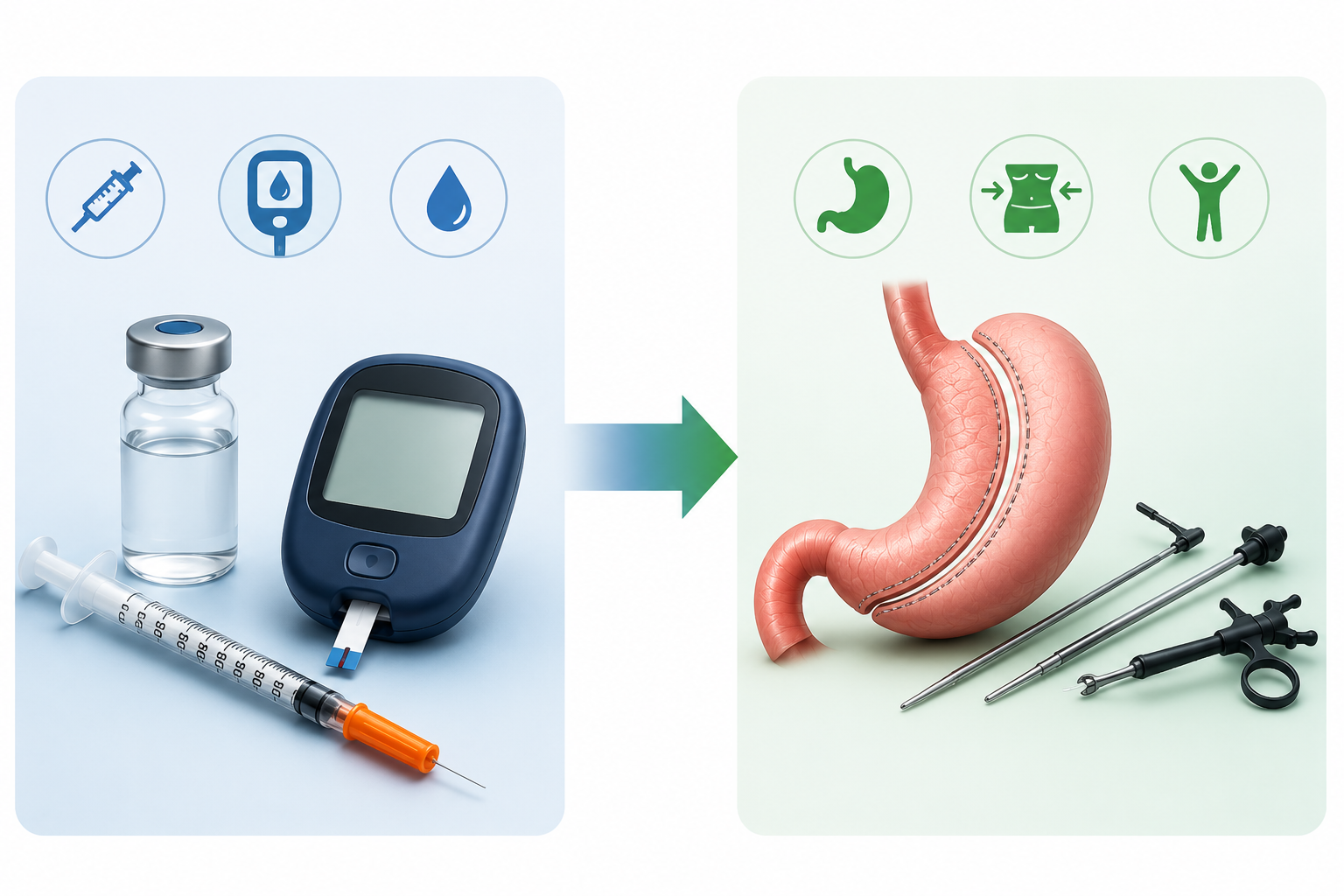
If you have type 2 diabetes and obesity you might be wondering which bariatric surgery is best for type 2 diabetes., there is likely one thing that you’ve noticed about all of the information out there- most ranking sites just tell you that it’s “up to your body type and medical history” without giving any indication as to which surgery actually has the best remission rate, how quickly you can expect your blood sugars to normalize or even if you will be able to stop using insulin completely. The team at BodEvolve Bariatric Surgery Center, headed by Dr. Frenzel and Dr. Brian Holt, has done more than 14,000 bariatric procedures in the Dallas-Fort Worth area, including many patients with type 2 diabetes who are no longer using insulin, Metformin, or any other methods of glucose control. This guide will help you find out which surgery is the most effective for remission of diabetes and how long it will take for you to reduce medications.
How Bariatric Surgery for Type 2 Diabetes Actually Works
Bariatric surgery for type 2 diabetes is not just about losing weight. It changes the way your gut, pancreas and brain talk to each other even before you lose a pound. That is why doctors now call it ” metabolic surgery.”
When the small intestine is changed or bypassed, hormones like GLP-1 and PYY go up. These hormones tell your pancreas to make insulin better. Your brain to feel full sooner. This is the same pathway that drugs like Ozempic target- can ozempic reduce weight enough to reverse type 2 diabetes in obese patients?
The American Diabetes Association now says that metabolic surgery for type 2 diabetes patients with a body mass index over 30 who have not been able to control their blood sugar with medicine and lifestyle changes alone.
Comparing the Best Weight Loss Surgery for Type 2 Diabetes
There are three surgeries that work well for type 2 diabetes and bariatric surgery. Each one works differently. The best one for you depends on your specific metabolic profile.
| Procedure | 1-Year Remission Rate | 5-Year Remission Rate | 10-Year Remission Rate |
|---|---|---|---|
| Duodenal Switch | 85–95% | 80–85% | 75–80% |
| Gastric Bypass | 75–85% | 65–75% | 50–65% |
| SADI-S | 80–90% | 70–80% | 65–75% |
| Gastric Sleeve | 60–65% | 50–60% | 40–50% |
Remission rates mentioned above have been taken from peer-reviewed studies regarding the outcomes of bariatric surgery. Duodenal switch and gastric bypass surgeries generally have better results than sleeve when it comes to diabetes remission especially for patients with prolonged history of diabetes. Nonetheless, choosing the appropriate surgical procedure involves other factors apart from the rate of remission.
Gastric Bypass (Roux-en-Y)- The Gold Standard for Diabetes Remission
Gastric bypass makes a stomach pouch and changes the small intestine, which makes the biggest change in hormones. For patients who’ve had diabetes for less than 10 years and still produce some insulin, gastric bypass for type 2 diabetes offers the best odds of full remission.
Who it’s best for:
- BMI 35-50
- Type 2 diabetes diagnosed under 10 years
- Patients also struggling with severe acid reflux
- Patients on multiple diabetes medications
Gastric Sleeve- Lower Risk, Strong Results
Gastric sleeve and type 2 diabetes outcomes have improved significantly in the last decade. The gastric sleeve removes about 75% of the stomach and reduces ghrelin (the hunger hormone), leading to diabetes remission in roughly 60-65% of patients.
Who it’s best for:
- BMI 30-45
- Early-stage or well-controlled type 2 diabetes
- Patients wanting a shorter recovery
- Patients who don’t want intestinal rerouting
Duodenal Switch- Highest Remission Rates for Severe Cases
Duodenal switch is more complex, requires lifelong vitamin supplementation and isn’t offered by every bariatric program but for the right patient, weight loss surgery can resolve type 2 diabetes even after decades of insulin dependence.
Who it’s best for:
A. BMI 50+
B. Insulin-dependent type 2 diabetes
C. Patients who haven’t responded to other bariatric procedures
D. Patients committed to lifelong nutritional follow-up
Can Weight Loss Surgery Reverse Type 2 Diabetes?
The question we hear often is can weight loss surgery reverse type 2 diabetes. The answer is yes. Only for the right patients. Studies show that 50-70% of patients who have surgery are still in type 2 diabetes remission after 10 years compared to less than 5% of patients who only use medicine and lifestyle changes.
The factors that most strongly predict remission:
1. Duration of diabetes- patients diagnosed within the last 5 years have the highest remission rates
2. C-peptide levels- higher levels indicate your pancreas still produces meaningful insulin
3. Procedure type- bypass and duodenal switch outperform sleeve for remission
4. Post-surgery weight maintenance- sustained weight loss drives sustained remission
For a broader view beyond diabetes remission, including head-to-head weight loss comparisons, GERD impact and long-term durability data across all four procedures, read our complete breakdown of the most effective weight loss surgery for different patient profiles.
Weight Loss Surgery for Type 2 Diabetes in Adults- Who Qualifies?
Bariatric surgery for type 2 diabetes in adults has changed a lot over the past decade. The American Society for Metabolic and Bariatric Surgery says that adults with a body mass index of 35 or more and type 2 diabetes qualify for surgery. Adults with a body mass index of 30-34.9 and type 2 diabetes that is not controlled well with medicine also qualify. Your doctor will also look at your weight loss attempts, medical clearance and psychological evaluation to see if you qualify.
Patients who are currently on semaglutide or considering it before surgery may also want to review the available alternatives to semaglutide understand their full range of medical options.
Does Insurance Cover Bariatric Surgery for Diabetes?
Most insurance plans, including BlueCross BlueShield, Aetna, Cigna, UnitedHealthcare and Medicare cover weight loss surgery for type 2 diabetes if it is medically necessary. You will need to have a qualifying body mass index, documented weight loss attempts and a doctor-supervised diet to get coverage.
If you’ve had a previous bariatric procedure that didn’t work, the process is different and often more complex. Learn how to get insurance to cover revision bariatric surgery and what documentation you’ll need to get approved.
Life After Bariatric Surgery for Diabetes
The post-surgical period is equally significant for patients. People who have this surgery usually see their blood sugar levels go down, to normal in a few days. This happens even before they lose a lot of weight. The doctors often reduce the amount of insulin and other medicines the patients take within the month. The patients A1C levels usually go down by 2 to 3 points in six months.
Over time like 18 to 24 months blood sugar patients generally lose 60 to 80 percent of the weight they were carrying. In the run the risk of heart problems and other issues related to blood sugar goes down a lot. This is something that has been seen in studies that followed patients for ten years.
Additionally, some of the patients opt for body contouring once their weight has been managed. Our plastic surgeons specializing in bariatric patients ensure that your transformation inside-out is complete.
Finding Bariatric Surgery Near You in Texas
BodEvolve has four locations in the Dallas-Fort Worth area. Each location offers all the procedures for type 2 diabetes.
1. Arlington- serving Tarrant County
2. Richardson- our primary facility and surgical hub
3. Dallas- serving central Dallas County
4. Texarkana- serving East Texas and Southwest Arkansas
If you’re trying to decide which bariatric surgery is best for type 2 diabetes in your specific case, the answer won’t come from a blog post- it comes from lab work, a BMI assessment and a conversation with a surgeon who understands metabolic disease. Schedule a consultation with Dr. Frenzel and the BodEvolve team to see which procedure gives you the best chance at remission.
FAQs
Which bariatric surgery has the highest diabetes remission rate?
The duodenal switch has the highest documented diabetes remission rate at over 85%, followed by gastric bypass at roughly 80%, and gastric sleeve at 60-65%. The “best” procedure depends on your BMI, how long you’ve had diabetes, and your overall health profile.
Can gastric sleeve cure type 2 diabetes?
The gastric sleeve achieves type 2 diabetes remission in approximately 60-65% of patients. “Cure” isn’t the medical term- remission means maintaining normal blood sugar without medication, which many gastric sleeve patients sustain for 5-10+ years.
How quickly does blood sugar improve after bariatric surgery?
Many patients see blood sugar drop to near-normal within days of surgery- often before significant weight loss has occurred. This is driven by hormonal changes in the gut, not just calorie restriction.
Is bariatric surgery safer than staying on diabetes medication long-term?
For patients with obesity and type 2 diabetes, long-term studies show bariatric surgery reduces overall mortality compared to medical management alone. Surgical risks are front-loaded and low in experienced centers; diabetes complications accumulate over decades.
Will I still need diabetes medication after surgery?
Roughly 50-80% of patients discontinue diabetes medication within the first year, depending on the procedure and how long they’d had diabetes. Patients with long-standing insulin dependence may still need medication but typically at much lower doses.
