
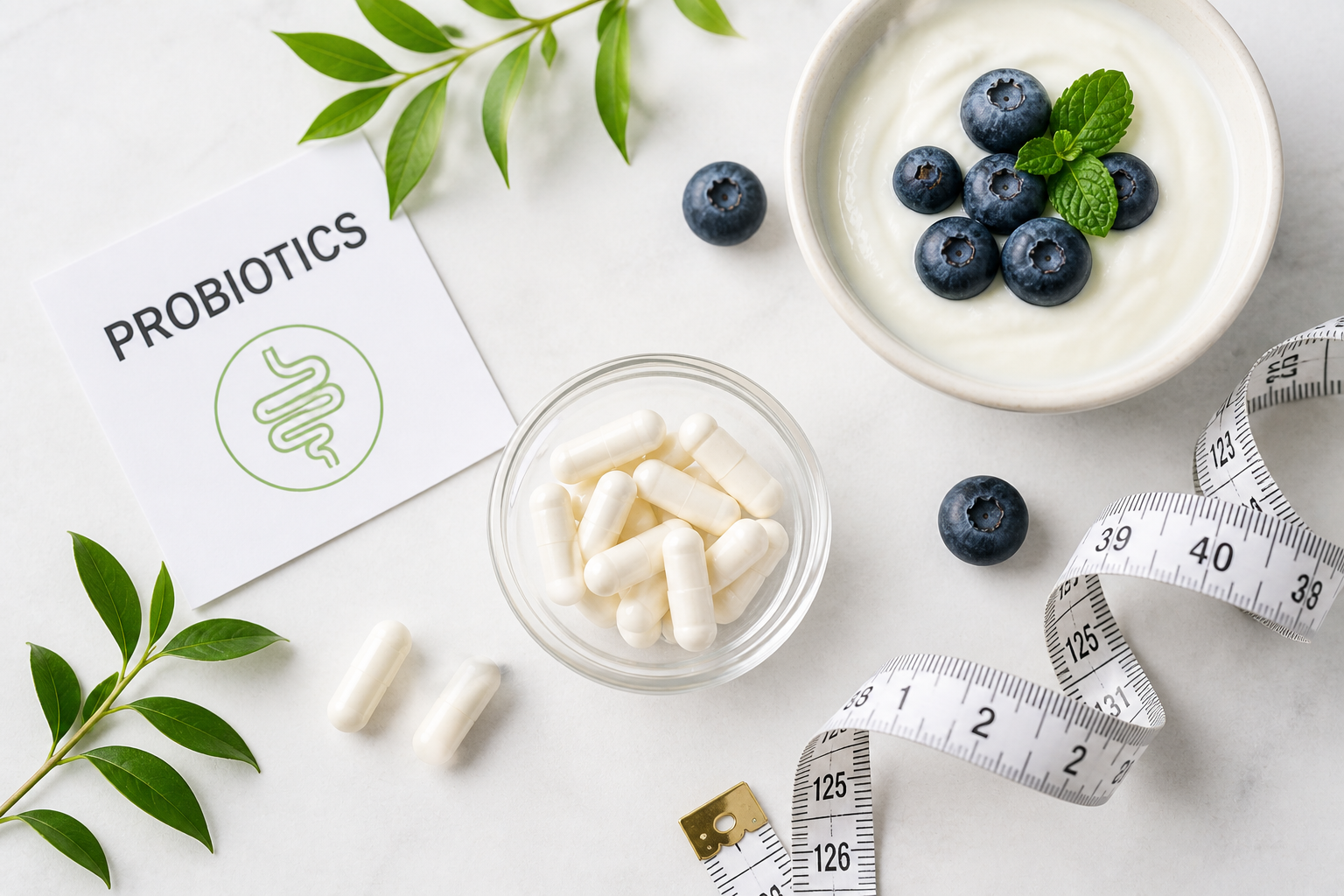
Probiotics for Weight Loss: What a Bariatric Surgeon Actually Tells Patients

Walk into any pharmacy. You’ll see shelves of probiotics for weight loss. They promise flatter stomachs, belly fat and weight loss. Most of it is marketing based on a little bit of real science that has been stretched too far.

As a practice we get asked all the time: do these supplements really work and are they worth the money? The honest answer is that some probiotic strains do have an effect on body weight and metabolism.. The difference between what the research shows and whats on the label is huge.

At  BodEvolve Bariatric Surgery Center, Dr. Frenzel and our team see patients every day whose gut health affects how they lose weight absorb nutrients and recover from surgery. So we pay attention to this. Here’s what you should know before you spend another dollar.

How Probiotics for Weight Loss Actually Work

Your gut has about 100 trillion bacteria. What kinds of bacteria you have affects how calories you get from food how full you feel and how your body stores fat. Probiotics for weight loss work through three main mechanisms:

1. Short-chain fatty acid production- certain bacteria ferment dietary fiber into compounds that signal fullness and regulate fat storage

2. GLP-1 stimulation- some strains increase your body’s natural GLP-1 secretion, the same hormone that Ozempic and Wegovy target pharmacologically

3. Inflammation reduction- a healthier gut lining reduces systemic inflammation, which is strongly linked to insulin resistance and weight gain

The research on probiotics and weight loss is real, but the effect size is modest. Most studies show 1 to 4 pounds of weight loss over 8 to 12 weeks. That’s meaningful if you’re already making healthy changes.. It’s not enough if you’re looking for probiotics to do all the work for you.

The Best Probiotic for Weight Loss- What the Evidence Actually Supports

When patients ask me about the probiotic for weight loss I tell them that the specific strain matters more than the brand. Some strains show up over and over in the research. The rest are just marketing.

A. Lactobacillus Gasseri

Lactobacillus gasseri probiotic for weight loss has the strongest evidence base. A Japanese trial showed adults taking L. Gasseri daily for 12 weeks reduced belly fat by 8%.

B. Lactobacillus Rhamnosus

L. rhamnosus has shown promise specifically in women. One 24-week trial found women taking it lost nearly twice as much weight as those on placebo. Results in men were less consistent, which is why probiotics for women weight loss searches often point back to this strain.

C. Bifidobacterium Lactis and Bifidobacterium Longum

These strains are associated with reduced belly fat and improved insulin sensitivity.

D. Akkermansia Muciniphila
This is an promising strain. Early trials show it improves insulin sensitivity and fat mass. When buying probiotics look for strain- labelling at least 10 billion CFUs per serving and a reputable brand.

Probiotics for Belly Fat- Separating Science From Marketing

Probiotics for belly fat is one of the most searched phrases in this category, and the marketing has outpaced the research significantly.

Here’s what’s true: L. Gasseri and some Bifidobacterium strains do reduce belly fat in trials. What’s not true is that probiotics produce belly-fat loss.

Probiotics for bloating and weight loss claims are on stronger ground- probiotics genuinely rebalance gut flora, reduce gas-producing bacteria and improve motility. Many people feel less bloated within 2 to 4 weeks.

Best Probiotics for Menopause Weight Loss

Hormonal changes during menopause affect the gut microbiome. Estrogen decline reduces diversity and slows metabolism.

Estrogen decline reduces bacterial diversity and slows metabolism, which is why best probiotics for menopause weight loss is one of the fastest-growing queries in this space.

Research on probiotic for menopause weight loss specifically is still emerging, but early trials suggest multi-strain formulas combining Lactobacillus and Bifidobacterium may help with:

  • Reduced bloating and digestive irregularity that worsens during menopause
  • Modest improvements in weight management when paired with dietary changes
  • Better mood and energy via the gut-brain axis, which also supports weight loss indirectly

For women, matching the strain to the specific goal matters more than buying whichever product has the best Instagram presence.

When to Take Probiotics for Weight Loss

The question of when to take probiotics for weight loss matters more than most people realize. Probiotic bacteria are sensitive to stomach acid, and acid levels peak shortly after eating. Research-backed protocols recommend:

1. Probiotics should be taken 15 to 30 minutes before having breakfast on an empty stomach.
2. They can be taken with a light meal, which will buffer the acid but not overload the good bacteria with enzymes.
3. The key is consistency, rather than timing; give 8 to 12 weeks before judging their impact.
4. Do not take probiotics with hot meals or drinks that will destroy living cultures.

Consistently missing doses is the most common cause of failure for probiotics.

Probiotics Before and After Bariatric Surgery

Probiotics have a clinical role here. Bariatric surgery changes the gut microbiome. Targeted probiotic supplementation supports digestion reduces bloating and improves absorption.

Following gastric bypass surgery or a gastric sleeve procedure, it is not uncommon for the patient to:

1. Have fast fluctuations in the types of bacteria due to changes in acidity and digestive function
2. Have decreased levels of stomach acid following a bypass, causing different bacteria to grow
3. Experience changes in bile acid turnover, impacting bacterial makeup
4. Develop small intestinal bacterial overgrowth (SIBO) as a result

Taking probiotics after undergoing such surgeries can help improve digestion, reduce gas, and increase nutrient absorption, which are all essential considering you’re absorbing less than before. It is a topic that we always discuss with post-operative patients in our consultations.
In cases where a patient is considering a more complicated surgery, such as a duodenal switch or sadi surgery, it is crucial to think about the role of the microbiome in their digestive system, as these procedures cause more dramatic changes. Patients who undergo  bariatric revision surgery texas are especially prone to this.

Probiotics vs. Medical Weight Management vs. Surgery

But this is precisely the kind of discussion that the supplement industry would prefer not to have. If you are aiming for 20 pounds of weight loss or more, probiotics will not get you anywhere near that number- the mathematics alone makes this impossible; it just does not add up to achieve an overall weight difference of 20, 50, or 100 pounds.
For those patients who have not reached a point at which surgery might be advisable, medical weight management protocols combine clinical supervision and dietary coaching with GLP-1 agonists such as semaglutide or tirzepatide- both drugs known to lead to weight loss of around 15% to 20%. This is vastly different from anything a probiotic has ever achieved.
When it comes to individuals with severe obesity or obesity-related health issues, as well as those with 50+ pounds to lose, surgery continues to yield superior results over all non-surgical methods. Probiotics are a good addition to the arsenal after such a procedure, however.

Expert Bariatric Services in Texas

BodEvolve offers their services in the metroplex of Dallas-Fort Worth from the following locations:

1. Arlington- serving Tarrant County

2. Richardson- our primary facility and surgical hub

3. Dallas- serving central Dallas County

4. Texarkana- serving East Texas and Southwest Arkansas

Are you thinking of undergoing the surgery and want to know about the possibility of insurance cover, especially after a failed surgery? Here’s how to get insurance to cover revision bariatric surgery and what documentation insurers typically require.

For patients who’ve completed major weight loss and are ready to address excess skin, our plastic surgeons specializing in bariatric patients complete the transformation with body contouring designed specifically for post-bariatric bodies.

There is no denying the effectiveness of probiotics in weight loss but only if they are suitable for a particular individual and taken with a specific strain. If you face the task of reducing a significant amount of weight, you should seek help from our bariatric surgeon, Dr. Frenzel of BodEvolve.

FAQs

Do probiotics really work for weight loss?

Some strains, especially Lactobacillus gasseri and Akkermansia muciniphila, exhibit significant but moderate weight and abdominal fat loss. On average, their effect ranges from 1 to 4 pounds after 8-12 weeks of regular consumption in combination with diet and lifestyle modifications. Probiotics can serve as an additional weight management measure.

Lactobacillus gasseri demonstrates the most promising results regarding visceral fat loss. Bifidobacterium lactis and Akkermansia muciniphila are also gaining popularity due to extensive scientific research. Probiotic multi-strain formulas containing at least 10 billion colony-forming units (CFU) and strains’ specifications outperform general “probiotic mixes.”

The majority of metabolic studies involve 10 to 50 billion CFU per day. Increased quantity does not necessarily equate to improved efficacy, as some strains work at 1 billion CFU per day, while others require larger quantities. The strain’s specificity outweighs the CFU count.

A few strains, predominantly Lactobacillus gasseri, demonstrate moderate visceral fat loss during clinical trials. Their effect is limited, requires 8-12 weeks of regular daily consumption and significantly depends on diet.

Research on probiotics for women’s weight loss is stronger than for men, particularly during menopause when microbiome shifts compound hormonal metabolic changes. L. rhamnosus and multi-strain Lactobacillus-Bifidobacterium formulas have the best supporting data.

Many bariatric patients benefit from targeted probiotic supplementation because gastric bypass, sleeve gastrectomy, and other procedures significantly alter the gut microbiome. Protocols should be discussed with your surgical team- needs vary by procedure and individual health history.


No. Probiotics produce 1 to 4 pounds of weight loss on average. Bariatric surgery produces 60 to 80% excess weight loss. For significant obesity or obesity-related health conditions, surgery remains the most effective long-term treatment by a wide margin.


Transform yourself with

"*" indicates required fields

This field is for validation purposes and should be left unchanged.
Name*

By submitting this form you agree to receive emails, calls, and text messages from BodEvolve related to our services. This agreement is not a condition to purchase and you can opt-out at any time.
