
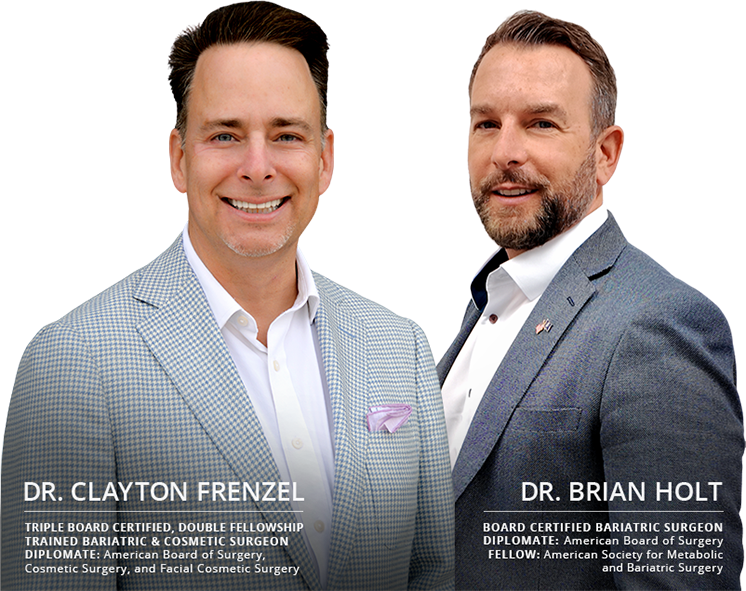
Plastic surgeons specializing in bariatric patients are surgeons trained to perform body contouring procedures- such as tummy tuck, arm lift, thigh lift and lower body lift on patients who have undergone weight loss surgery. They account for altered nutrient absorption, healing timelines and skin elasticity changes unique to post-bariatric patients. At BodEvolve in Dallas–Fort Worth, Dr. Clayton Frenzel is dual fellowship-trained in both bariatric and cosmetic surgery.
After bariatric surgery, finding such plastic surgeons who specializes in bariatric surgery is one of the most important decisions you will make because excess skin that remains after significant weight loss requires a surgeon who understands bariatric physiology, not just cosmetic technique. At BodEvolve Bariatric Surgery Center, in Texas is one of a small number of practices where the plastic surgeon treating you post-weight loss is the same surgeon who understands your bariatric history because Dr. Clayton Frenzel is dual fellowship-trained in both.
At BodEvolve Bariatric Surgery Center in Texas, Dr. Frenzel and Dr. Brian Holt specialize in exactly this combination. Dr. Frenzel is triple board-certified and dual fellowship-trained in both bariatric and cosmetic surgery- one of a small number of surgeons in Texas who can manage your weight loss surgery and post-bariatric body contouring under one roof, without referrals to an outside practice.
Whether you are considering a tummy tuck after gastric sleeve, an arm lift after gastric bypass, or a full lower body lift after significant weight loss, this page covers what to expect and why choosing a bariatric-specialized plastic surgeon makes a measurable difference in outcomes.
Medically reviewed by Dr. Clayton Frenzel, MD- Triple Board-Certified Bariatric & Cosmetic Surgeon, BodEvolve Bariatric Surgery Center, Dallas–Fort Worth, TX.
At BodEvolve Bariatric, patients receive a full and personalized experience under the guidance of seasoned surgeons such as Dr Clayton Frenzel and Dr. Brian Holt. Together, their experience gives patients the best chance at a successful medical and aesthetic transformation.
Plastic Surgeons Specializing in Bariatric Patients – The Link You Must Be Aware Of
The plastic surgeons specializing in bariatric patients are aware of something most patients aren’t: there is an important link between weight loss surgery and reconstructive treatment that should not be overlooked. With loose skin and tissue following weight loss due to gastric sleeve or gastric bypass, there is discomfort, poor hygiene, and low self-confidence.
This is where the role of bariatric plastic surgery becomes highly critical. The bariatric plastic surgeon who possesses profound knowledge about the procedure of weight loss surgery and reconstruction realizes:
- Changes in skin elasticity with massive weight loss
- Factors related to nutrition after weight loss surgery
- Healing in the case of bariatric patients
- Results of body sculpting in the long run
It is through experience that a predictable outcome is achieved.
Bariatric patients possess unique medical history, which requires unique medical knowledge on the part of the surgeon. The impact of nutrient absorption, metabolism, and time necessary for stabilization needs to be considered in terms of surgery.
Surgical Procedures Often Needed Post-Weight Loss Surgery
Bariatric patients often seek the following plastic surgery procedures post-weight loss surgery:
- Plastic Surgery Post-Weight Loss Surgery: These include abdominoplasties, arm lifts, thigh lifts, and total body contouring to eliminate excess skin and enhance comfort.
- Plastic Surgery Post-Gastric Bypass: Bariatric patients who have had gastric bypass surgery often experience dramatic skin relaxation resulting from rapid weight loss. These procedures aim to restore form and function while avoiding complications.
- Reconstructive Plastic Surgery: Bariatric plastic surgery includes panniculectomy and lower body lifts to address both cosmetic and medical issues.
What a Bariatric-Specialized Plastic Surgeon Does Differently
A plastic surgeon who specializes in bariatric patients brings clinical knowledge that goes beyond standard cosmetic surgery training. Because post-bariatric patients have a distinct medical history, including changes in nutrient absorption, altered healing timelines, and the effects of rapid weight loss on skin and tissue, a surgeon unfamiliar with bariatric physiology may underestimate the complexity of the procedure or mistime the surgery.
At BodEvolve, the pre-surgical process for post-bariatric body contouring includes a comprehensive evaluation that covers your current nutritional status (deficiencies in protein, iron, or B vitamins directly affect wound healing), your weight stabilization timeline, psychological readiness for a second major surgery, and a detailed review of your bariatric surgical history. Surgery is not scheduled until all clinical markers confirm you are at a safe point for reconstruction. This level of preparation is what separates a bariatric-specialized approach from a general cosmetic surgery consultation.
Why Experience Matters in Weight Loss Plastic Surgery
Timing is the single most important factor in post-bariatric plastic surgery and it is also the most commonly misunderstood. Most patients are eager to address loose skin soon after hitting their goal weight, but operating too early significantly increases the risk of complications, poor wound healing and suboptimal aesthetic results.
The standard recommendation is to wait until weight has been stable for a minimum of 6 to 12 months before undergoing body contouring. For patients who have lost 100 pounds or more, the wait is often longer. During this period, nutritional labs should be monitored regularly, as deficiencies- particularly in protein and micronutrients, impair the body’s ability to heal from surgery.
An experienced post-bariatric plastic surgeon will also account for the fact that post-bariatric skin behaves differently from skin that has not undergone massive weight change. Elasticity, thickness and vascular supply are all affected by the degree of weight loss and the speed at which it occurred. These factors influence incision placement, the amount of tissue that can be safely removed, and the recovery protocol. At BodEvolve, surgical planning for each body contouring procedure is individualized based on your specific bariatric history, current labs and body composition, not a standardized template.
What Makes BodEvolve Bariatric Different?
Most patients who need post-bariatric body contouring have to choose between two separate practices- their bariatric surgeon for follow-up and a separate cosmetic surgeon for reconstruction. That handoff creates gaps in communication, inconsistent documentation and often means starting over with a surgeon who has no familiarity with your bariatric history.
At BodEvolve, that separation does not exist. Dr. Clayton Frenzel’s dual fellowship training in bariatric and cosmetic surgery means that the surgeon who performed or is familiar with your weight loss procedure is the same surgeon evaluating you for body contouring. Dr. Brian Holt brings additional reconstructive expertise to the team, giving patients access to a collaborative surgical approach under one practice.
Post-Bariatric Body Contouring for Fort Worth Patients
BodEvolve offers post-bariatric body contouring procedures to Fort Worth and Tarrant County patients. Being a Fort Worth body contouring surgeon group practicing together with our bariatric services, we assist our patients to get rid of the extra skin that is often left following a weight reduction after gastric sleeve, gastric bypass, or medical weight loss procedures.
Fort Worth patients visit us to:
1. Get body sculpting and skin removal after bariatric surgery
2. Undergo tummy tuck (panniculectomy) after weight loss
3. Have arms, thighs, and breasts reshaped after weight loss
4. Cooperate with both bariatric and plastic surgeons
The process of recovery is as important as the procedure itself. Our team helps Fort Worth patients recover from their plastic surgery procedures step-by-step, and our post-surgery recovery plan includes the follow-ups near Fort Worth.
We offer our post-bariatric body contouring services to Fort Worth patients who can visit us in our convenient Arlington office.
Who does post bariatric body contouring in mansfield tx?
We also treat patients from Mansfield, TX who need body contouring after bariatric surgery with ease through our Arlington and Dallas offices.
BodEvolve holds ASMBS Center of Excellence accreditation and has earned over 389 five-star patient reviews across its Texas locations, including Arlington, Dallas, Richardson, Mansfield, and Texarkana. Patients traveling from across the DFW metroplex and surrounding Texas regions choose BodEvolve specifically because the practice can manage the full arc of their transformation from initial bariatric procedure through final body contouring, without transferring care.
