
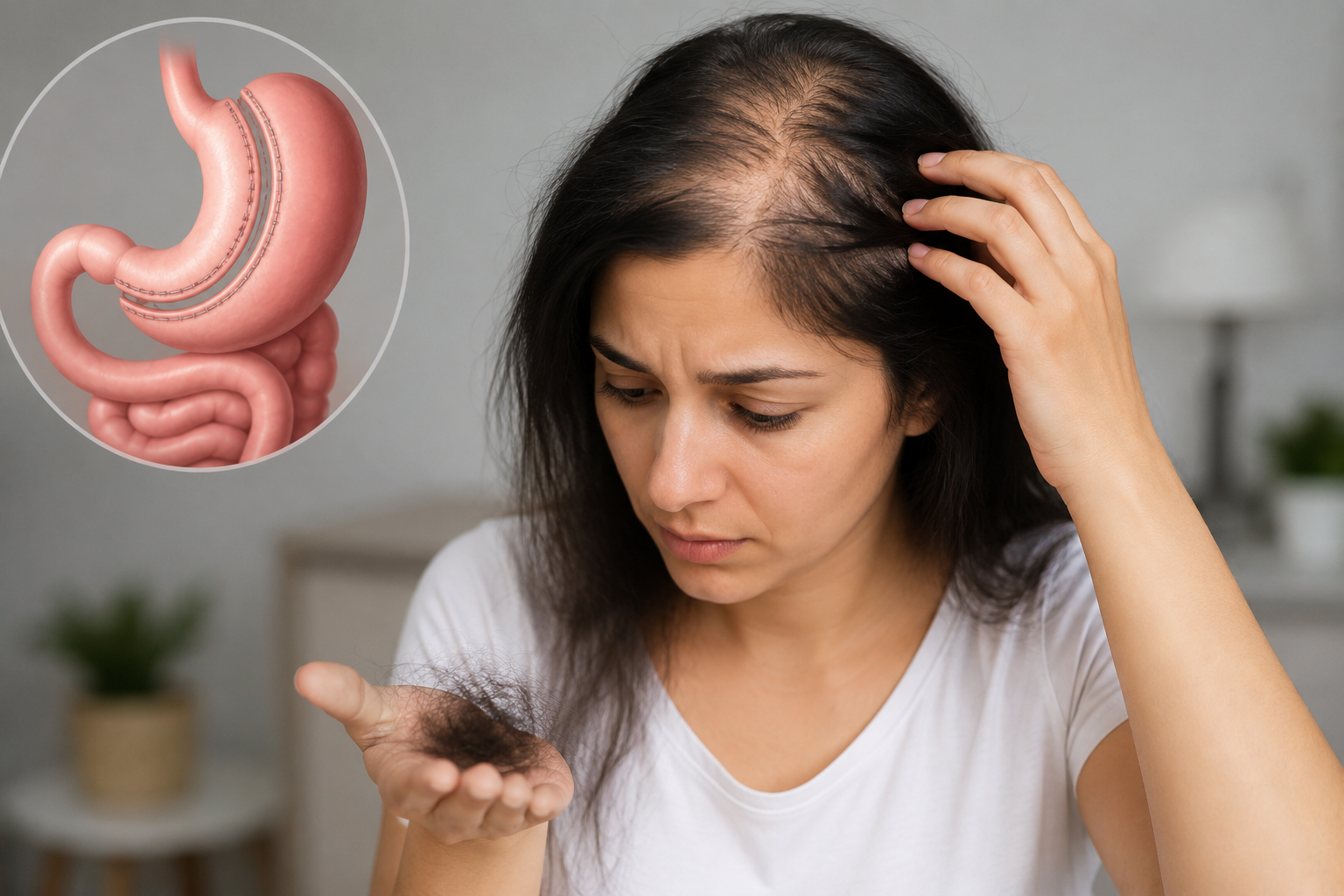
Hair loss after bariatric surgery is a temporary condition called telogen effluvium. It typically begins 2 to 4 months after surgery, peaks at months 3 to 6, and stops by months 9 to 12. Full regrowth usually completes between months 12 and 18, once protein intake reaches 60 to 80 grams per day and vitamin deficiencies (iron, biotin, zinc, vitamin D, B12) are corrected. Hair loss after bariatric surgery is not permanent.
At BodEvolve Bariatric in Texas, we walk every patient through what to expect, when the shedding peaks, and how to get your hair back on track.
Shedding after weight loss surgery typically follows this timeline:
- Months 1–2: No visible shedding yet (hair follicles enter resting phase)
- Months 2–4: Shedding begins, often noticed in the shower or on a pillow
- Months 3–6: Peak shedding the most alarming stage, but still temporary
- Months 6–9: Shedding gradually slows; early regrowth may be visible
- Months 9–12: Most patients see significant slowdown and early density return
- Months 12–18: Hair returns to near-normal density in the majority of cases
The total duration of hair shedding after weight loss surgery is typically six to twelve months, with regrowth completing between twelve and eighteen months post-surgery.
Is Hair Loss After Bariatric Surgery Permanent?
No. Hair loss after bariatric surgery is almost never permanent. The medical condition behind it, telogen effluvium, is a resting-phase disruption, not follicle damage. Your follicles are alive, they’ve simply stalled. Once protein intake stabilizes and any vitamin deficiencies are corrected, the resting follicles cycle back into growth phase and shedding stops.
The exception is patients who develop chronic, uncorrected iron or thyroid deficiencies. If shedding is still active beyond 12 months post-op, it’s no longer typical post-surgical hair loss and needs a full workup with your bariatric team. Almost every patient we see at BodEvolve returns to near-original density by month 12 to 18, provided their labs stay on track.
Bariatric Biotin for Hair Loss: What the Evidence Says
Bariatric biotin for hair loss is one of the most searched supplements after weight loss surgery, and it’s a fair place to start, with a caveat. True biotin deficiency is uncommon, but bariatric patients absorb less than the general population, which shifts the risk. Most bariatric dietitians recommend 2,500 to 5,000 mcg of biotin daily during the first 12 months post-op, ideally as part of a bariatric-formulated multivitamin rather than a separate mega-dose.
A word of warning: high-dose biotin (10,000 mcg or more) can interfere with lab tests, including thyroid panels and troponin readings used in cardiac testing. Always tell your care team you’re taking it before any bloodwork. Biotin will not reverse hair loss on its own, but paired with adequate protein and corrected iron levels, it supports the keratin production your follicles need during regrowth.
Does Bariatric Surgery Cause Hair Loss? The Real Reason
The medical term for the type of hair loss most bariatric patients experience is telogen effluvium. Under normal circumstances, roughly 85 to 90 percent of your hair follicles are in the active growth phase at any given time. The remaining follicles are in a resting phase, after which the hair naturally sheds.
When your body undergoes significant physical stress, such as major surgery, rapid weight loss or severe caloric restriction a large number of follicles are simultaneously pushed into that resting phase. Two to four months later, that hair sheds all at once. The result is noticeable, sometimes alarming, hair thinning.
It is important to understand that this is not permanent hair loss. The follicles are alive and intact. They are simply resting. Hair shedding after weight loss surgery is a temporary condition called telogen effluvium. It typically begins two to four months after surgery, peaks at three to six months, and resolves on its own by twelve to eighteen months once protein and nutrient levels are restored. The follicles are resting, not damaged.
Hair Loss Timeline After Weight Loss Surgery: When Shedding Starts and Stops
Hair loss after bariatric surgery follows this timeline:
- Months 1-2: No visible shedding follicles enter a resting phase
- Months 2-4: Shedding begins, often noticed in the shower or on a pillow
- Months 3-6: Peak shedding the most noticeable stage, but temporary
- Months 6-9: Shedding slows; early regrowth may appear
- Months 9-12: Significant slowdown and early density return for most patients
- Months 12-18: Hair returns to near-normal density in the majority of cases
How to Stop Hair Loss After Bariatric Surgery Once It Starts
If shedding has already begun, the goal shifts from prevention to damage control. Start with a full nutrition panel iron, ferritin, zinc, B12, and vitamin D so you know exactly what’s low instead of guessing. Increase protein toward 80-100 grams daily, spread across three to four meals rather than one large serving, since your body can only use so much amino acid at once for follicle repair. Resume or increase your bariatric multivitamin if you’ve drifted off it, which is common around month two or three, right before shedding peaks. Switch to a gentle, volumizing shampoo and stop heat styling to reduce breakage on strands that are already fragile. None of this reverses shedding overnight telogen effluvium runs its biological course but correcting deficiencies early is what determines whether your shedding phase lasts six months or stretches toward twelve.
How to Prevent Hair Loss After Bariatric Surgery
You may not be able to avoid some degree of hair shedding after bariatric surgery that is just how the body responds to major physical stress. But there is a real difference between patients who lose a little hair for a few months and those who experience prolonged, severe shedding. The strategies below are what separate the two groups.
The foundation of prevention is not a single supplement or miracle shampoo. It is consistent, proactive nutritional support that starts on day one after your procedure ideally before surgery even happens.
Protein Intake: The 1 Factor in Preventing Hair shedding after weight loss surgery
Protein is the raw material your hair follicles need to stay in the growth phase. After bariatric surgery, your caloric intake drops dramatically, and protein is often the first casualty. Aim for a minimum of 60 to 80 grams of protein per day in the first year. Many bariatric surgeons in Texas recommend going as high as 100 grams daily, especially after gastric bypass or duodenal switch procedures. Lean meats, eggs, Greek yogurt, cottage cheese, and whey protein shakes are your best
sources.
Key Nutritional Deficiencies That Worsen Hair Loss After Weight Loss Surgery
Bariatric surgery changes how your gut absorbs nutrients. Even if you are eating well, your body
may not be absorbing enough of the following:
- Iron – particularly important for women who still menstruate
- Zinc – supports follicle cell repair and production
- Biotin (Vitamin B7) – a key player in keratin synthesis
- Vitamin D – low levels are strongly linked to diffuse hair thinning
- Vitamin B12 – necessary for healthy cell metabolism throughout the body
Get comprehensive bloodwork done every three months during the first year. Catching a deficiency early gives you time to correct it before the shedding phase escalates.
Best Vitamins for Hair Loss After Bariatric Surgery
Nutritional deficiencies are one of the primary drivers of prolonged hair shedding after weight loss surgery. While your bariatric multivitamin covers the basics, some patients need targeted supplementation based on their actual lab values. Here are the specific vitamins most directly linked to post-surgical hair loss:
- Iron & Ferritin: Low ferritin not just low hemoglobin is strongly associated with telogen effluvium. Women who still menstruate are especially at risk. Target ferritin levels above 50 ng/mL for optimal hair retention.
- Biotin (Vitamin B7): Supports keratin production. While biotin deficiency is less common, supplementing 2,500-5,000 mcg daily is widely recommended by bariatric dietitians.
- Zinc: Zinc deficiency directly impairs follicle repair. Found in foods like pumpkin seeds , but supplementation is often needed post-surgery.
- Vitamin D: Low Vitamin D is linked to diffuse hair thinning. Many bariatric patients are already deficient before surgery.
- Vitamin B12: Essential for cell metabolism. Malabsorption after gastric bypass makes B12 deficiency particularly common.
Important: Never self-prescribe high dose supplements. Have your labs checked every three months and adjust your protocol with your bariatric team based on actual results not what worked for someone else in a Facebook group.
Best Shampoo for Hair Loss After Bariatric Surgery
The best shampoo for thinning hair after bariatric surgery is a lightweight volumizing formula with biotin, keratin, or caffeine as an active ingredient. Shampoo will not regrow hair on its own, that job belongs to your nutrition, but the right formula reduces breakage on already-fragile strands and adds visible body during the shedding phase.
Look for these ingredients on the label:
- Biotin (supports keratin structure in the strand)
- Caffeine (studied for follicle stimulation in early hair loss)
- Keratin (temporarily thickens each strand for fuller appearance)
- Saw palmetto (may help balance DHT-related shedding in some patients)
Skip heavy moisturizing, “smoothing,” or oil-based shampoos during the shedding phase. They coat fine hair, flatten volume, and make thinning more visible. Pair your shampoo with lukewarm water, gentle scalp massage instead of scrubbing, and a wide-tooth comb on wet hair.
Does Vitamin D Deficiency Cause Hair Loss After Bariatric Surgery?
Yes, vitamin D deficiency can absolutely worsen hair shedding after weight loss surgery. Low vitamin D is strongly linked to diffuse thinning, and the timing is unlucky: a large share of bariatric patients are already deficient before surgery, and malabsorption afterward makes it harder to rebuild. Vitamin D plays a direct role in the hair follicle’s growth cycle, so when levels drop, more follicles stall in the resting phase and shed together. The fix is not megadosing on your own. Ask your bariatric team to check your 25-hydroxy vitamin D level, then correct it with a dose matched to your result and recheck in three months. Getting vitamin D back into a healthy range is one of the most controllable factors in shortening your shedding phase.
Hair Loss and Joint Pain After Bariatric Surgery: Is There a Link?
If you’re dealing with hair loss and joint pain at the same time after bariatric surgery, you’re not imagining a connection. Both often trace back to the same root cause: nutritional gaps that show up when your body is running on a fraction of its former calorie intake. Rapid weight loss depletes collagen-supporting nutrients, and low vitamin D, protein, and iron can affect your joints and your hair follicles at the same time. Vitamin D deficiency in particular is tied to both diffuse thinning and joint aching, and it’s one of the most common shortfalls in bariatric patients.
Weight loss itself also shifts the mechanical load on your joints as your body composition changes, which can cause temporary aches during the fastest months of loss. The takeaway: if hair loss and joint pain are hitting together, it’s a strong signal to get your labs checked rather than treating each symptom on its own. Correcting the underlying deficiency often eases both.
Bariatric Vitamins & Supplements That Reduce Post-Surgery Hair Shedding
Our bariatric multivitamin is not optional. It is the daily insurance policy that keeps small nutritional gaps from widening into the deficiencies that drive prolonged shedding. Many patients who experience the worst hair loss are the ones who quietly drifted off their supplements around month two or three, right before shedding peaks. Beyond the standard multivitamin, the supplements most often added after lab testing are a separate iron or ferritin supplement, a zinc and copper combination (zinc alone can deplete copper over time), a B-complex or standalone B12, and vitamin D3 dosed to your actual level. Take fat-soluble vitamins with a meal that contains some fat so your body can absorb them, and space iron away from calcium, since calcium blocks iron absorption. Re-test every three months in your first year so your plan follows your bloodwork instead of guesswork.
How to Prevent
Chronic stress amplifies the hormonal disruption already caused by surgery and rapid weight loss.
Gentle exercise, consistent sleep, and professional mental health support all help stabilize the hormonal environment that determines how quickly your follicles return to their growth cycle.
When Should You Call Your Bariatric Surgeon About Hair Loss?
Most hair shedding after weight loss surgery resolves on its own. However, you should contact your care team if:
- Hair shedding is still significant beyond twelve months post-surgery.
- You are losing hair in patches rather than diffuse thinning.
- Hair loss is accompanied by fatigue, cold sensitivity or unexplained weight changes (possible thyroid involvement).
- Blood work reveals persistently low iron, ferritin or B12 despite supplementation.
Early intervention can make a meaningful difference. If you are based in Texas, the specialists at our weight loss clinic in Texarkana, TX offer comprehensive post-operative nutritional support and follow-up care to help patients manage exactly these kinds of concerns.
Daily Hair Care Tips During the Shedding Phase
As you wait for your hair to grow back, there are several things you can do to hide the signs of shedding and maintain the hair that you still have:
Use a Volumizing or Thickening Shampoo
Look for shampoos specifically formulated for fine or thinning hair. Ingredients like biotin, keratin, and caffeine can give the appearance of fuller hair while your follicles recover. Avoid heavy conditioners that weigh strands down.
Avoid Tight Hairstyles
Tight ponytails, braids, and buns put traction on follicles that are already in a fragile state. This traction can cause a secondary type of hair loss called traction alopecia, which takes much
longer to recover from. Wear your hair loose or in very gentle styles during this phase.
Step Away From Heat Styling
Heat-based styling blow dryers, flat irons, curling wands weakens already vulnerable strands and leads to increased breakage. If you need to use heat, apply a thermal protectant first and keep temperatures on the lowest effective setting.
Handle Wet Hair Carefully
Hair is most fragile when wet. Use a wide-tooth comb rather than a brush, and detangle starting from the ends and working upward never root to tip. Pat hair dry with a microfiber towel
instead of rubbing with a regular one.
Consider a Short Cut
A shorter cut naturally appears fuller. It also reduces the visible impact of shedding and takes stress off the scalp from the weight of long hair. Many bariatric patients find this a helpful
confidence boost during the shedding phase.
Regrowing Hair After Bariatric Surgery: What Actually Works
Regrowing hair after bariatric surgery is not about finding the right shampoo or supplement brand. It is about creating the right internal conditions for your follicles to come out of their resting phase. Here is what the evidence actually supports:
Protein timing matters. Spacing your protein intake across three to four meals rather than consuming it all at once improves amino acid availability for follicle repair throughout the day.
Iron levels need to be within optimal range, not just “normal.” A ferritin level of 40 ng/mL or higher is associated with better hair regrowth outcomes in post-surgical patients. Many bariatric patients fall within the lab reference range but are still functionally iron-deficient for hair growth purposes.
Minoxidil (topical) is an option. For patients whose shedding extends beyond nine months, topical minoxidil may be discussed with a dermatologist. This is not a first-line recommendation but is worth knowing exists.
Patience is not optional. The regrowth hair that comes in is often finer and softer than your original hair at first. This is normal. Full density typically returns by twelve to eighteen months post-surgery.
Find the Right Support at a Location Near You
Post-surgical hair loss is manageable, but it’s a lot easier when you have a care team actively monitoring your nutrition and labs throughout your recovery. If you’re in Texas, here’s how our clinics can help depending on where you are:
- At our weight loss clinic Texarkana, TX, patients get access to in-depth nutritional counseling from the very first post-op appointment, catching deficiencies early before they have a chance to extend the shedding phase.
- Our weight loss clinic Richardson, TX offers structured follow-up programs that include regular bloodwork reviews, so nothing falls through the cracks during the critical first twelve months.
- At our weight loss clinic Dallas, TX, the team builds personalized supplement plans based on your actual lab results, not a one-size-fits-all approach, because every patient’s nutritional needs are different.
