
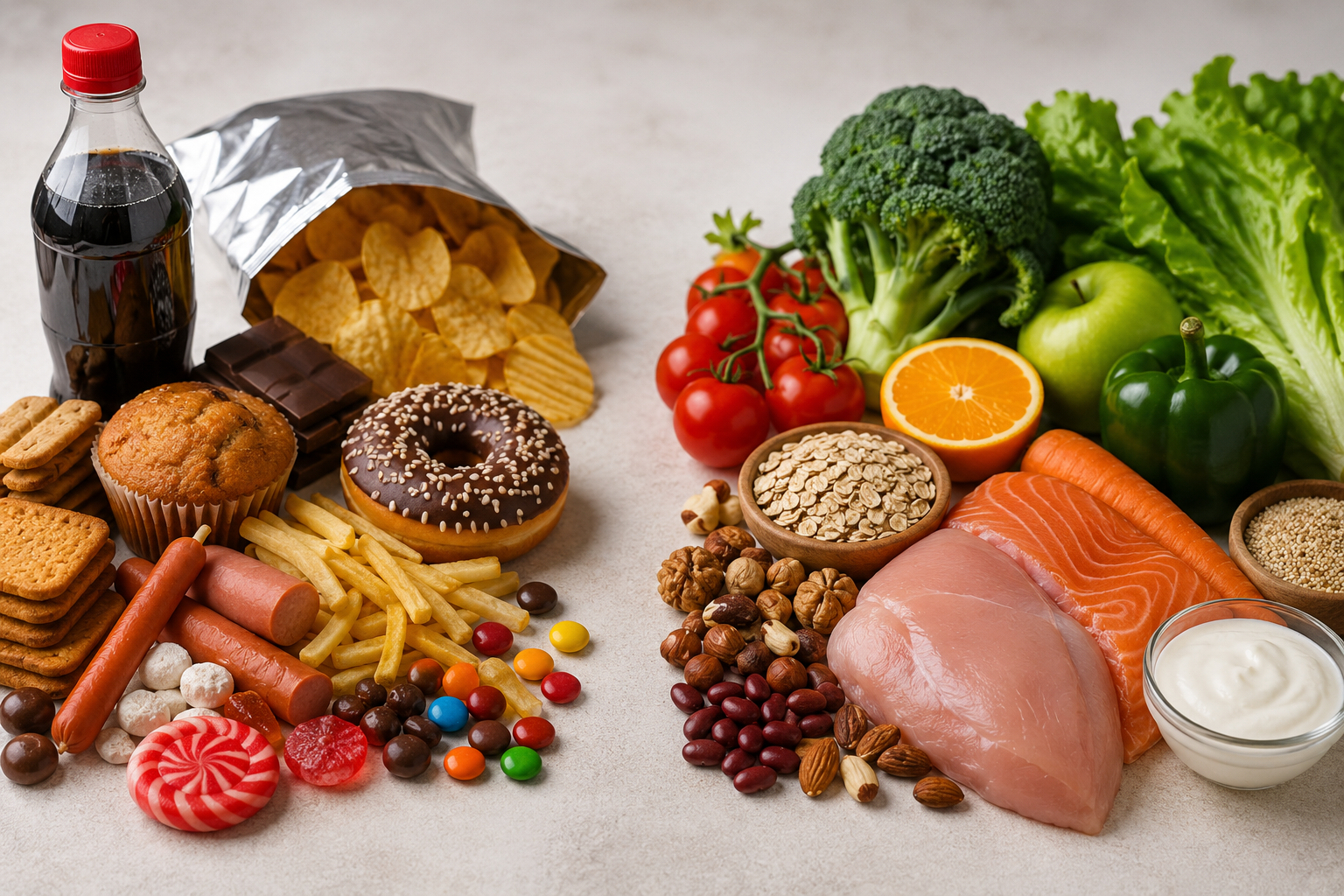
NOVA food classification is a simple but powerful framework that groups every food into one of four categories based on how much it has been industrially processed, not on its nutrients. Developed by researchers at the University of São Paulo in Brazil, it has become the most widely used system for studying the link between ultra-processed foods and diseases like obesity, type 2 diabetes, and heart disease. This guide walks through the four NOVA groups, real food examples, tools to check where a product fits, health implications, honest limitations, and practical steps bariatric and medical weight loss patients can take to shift their diet toward less processed choices without falling into unnecessary food fear or restrictive thinking.
What Is the NOVA Food Classification System?
When people ask what is nova food classification, the answer is that it is a food grouping method that categorizes foods by the level of industrial processing they undergo rather than by their calorie, protein, or fat content. What is nova food classification system in more formal terms? It is a public-health tool created to study how processing changes what we eat. Sometimes called the nova system of food classification, the nova system food classification framework, or simply the nova food classification system, it splits every food into four groups from unprocessed to ultra-processed. Terms like nova classification of food, nova classification of foods, nova classification food, food nova classification, novo food classification, or nova classifications all refer to the same tool. What is the nova food classification system? A globally used way to see how far a food has traveled from its natural state.
Who Developed the NOVA Food Classification System (And What Does NOVA Stand For)?
Who developed the nova food classification system? A team of Brazilian researchers led by Professor Carlos Monteiro at the Center for Epidemiological Studies in Health and Nutrition at the University of São Paulo. The original system was proposed around 2009 and refined in follow-up papers. So what does nova food classification stand for, what does nova stand for food classification, and what does nova stand for in food classification? NOVA is not an acronym at all. It comes from the Portuguese word meaning “new” and was chosen to signal a fresh approach to classifying foods that focused on processing rather than nutrients alone.
NOVA Food Classification Groups and Chart Overview
The nova food classification groups divide foods into four categories, and a simple nova food classification chart is often used to summarize them at a glance. The nova classification of food chart typically lists Group 1 (unprocessed or minimally processed), Group 2 (processed culinary ingredients), Group 3 (processed foods), and Group 4 (ultra-processed foods). The nova food group classification approach is unusual because it evaluates production methods, not nutrients. This is also why it is sometimes called the nova classification of food processing, the nova classification system of food processing, or the nova food processing classification system. Every food, drink, or ingredient fits into one of these four buckets, no matter how it is packaged.
NOVA Group 1: Unprocessed and Minimally Processed Foods
Group 1 covers foods eaten in their natural form or with only minor modifications such as washing, drying, freezing, pasteurizing, or grinding. No salt, sugar, oil, or additives are added. Common examples include fresh fruits and vegetables, whole grains, plain oats, brown rice, beans, lentils, eggs, milk, plain yogurt, fresh meat, fish, and nuts without added coatings. These foods form the foundation of a healthy plate, and the NOVA framework recommends they make up the majority of daily intake. Bariatric patients can find plenty of Group 1 options in this guide to the best foods to eat to lose weight and high-fiber foods for weight loss.
NOVA Group 2: Processed Culinary Ingredients
Group 2 covers ingredients extracted from Group 1 foods or from nature through pressing, refining, grinding, or milling and then used in home or restaurant kitchens to prepare, season, and cook Group 1 foods. Examples include vegetable oils, butter, lard, vinegar, salt, sugar, honey, and maple syrup. These are rarely eaten on their own but combine with Group 1 foods to make meals. NOVA advises using Group 2 items in small amounts, since they can concentrate calories quickly, especially oils and sugars.
NOVA Group 3: Processed Foods (NOVA Classification Processed Foods)
The nova classification of processed foods (also written as nova classification processed food, nova classification processed foods, or nova processed food classification) covers Group 3 items. Under the nova classification system for processed foods, this group includes any food made by adding sugar, salt, oil, or vinegar to a Group 1 ingredient to extend shelf life or enhance taste. Typical examples include canned vegetables, canned beans, fruits in syrup, salted or smoked meats, cured meats, most cheeses, and freshly baked bread. These foods usually have only two or three recognizable ingredients and can fit into a healthy plate when used carefully alongside Group 1 foods.
NOVA Group 4: Ultra-Processed Foods Under the NOVA Classification
Group 4 is where the nova classification of ultra processed food, nova classification of ultra processed foods, nova classification ultra processed food, and nova classification ultra processed foods all point. The nova food classification ultra processed foods list, sometimes searched as nova food classification system ultra processed, includes items made through industrial formulations of five or more ingredients, often with additives like emulsifiers, artificial flavors, non-sugar sweeteners, hydrogenated oils, and protein isolates. The definition of ultra-processed food nova classification (and definition of ultra-processed foods nova classification) covers products designed to be hyper-palatable and shelf-stable. Under nova classification for ultra processed food guidelines, examples include soft drinks, packaged snacks, instant noodles, ready meals, mass-produced breads, flavored yogurts, breakfast cereals, hot dogs, and reconstituted meat products. Ultra processed foods nova classification research and ultra processed food nova classification data consistently link high intake of these foods to weight gain, insulin resistance, and cardiovascular disease. Patients can review the guide on foods to avoid for weight loss to see how Group 4 items overlap with common weight loss barriers.
NOVA Food Classification Examples: A Practical List
A short nova food classification examples snapshot makes the framework easier to apply. A quick nova food classification list looks like this: Group 1 (banana, plain oats, chicken breast, spinach, boiled egg), Group 2 (olive oil, table salt, cane sugar, butter), Group 3 (canned tuna, cheddar cheese, sourdough bread, canned chickpeas), Group 4 (potato chips, cola, packaged cookies, chicken nuggets, breakfast cereal bars). Even foods that look similar can sit in different groups: plain yogurt is Group 1, canned fruit is Group 3, and flavored fruit yogurt with additives is Group 4. Patients can also look at high-protein low-calorie foods for post-op-friendly Group 1 and Group 3 picks.
Why the NOVA Food Classification Matters for Health and Weight
A growing body of research links heavy consumption of Group 4 foods to obesity, type 2 diabetes, cardiovascular disease, some cancers, and higher all-cause mortality. Ultra-processed foods are typically high in added sugars, sodium, unhealthy fats, and refined carbs while being low in fiber, protein, and micronutrients. They are also engineered to be hyper-palatable, which can override normal satiety signals and drive overeating. Patients dealing with metabolic dysfunction can also read the related guides on the insulin resistance diet and gut health and weight loss to see how food quality shapes metabolic risk.
Best Practices for Applying the NOVA Food Classification System
The best practices for applying the nova food classification system come down to a few sensible habits: build most meals around Group 1 foods, use Group 2 ingredients in small amounts, allow Group 3 foods in moderation, and try to keep Group 4 foods as occasional items rather than daily staples. Reading ingredient labels is often the quickest way to spot Group 4 foods; five or more industrial-sounding ingredients (isolates, hydrogenated oils, non-sugar sweeteners, gums) is a strong signal. The Mediterranean diet for weight loss is a good real-world example of these habits in action.
NOVA Food Classification Limitations
The nova food classification limitations are worth understanding. Because the system judges processing rather than nutritional value, some Group 4 foods (like whole-grain bread, plain kefir, or fortified breakfast cereals) can still support a healthy diet, while some Group 1 foods eaten in excess (like fatty cuts of red meat) may not. NOVA also does not account for portion size, cooking methods, or context; a small square of dark chocolate is treated the same as a family-size candy bar. Some registered dietitians argue that NOVA can create unnecessary food fear or shame around convenient items that fit within a balanced plan. It is a helpful lens, not the only lens, for judging a food’s role in a healthy diet.
How Bariatric Patients Can Use NOVA to Guide Food Choices
For patients before or after weight loss surgery, using NOVA as a shopping guide can strongly support long-term success. Post-op plates should lean heavily on Group 1 lean proteins, non-starchy vegetables, and fruits, with Group 3 items like plain canned tuna or unsweetened Greek yogurt used strategically. Group 4 foods, especially calorie-dense snacks and sugary drinks, are the ones most likely to stall weight loss or contribute to regain. A structured bariatric meal guide and this post-bariatric surgery diet resource both reinforce the same Group 1 and Group 3 emphasis that NOVA suggests. Building healthy habits for losing weight around whole foods is the sustainable path.
NOVA food classification is a practical, evidence-based way to think about food quality that goes beyond calorie counting. Focusing on Group 1 and Group 3 foods while limiting ultra-processed Group 4 items can meaningfully support long-term weight loss and metabolic health. For patients ready to combine smarter nutrition with expert medical guidance, BodEvolve Bariatric offers comprehensive care through experienced weight loss doctors in Arlington, TX, a full team of weight loss surgeons in Dallas, and personalized programs at the medical weight loss clinic serving Dallas and Fort Worth. Patients can also connect with the best bariatric surgeon in Texas, explore the GLP-1 weight loss program, or review the non-surgical weight loss programs available across Dallas, Fort Worth, Richardson, Arlington, and Texarkana for a plan that fits their goals.
