
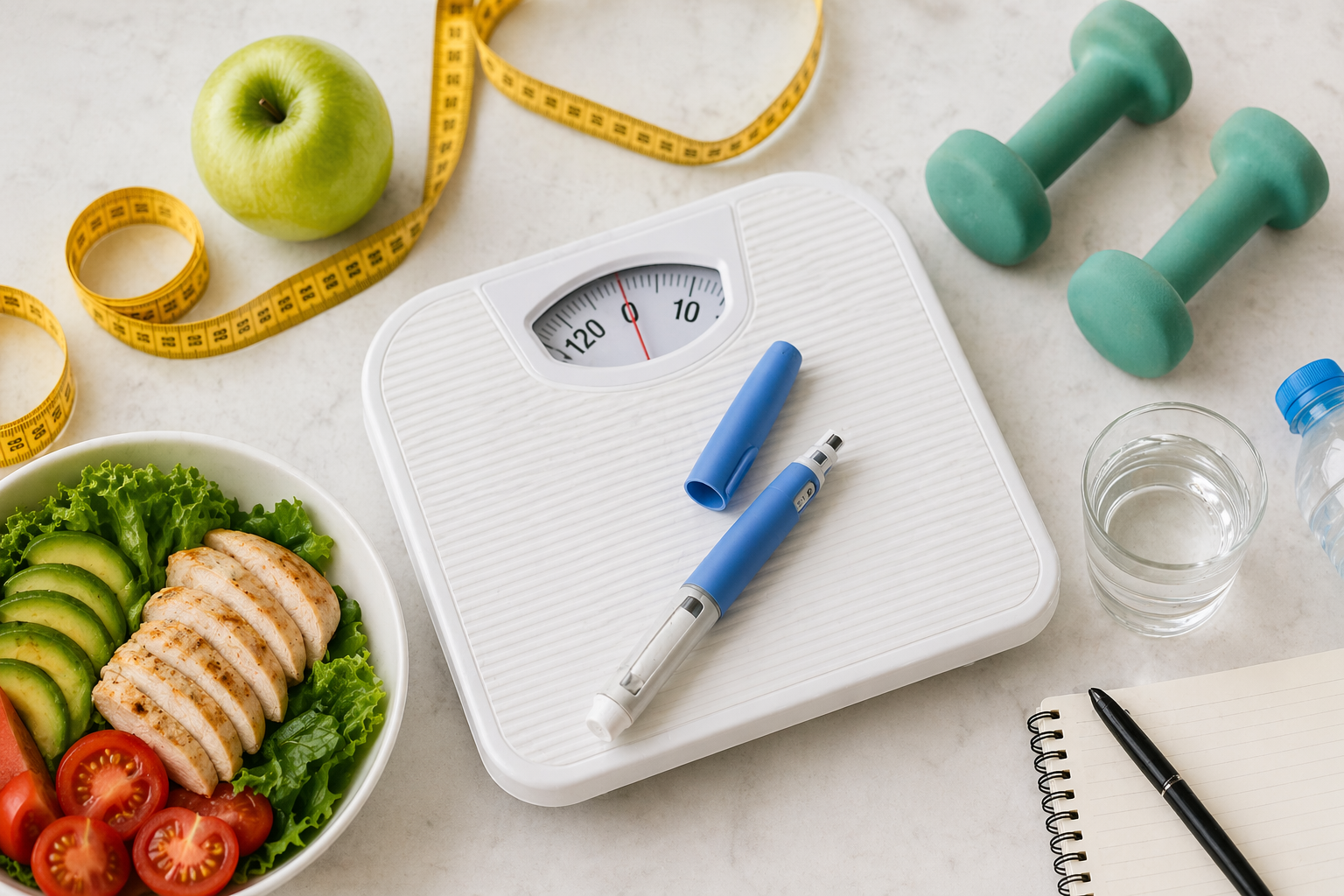
Healthy habits for losing weight are the small, repeatable behaviors that produce steady fat loss over months, things like eating protein at every meal, sleeping seven to nine hours, drinking water before meals, and stopping eating after 8 PM. They work because they shift your daily defaults rather than relying on willpower, and that is why they hold up long after a crash diet has failed.
Most people searching for healthy habits for losing weight have already tried the dramatic version, the crash diet, the 6 AM workout streak that lasted ten days, the meal plan they followed perfectly for two weeks. What actually moves the needle is quieter than that. A handful of consistent daily habits to lose weight, built into ordinary life without requiring constant willpower, compound over months in ways that no two-week plan ever does.
The research on lasting weight loss is fairly consistent. It is not the dramatic overhauls that hold. It is the boring, repeatable ones. Good eating habits for weight loss, steady sleep, and stress management do not make headlines, but they are what separates people who keep the weight off from those who do not.
Dr. Clayton Frenzel and Dr. Brian Holt at BodEvolve work with patients across every stage of the weight loss journey, from people making their first real lifestyle changes to those managing weight after bariatric surgery. What follows is a practical breakdown of the habits that hold up, why they work, and how to build them in a way that actually sticks.
Why Most People Struggle to Lose Weight in the First Place
Before we talk about solutions, it’s worth being honest about the problem. Weight gain, especially stubborn fat around the belly isn’t always just a lifestyle issue. Hormones, medications, metabolic conditions and genetics all play a role. For many people, no amount of clean eating or gym time is enough to overcome what’s happening at a physiological level.
That’s not an excuse. It’s context. And ignoring it is why so many people spend years trying the same things and wondering what they’re doing wrong. For people managing significant weight, the conversation often needs to go deeper than food swaps and step counts. The team at BodEvolve Bariatric Surgery Center works with patients across the Dallas-Fort Worth area who’ve spent years fighting this battle and they understand that the habit layer and the medical layer aren’t separate conversations. They’re the same one.
Habits for Losing Weight That Actually Work
The short version: these are the habits that consistently show up in research on long-term, natural weight loss, no extreme measures required. Not every habit on this list carries equal weight. Some have an outsized impact on the scale. Others are useful but will not move the needle on their own. The list below is ordered roughly by leverage, starting with the change that produces the biggest return for the least effort.
Start with protein, every single meal
This is probably the highest-leverage dietary change most people aren’t making consistently. Protein keeps you full longer, helps preserve muscle as you lose fat, and requires more energy to digest than carbs or fat. Aim for it to anchor every meal, eggs in the morning, chicken or fish at lunch, a legume-based dinner. It sounds simple because it is. The issue is consistency, not complexity.
Eat slowly. Seriously
Your stomach takes about 20 minutes to signal your brain that it’s full. If you eat fast and most people do you’ve already overeaten before that signal arrives. Slowing down isn’t a mindfulness cliché. It’s one of the best eating habits to lose weight that costs you nothing except a little patience.
Stop drinking your calories
Sweetened coffee drinks, juice, soda, alcohol these are among the most overlooked contributors to weight gain. They spike insulin, add hundreds of calories with zero satiety, and most people don’t even count them. Water, black coffee and unsweetened tea should be your defaults.
Don’t eat after 8 PM
Set a hard kitchen cutoff. Late-night eating is almost never driven by real hunger it’s habit, boredom, or stress. If the food is already put away and the kitchen is closed in your mind, those 200 to 400 extra calories simply don’t happen.
Move more, but don’t rely on exercise alone
Exercise matters for cardiovascular health, mood, muscle retention, and metabolism. But it’s a poor primary lever for weight loss in isolation. A 45-minute run burns roughly what’s in a medium order of fries. Focus on movement as a non-negotiable part of your day walking, strength training, whatever you’ll actually do but don’t let it become the reason you’re not changing your eating.
Healthier Eating Habits to Lose Weight Naturally
Healthier eating habits to lose weight naturally are the patterns you build into normal life that quietly shift the calorie balance without forcing you to count, track, or restrict aggressively. They work because they change your defaults instead of relying on daily decision-making.
The four that produce the largest result for the least effort:
Prioritize whole foods over processed ones:
A plate of grilled chicken, vegetables, and brown rice has roughly half the calorie density of the same portion size from a convenience meal or fast food. You can eat more food, feel fuller, and still be in a calorie deficit. This single shift is often the difference between effort that holds and effort that fades.
Eat fiber-rich foods at every meal:
Oats, lentils, beans, vegetables, berries. Fiber slows digestion, keeps blood sugar stable, and reduces appetite between meals in a way that no shake or supplement reliably replicates.
Cook at home more often than you eat out:
People who cook the majority of their meals consistently consume fewer calories, less sodium, and less added sugar than those who eat out frequently. The mechanism is not mysterious. Restaurant food is engineered to taste rich, which usually means more oil, more salt, and more sugar than home cooking.
Eat from a smaller plate:
The same volume of food on a 9-inch plate versus an 11-inch plate registers as a fuller meal visually, which directly affects how satisfied you feel afterward. Most people unconsciously serve themselves to fill the plate they pick up, so changing the plate changes the portion without any willpower involved. It is one of the easiest weight loss habits you can adopt this week.
These habits are not dramatic. They do not require a paid app or a meal delivery service. They are the easy weight loss habits that compound quietly over weeks and months.
How to Change Eating Habits to Lose Weight Without Feeling Restricted
The word “diet” carries so much psychological baggage that it undermines the effort before it starts. Reframing the goal as building good eating habits for weight loss rather than restricting everything you enjoy changes how sustainable the effort feels.
A few approaches that work:
Crowd out, don’t cut out:
Instead of obsessing over what you can’t eat, focus on adding more of what supports your goals vegetables, whole grains, lean protein, fiber-rich foods. When your plate is already full of things that work, there’s less room for the things that don’t.
Meal prep, even minimally:
You don’t need to cook five days of food on Sunday. But having two or three go-to meals ready means you’re not making hunger-driven decisions at 6:30 PM on a Tuesday when every option that comes to mind is a drive-through.
Understand your trigger patterns:
Stress eating, boredom eating, emotional eating these aren’t character flaws. They’re patterns, and patterns can be interrupted. Knowing yours is the first step. Replacing the behavior with something non-food-related a walk, a phone call, journaling is the second.
Daily Weight Loss Habits That Don’t Require a Gym
Small weight loss habits, stacked over time, are what actually produce lasting results. None of these are dramatic. That’s the point.
Sleep seven to nine hours:
Chronic sleep deprivation elevates ghrelin (your hunger hormone) and suppresses leptin (your fullness hormone). Sleeping poorly is physiologically making you hungrier. It’s not a minor factor.
Manage stress actively:
Cortisol directly promotes fat storage and disrupts sleep quality, which creates a cycle that makes every other habit harder to maintain. Managing stress isn’t a bonus it’s load-bearing.
Track your food:
At least temporarily. You don’t have to do it forever. But most people significantly underestimate how much they’re eating. Even two weeks of honest tracking recalibrates your awareness in ways that stick.
Drink water before meals:
Your stomach interprets water volume as partial fullness before the meal even starts. The appetite reduction is real and measurable in controlled studies. Thirty seconds, zero cost, genuinely useful.
Healthy Habits to Lose Belly Fat: What the Research Actually Shows
Belly fat particularly visceral fat stored deep around the abdominal organs doesn’t respond to general weight loss effort the way fat in other areas does. It’s the most metabolically active type of fat in the body and is strongly influenced by hormonal factors, which is why some people shed weight from their arms, legs, and face while their midsection barely budges.
Certain dietary habits consistently show up in research targeting abdominal fat specifically. Reducing refined carbohydrates and added sugars has a more direct impact on visceral fat than simply cutting total calories. Prioritizing soluble fiber found in oats, lentils, flaxseed, and most vegetables helps reduce belly fat over time by slowing digestion and improving the body’s insulin sensitivity.
Sleep and cortisol management belong in this section too, not just the lifestyle section. Chronically elevated cortisol signals the body to store fat centrally right around the midsection. No matter how disciplined your diet is, a persistently activated stress response works against abdominal fat loss. The habits overlap deliberately.
For patients at BodEvolve, belly fat that resists consistent effort often points to a metabolic condition that goes beyond what diet and exercise can realistically address on their own. That’s a conversation worth having with a bariatric team rather than a wellness app.
10 Healthy Eating Habits for Weight Loss You Can Start Today
Most people don’t need a new diet plan. They need a shorter, more honest list of things that actually move the needle. These ten habits show up consistently in both clinical research and in the real-world results that bariatric teams see with patients, not because they’re revolutionary, but because they work with how your body functions rather than against it.
These aren’t hacks. They’re the habits that work with how your body functions rather than against it, no supplements, no extreme restriction, just a consistent pattern your biology can actually respond to over time.
Anchor every meal with protein first:
Protein is the one macronutrient that works in multiple directions at once, it keeps you full, it protects muscle as you lose fat, and it takes more energy to digest than carbs or fat do. If you build the meal around it rather than adding it as an afterthought, everything else follows more naturally.
Eat without a screen in front of you:
Distracted eating is one of the most reliable ways to overeat without realizing it. When your attention is split, your brain simply doesn’t register fullness the same way. Sit down, eat the food, do nothing else.
Replace every sugary drink with water, black coffee, or unsweetened tea:
This single swap eliminates hundreds of invisible calories that most people never account for and it costs nothing except the habit of reaching for something different.
Stop eating after 8 PM:
Not because your metabolism shuts down at night, but because nothing good happens in the kitchen after 8. Late-night eating is almost always driven by boredom or stress, not actual hunger, and the calories add up fast.
Fill half your plate with vegetables before adding anything else:
This isn’t about eating less, it’s about crowding out. A plate that’s already half-full of fiber and volume leaves less room for the things that stall progress.
Prep two or three go-to meals each week:
You don’t need a full Sunday meal prep routine. You just need enough ready food to survive Tuesday evening when you’re tired and every option your brain suggests involves a drive-through.
Drink a full glass of water 20 to 30 minutes before each meal:
Studies consistently show this reduces appetite and caloric intake at that meal. It takes thirty seconds and costs nothing. There is almost no reason not to do this.
Sleep seven to nine hours, treat it like a health habit, not a luxury:
Poor sleep raises ghrelin, the hormone that makes you hungry, and suppresses leptin, the one that tells you you’re full. Chronic sleep deprivation is physiologically making weight loss harder every single day.
Walk for 15 minutes after your largest meal:
A short walk after eating significantly improves how your body handles blood sugar from that meal. It also breaks the post-meal habit of sitting back down with another snack within the hour. You do not need to track distance or pace. Walking the dog around the block counts.”
Name your trigger and plan a replacement before it happens:
Whether it’s stress, boredom, or a specific time of day, the pattern is predictable. Deciding in advance what you’ll do instead of eat (a walk, a phone call, five minutes outside) is what separates people who break the cycle from those who don’t.
When Healthy Habits for Weight Loss Aren’t Enough
Here’s something worth saying plainly: for some people, habits and lifestyle changes are simply not sufficient. Obesity is a complex chronic condition with biological underpinnings that behavioral changes alone cannot fully address. If you’ve been working at this seriously for years and the scale won’t move, that’s not a personal failure it may be a medical signal.
Bariatric surgery has decades of clinical evidence behind it. Procedures like gastric sleeve surgery, gastric bypass, and the newer SADI-S have helped hundreds of thousands of people achieve lasting, significant weight loss when other methods didn’t. These aren’t shortcuts they’re tools for people who need a different level of intervention.
BodEvolve Bariatric Surgery Center has locations across the Dallas-Fort Worth area, including Arlington, Richardson, Texarkana and Dallas, with surgeons who specialize in exactly these conversations. Dr. Frenzel triple board-certified and dual fellowship-trained and Dr. Brian Holt bring a level of expertise that’s genuinely rare. If you’re at the point where you’re wondering whether surgery is worth considering, that conversation is worth having.
You Don’t Have to Figure This Out Alone
Start smaller than you think you need to. Focus on one or two changes at a time. Let them become automatic before adding more. Weight loss is hard enough without going it alone. And if you’ve genuinely put in the work, built healthy habits for losing weight, stayed consistent, made the changes, but the scale still isn’t reflecting that effort, that’s not a personal failure. It’s a signal worth paying attention to. The next step might be a medical evaluation, a structured program, or a conversation with a best bariatric surgeon in Texas who can look at the full picture and tell you honestly what’s standing in the way.
FAQ's
What are good habits to lose weight?
Honestly, the ones that actually work aren’t complicated, they’re just harder to stick with than people expect. Eating protein at every meal, slowing down while you eat, cutting out liquid calories, stopping food after 8 PM, sleeping enough, keeping stress in check, and tracking what you eat at least for a few weeks. That’s most of the list. None of it is extreme. The challenge was never figuring out what to do. It’s doing it on a Wednesday night when you’re exhausted and there’s leftover pizza in the fridge.
Will losing weight lower LDL cholesterol?
Usually, yes and often more than people expect. Sustained fat loss tends to improve the entire lipid picture: LDL comes down, triglycerides drop, and HDL (the one you actually want higher) tends to improve. The key word is sustained, crash dieting doesn’t produce the same results as steady, maintained weight loss. For patients who’ve had bariatric surgery, the cholesterol improvements can be dramatic and show up within the first few months post-op, before the full weight loss is even complete.
Why is it hard for diabetics to lose weight?
Because Type 2 diabetes stacks the deck against fat loss in several ways at once. Higher circulating insulin levels signal your body to store fat rather than burn it. Many common diabetes medications insulin included cause weight gain as a direct side effect. And the underlying insulin resistance means your metabolism is already less efficient at using stored fat for energy. It’s not a willpower issue; it’s a physiology issue. That’s a big part of why bariatric surgery has become a recognized treatment option for Type 2 diabetes not just for the weight loss, but for the metabolic reset it produces.
What is the 30 30 30 rule for weight loss?
Eat 30 grams of protein within 30 minutes of waking up, then do 30 minutes of low-intensity exercise. Morning protein stabilizes blood sugar and keeps hunger quieter later in the day. Low-intensity movement improves fat oxidation without the cortisol spike that hard morning workouts can trigger. Simple habit, solid mechanism behind it.
What are the best daily habits to lose weight naturally?
The habits that consistently show results without extreme measures are: eating protein at every meal, stopping food intake by 8 PM, replacing sugary drinks with water, sleeping at least seven hours, and tracking what you eat for at least two weeks. None of these require a gym or a strict diet plan. What they require is consistency built one habit at a time rather than all at once.
Will losing weight lower TSH levels?
For many people, yes. Excess body fat is linked to elevated TSH and reduced thyroid function. As weight comes down, TSH often improves. But the relationship runs both ways an underactive thyroid also makes losing weight harder. If TSH has been elevated and weight loss has stalled despite real effort, get your thyroid panel reviewed before assuming the problem is behavioral.
What are the 3 C's of weight loss?
Consistency, Calories, and Composition. Consistency means the same behaviors week after week regardless of motivation. Calories means a sustainable deficit that doesn’t trigger rebound. Composition means enough protein to preserve muscle while fat is lost. Most people have one or two but not all three, that gap is usually where progress stalls.
