
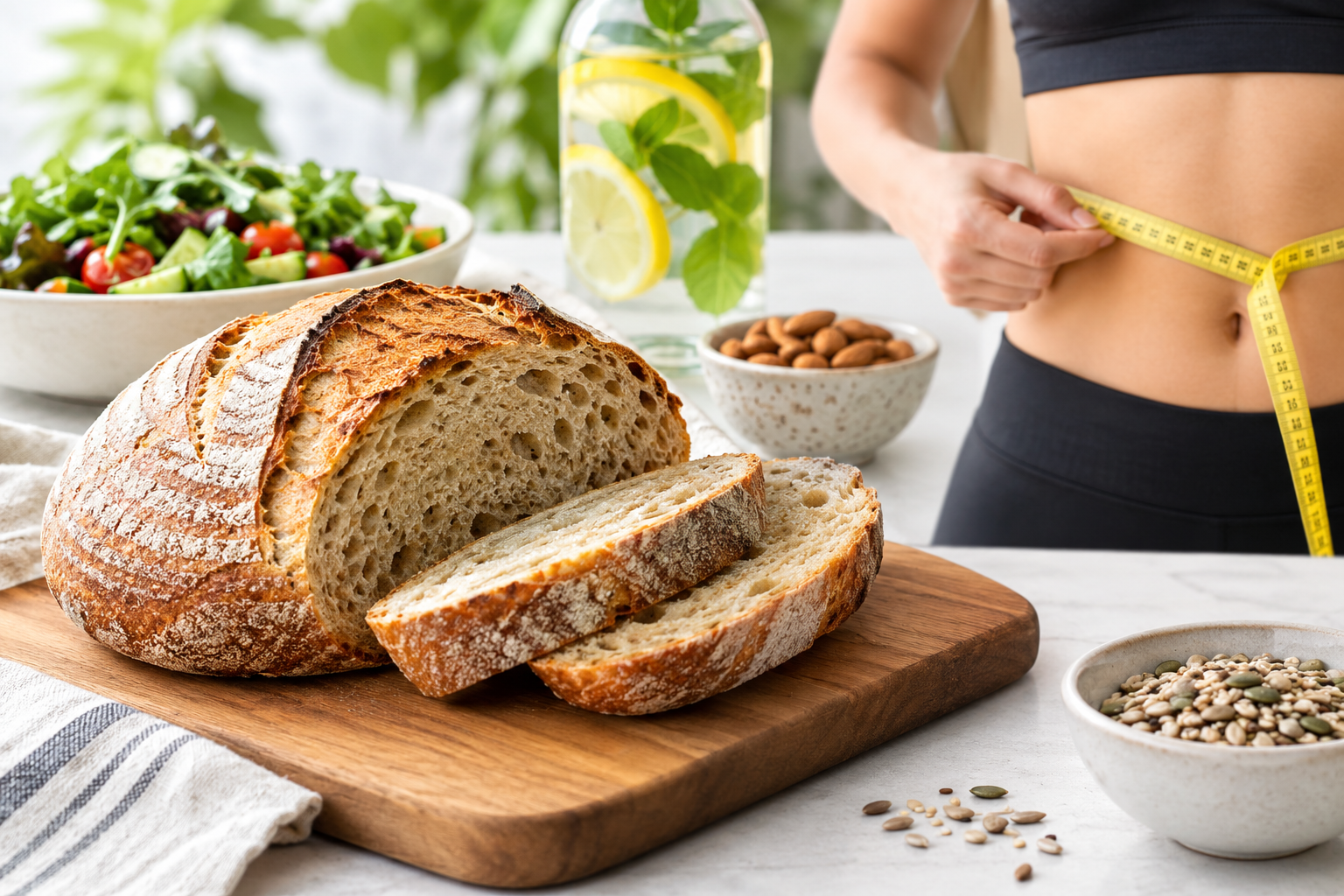
Is sourdough bread good for weight loss? Yes, and it might be one of the very few breads that actually works with your goals instead of against them, provided you choose real sourdough, watch your portions, and pair it with the right foods. That last part matters more than most people realize. Sourdough has quietly become the bread of choice for dietitians, gut-health specialists, and even weight-loss surgeons because fermentation changes what the bread does inside your body. If you have been avoiding bread completely to shed pounds, you may be cutting out a food that could actually support your progress instead of stalling it.
Below is everything the pop-science headlines skip: the real chemistry, what to look for on a label, how much to eat, when to eat it, and how sourdough fits into a serious weight-loss plan, including one built around bariatric surgery.
Why Is Sourdough Bread Good for Weight Loss?
The short science: sourdough is fermented, not commercially yeasted. That single difference changes almost everything about how your body handles it.
During the 12 to 48 hour slow fermentation, wild yeast and lactic-acid bacteria break down starches, gluten, and something called phytic acid. The result is a bread that:
- Releases sugar into your bloodstream more slowly, giving it a lower glycemic response than white or standard whole-wheat bread
- Feels more filling for the same calorie count, thanks to organic acids that slow gastric emptying
- Is easier on your gut, which reduces the bloat and post-meal sluggishness many people mistake for weight gain
- Preserves more minerals like iron, zinc, and magnesium, because the phytic acid that normally blocks their absorption has already been broken down
A steady blood-sugar curve is the quiet engine of fat loss. When glucose spikes hard and then crashes, insulin surges, hunger returns within an hour, and cravings for quick carbs almost always win. Sourdough’s slower curve keeps you full longer on the same ~120 calories per slice, which is why people naturally eat less at the next meal without trying.
There is also an emerging story around the gut microbiome. The organic acids produced during fermentation act like a mild prebiotic, feeding the beneficial bacteria that keep showing up in research on healthy body-weight regulation. It is not a miracle food, but it is a real edge over commercial breads that offer none of it.
Is Whole Wheat Sourdough Bread Good for Weight Loss?
If regular sourdough is a good choice, whole-wheat sourdough is a better one. You keep every fermentation benefit and add roughly 2 to 3 grams more fiber per slice, which slows digestion further and improves satiety.
A typical slice of whole-wheat sourdough delivers around:
- 110 to 130 calories
- 3 to 5 grams of fiber
- 4 to 6 grams of protein
- A lower glycemic load than white sourdough
For anyone actively trying to lose weight, that fiber-and-protein combination is the reason to reach for whole-wheat sourdough over its white cousin. It also has a deeper, nuttier flavor that pairs beautifully with eggs, avocado, hummus, or a lean protein spread.
One caveat worth naming: many grocery brands sell a “wheat sourdough” that is really white flour with a splash of whole-wheat flour and caramel color for appearance. Look for a loaf where whole-wheat flour is the first ingredient. If you have to squint at the label, it probably is not the real thing.
Is Sourdough Bread Good for Weight Loss at Night?
This is the question that gets misunderstood the most. The truth is a slice of sourdough at night will not make you gain fat by itself. Weight gain comes from total daily calories, not the clock.
That said, timing does matter for a few practical reasons:
- Late-night carbs paired with butter, cheese, or sugary spreads add hundreds of stealth calories most people forget to log
- A large portion right before bed can raise overnight blood sugar and interfere with deep sleep, and poor sleep is directly linked to next-day hunger and weight-loss stalls
- Eating within one to two hours of sleeping tends to blunt fat-burning in the early sleep cycles
If you want sourdough at night, keep it to one small slice, pair it with protein (turkey, cottage cheese, an egg, or a slice of chicken), and finish eating at least 90 minutes before bed. That combination keeps blood sugar steady, satisfies the craving, and does not throw off sleep.
How Sourdough Fits Into a Post-Bariatric Diet
For patients who have had gastric bypass or gastric sleeve surgery, bread is a subject that comes up in almost every follow-up. The blanket “no bread ever” rule you may have heard is outdated. The updated guidance from our surgical team, led by dr Frenzel, is more nuanced.
Sourdough is often better tolerated than commercial bread because fermentation partially pre-digests the gluten and starch, which reduces the doughy, stuck feeling some bariatric patients describe with regular bread. That does not make it a green light for unlimited slices. The rules that still apply:
- Protein comes first, always. Bread only enters the meal after protein needs are met.
- Portion is typically half a slice, toasted, because toasting further reduces the gummy texture that can be uncomfortable in a small pouch.
- Introduce it slowly, usually not before the soft-food stage cleared by your surgeon.
- Skip it entirely if it displaces protein or triggers dumping symptoms.
For non-surgical weight loss, the same protein-first principle works. Eat your protein and vegetables first, then let one slice of sourdough round out the meal. You will find it much harder to overeat this way.
The Sourdough Trap: When It Can Sabotage Your Weight Loss
Sourdough has a health halo, and that halo leads to a very common problem: portion creep. A single slice is a smart choice. Three slices with butter is a 500-calorie problem regardless of how virtuous the bread is.
Watch out for these silent saboteurs:
- Restaurant sourdough baskets, which are almost always oversized and served with butter or olive oil
- “Sourdough-style” supermarket loaves that use vinegar or added flavoring instead of true fermentation, giving you none of the metabolic benefits
- Sourdough toast piled with sweetened nut butters, jam, or Nutella, which erases the blood-sugar advantage
- Sourdough pizzas and sandwiches marketed as healthy but built on double portions of dough
Rule of thumb: if the bread is doing the work of the meal, you are eating too much of it. If the bread is a supporting player next to protein and vegetables, portion tends to solve itself.
How to Buy (or Bake) Real Sourdough That Actually Helps
Not all bread labeled “sourdough” is real sourdough. Authentic sourdough has three ingredients and nothing else: flour, water, and salt. The leavening comes from a naturally fermented starter, not commercial yeast, vinegar, or dough conditioners.
When shopping, look for:
- A short ingredient list of three to five items
- No commercial yeast, no added sugars, no preservatives, no “sourdough flavor”
- A dense, chewy crumb with irregular holes, never uniform and soft like sandwich bread
- A slight tang on the finish, not sweet
- Whole-wheat flour listed first if you are choosing the whole-wheat version
Your safest bet is a local bakery loaf, ideally one where you can ask the baker about their process. Frozen artisan sourdough from specialty grocers is a solid backup. If your only option is a mass-market grocery loaf, read the label carefully, because most fail the test.
A Simple Sourdough Framework for Weight Loss
You do not need a rigid plan. Use this framework and sourdough works for you instead of against you:
- One meal per day includes one slice of real sourdough, not more
- Every sourdough meal is anchored by 20 to 30 grams of protein (eggs, chicken, cottage cheese, Greek yogurt, salmon, tuna, or lean deli meat)
- A source of healthy fat is added in a small portion (a quarter of an avocado, a teaspoon of olive oil, a tablespoon of hummus)
- Vegetables fill at least a third of the plate
- Water, not juice or soda, is your drink
Weight-loss friendly sourdough meal ideas:
- Whole-wheat sourdough toast with two poached eggs, spinach, and half an avocado
- Open-faced sourdough with smoked salmon, cottage cheese, cucumber, and dill
- A single sourdough slice alongside a hearty protein-and-vegetable soup
- Sourdough with turkey, mustard, tomato, and lettuce as a light lunch
Ready to Take the Next Step in Your Weight-Loss Journey?
Sourdough can be a smart part of a healthy plate, but bread alone is not a weight-loss strategy. For patients who have struggled with obesity for years, bariatric surgery is often the tool that finally makes lasting change possible. Our team supports patients across Arlington, Richardson, Dallas, and Texarkana with the full spectrum of surgical and non-surgical options. If cost has been the barrier, learn how to get insurance to cover revision bariatric surgery and primary procedures. Book a consultation to see which path is right for you.
