
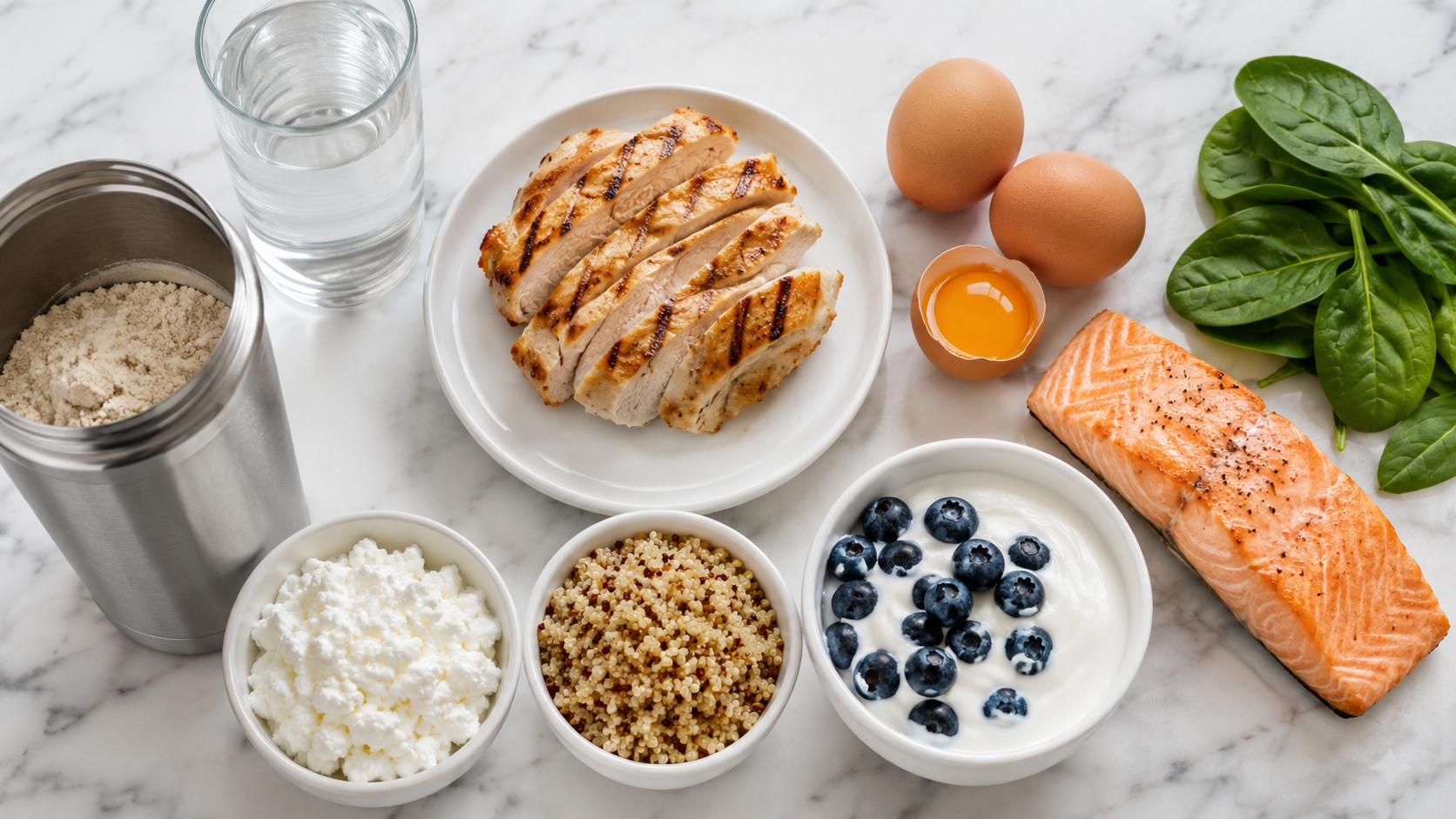
Best foods for weight loss and muscle gain, this is especially true for people who have had surgery. After surgery people can lose weight quickly but if they do not eat the right food they might lose muscle too.
At BodEvolve Bariatric Surgery Center in Texas, Dr. Frenzel and Dr. Holt work with patients to make sure they lose weight in a way. They want to help patients protect their muscle and keep their strength.
Losing weight. Keeping muscle is not about eating special foods or taking lots of protein supplements. It is about eating the food every day and getting enough protein. Patients who do this look better feel stronger and can keep their weight loss longer.
Why Muscle Preservation Matters During Weight Loss
When your body does not have calories it can use your fat or your muscle for energy. If you lose muscle it can make it harder to keep your weight loss. You might also feel weaker and less able to do things.
For people who have had surgery keeping muscle is even more important. This is because surgery can make you lose weight quickly but it can also make you lose muscle if you are not careful.
The comprehensive high-protein diet for weight loss guide explains protein physiology thoroughly, while the high-protein bariatric recipes guide explores the preparation aspect for post-operative patients.
The Foundation: Why Protein Matters Most
So what can you do to keep muscle when you are losing weight? First you need to eat protein. Protein is very important for building and repairing muscle.
Some good foods for weight loss and muscle gain are:
- Eggs. They have a lot of protein. Are very good for you.
- Chicken breast. It is very lean. Has a lot of protein.
- Yogurt. It has a lot of protein and can help you feel full.
- Salmon. It has a lot of protein and omega-3 fatty acids that are good for you.
- Cottage cheese. It has a lot of protein. Can help you feel full.
- Beef. It has a lot of protein and is very good for you.
- Lentils and beans. They have a lot of protein and fiber.
- Quinoa. It has a lot of protein. Is very good for you.
- Protein powder. It can help you get protein if you are having trouble eating enough food.
- Tofu and tempeh. They have a lot of protein. Are very good for you. The high-protein vegetarian meal plan has extended plant-based options.
Best Breakfast Foods for Weight Loss and Muscle Gain
The best breakfast foods for weight loss and muscle gain contain high protein, which sets the tone for muscle protein synthesis all day long. Studies show that patients consuming protein breakfasts tend to retain more muscle mass while losing weight compared to those who miss breakfasts or consume carbohydrate-loaded breakfasts.
Best breakfast meals include:
| Breakfast Option | Ingredients | Protein |
| 1 | 3-egg veggie scramble + ½ cup Greek yogurt | 30g |
| 2 | Protein smoothie (whey protein, Greek yogurt, berries, spinach) | 35g |
| 3 | Steel-cut oats + 1 scoop protein powder + chia seeds | 28g |
| 4 | Cottage cheese (1 cup) + 1 scrambled egg + berries | 24g |
| 5 | Chia pudding made with milk + protein powder + walnuts | 25g |
The full best breakfast foods for weight loss guide includes everything you need to know about the breakfast plan. The high-protein smoothies for weight loss guide provides information on the recipe for the smoothie choice.
In case of bariatric patients, bariatric breakfast ideas guide provides protein-rich breakfast meals in recommended portions.
Foods to Eat to Lose Weight and Build Muscle
When you are trying the best foods to eat to lose weight and build muscle, eat even more protein and calories. You also need to do resistance training to build muscle.
Some good foods to eat when you are trying to build muscle are:
- Potatoes. They have a lot of carbohydrates that can help you have energy for workouts.
- Oatmeal. It has a lot of carbohydrates that can help you have energy for workouts.
- Rice. It is easy to digest and can help you have energy for workouts.
- milk. It has a lot of protein and calories that can help you build muscle.
- Bananas. They have a lot of carbohydrates that can help you have energy, for workouts.
- Mixed nuts and nut butters. They have a lot of calories that can help you build muscle.
How to Lose Weight Without Losing Muscle After Bariatric Surgery
For people who have had gastric sleeve surgery or gastric bypass surgery the most important thing is to protect their muscle and lose weight in a healthy way. Once they have lost weight and are feeling better they can start to focus on building muscle.
So how can you lose weight without losing muscle after surgery? First you need to make sure you are eating protein at every meal. You also need to do resistance training to build muscle and protect your strength.
The key is to be consistent and patient. Losing weight and building muscle takes time. If you do it in a healthy way you can achieve your goals and feel great.
Bariatric patients should always eat protein first at every meal. This means eating protein before vegetables before grains and before fruit. The reason for this is that the smaller stomach after surgery fills up quickly. So whatever fills it up first is what counts most. Eating protein first ensures that bariatric patients hit their protein target before they run out of stomach space.
The second strategy is to eat five to six protein-rich meals per day. Of eating three big meals, which a bariatric stomach cannot handle bariatric patients should eat smaller meals more often. Each meal should have 15-25g of protein. If bariatric patients eat six meals with 20g of protein each they will get 120g of protein per day which’s exactly what they need.
A typical day for a patient might look like this:
- 7am breakfast: 2 eggs and half a cup of cottage cheese which is 20g of protein.
- 10am snack: yogurt with berries, which is 18g of protein.
- 12:30pm lunch: 3 oz of chicken breast and some small vegetables, which is 22g of protein.
- 3pm snack: A protein shake, which’s 25g of protein.
- 6pm dinner: 3 oz of salmon and some small roasted vegetables, which is 22g of protein.
- 9pm snack: Half a cup of cottage cheese which is 14g of protein.
- The total protein for the day is 121g.
The third strategy is to use protein supplements in the period after surgery. In the 3-6 months after surgery it is really hard for bariatric patients to eat enough solid food. So protein shakes and protein powder become very important. Most bariatric programs require patients to get 60-80g of protein per day even in the first month. This is almost impossible to do with solid food in the early weeks.
The fourth strategy is to start resistance training at week 4-6. This is where bariatric patients can really make a difference between losing muscle and keeping muscle. Food alone cannot prevent muscle loss when bariatric patients are losing weight quickly. The body needs a signal that says “keep this muscle it is being used”. That signal is resistance training, which includes weight lifting, bodyweight exercises and resistance bands.
Patients undergoing bariatric surgery who take up appropriate resistance exercises within six to eight weeks after surgery keep their muscles intact much better than those who delay such workouts. Appropriate best exercises after bariatric surgery are discussed in detail here.
The fifth strategy is to drink water and electrolytes. Dehydration makes muscle breakdown worse. Bariatric patients should drink least 64 ounces of water per day and may need to take extra electrolytes especially in the first 6 months to help muscle function.
The sixth strategy is to take vitamins. Vitamin deficiencies after bariatric surgery, such as B12, vitamin D, and iron, affect muscle functioning and metabolism. Patients who do not take the recommended vitamins after bariatric surgery experience greater muscle loss compared to those who comply.
The bariatric patients who follow all six strategies usually finish their weight loss journey with their muscle mass intact and often stronger than before surgery. This is because resistance training builds muscle even as fat is lost.
Best Foods to Eat to Lose Weight But Keep Muscle
In terms of losing weight but without wanting to add muscle mass for patients, the dietary solution is quite simple.
4-step regimen:
- Hit 1.0g of protein per pound of goal body weight daily.
- Spread protein across 4-6 meals so amino acid availability stays consistent.
- Include leucine- foods at most meals, such as whey protein, eggs, chicken, fish and Greek yogurt.
- Do resistance training 2-3 times per week which’s necessary for muscle preservation.
Bariatric patients have their post-operative eating habits designed by followingthe bariatric meal guide that designs these rules into actual eating practices. The best foods to eat to lose weight pillar provides the overall food menu while the high-protein vegetarian meal plan pillar deals with vegetarian versions.
Sample Daily Meal Plan for Weight Loss and Muscle Preservation
For a patient who wants to lose weight and keep muscle a sample daily meal plan might look like this:
- Breakfast: 3 scrambled eggs with spinach and half a cup of plain Greek yogurt with blueberries, which is 320 calories and 32g of protein.
- Mid-morning snack: 1 scoop of whey protein in almond milk, which is 180 calories and 22g of protein.
- Lunch: 4 oz of grilled chicken breast half a cup of quinoa and a green salad with olive oil, which is 400 calories and 32g of protein.
- Afternoon snack: Half a cup of cottage cheese with cucumber slices, which’s 160 calories and 14g of protein.
- Dinner: 4 oz of salmon roasted broccoli and cauliflower and a quarter of a baked sweet potato, which is 380 calories and 25g of protein.
- Evening protein: Half a cup of cottage cheese with cinnamon, which’s 150 calories and 14g of protein.
The total calories for the day are 1,490. The total protein is 139g.
In the case of bariatric patients, portions should be much smaller (1-3 oz per meal versus 3-4 oz), with protein supplements making up the difference. There is an extensive list of bariatric snacks guide to include between meals.
Speak to a BodEvolve Bariatric Surgeon
In addition to making you look good, keeping your muscles throughout weight loss means keeping your metabolism functioning, staying strong, and even making sure you keep losing weight for good. For those going after substantial weight loss, there really hasn’t been a more successful formula than combining proper nutrition, resistance training, and in some cases bariatric surgery.
For those considering gastric sleeve, gastric bypass, duodenal switch, or SADI surgery or those evaluating medical weight management using GLP-1 drugs, the BodEvolve team makes sure they have all aspects covered to ensure the best muscle sparing experience possible.
Those interested from Dallas, Arlington, Richardson, Texarkana and other DFW areas are invited to get in touch for a free consultation. They’ve done over 14,000 procedures, are accredited as a Center of Excellence by ASMBS, and boast two board-certified bariatric surgeons, namely Drs. Clayton Frenzel and Brian L. Holt.
Book Your Consultation
