
Anti inflammatory diet for weight loss is one of the most talked-about approaches in the nutrition world right now, and for good reason. When your body is stuck in a cycle of chronic inflammation, losing weight feels like an uphill battle no matter how hard you try. The fat does not just sit there passively. It actively produces inflammatory signals that make your metabolism sluggish, your hunger hormones unpredictable, and your energy levels inconsistent. So when people ask whether changing what they eat can genuinely break that cycle, the honest answer is yes. Eating in a way that calms inflammation does not just help you feel better from the inside. It creates the biological conditions your body needs to actually release stored fat and keep it off.
Weight Loss Anti Inflammatory Diet: Why Inflammation Is the Hidden Roadblock
Most people focus on calories when they think about weight loss, but chronic low-grade inflammation is just as important a factor. When your immune system stays in a constant state of low alert, it disrupts insulin sensitivity, elevates cortisol, and makes your fat cells more resistant to breaking down. This is not a minor inconvenience. Over time it becomes a physiological wall between you and real, lasting progress.
A weight loss anti inflammatory diet works by removing the foods that trigger this ongoing immune response and replacing them with foods that help regulate it. The shift is not dramatic or complicated. It centers on whole foods, healthy fats, fiber-rich vegetables, and quality proteins that your body can actually use efficiently.
Foods That Drive Inflammation (and Should Come Off Your Plate)
- Refined sugars and high fructose corn syrup
- Processed seed oils like soybean and corn oil
- White bread, pasta, and other refined grains
- Packaged snacks, fast food, and ultra-processed items
- Excessive alcohol and sugary beverages
These foods spike blood sugar repeatedly throughout the day, keeping insulin elevated and fat storage turned on. When they come out of your regular rotation, many people notice improvements in energy, bloating, sleep, and cravings within the first two weeks.
How an Anti Inflammatory Diet for Weight Loss Works Differently After Bariatric Surgery
Most conversations about anti inflammatory diet focus on people who have not had surgery yet. But for bariatric patients, the stakes around inflammation are actually higher, not lower. Your body is healing, your gut microbiome is shifting, and your metabolism is resetting all at the same time. In this phase, the foods you eat are not just fuelling your day. They are either supporting that entire recovery process or quietly working against it. Understanding how inflammation specifically behaves in a post-surgical body gives you a real advantage in making your results last well beyond the first year.
Your Stomach Size Changed but Your Inflammation Triggers Did Not
After surgery, portions shrink but the foods that fuel chronic inflammation are just as disruptive in smaller quantities. Processed carbs, seed oils, and added sugars still spike insulin and activate inflammatory pathways even in a tablespoon-sized serving. The anti inflammatory diet becomes even more important post-surgery because your recovery window depends on keeping systemic inflammation low.
Meal Timing Matters More Than You Think
Anti Inflammatory Meal Timing Guide for Bariatric Patients
Time of Day | What to Eat | Why It Helps |
Morning (within 1 hour of waking) | Protein first, then soft fruit like berries | Stabilises blood sugar early, reduces cortisol-driven inflammation |
Midday | Leafy greens, lean protein, olive oil drizzle | Peaks your nutrient absorption window post-surgery |
Afternoon snack | Walnuts or a small portion of Greek yoghurt | Omega-3s and probiotics calm gut inflammation between meals |
Evening meal | Fatty fish or eggs with cooked vegetables | Light on digestion, high on anti-inflammatory compounds |
Avoid after 8 PM | Refined carbs, sugary drinks, processed snacks | Late eating elevates inflammatory markers overnight |
Protein Protects Muscle While the Diet Reduces Fat-Driven Inflammation
One underappreciated benefit of combining an anti inflammatory diet with post-bariatric care is that adequate protein intake actively reduces muscle inflammation during rapid weight loss phases. Muscle tissue lost during fast weight loss releases its own inflammatory signals. Keeping protein at the centre of every meal protects against this while the anti-inflammatory foods handle systemic fat-related inflammation simultaneously.
Anti Inflammatory Diet and Weight Loss: What the Research Actually Shows
The connection between an anti inflammatory diet and weight loss is not just anecdotal. Multiple studies have found that diets high in antioxidants, omega-3 fatty acids, and polyphenols reduce markers of systemic inflammation like C-reactive protein and interleukin-6. As those markers come down, insulin sensitivity tends to improve, cortisol patterns normalize, and the body becomes more responsive to its own hunger and fullness signals.
This is particularly relevant for people dealing with weight that has been resistant to conventional approaches. If you have tried calorie restriction before and hit a wall, chronic inflammation may have been working against you the whole time.
How Gut Health Ties Into All of This
Your gut microbiome plays a bigger role in inflammation than most people realize. A diet full of processed food feeds the type of gut bacteria that produce inflammatory byproducts, while a diet rich in fiber and fermented foods helps the strains that keep the gut lining strong and inflammation low. Incorporating best prebiotic foods and understanding the difference between prebiotics vs probiotics for weight loss is a smart starting point for anyone building an anti-inflammatory eating plan from scratch.
Lose Weight Anti Inflammatory Diet: A Practical Week One Approach
Knowing the theory is one thing. Actually putting it into practice is where most people get stuck. Here is a realistic, non-overwhelming way to start:
Build Your Plate Around These Categories
- Proteins: Wild-caught salmon, sardines, eggs from pasture-raised hens, chicken breast, turkey, legumes. These provide the amino acids needed for muscle preservation while losing fat, and fatty fish in particular are packed with omega-3s that directly lower inflammatory markers.
- Vegetables and Fruits: Leafy greens like spinach and kale, cruciferous vegetables like broccoli and Brussels sprouts, berries of all kinds, tomatoes, and avocados. The deeper and more varied the color on your plate, the wider the range of anti-inflammatory compounds you are getting.
- Healthy Fats: Extra virgin olive oil, avocado oil, nuts, seeds, and whole avocados. These fats support hormone production, reduce oxidized LDL, and slow digestion in a way that prevents blood sugar spikes.
- Whole Grains and Legumes: Brown rice, quinoa, oats, lentils, and black beans. These provide steady fuel without the glucose rollercoaster that comes from refined carbs. For those who prefer a lower carb approach, the low carb diet for weight loss guide covers how to do this while still keeping inflammation in check.
Habits That Amplify the Anti-Inflammatory Effect
- Drink plenty of water throughout the day, around half your body weight in ounces as a starting target
- Get at least seven hours of sleep. Chronic sleep deprivation is itself inflammatory
- Manage stress actively. Elevated cortisol from chronic stress triggers the same fat storage mechanisms as inflammatory food. Understanding the role of cortisol and hormonal belly fat can change how you approach the emotional side of weight loss
- Move daily, even if it is just a 20-minute walk. Gentle movement reduces inflammatory cytokines
Anti Inflammatory Foods for Weight Loss: The Ones Worth Prioritizing
Not all healthy foods carry the same anti-inflammatory punch. Some earn their spot on the plate more than others when your goal is specifically anti inflammatory foods for weight loss. Top Performers to Know:
- Fatty fish (salmon, mackerel, sardines): Rich in EPA and DHA, these omega-3s are among the most studied anti-inflammatory compounds in nutrition. Aim for two to three servings per week.
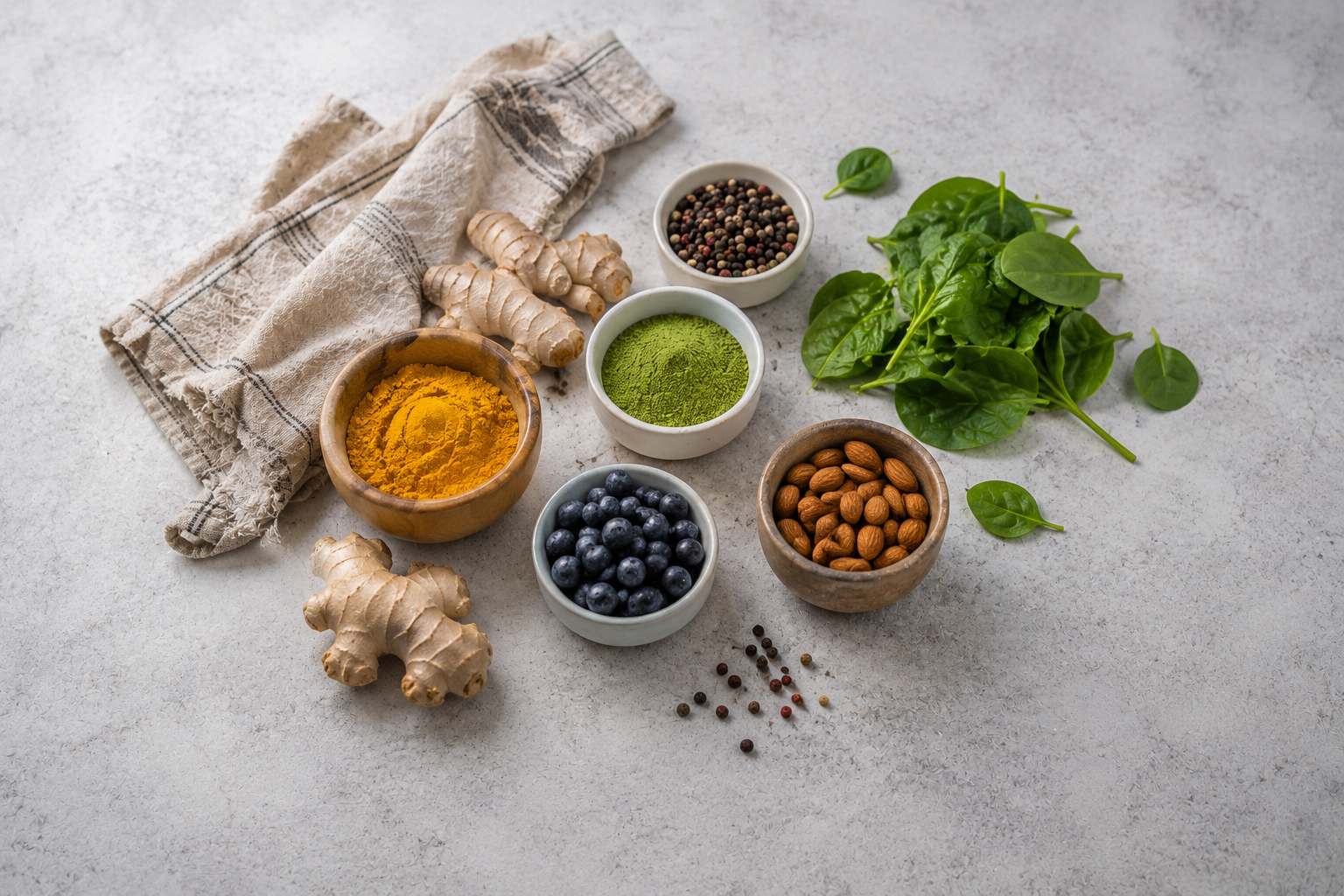
- Turmeric with black pepper: Curcumin in turmeric has been shown in multiple studies to reduce several inflammatory markers. Adding black pepper increases its absorption significantly. Stir it into soups, rice, or even scrambled eggs.
- Blueberries and other dark berries: The anthocyanins in berries help fight oxidative stress, which is one of the drivers of low-grade inflammation. They also have a low glycemic impact, making them one of the best sweet options for someone watching blood sugar.
- Extra virgin olive oil: A daily source of oleocanthal, a natural compound with anti-inflammatory properties similar in mechanism to ibuprofen. This is a kitchen staple worth spending a little more on.
- Walnuts and flaxseeds: Plant-based omega-3 sources that also provide fiber. Easy to add to oatmeal, yogurt, or salads without overhauling anything.
- Green tea and matcha: Both are rich in EGCG, a catechin with documented anti-inflammatory effects. Matcha for weight loss covers how this works in more detail for those curious about adding it regularly.
Pairing these foods with a consistent Mediterranean diet for weight loss framework gives you a structured template that already lines up closely with anti-inflammatory eating principles.
When Diet Alone Is Not Enough: BodEvolve Is Here for You
Anti inflammatory diet for weight loss is a powerful tool, and for many people it creates meaningful, lasting results when applied consistently. But there are situations where diet, exercise, and lifestyle changes have genuinely been done right and the weight still does not move in a way that is proportional to the effort. Metabolic adaptation, hormonal imbalances, and years of yo-yo dieting can all reset the body’s thresholds in ways that nutrition alone cannot fully overcome.
This is exactly the space where BodEvolve Bariatric steps in. Under the care of Dr. Clayton Frenzel and Dr. Brian Holt, both of whom bring specialized expertise in metabolic and bariatric medicine, the team works with patients to understand what is actually happening physiologically before recommending a path forward. Whether that means medical weight management, a procedure like gastric sleeve surgery or gastric bypass surgery, or simply a more structured nutritional strategy, everything is personalized.
BodEvolve has locations in Arlington, Richardson, Dallas, or Texarkana, making expert support accessible across the Dallas-Fort Worth region and beyond. If you have been doing everything right and still feel stuck, a consultation is worth having. The team at BodEvolve does not push procedures. They help you figure out what the right next step actually is for your body and your goals.
