
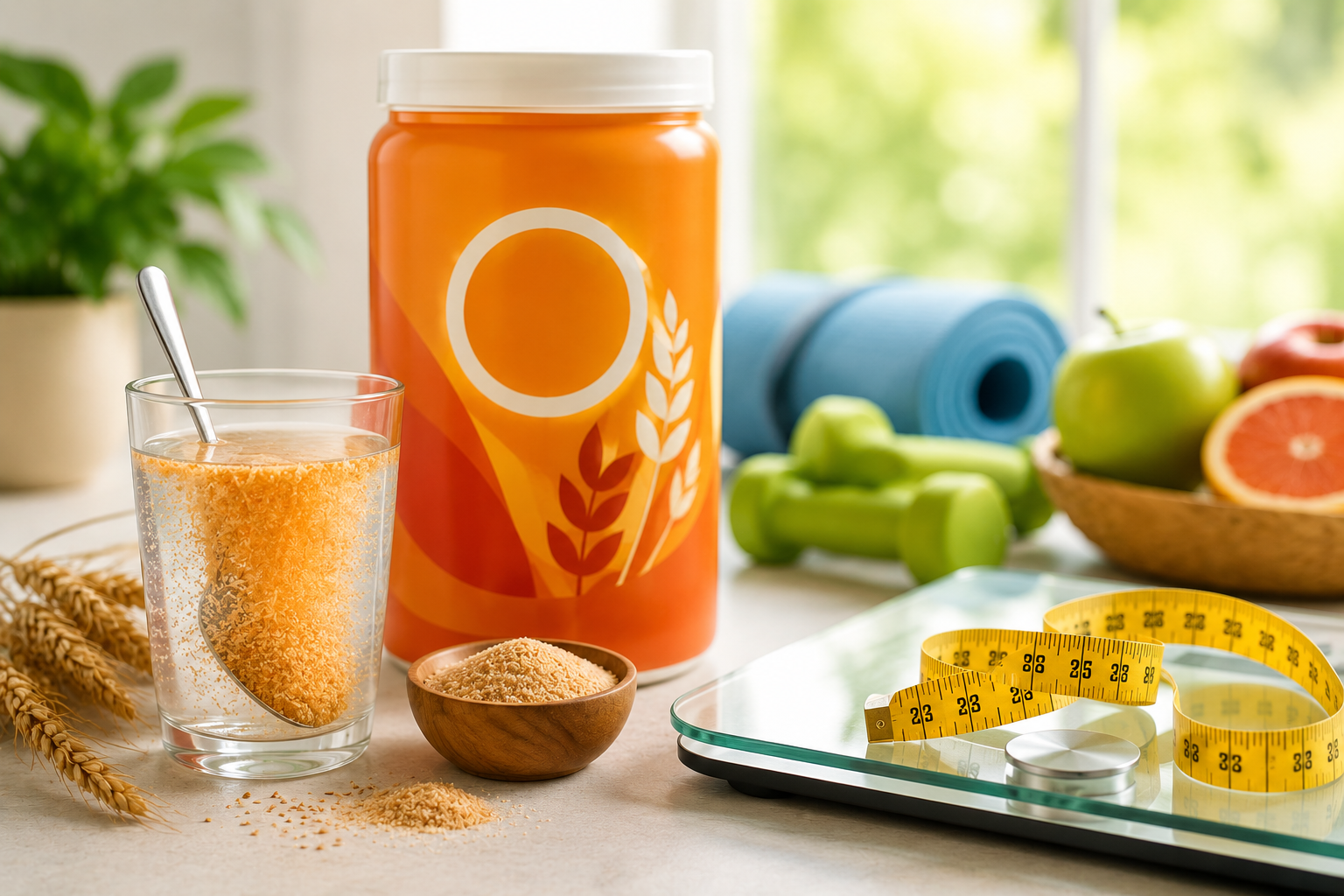
Does Metamucil help you lose weight? Yes, but only modestly. The psyllium husk in Metamucil forms a gel in your stomach that keeps you full longer, slows how fast carbs hit your blood sugar, and makes it easier to eat less without feeling starved. It is not a fat burner, and it won’t work on its own. Paired with a calorie-controlled diet, clinical research shows it can lead to small but real reductions in weight, BMI, and waist size, the same pattern Dr. Clayton Frenzel and the BodEvolve team see in patients who stick with it.
Metamucil and Weight Loss: What the Science Actually Says
Here’s the thing about fiber and weight loss – it’s not flashy, but the research is pretty solid. Psyllium husk, which is the main ingredient in Metamucil, is a type of soluble fiber. When you mix it with water and drink it, it doesn’t just pass through your gut like most things do. It absorbs liquid and turns into a thick, gel-like substance inside your digestive tract. That gel then moves slowly through your system, and that slowness is actually the whole point.
Because food is moving more slowly, your body takes longer to pull nutrients out of it. Your blood sugar rises more gradually after meals instead of spiking sharply. And your stomach stays occupied for longer, which means your brain gets that “okay, we’re full” signal much sooner than it usually would.
Key Benefits of Psyllium Husk for Weight Management
To put it plainly, here is what psyllium husk is actually doing for you:
- Reduces hunger signals: That gel takes up real physical space in your stomach. Your stomach walls stretch, and that stretch tells your brain you’ve eaten enough – even if you haven’t had a huge meal.
- Lowers blood sugar spikes: When glucose enters your bloodstream slowly instead of all at once, you don’t get that sharp crash an hour later that sends you hunting for something sugary.
- Supports gut health: Your gut bacteria actually feed on soluble fiber. A healthier gut microbiome is showing up in more and more weight research as something that genuinely matters.
- May lower calorie absorption slightly: Some research suggests that fiber can bind to a small portion of the fat and calories you eat and carry them out before they get fully absorbed. The effect is modest, but it’s real.
None of this is magic. But taken together, these effects can make a meaningful dent in how much you eat day to day – which is, at the end of the day, what drives weight loss.
Best Time to Take Metamucil for Weight Loss
Timing with Metamucil is one of those things that sounds minor but actually shifts how well it works. The idea is simple – you want the fiber to be doing its thing in your stomach right when you’re about to eat, so you end up eating less naturally.
Morning (Before Breakfast)
Taking it 20 to 30 minutes before breakfast is probably the most commonly recommended window, and for good reason. A lot of people either eat too much at breakfast because they wake up ravenous, or they skip it entirely and end up overeating later in the day. Taking Metamucil before that first meal gives the gel time to form and settle, so you sit down to eat already feeling like you’ve taken the edge off your hunger. It’s a subtle effect, but over weeks it adds up.
Before Lunch or Dinner
Your biggest meal of the day is also your biggest opportunity. If you tend to pile the plate high at dinner, or if lunch is where you always end up ordering more than you planned, that’s the time to take it. Give it about 20-30 minutes before you eat and see how your portions shift on their own.
What to Avoid
Don’t take it right before lying down for bed. And please, please drink enough water with it. Psyllium without adequate water doesn’t form that helpful gel – it can actually clump up and cause a blockage. That’s the opposite of helpful.
| Timing | Benefit | Notes |
| 30 min before breakfast | Takes the edge off morning hunger | Good for people who tend to overeat early |
| Before your largest meal | Natural portion reduction | Works well before dinner for most people |
| Mid-afternoon | Curbs snack cravings | Helpful if you graze between meals |
| Right before bed | Not recommended | Hydration is usually lower at night |
How to Take Metamucil for Weight Loss
It’s one of those products where doing it wrong negates most of the benefit. Here’s the practical version:
Step-by-Step Instructions
- Start low. If you’ve never taken fiber supplements regularly, don’t jump straight to a full dose. Your gut needs time to adjust – otherwise you’ll spend a few uncomfortable days bloated and gassy, and you’ll probably quit. Half a dose for the first week is plenty.
- Use enough water. At minimum 8 ounces, but more is better. Stir it quickly and drink it before it starts to gel in the glass. It gets thick fast.
- Keep drinking water all day. The fiber keeps working as it moves through your system, and it needs water to do that properly. If you’re not already drinking 6 to 8 glasses a day, start building that habit alongside the Metamucil.
- Pick a time and keep it. Random timing means random results. When you take it at the same time every day, your body starts to adapt and the appetite effects become more predictable and consistent.
Is Metamucil Good for Weight Loss?
It is – genuinely. But only if you understand what it can and can’t do. Clinical research has found that regular psyllium supplementation, when combined with a calorie-controlled diet, leads to measurable reductions in body weight, BMI, and waist circumference. Those results are real.
The tricky part is that word “combined.” Metamucil is not doing the heavy lifting here. Your diet is. What Metamucil does is make it easier to eat less without feeling deprived – it lowers the volume of hunger you’re fighting against. If your diet is still full of processed food and extra calories, a fiber supplement isn’t going to outrun that. No supplement will.
Think of it less like a weight loss product and more like a daily support tool. Pairing it with a structured eating approach, like what’s laid out in this guide on DASH diet for weight loss, gives it real context to work within. A good dietary framework plus daily fiber is a much stronger combination than either one alone.
For someone managing mild to moderate weight concerns who is otherwise healthy, Metamucil can be a solid part of a daily routine. But for anyone dealing with obesity as a medical condition, or with weight that’s significantly affecting their quality of life, fiber is just not in the same conversation as proper medical care.
The team at BodEvolve Bariatric Surgery Center sees patients every day who have spent years trying everything – supplements, crash diets, programs, pills – before finally getting real answers. If that sounds familiar, it’s worth having an actual conversation with someone who specializes in this.
How to Use Metamucil for Weight Loss as Part of a Bigger Plan
Nobody loses meaningful weight from one thing. Metamucil works best when it’s slotted into a plan that has a few other moving parts – what you eat, how much you move, and how you track your progress.
Pair It with a High-Protein Diet
Fiber and protein are arguably the two most filling nutrients you can eat. When you combine them, you get a really powerful brake on overeating. If you’re already eating protein-forward meals, adding Metamucil before those meals can make each one stretch even further in terms of how full you feel afterward. The 7-day protein diet plan for weight loss gives you a real, meal-by-meal framework that works well alongside a daily fiber habit.
Track Your Calories Alongside It
Metamucil does reduce hunger, but it doesn’t make you immune to overeating. Keeping a food log – even a rough one – helps you see whether the appetite reduction is actually translating into fewer calories. Sometimes people feel less hungry but still eat the same amount out of habit. Tracking cuts through that blind spot.
Add Light Movement
Walking after meals does something that Metamucil also does – it slows glucose absorption and keeps blood sugar more stable. When you combine the two, the effect on post-meal blood sugar is noticeably better than either approach on its own. And you don’t need to do anything intense. A 15-20 minute walk is enough. If you want to figure out what kind of movement is going to actually move the needle for you, the guide on the best cardio for weight loss breaks it down based on different fitness levels and goals.
For anyone who wants a proper, physician-led structure around their nutrition and weight loss plan, BodEvolve’s Medical Weight Management program is worth looking into. It goes well beyond generic recommendations.
How Does Metamucil Work for Weight Loss: The Biology Behind It
If you want to understand why this fiber actually works, it helps to follow it through your digestive system step by step. How does Metamucil work for weight loss when you zoom in on biology? Here’s what’s happening.
Inside Your Digestive Tract
The moment psyllium hits your stomach with water, it starts pulling liquid in and forming a gel. This isn’t a figure of speech – it literally thickens into a substance that physically takes up space in your stomach. Your stomach walls detect that pressure and stretch, and that stretch signal travels up the vagus nerve to your brain. Your brain interprets it as fullness. So before you’ve even finished digesting your meal, your body is already starting to wind down the hunger response.
When this gel moves into your small intestine, it starts wrapping around the carbohydrates from your food and slowing down how quickly they get broken down and absorbed. Normally, carbs hit your bloodstream relatively fast, causing a sharp rise in blood sugar and then a crash that leaves you hungry again an hour or two later. With psyllium in the mix, that process is stretched out over a longer window. Your energy stays more even. Your cravings stay quieter.
Down in the large intestine, psyllium becomes food for the beneficial bacteria that live there. These bacteria ferment the fiber and produce compounds called short-chain fatty acids, which play a role in appetite regulation and how efficiently your body handles fat. There’s growing evidence that the gut microbiome has a significant influence on body weight, and feeding it well with soluble fiber is one of the most practical ways to support it. That said, protecting your muscle while losing fat matters just as much as gut health, and this piece on how to lose weight with the best foods for weight loss and muscle gain after bariatric surgery covers that side of the equation in detail.
| Gut Location | What Psyllium Does | Why It Matters for Weight |
| Stomach | Forms a thick gel, fills space | You feel full earlier in a meal |
| Small intestine | Slows carbohydrate breakdown | Blood sugar stays steadier, cravings drop |
| Large intestine | Feeds good gut bacteria | Supports metabolism and appetite hormones |
Why Fiber Alone Isn’t Always Enough: When to Consider Bariatric Surgery
Let’s be straightforward here. Metamucil is useful. It works. But it was built for digestive health and general dietary support, not for treating obesity as a disease. And obesity is a disease – one that doesn’t respond to fiber the way it responds to properly matched medical or surgical care.
A lot of people reach a point where they’ve done everything right on the lifestyle side and still can’t move the scale the way they need to. If that’s where you are, it’s not a personal failure – it’s a physiological reality that often needs a more targeted approach. Before going the surgical route, many people also explore prescription medication options, and this guide on what is the strongest weight loss prescription pill from BodEvolve’s bariatric team is a useful read to understand what’s available and what’s realistic.
For people with a BMI above 35, or above 30 alongside conditions like type 2 diabetes or sleep apnea, bariatric surgery produces outcomes that simply cannot be replicated by any supplement or medication. BodEvolve offers Gastric Sleeve Surgery, Gastric Bypass Surgery, Duodenal Switch Surgery, and SADI-S Surgery – each suited to different patient profiles and weight loss needs, with consistently strong long-term outcomes.
Dr. Clayton Frenzel, who is triple board-certified and dual fellowship-trained in bariatric and cosmetic surgery, and Dr. Brian Holt, a metabolic specialist with deep expertise in obesity-related conditions, lead the surgical team at BodEvolve. Between them, they have performed over 14,000 procedures. Their patient satisfaction rate sits at 98%, which in this field is extraordinary. That kind of sustained track record is not something you find everywhere.
For people who aren’t ready for or interested in surgery, the Medical Weight Management program offers a supervised, non-surgical path. And for anyone who has had a previous bariatric procedure that isn’t giving them the results they expected, Revision Weight Loss Surgery is also an option worth discussing.
Ready to Go Further Than a Fiber Supplement? Start Here
Metamucil for weight loss has a real place in a smart daily routine. It curbs hunger, keeps blood sugar more stable, supports your gut, and makes it a little easier to eat less without white-knuckling every meal. If you use it consistently as part of a structured plan, it can genuinely contribute to your progress.
But there is a ceiling to what it can do, and most people who are reading this already know whether they’ve hit that ceiling or not. If you’ve been doing the right things for a long time and not getting where you want to go, that’s information. It means your body might need something more targeted than what any supplement can offer.
BodEvolve Bariatric Surgery Center has helped thousands of DFW patients get past that ceiling – people who tried everything before finally getting the right support. If you want to have that conversation, their team is available across four locations. You can book a consultation at Dallas, Arlington, Richardson and Texarkana. Wherever you are in DFW, there’s a BodEvolve location close to you.
