
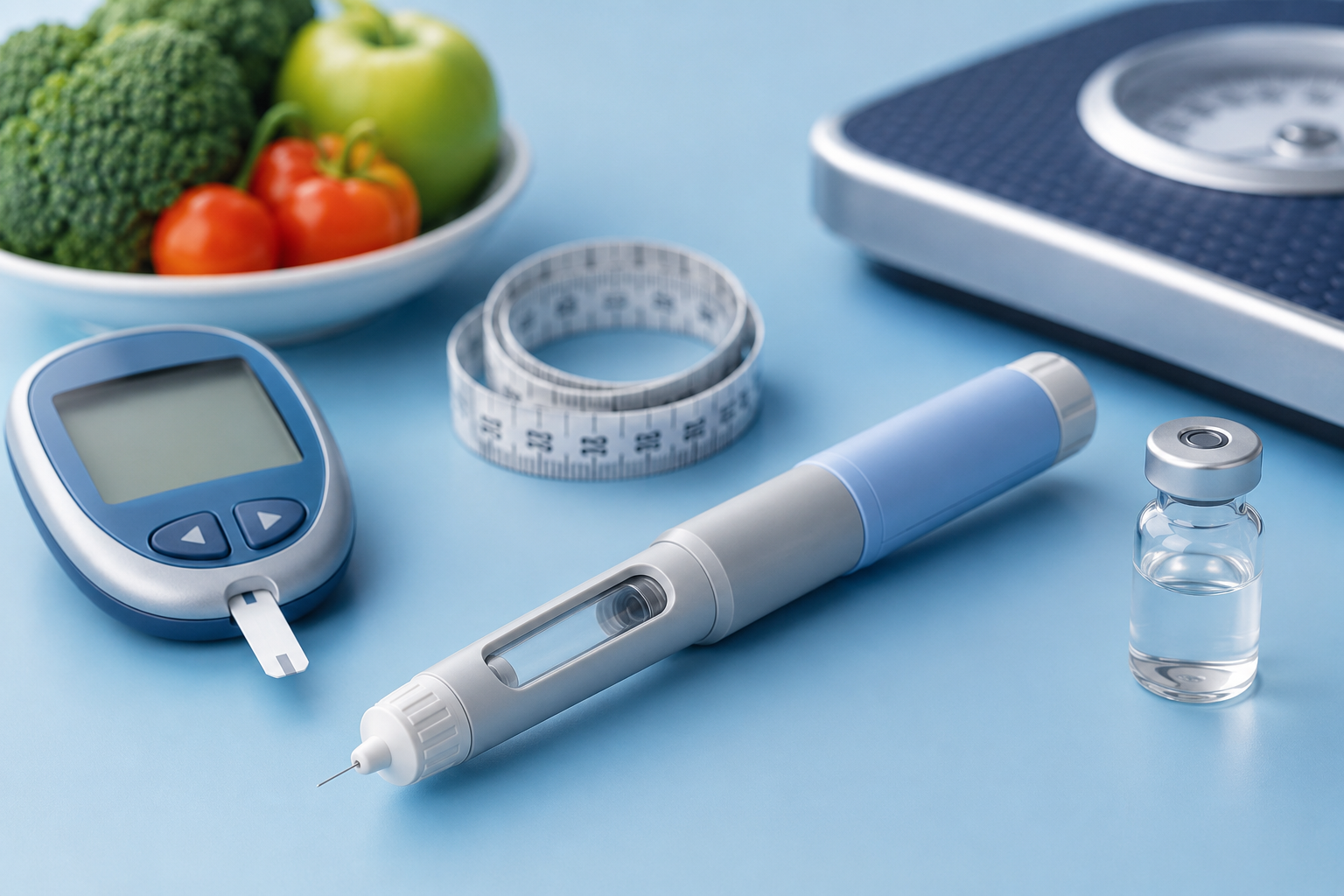
A few years ago, almost nobody outside an endocrinologist’s office could pronounce “semaglutide.” Today it feels like every other conversation circles back to it. A friend drops two dress sizes, a coworker’s appetite seems to vanish overnight, and suddenly everyone wants to know about the diabetes weight loss drug that started it all.
Here’s the part most articles won’t tell you straight: these medications are genuinely impressive and they come with a catch that matters more than the side effects everyone Googles. If you’re weighing your options, you deserve the honest version, not the hype. So let’s get into it.
How a Diabetes Weight Loss Drug Actually Works in Your Body
Most of these medications belong to a class called GLP-1 receptor agonists. In plain English, they mimic a hormone your gut releases after you eat. That hormone tells your brain you’re full, slows how fast your stomach empties, and helps your body manage blood sugar. The weight loss is partly a side effect of the appetite suppression which is exactly why a diabetes drug that causes weight loss became a weight-loss story in the first place.
The two names you’ll hear most often are semaglutide (sold as Ozempic for diabetes and Wegovy for weight management) and tirzepatide (Mounjaro and Zepbound). Tirzepatide is a little different it works on two hormone pathways instead of one which is why a lot of patients ask about it specifically. These are the real engines behind the trend of using a diabetes weight loss drug for shedding pounds, even in people who don’t have diabetes at all.
What Is the Best Diabetes Drug for Weight Loss Right Now?
The most effective diabetes weight loss drugs currently available are tirzepatide (Mounjaro, Zepbound) and semaglutide (Ozempic, Wegovy). Here is how they compare:
- Tirzepatide: Targets GLP-1 and GIP receptors. Average weight loss of 15 to 22%
of body weight in clinical trials. Weekly injection. - Semaglutide: Targets GLP-1 receptors. Average weight loss of 10 to 15% of body
weight in clinical trials. Weekly injection. - FDA-approved status: Both are approved for type 2 diabetes and weight management,
under different brand names. - Best fit: Determined by A1C, insurance, side effect tolerance, and physician evaluation.
Side Effects of Diabetes Weight Loss Drugs: The Honest Picture
No honest article skips this part. The most common diabetes drug for weight loss side effects are gastrointestinal nausea, constipation, diarrhea, and that “I ate three bites and I’m done” feeling that’s helpful right up until it isn’t. Most fade as your body adjusts. A smaller number of people deal with more serious issues, which is why these drugs are prescription-only and require monitoring.
The side effect nobody puts in the headline, though, is muscle loss. Rapid weight loss without resistance training and adequate protein means a chunk of what you’re losing isn’t fat it’s lean muscle, the very tissue that keeps your metabolism humming. That sets up the problem we need to talk about next.
What Happens When You Stop Taking a Diabetes Weight Loss Drug?
This is where the glossy ads go quiet, and where you should pay attention.
A diabetes weight loss drug is not a course you finish it’s a medication you stay on. Clinical trials are blunt about it: when people stop taking semaglutide or tirzepatide, a large share of the weight comes back, often within a year. Your appetite returns, the fullness signal fades, and the body you worked toward starts slipping. For many patients this means injections, and the monthly cost that comes with them, essentially for life.
So the real question isn’t “does a drug for diabetes and weight loss work?” It clearly does. The real question is: can you sustain it physically, financially, and indefinitely? For some people, yes. For others, the honest answer is no, and that’s not a failure. It’s just information that points toward a different solution.
When Bariatric Surgery Outperforms a Diabetes Weight Loss Drug
Here’s the comparison the pharma marketing won’t make for you. Bariatric surgery doesn’t just suppress your appetite while you take it it changes your anatomy and your gut hormones in a durable way. Procedures like the gastric sleeve and gastric bypass consistently produce 60–80% excess weight loss that holds over the long term and they resolve type 2 diabetes in roughly 85% of patients, often before they even leave the hospital.
That last point is the one to sit with. A type 2 diabetes weight loss drug manages your blood sugar for as long as you keep taking it. Surgery can put the disease into lasting remission. For a lot of patients carrying significant weight and metabolic disease, that’s not an incremental difference it’s the whole ballgame.
It’s also worth knowing that the two approaches aren’t enemies. Many of our patients use a GLP-1 medication as a bridge before surgery, or as a tool afterward to fine-tune their results. The point isn’t drugs or surgery it’s building the plan that actually lasts. At BodEvolve, dr Frenzel and our team map that out with you based on where you actually are, not where a billboard says you should be.
And if cost is the thing holding you back, don’t assume surgery is out of reach. A lot of plans cover it, and our team handles the paperwork including the tricky cases, like how to get insurance to cover revision bariatric surgery when a previous procedure didn’t deliver.
Weight Loss Drug for Type 1 Diabetes: A Critical Distinction
Quick but important distinction, because people search this a lot. GLP-1 medications are designed and approved for type 2 diabetes and weight management. A weight loss drug for type 1 diabetes is a very different and more delicate conversation type 1 is an autoimmune condition, not an insulin-resistance condition, and these drugs aren’t a standard treatment for it. If you have type 1 and are curious about weight management, that decision belongs entirely with your endocrinologist. Don’t take cues from type 2 marketing.
Ready for Results That Don’t Reset When the Prescription Runs Out?
A diabetes weight loss drug can be a powerful first step but if you’re tired of solutions that only work while you’re paying for them, it may be time to talk about something built to last. Our board-certified surgeons see patients across Arlington, richardson, Dallas, and texarkana.
Book your consultation today and let’s build a plan around the results you’ll actually keep.
