
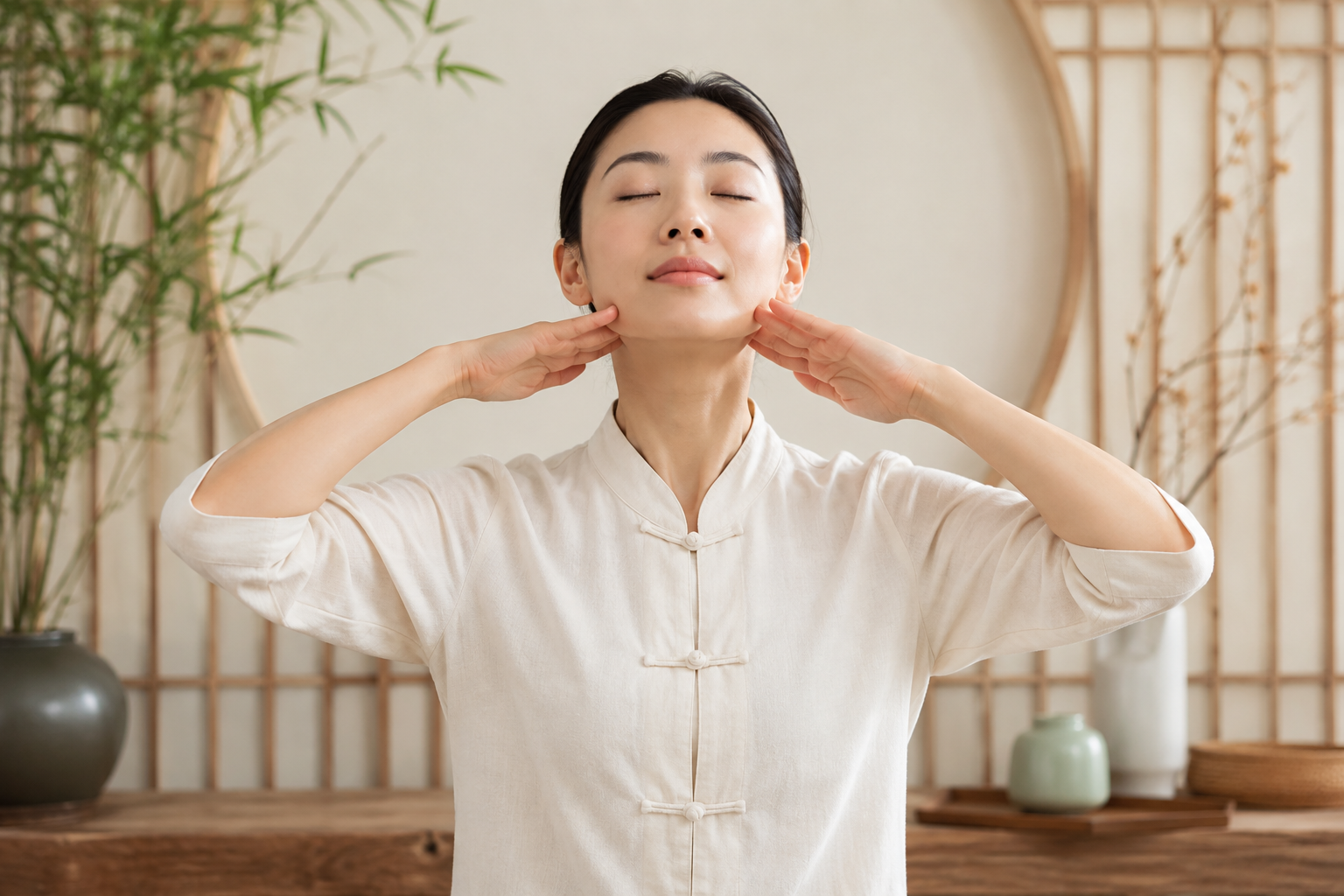
Chinese lymphatic drainage exercises are slow, rhythmic movements drawn from traditional Chinese practices such as tai chi, qigong and pai da tapping, used to encourage lymph fluid to move through the body. They typically combine gentle patting along the arms and legs, deep diaphragmatic breathing, and stretches that open the armpits, groin and neck where lymph nodes cluster. A session usually runs 10 to 20 minutes and needs no equipment.
Here is what the practice actually does, the seven movements most commonly taught, and where the claims about it get exaggerated.
What Are Chinese Lymphatic Drainage Exercises?
Your lymphatic system has no pump. Unlike blood, which the heart pushes around, lymph fluid only moves when the muscles around the vessels squeeze them, when you breathe deeply, and when the skin is stimulated. This is the physiological reason movement based lymph work has any effect at all.
Chinese lymphatic drainage exercises apply that principle through three techniques: tapping or patting the limbs along meridian lines, holding gentle stretches that open the major node clusters, and coordinating both with slow breathing. It sits in the same family as somatic exercises and tai chi walking, where the intensity is low but the sequencing matters more than the effort.
Ancient Chinese Lymphatic Drainage Exercise: Where the Practice Comes From
The ancient Chinese lymphatic drainage exercise most people are describing is pai da, a patting practice recorded in Chinese wellness traditions for centuries. Practitioners would strike the inner elbows, backs of the knees and armpits with a cupped hand, believing it cleared stagnation from the body.
Traditional Chinese medicine had no concept of the lymphatic system as Western anatomy defines it. Lymph vessels were not described until the seventeenth century in Europe. What early practitioners were working with was the meridian model, and the overlap with modern lymphatic mapping is partial rather than exact. That does not make the movements useless. It does mean the historical framing and the physiological explanation are two separate things, and honest sources say so.
Chinese Medicine Lymphatic Drainage Exercises and the Qi Connection
In Chinese medicine lymphatic drainage exercises are framed around qi and the movement of fluid, not around nodes and vessels. Stagnation is treated as the root problem, and swelling, heaviness or puffiness are read as signs the body is not circulating properly.
Modern practitioners often blend the two models, which is where a lot of confusion comes from. The useful takeaway is that both frameworks point at the same intervention: move gently, breathe deeply, and do it regularly. If you are curious how other traditional practices hold up under scrutiny, our look at whether acupuncture works for weight loss applies the same lens.
Chinese Lymphatic Drainage Exercises Benefits
The realistic Chinese lymphatic drainage exercises benefits are these:
- Reduced fluid retention and puffiness. Movement genuinely helps shift interstitial fluid, which is why swollen ankles improve after walking.
- Less post-exercise heaviness. Gentle circulation work aids recovery between harder sessions.
- Improved mobility in the shoulders, hips and neck, since most of the stretches target those areas.
- A measurable stress drop. Slow breathing shifts you into a parasympathetic state, and chronic stress does contribute to weight gain.
What they do not do is burn fat, detoxify organs or replace medical treatment for lymphedema. The bloating that people mistake for fat is often exactly that, and the difference is explained in belly fat vs bloating. Fluid shifts also get mistaken for fat loss on the scale, covered in how to lose water weight.
Chinese Exercises for Lymphatic Drainage: 7 Movements to Try
Do these in order, breathing slowly through the nose. The whole sequence takes about 15 minutes.
- Diaphragmatic breathing. Hand on the belly, inhale for four counts, exhale for six. Ten rounds. The pressure change in your chest is the single strongest driver of lymph flow in the body, which is why this goes first.
- Neck rolls with shoulder drops. Slow half circles, chin to chest, five each direction. Opens the cervical nodes.
- Armpit patting. Cup your hand and pat the armpit hollow lightly for 30 seconds each side. Firm enough to feel, never enough to sting.
- Inner elbow patting. Same technique, 30 seconds each arm, working from wrist toward elbow.
- Behind the knee patting. Sitting, pat the hollow behind each knee for 30 seconds.
- Standing calf pumps. Rise onto the toes and lower, 30 reps. The calf is often called the second heart because of how much fluid it returns upward.
- Ankle circles and toe points. Twenty each direction per foot, ideally with the legs elevated.
The bouncing principle behind step six is the same one covered in rebounding for weight loss, and the low intensity structure will feel familiar if you have tried wall pilates or yoga.
Chinese Exercise for Lymphatic Drainage of the Face and Neck
Facial work is the most searched version of this practice, and the most oversold. The Chinese exercise for lymphatic drainage of the face uses fingertips rather than palms, always moving downward toward the collarbone, because that is where facial lymph actually drains.
Start at the centre of the forehead and sweep outward to the temples, then down the sides of the neck. Ten passes, feather light. Real facial lymph vessels sit just under the skin, so pressing hard achieves nothing except irritation. The visible depuffing is temporary, lasting hours rather than days, and it is fluid moving rather than tissue changing.
Lymphatic Drainage Exercises Chinese Practitioners Use for Legs and Arms
For the limbs, lymphatic drainage exercises Chinese practitioners teach always work from the extremity toward the trunk. Ankle to knee, knee to hip. Wrist to elbow, elbow to armpit. Working the wrong direction pushes fluid toward a dead end.
Leg swings, hip circles and slow lunges all fit here, as does simply walking. If you want a version with a genuine cardiovascular return alongside the circulation benefit, incline walking does both, and NEAT based movement explains why frequent light activity beats one long session for fluid management.
Chinese Lymphatic Drainage Exercises YouTube Videos: What to Look For
Searching Chinese lymphatic drainage exercises on YouTube returns thousands of results of wildly varying quality. Three filters help.
Check whether the instructor names a credential, whether the claims stay within circulation and mobility rather than promising detox or fat loss, and whether the routine is under 20 minutes. Anything advertising rapid weight loss from tapping is selling something. Watch the full video once before following along, since many skip the contraindications entirely.
Chinese Lymphatic Drainage Exercise After Bariatric Surgery
This is where the practice has genuine clinical relevance. Fluid retention and swelling are common in the weeks after abdominal surgery, and gentle movement is part of standard recovery guidance for exactly that reason.
The critical rule is clearance first. Do not pat, press or stretch anywhere near incisions until your surgeon signs off, and follow the progression laid out in best exercises after bariatric surgery rather than a video. Our guide to bariatric surgery recovery time covers when each activity level becomes safe. Patients who have had body contouring or reconstructive procedures are often prescribed formal manual lymphatic drainage by a trained therapist, which is a different and more targeted intervention than anything you would learn online.
Lymphatic Drainage Chinese Exercises: How Often, and Who Should Avoid Them
Daily is fine. These lymphatic drainage Chinese exercises are low intensity by design, and consistency matters far more than duration. Ten minutes every morning outperforms an hour on Sunday.
Skip them or check with your doctor first if you have congestive heart failure, an active infection or cellulitis, a blood clot or clotting disorder, diagnosed lymphedema, kidney disease, or any acute injury in the area. Diagnosed lymphedema in particular needs certified therapy, not self-tapping.
Do Chinese Lymphatic Drainage Exercises Help With Weight Loss?
Not directly. They burn very few calories and do not create the energy deficit that drives fat loss, which our calorie deficit guide breaks down in detail.
What they can do is make you feel less puffy and less stiff, which makes it easier to keep showing up for the work that does move the needle. Treat them as a supporting habit inside a real plan, not a substitute for one. Our weight loss strategies overview sets out what belongs in that plan.
If swelling, stubborn weight or fatigue have persisted despite consistent effort, that is worth a medical conversation rather than another routine. Depending on your BMI and health history, the options might include a gastric sleeve, a gastric bypass, a SADI-S procedure, a gastric balloon or a non-surgical medical weight loss program. BodEvolve sees patients acrossDallas,Arlington,Richardson and Texarkana. Book a consultation to talk through what is actually driving it.
