
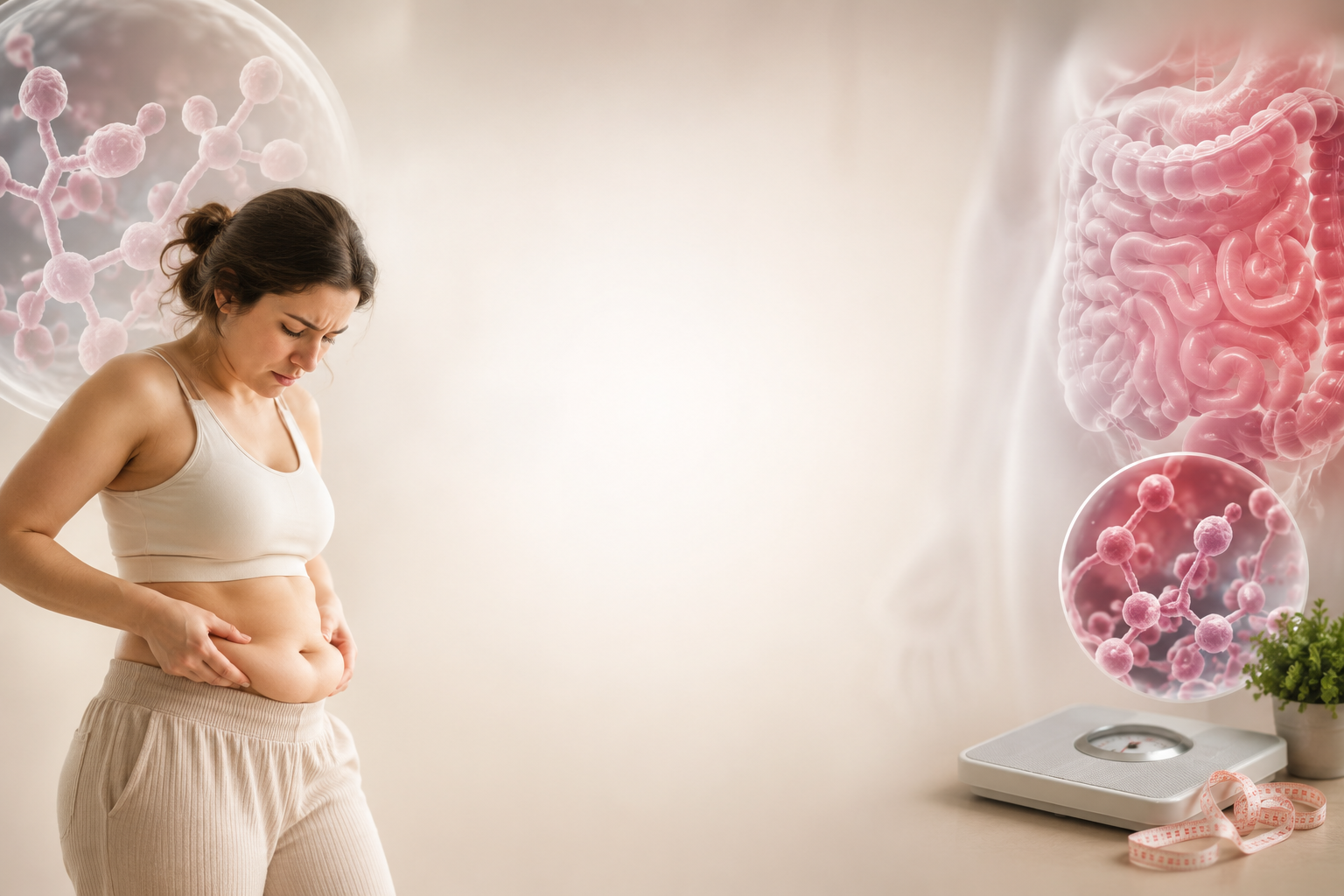
Can candida cause weight gain? Yes, a candida overgrowth in the gut can contribute to weight gain by triggering intense sugar cravings, releasing toxins that overload the liver, raising cortisol, disrupting insulin sensitivity, and causing water retention through gut dysbiosis. When candida yeast multiplies beyond healthy levels, many people notice stubborn belly fat, bloating, and difficulty losing weight even with a clean diet and regular exercise. Understanding this connection is the first step to breaking the cycle.
What Is Candida Overgrowth?
Candida is a type of yeast that lives naturally in small amounts in your mouth, gut, and skin. A healthy immune system and balanced gut bacteria keep it in check. Problems begin when the yeast multiplies too quickly, which is often called candida overgrowth or candidiasis. Common triggers include a diet high in sugar and refined carbs, repeated antibiotic use, chronic stress, hormonal changes, and a weakened immune system.
Once candida takes over the gut, it stops being a harmless resident and starts behaving more like an unwelcome tenant that raids your fridge, drains your energy, and messes with your metabolism.
Can Candida Cause Weight Gain? The Direct Connection
Yes, it can. Research on gut microbiome imbalance shows a strong link between fungal and bacterial overgrowth and metabolic dysfunction. Candida does not add weight the way overeating does. Instead, it changes the internal environment so your body is more prone to storing fat, holding water, and craving the very foods that fuel more yeast growth.
Here is what actually happens inside your body when candida is running the show.
1. Sugar and Carb Cravings You Cannot Seem to Win
Candida feeds on sugar and refined carbohydrates. As the yeast multiplies, it sends signals that push you toward bread, pasta, sweets, and fruit juice. The more you eat, the more it grows. This is often mistaken for a lack of willpower.
Blood sugar swings make it worse. Every time yeast pulls glucose from your bloodstream, levels crash, and your brain screams for more sugar to rebound. It becomes a loop that is nearly impossible to break through diet alone. If you have been struggling with this, our guide on foods to avoid for weight loss can help you identify hidden sugars keeping the cycle alive.
2. Toxin Overload That Slows the Liver
As candida cells grow and die, they release byproducts, including acetaldehyde, a compound also produced when the body processes alcohol. Your liver, which is your main detox organ, has to work overtime to filter these toxins out.
When the liver falls behind, it stores excess toxins in fat cells, mostly around the abdomen, hips, and thighs. That is why so many people with candida notice belly weight that will not budge no matter how many salads they eat. Supporting liver health is part of the fix, and our fatty liver diet complete guide explains how food directly influences liver function.
3. Cortisol, Stress and Belly Fat
Candida places constant stress on the immune system and adrenal glands. This raises cortisol, the stress hormone that tells your body to hold on to fat, especially around the waistline.
Elevated cortisol also promotes insulin resistance, making it harder for cells to use glucose properly. That surplus glucose ends up stored as fat. If you want to go deeper on this, see our breakdown of cortisol belly and hormonal belly fat and can stress cause weight gain.
4. Gut Dysbiosis, Bloating, and Water Retention
Candida disrupts the balance of good and bad bacteria in the gut. This dysbiosis slows digestion, promotes constipation, and triggers bloating that can add several pounds of water weight to the scale.
An imbalanced gut also affects how efficiently your body absorbs nutrients and how full you feel after meals. Restoring healthy gut flora is one of the fastest ways to feel lighter. Our article on probiotics for weight loss and prebiotics vs probiotics for weight loss walks through what to add and why.
5. Fatigue and Brain Fog That Kill Motivation
Candida releases dozens of toxic byproducts that can drain energy and cloud thinking. When you feel wiped out by 3 p.m. and cannot focus, workouts and healthy cooking start to feel impossible. Less movement means fewer calories burned, and quick, sugary snacks become the default fuel. The cycle continues.
Signs Your Weight Gain Might Be Candida-Related
Not every case of stubborn weight gain is caused by candida, but there are patterns worth watching for. Consider whether these sound familiar:
- Persistent sugar or carb cravings, especially in the afternoon or at night
- Bloating and gas after meals, even after clean foods
- White coating on the tongue or recurring yeast infections
- Brain fog, low energy, and mood swings
- Weight gain around the belly that resists calorie restriction
- Chronic constipation or irregular bowel movements
- Skin issues like eczema, acne, or fungal rashes
If several of these apply, gut health is worth investigating. See our list of medical reasons for not losing weight for a broader look at hidden causes.
Candida and Bariatric Surgery Patients
Patients who have had bariatric surgery deserve a special note here. After gastric sleeve or gastric bypass, the gut microbiome shifts significantly. Antibiotics used during hospital care, changes in stomach acid, and a temporary reduction in fiber during the liquid and puree stages can create ideal conditions for candida to overgrow.
If you notice a sudden weight loss stall after gastric sleeve along with new sugar cravings, bloating, or fatigue, gut yeast could be part of the story. Rebuilding a diverse microbiome with fermented foods, prebiotic vegetables, and quality protein supports both weight loss and long-term surgical success.
How to Break the Candida Weight Gain Cycle
Fixing candida-driven weight gain is less about restricting calories and more about starving the yeast while restoring gut balance. A practical approach includes:
Cut the fuel:
Reduce added sugars, alcohol, refined flour, and sweetened drinks. This is not forever. It is a reset that gives the good bacteria a chance to grow back.
Feed good bacteria:
Add fermented foods like plain yogurt, kefir, sauerkraut, and kimchi. Non-starchy vegetables, garlic, onions, and asparagus are excellent prebiotics. Our roundup of the best prebiotic foods is a good starting point.
Support your liver:
Drink enough water, prioritize leafy greens, and get consistent sleep so your body can detox efficiently.
Move gently but often:
You do not need to punish yourself in the gym. Daily walking, light strength training, and stretching all reduce cortisol and improve insulin sensitivity.
Manage stress and sleep:
Chronic stress keeps cortisol elevated and gut function suppressed. Even ten minutes of daily quiet time makes a difference.
Consider medical support:
If cravings, bloating, and stubborn weight persist, a clinical evaluation can rule out yeast overgrowth, hormonal issues, or insulin resistance. Our insulin resistance diet guide can also help.
When to See a Doctor
If your symptoms are severe, worsening, or affecting daily life, do not try to guess your way through it. Testing for candida overgrowth, thyroid dysfunction, and metabolic conditions gives you real answers instead of another diet that will not work. A supervised plan is especially important if you are struggling with obesity, prediabetes, or post-bariatric weight gain. A medical weight loss program can address both root causes and results.
If you have been struggling with stubborn weight, gut symptoms, or a stall you cannot explain, our team can help you find the root cause and build a real plan. We support patients through our weight loss clinics Arlington, Dallas, Richardson and Texarkana. Book a consultation today and let us take the guesswork out of your weight loss journey.
