
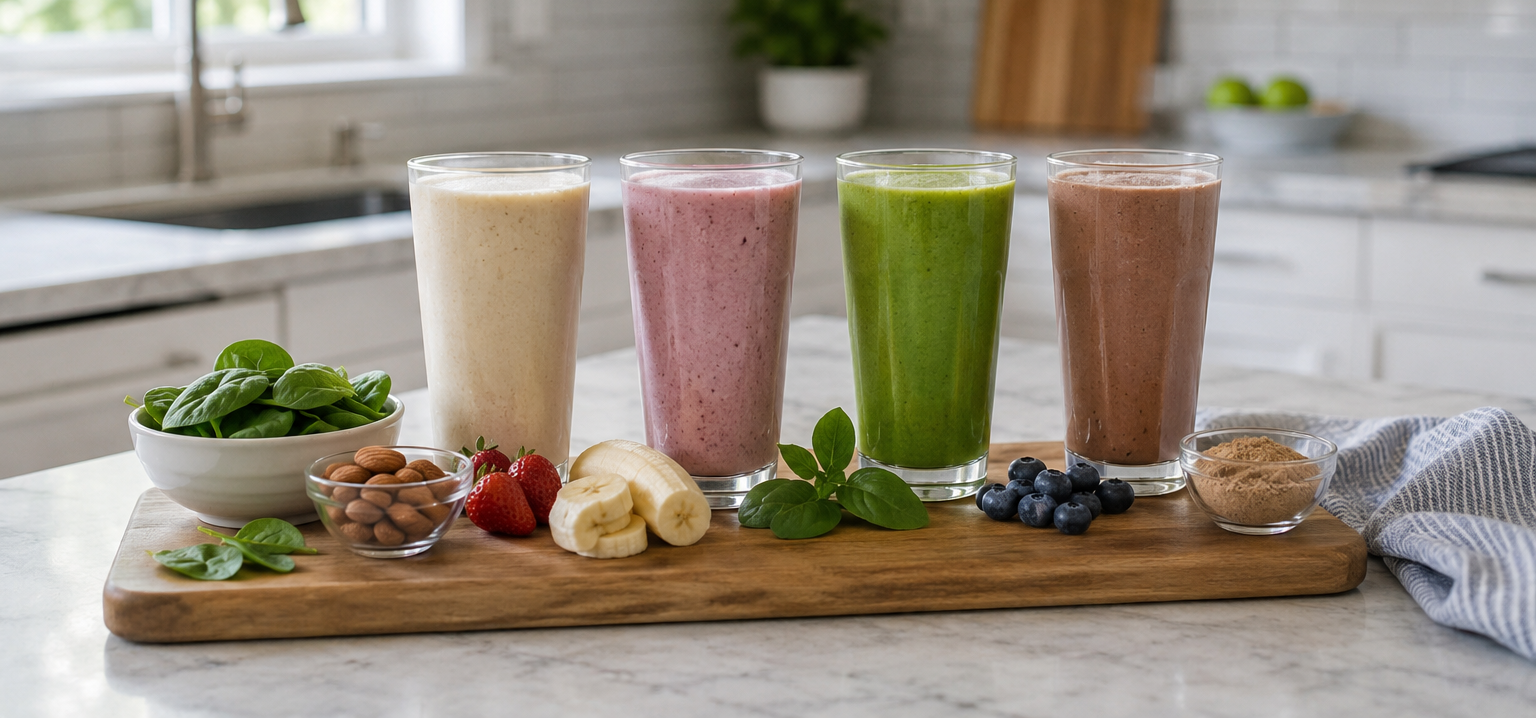
High protein smoothies for weight loss are nutrient-dense blended drinks that deliver 20 to 30 grams of protein, healthy fats, fiber, and low-sugar fruit in a single glass. They support fat loss, protect lean muscle, and keep hunger under control. At BodEvolve Bariatric, Dr. Clayton Frenzel and our surgical team recommend them to gastric sleeve and gastric bypass patients because they fit a smaller post-surgery stomach while covering key nutrition needs. A daily high protein smoothie makes hitting your goals easier, supports steady recovery, and helps your body burn fat without losing strength.
Protein Rich Smoothies for Weight Loss: Why Protein Comes First
Protein is the single most important macronutrient after bariatric surgery. When your stomach is smaller, you absorb less of everything, and your body will turn to muscle tissue for energy if protein intake falls short. That muscle loss is exactly what you want to avoid. Dr. Frenzel and the BodEvolve team typically recommend 60 to 80 grams of protein daily post-surgery, and protein rich smoothies for weight loss are one of the most efficient ways to close that gap.
What to put in a high-protein smoothie
- Greek yogurt: Adds roughly 17 grams of protein per serving and also provides gut-friendly probiotics. Your digestive system will thank you in recovery.
- Unsweetened protein powder: Whey isolate or plant-based options work well. Look for a powder with at least 20 grams of protein per scoop and minimal added sugar.
- Cottage cheese: Sounds unusual in a smoothie, but it blends smoothly and contributes a creamy texture along with a solid protein punch.
- Nut butter: Two tablespoons of almond or peanut butter adds healthy fats and about 7 grams of protein. Keep portions small to manage calorie density.
Blend any combination of the above with water or low-fat milk and you already have a recovery-friendly base. Getting your protein up early in the day also reduces cravings later, which directly supports consistent weight loss progress.
Banana Smoothie for Weight Loss: Gentle on the Stomach, Big on Nutrients
A banana smoothie for weight loss might not be the first thing your doctor recommends in week one, but once you are cleared for soft foods and beyond, bananas become a genuine friend to post-op patients. Bananas are soft, naturally sweet, easy to blend, and rich in potassium, which is a mineral many bariatric patients lose in the early weeks after surgery.
How to make it bariatric-friendly
- Use half a frozen banana rather than a whole one to keep carbs and calories in check.
- Pair it with Greek yogurt or a scoop of vanilla protein powder to balance the natural sugars with protein.
- Add a tablespoon of chia seeds for fiber and omega-3s without adding much volume.
- Keep it cold. Frozen banana gives the smoothie a thick, creamy texture that feels satisfying even in a small portion.
This combination is filling, gentle on a healing stomach, and easy enough to make on days when you simply do not have the energy for elaborate meal prep. Patients recovering from SADI-S surgery or duodenal switch surgery should confirm fruit tolerance with their BodEvolve nutritionist before introducing bananas.
Spinach Smoothies for Weight Loss: Green Without the Taste
Most people assume a green smoothie is going to taste like a salad in a cup. It does not have to. Spinach smoothies for weight loss are incredibly effective precisely because fresh baby spinach is so mild that it nearly disappears once blended with fruit and protein. What it does not hide is its nutritional resume. Spinach is loaded with iron, folate, magnesium, and vitamin K, all of which support healing and energy levels.
Building the right spinach base
- Start with one large handful of fresh baby spinach. Do not use cooked spinach; it gets slimy.
- Blend with water or coconut water first before adding other ingredients. This breaks down the leaves fully and eliminates any fibrous chunks.
- Add half a frozen banana or a few frozen mango pieces for natural sweetness.
- Finish with a scoop of unflavored or vanilla protein powder.
The result is a smooth, vibrant green drink that tastes nothing like vegetables. For patients worried about iron absorption after surgery, pairing spinach with vitamin C-rich fruit like mango or strawberries significantly improves how well the iron is absorbed. This is a small detail that makes a real difference in how you feel week to week.
Almond Milk Smoothie for Weight Loss: A Dairy-Free Option That Delivers
Not every post-op patient tolerates dairy well, especially in the first few months after surgery. Lactose intolerance is actually quite common following gastric bypass and revision weight loss surgery. This is where an almond milk smoothie for weight loss becomes genuinely useful. Unsweetened almond milk is low in calories (around 30 to 40 per cup), free of lactose, and mild enough to use as a base for virtually any smoothie combination.
Making almond milk smoothies count
- Always choose unsweetened almond milk. The sweetened versions add unnecessary sugar and calories that slow your progress.
- Combine with a plant-based protein powder to keep total protein above 20 grams per smoothie.
- Add a tablespoon of almond butter for healthy fats that support satiety.
- Throw in frozen berries for antioxidants and a vibrant color without spiking blood sugar.
Almond milk is also gentle on digestion, which makes it an easy choice during the liquid and soft food phases that follow bariatric surgery. If you are following an anti-inflammatory diet for weight loss as part of your post-op plan, almond milk fits naturally into that framework.
What Makes the Best Smoothies After Gastric Bypass Different From Regular Ones
Here is something nobody really tells you before surgery. Once you have had gastric bypass, a smoothie is no longer just a quick breakfast or a post-workout drink. It becomes one of the most important tools in your recovery and getting it wrong can genuinely slow you down in ways you would not expect.
Sipping Speed Matters More Than Ingredients
This one catches a lot of patients off guard. You can have the most perfectly balanced smoothie in front of you and still end up feeling awful if you drink it too fast. After gastric bypass your stomach cannot handle volume the way it used to. Gulping anything down, even something liquid, can trigger nausea, cramping or that uncomfortable tight feeling that ruins the next few hours of your day.
Timing Your Smoothie Around Meals
This is another area where a lot of people make mistakes without realising it. Drinking a smoothie too close to a solid meal, whether just before or right after, puts too much demand on a stomach that is already working hard. The result is usually early fullness, bloating or that uncomfortable pressure that makes you want to lie down.
Cold Versus Room Temperature
This sounds like a small thing but it genuinely is not. A lot of gastric bypass patients, especially in the first few weeks after surgery, find that ice cold smoothies are harder to tolerate. Cold temperatures can sometimes cause the stomach to tighten and that leads to cramping or sensitivity that feels worse than it should for something as simple as a drink.
Ready to Take the Next Step Toward Lasting Weight Loss?
High protein smoothies for weight loss are more than a trend; they are a clinically sensible, practical tool for anyone recovering from bariatric surgery and building new nutritional habits. Whether you are blending a banana smoothie for weight loss, experimenting with spinach smoothies for weight loss, or keeping it dairy-free with an almond milk smoothie for weight loss, the most important thing is consistency. Small, protein-rich meals and smoothies, taken regularly throughout the day, create the steady nutrition your body needs to lose fat, preserve muscle, and feel strong.
If you are ready to explore your surgical options or want guidance on post-operative nutrition, the team at BodEvolve Bariatric is here to help. With locations in Arlington, Richardson, Dallas, or Texarkana, expert bariatric care is always close to home. You can also add on low-carb diet for weight loss and Mediterranean diet for weight loss, as part of your post-op meal plan. Book your consultation today and let Dr. Clayton Frenzel and the BodEvolve team help you build the life you deserve.
