
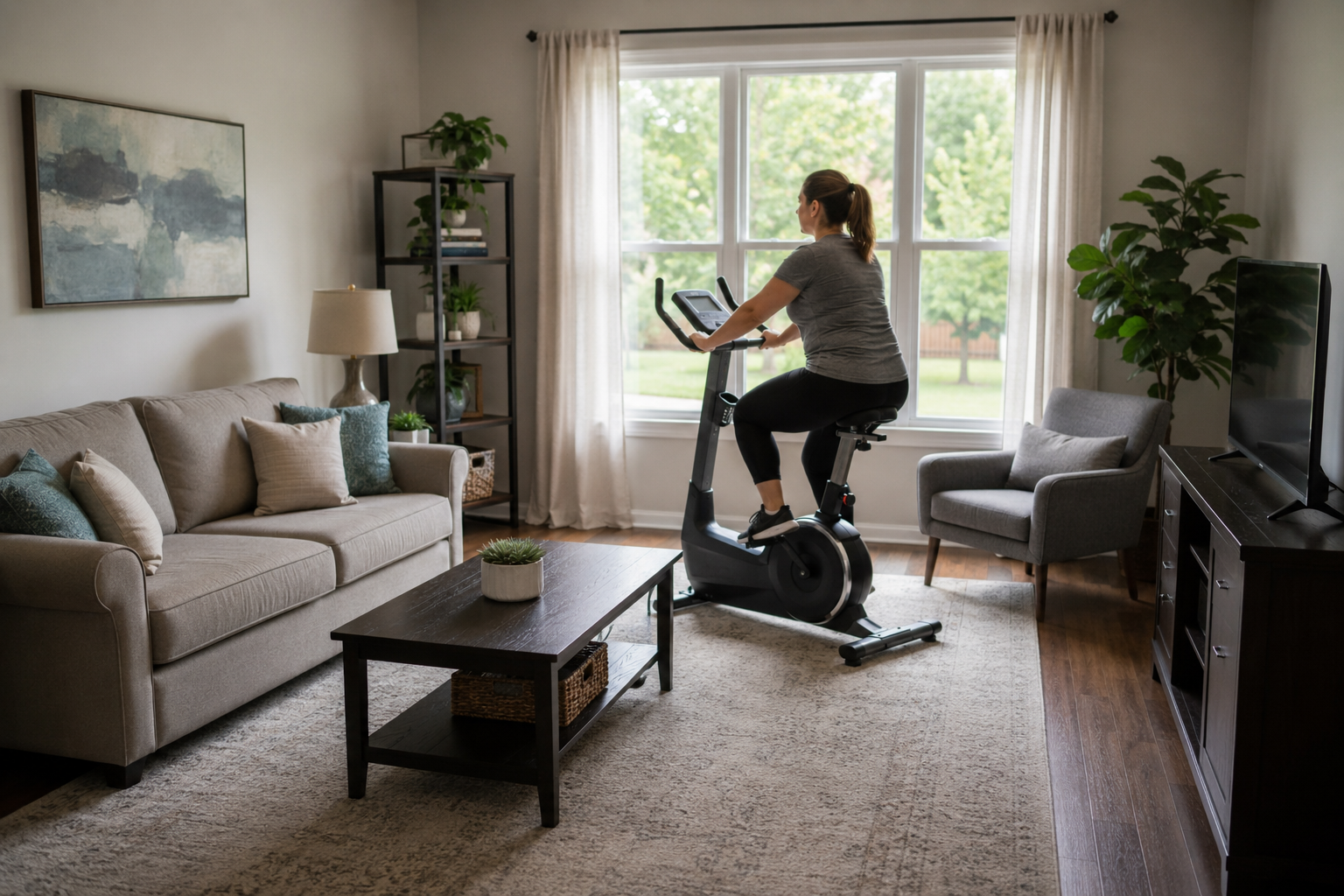
Stationary bike exercise for weight loss is one of the safest and most effective ways bariatric surgery patients can support their recovery and accelerate long-term results. It is low-impact, easy to start at any fitness level, and gentle enough on the joints to begin just weeks after surgery. Unlike jogging or high-intensity workouts, cycling allows you to build cardiovascular endurance and burn meaningful calories without putting dangerous stress on healing tissues.
At BodEvolve Bariatric, Dr. Clayton Frenzel and Dr. Brian Holt guide patients through every phase of their weight loss journey, from the operating table through long-term lifestyle changes. Both surgeons consistently emphasize that what happens after surgery matters just as much as the procedure itself. Physical activity, nutrition, and consistent habits are what turn a surgical result into a permanent transformation.

Bariatric Exercise Bike: Why It Is the Right Fit After Bariatric Surgery
Static cycling for weight loss works particularly well for post-bariatric patients because the body is supported by the seat during the entire session. There is no impact on the knees, hips, or ankles, which matters significantly for anyone recovering from gastric sleeve surgery or gastric bypass surgery.
Most BodEvolve patients are cleared for light movement within two to four weeks of surgery. At that stage, a stationary bike at low resistance for 10 to 15 minutes a day is a perfect starting point.
Burns Calories Without Joint Stress
Cycling is classified as a non-weight-bearing exercise, meaning your body weight is distributed across the seat and pedals rather than absorbed by your joints. For patients who carry excess weight in their lower body or have existing knee issues, this distinction is significant. You can burn 300 to 500 calories in a 45-minute session without any of the joint strain associated with walking on hard surfaces or traditional cardio exercises.
Supports Heart Health Alongside Your Surgery
Bariatric patients often manage related conditions like high blood pressure or poor blood sugar regulation alongside their weight. If you are curious about the connection, this piece on whether losing weight lowers blood pressure is worth reading. Regular cycling strengthens the cardiovascular system, improves circulation, and helps regulate blood sugar over time, building on the metabolic improvements your surgery has already started.
Helps You Hold on to Muscle
Rapid weight loss after surgery can sometimes lead to muscle loss alongside fat loss. Cycling actively engages the legs, glutes, and core, helping preserve lean muscle mass. Combined with adequate protein intake, which is a non-negotiable part of the BodEvolve post-op nutrition plan, consistent cycling keeps your metabolism active even as the number on the scale drops.
Is Stationary Bike Good for Weight Loss Beyond the Early Recovery Phase?
Is a stationary bike good for weight loss not just in the first few months but across the full arc of your post-bariatric life? The honest answer is yes, and the results compound over time.
Creates a Consistent Calorie Deficit
After bariatric surgery, your reduced calorie intake from eating less already creates a deficit. Adding cycling on top of that deepens the deficit in a sustainable way. Unlike crash diets or extreme exercise plans, cycling is gentle enough to repeat five or six times a week without burning out or risking injury. That consistency is what drives steady, lasting weight loss.
Pairing this with dietary choices matters too. For reference, patients who follow an anti-inflammatory diet for weight loss alongside their exercise routine tend to manage inflammation, support gut health, and maintain energy levels more effectively throughout recovery.
Easy to Scale as You Get Stronger
One of the best things about a stationary bike is how easily you can adjust it. In early recovery, you ride at zero resistance for short stretches. By month three, you might be cycling at moderate resistance for 25 minutes. Six months in, you could be doing interval sessions for 40 minutes. This natural progression keeps the exercise challenging without ever forcing you to do more than your body is ready for.
Works at Home Without Any Barriers
Post-surgical patients sometimes feel self-conscious at the gym or lack the energy for a commute. A basic stationary bike at home removes every obstacle. There is no travel time, no crowd, and no schedule to work around. You ride when it suits you, which makes it much easier to stay consistent.
Stationary Bike for Weight Loss: How to Structure Your Routine
Building a stationary bike for weight loss routine that works over the long term requires thinking in phases rather than pushing hard from day one.
Phase One: Weeks Two to Six Post-Op
Start with 10 to 15 minutes at the lowest resistance setting, once a day. Focus on smooth, steady pedaling rather than speed or intensity. The goal here is to reestablish the habit of daily movement, not to torch calories. Patients recovering from SADI-S surgery or duodenal switch surgery should follow the specific clearance timeline given by their BodEvolve surgeon before starting.
Phase Two: Months Two to Four
Gradually build to 20 to 30 minutes per session, three to five times a week. You can begin increasing resistance slightly when 20 minutes feels comfortable at your current level. Patients on medical weight management or those who have had revision weight loss surgery should check in with their care team before moving to higher intensity levels.
Phase Three: Month Four and Beyond
Aim for 30 to 45 minutes per session, four to six days a week. This is where interval training becomes valuable. Alternate between one to two minutes of harder pedaling and two to three minutes of easy recovery pedaling. This approach raises your metabolic rate during and after the workout and is highly effective for breaking through weight loss plateaus.
How Long to Ride Stationary Bike for Weight Loss: The Practical Answer
How long to ride a stationary bike for weight loss is one of the most common questions BodEvolve patients ask once they feel ready to push beyond the early recovery phase. The clinical guidance from most bariatric programs, including BodEvolve, points to 150 minutes of moderate aerobic activity per week as the target. That works out to 30 minutes a day, five days a week, which is very achievable for most patients by month three or four.
If 30 minutes feels like too much early on, break it into two 15-minute sessions. The total weekly minutes matter more than whether each session is uninterrupted. Consistency across the week is always more valuable than occasional long rides.
Tracking your calorie expenditure can also help keep you motivated. A useful tool to bookmark is this calorie calculator for weight loss, which gives you a clearer picture of where your daily burn and intake numbers should sit based on your goals and activity level.
Start Your Recovery Strong With the Right Team Behind You
Stationary bike exercise for weight loss is not a complicated strategy, but it is a powerful one when practiced consistently after bariatric surgery. Whether you are two weeks out of surgery or six months into your journey, cycling gives you a tool you can use every single day without risking your recovery or your joints.
Dr. Frenzel and Dr. Brian Holt at BodEvolve Bariatric works with patients at locations across Arlington, Richardson, Dallas, or Texarkana to build individualized recovery and activity plans that fit your procedure, your pace, and your life. If you have questions about getting started with exercise or want to explore what your post-op plan should look like, reach out to a BodEvolve location near you and take the next step forward with confidence.
