
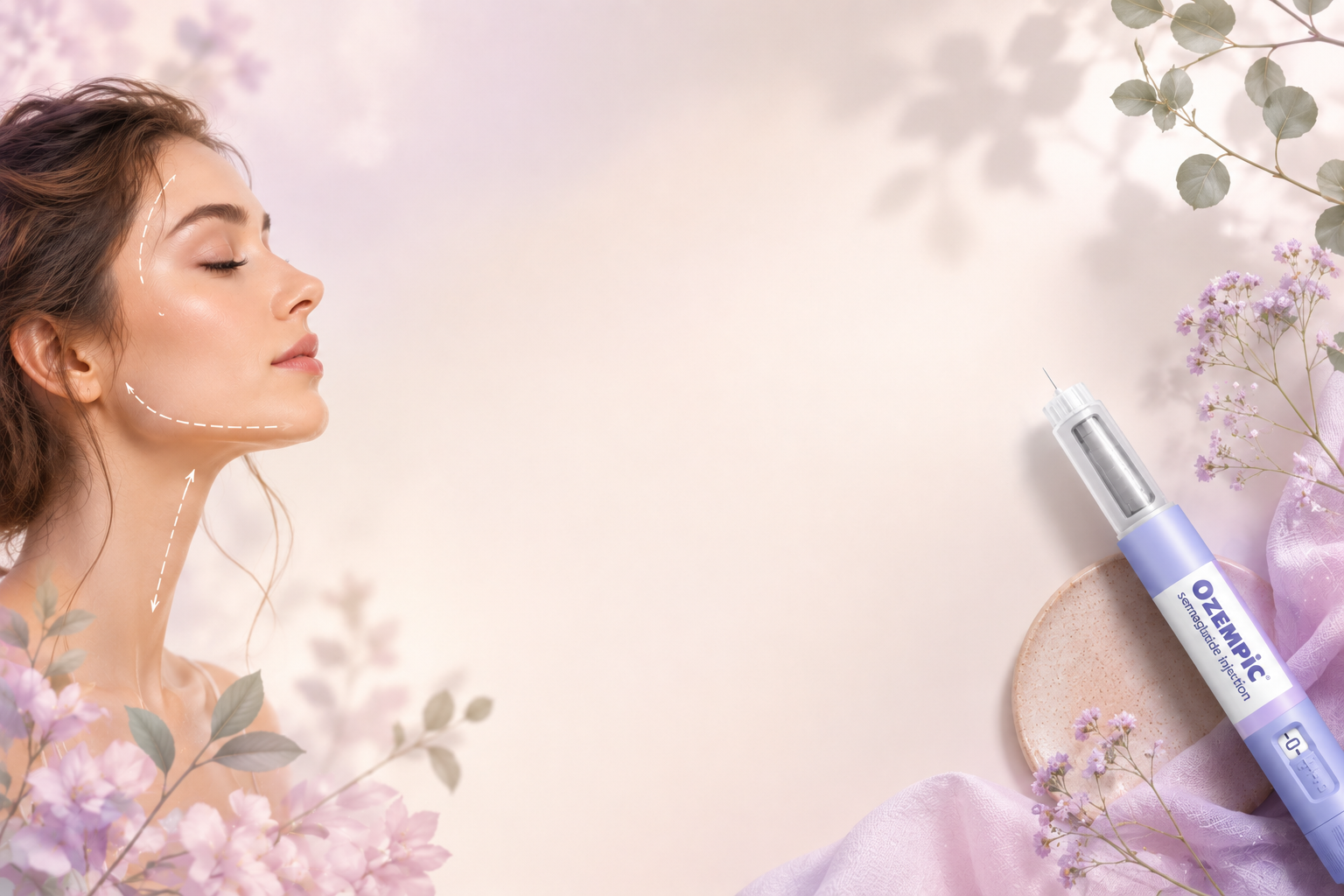
Ozempic face is the sunken cheeks, hollow temples, deeper wrinkles and loose skin that show up when rapid weight loss on GLP-1 medications strips facial fat faster than skin can adjust. It is not a direct side effect of the drug itself. It is what happens when the scale moves too fast for the face to keep up. The term was coined by New York dermatologist Dr. Paul Jarrod Frank after he noticed a pattern in patients losing large amounts of weight on semaglutide, and it has since become one of the most searched aesthetic concerns in the entire GLP-1 conversation.
If you are considering weight loss medication or are already on one, understanding this side effect and how to work around it matters. At BodEvolve Bariatric Surgery Center in Texas, our team led by Dr. Clayton Frenzel and Dr. Brian Holt sees patients every week who want lasting weight loss without trading their face for a smaller waistline. Here is everything you need to know, minus the influencer noise.
What Is Ozempic Face and What Does It Mean?
Ozempic face is a colloquial term, not a medical diagnosis. Your doctor will not write it in your chart. It describes the collection of facial changes that happen when someone loses a lot of weight in a short window, especially with GLP-1 receptor agonists like semaglutide or tirzepatide.
Endocrinologist Vinni Makin at the Cleveland Clinic describes it as gauntness, sunken cheeks, new wrinkles, and loose skin on the face and neck. And yes, it is very real. Roughly 60 percent of facial plastic surgeons reported a rise in Ozempic face cases, according to a survey by the American Academy of Facial Plastic and Reconstructive Surgery. Bariatric surgeon Dr. Andrea Bedrosian at Northwell Health puts it plainly: when you drop weight fast on these medications, a lot of people see the loss in their face first.
What Causes Ozempic Face?
Rapid weight loss is the actual cause. The face happens to be one of the first places the body pulls fat from, which is why people notice changes in the mirror before they see them anywhere else.
Three things are happening at once. First, subcutaneous fat, the cushion just under your skin, shrinks. That layer is what gives the face its youthful fullness and softens the underlying bone structure. Second, skin loses two proteins critical for firmness: elastin, which lets it snap back, and collagen, which gives it structure. The faster you drop weight, the less time your skin has to rebuild them. Third, the fat pads around the eyes, cheeks, and temples deflate, and unlike body fat, these are not designed to bounce back on their own.
The speed of loss is the real driver. Patients who escalate their dose aggressively to hit weight goals in a few months almost always see more pronounced facial changes than patients losing at a steady one to two pounds per week. If you want to see how the timeline plays out at each dose, our week-by-week Ozempic guide breaks it down.
Signs of Ozempic Face and What It Looks Like
The signs tend to appear in a predictable order. Cheeks lose fullness first, then temples start to hollow, then fine lines appear where skin used to sit smoothly over fat. Common signs include:
- Sunken cheeks and hollow temples
- New wrinkles and deeper fine lines, especially around the mouth
- Thin, deflated lips
- Sagging skin along the jawline and neck, sometimes called jowls
- Prominent cheekbones and a sharper jaw
- Sunken eyes and a hollow under-eye area
Older adults show these changes more dramatically because they start with less subcutaneous fat and skin that has already lost some elasticity.
Ozempic Face Before and After: Celebrity Examples
The reason Ozempic face went viral is because of celebrities. Sharon Osbourne has been the most transparent about it, telling interviewers she lost 42 pounds in four months on Ozempic and openly admitting she went too far. Kelly Osbourne has denied using it, but her sharpened cheekbones and jarring facial changes across 2025 and 2026 kept her at the center of the conversation. Rebel Wilson used it briefly and later showed hollowing around her temples. Kathy Bates, who has been open about using Ozempic to manage type 2 diabetes, dropped nearly 100 pounds and now has slimmer cheeks and softer jawline definition.
Meghan Trainor lost weight on Mounjaro and shows noticeably sharper cheekbones. Ryan Seacrest and Scott Disick have been part of the male side of the conversation. None of this confirms current medication use, but the pattern is hard to miss.
Why Ozempic Face Makes You Look Older
This is the part patients find most frustrating. You expected to feel younger and healthier, and instead the mirror shows something closer to premature aging. The reason is simple. The natural aging process involves the same three changes: subcutaneous fat shrinks, collagen and elastin drop, and fat pads redistribute. The ozempic face compresses all of that into a few months instead of a few decades.
Ozempic Face in Men vs Women
Both experience it. Men often notice changes around the jawline, temples, and under the eyes first. Women more commonly report sunken cheeks and thinner lips. Older adults of either sex see it faster because baseline collagen and facial fat are already lower. It also often shows up alongside other loose skin concerns, like Ozempic butt and Ozempic neck.
How to Avoid Ozempic Face
Slower is better. Cleveland Clinic recommends losing one to two pounds per week rather than pushing for aggressive numbers. Beyond pace, these habits genuinely help:
- Hit 25 to 30 grams of protein at each meal to protect muscle and support collagen
- Stay hydrated. Skin elasticity depends on it
- Use sunscreen daily and add retinoids or peptides to your skincare
- Add resistance training. Preserving muscle matters as much as skincare
If you are already on a GLP-1, talk to your prescriber about staying at a lower maintenance dose. Our guide on how quickly Ozempic works for weight loss covers what a sustainable pace looks like.
How to Fix Ozempic Face: Treatment Options
Once the Ozempic face develops, it does not fade on its own. If you maintain the weight loss, the facial changes usually stay. But there are treatments that work.
Non-invasive options include microneedling with PRP, radiofrequency skin tightening and laser resurfacing. These stimulate collagen and firm loose skin over several sessions.
Injectables are the most common route. Hyaluronic acid fillers like Juvéderm and Restylane restore volume in cheeks, temples, and lips. Poly-L-lactic acid and calcium hydroxylapatite fillers work more gradually and last longer. Botox smooths lines that have deepened.
Surgical options enter the picture when skin laxity is beyond what fillers can address. Facelifts, neck lifts, cheek implants and fat grafting using your own body fat restore contour that injectables cannot.
Ozempic Face and Bariatric Surgery: The Slower Path
Here is something patients rarely consider. Bariatric surgery causes weight loss too, but usually at a pace and total amount that produces different facial outcomes than aggressive GLP-1 use. After procedures like gastric sleeve surgery or gastric bypass surgery, weight loss happens gradually over 12 to 18 months, giving skin more time to adjust.
Patients with significant obesity often find that procedures like duodenal switch or SADI-S produce better long-term metabolic outcomes than staying on GLP-1s indefinitely. For patients whose first bariatric surgery has stopped working, revision weight loss surgery is a real option. And for those still exploring, our medical weight management program combines physician-supervised GLP-1 therapy with nutrition coaching and lab monitoring. If you are curious about food-first strategies, our guide to natural alternatives to Ozempic is a good starting point.
Patients drive to BodEvolve from Arlington, Richardson, Dallas and Texarkana for one reason. They want a plan built around long-term results, not just a prescription refill.
Frequently Asked Questions
Does Ozempic face go away?
No, it does not fade with time on its own. If you regain the weight, your face may look fuller again. But if you maintain the weight loss, the facial changes usually stay unless treated with fillers, skin tightening, or cosmetic procedures.
Has anyone gone off Ozempic and kept weight off?
Some have, but most regain significant weight. Cambridge research shows patients regain about 60 percent of lost weight within a year of stopping. Those who preserved muscle and built strong nutrition habits during treatment keep off around 25 percent long term. Read more on what happens when you stop taking Ozempic.
How can you tell if someone is on Ozempic?
Common signs include noticeable weight loss combined with sunken cheeks, thinner lips, and a sharper jawline. Reduced appetite, slower eating and loss of interest in previously craved foods can also be indicators. None of these are definitive on their own.
What organ is Ozempic hard on?
The pancreas is the most cited concern, with reports of pancreatitis in some users. Ozempic also carries an FDA boxed warning for possible thyroid tumors, and it can affect kidney function, especially in patients who become dehydrated from nausea or vomiting.
