
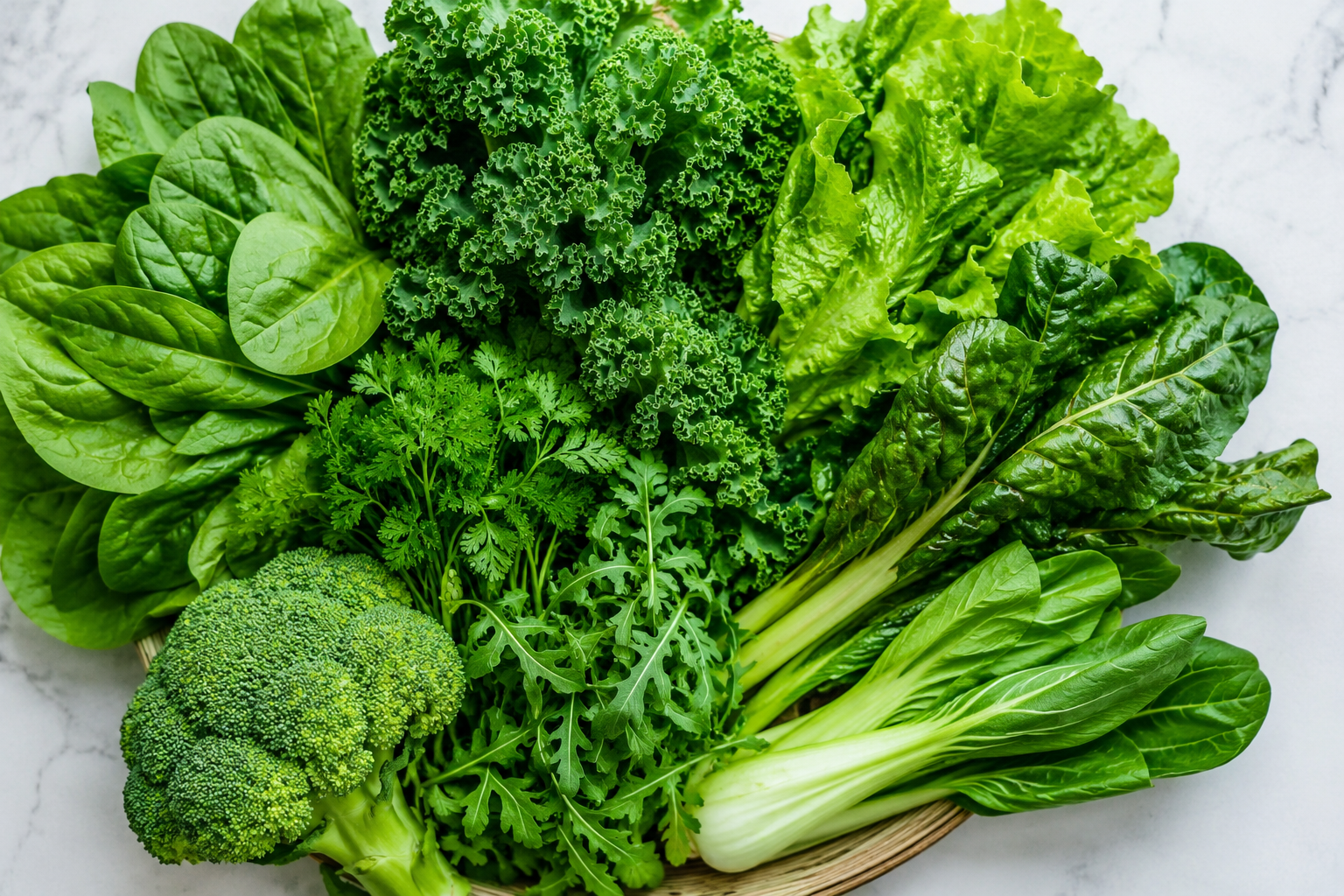
Most weight loss advice tells you to “eat more greens” and stops there. That is not useful when you are standing in the produce section trying to figure out what to actually put in your cart. Not every leaf on the shelf is doing the same job. Some are nutritional powerhouses that fill you up for barely any calories. Others are pleasant salad fillers that will not really move your numbers. A few can even cause trouble in the first weeks after weight loss surgery. This guide is different because it looks at green leafy vegetables for weight loss through the lens of what actually works in a real medical weight loss program, the kind we run for patients across Texas at BodEvolve Bariatric Surgery Center. The advice you will read here reflects what we see working for patients trying to drop 30, 60, or 150 pounds and keep it off long term.
Why leafy greens actually work for fat loss
The reason leafy greens keep showing up in every weight loss plan is not marketing. It is math. A full cup of raw spinach has about 7 calories. That same cup gives you fiber, water, magnesium, potassium, folate, and a small amount of protein. Very few foods on earth have that ratio. When your plate is half greens, you are eating a large volume of food but taking in a fraction of the calories you would from an equivalent volume of rice, pasta, or meat.
Fiber is the other quiet hero here. Fiber slows digestion, blunts blood sugar spikes, feeds healthy gut bacteria, and helps you feel full longer. Most Americans get less than half the fiber they need. Leafy greens are one of the easiest ways to close that gap without adding calories.
There is also a satiety signal issue. Your stomach has stretch receptors that tell your brain “we are done.” High-volume, low-calorie foods trigger those receptors before you overshoot on calories. This is why a large kale salad can feel more satisfying than a small handful of crackers, even though the crackers have five times the calories.
Best green leafy vegetables for weight loss
Here are the greens that consistently deliver, ranked by how much bang you get per calorie and how easy they are to actually eat.
- Spinach. About 7 calories per cup raw. High in iron, magnesium, and folate. Wilts down to almost nothing, which makes it easy to sneak into eggs, pasta sauces, and smoothies. This is the best gateway green for anyone who claims they hate vegetables.
- Kale. 33 calories per cup, but you get 2.5 grams of fiber, tons of vitamin K, and one of the highest antioxidant loads of any vegetable. Massaged with a bit of olive oil and lemon juice, it stops being intimidating. Baby kale is milder if the curly stuff is too much.
- Arugula. 5 calories per cup, peppery, and holds up well in salads without wilting immediately. It also pairs well with lean protein, which matters for weight loss and even more for anyone recovering from bariatric surgery.
- Swiss chard. 7 calories per cup. Similar profile to spinach, slightly earthier taste. The stems are edible and add crunch. Sauteed with garlic and lemon, it is one of the simplest greens to prepare.
- Watercress. 4 calories per cup. Watercress consistently tops nutrient-density rankings from the CDC. It is peppery and fresh, and works beautifully in soups or as a garnish that you actually eat instead of push aside.
- Bok choy. 9 calories per cup. Crunchy, mild, and one of the best greens for stir fries. High in calcium and vitamin C, which matters for anyone at risk of nutrient deficiency after surgery.
- Collard greens. 11 calories per cup. High in fiber and calcium. Traditionally cooked with a lot of fat in Southern cooking, but a quick saute or steam keeps the calorie count low and the taste satisfying.
- Mustard greens. 15 calories per cup. Spicy, bold flavor. Good for people who find spinach and kale too neutral.
- Romaine lettuce. 8 calories per cup. Not as nutrient dense as darker greens, but crunchy and hydrating. Way better than iceberg. It is what turns a wrap or bowl into a meal you can chew.
- Cabbage. Technically a leafy vegetable and worth adding to this list. 22 calories per cup shredded, high in fiber, cheap, and shelf stable. Cabbage is criminally underrated for weight loss.
Skip iceberg lettuce as your main green. It has almost no nutritional value beyond water. It is fine as a texture layer but it should not be your foundation.
Green vegetables to lose belly fat and support metabolic health
The idea of a food that “burns belly fat” is a marketing myth. No single food melts abdominal fat. But some green vegetables do help specifically with the underlying issues that cause visceral fat to accumulate, such as insulin resistance, chronic inflammation, and blood sugar swings.
Cruciferous greens like kale, cabbage, bok choy, mustard greens, and collards contain compounds like sulforaphane and indole-3-carbinol, which research links to improved metabolic markers. They also have enough fiber to keep blood sugar steady after meals, and steady blood sugar is one of the strongest predictors of losing belly fat over time.
Magnesium-rich greens like spinach and Swiss chard support insulin sensitivity, which is one of the metabolic levers that has to move for stubborn midsection fat to come off. If you want a deeper look at how belly fat actually behaves, our team wrote a full guide on cortisol belly and hormonal belly fat that pairs well with this article.
Leafy greens after bariatric surgery: what changes
This is where most weight loss articles fall short, because they do not distinguish between a healthy adult who wants to lose 15 pounds and a patient recovering from gastric bypass or gastric sleeve surgery. The rules are different.
In the first four to six weeks after surgery, raw leafy greens are usually off the table. The stems and fibrous leaves can be hard to chew thoroughly enough, and undigested fiber can cause discomfort or blockages in a healing pouch. During this window, patients focus on protein, hydration, and pureed or soft foods.
Once the diet advances to soft and then regular textures, leafy greens come back in a very specific way. Cooked greens are easier to tolerate than raw. Baby spinach and baby kale are gentler on the pouch than mature leaves. Chewing to a paste consistency is not optional, it is the standard bariatric rule for any food.
Iron and calcium absorption also change after surgery, especially after gastric bypass. Leafy greens contain both minerals, but plant-based iron is not absorbed as efficiently as heme iron from animal sources. Pairing greens with vitamin C, such as a squeeze of lemon on your spinach or arugula with sliced strawberries, helps significantly. This is the kind of practical detail our patients get during nutrition follow-ups with the BodEvolve team led by dr Frenzel.
For a broader look at how eating patterns fit into medical weight loss, our guide on the DASH diet for weight loss shows how leafy greens work alongside other food groups in a proven eating pattern.
How to actually eat more leafy greens without hating your life
The best diet in the world does nothing if you cannot stick to it. Here are the moves that make greens easy.
Buy pre-washed. Bagged, triple-washed spinach and kale are not less nutritious. They are just less annoying. If washing a head of lettuce is what stops you from eating it, buy the bag.
Freeze your smoothie greens. Portion spinach or kale into freezer bags and blend straight from frozen. No wilting, no waste, no thinking.
Cook a giant batch on Sunday. Saute a large pan of greens with garlic and olive oil at the start of the week. You can add them to eggs, grain bowls, soups, wraps, and pasta for the next four days.
Hide them in things you already eat. A handful of spinach in scrambled eggs. Chopped kale in tomato sauce. Baby arugula tossed into a warm soup at the end. You do not have to eat a salad every day to hit your green intake.
Drink them when you cannot eat them. A green smoothie is a legitimate way to get greens in, especially post-op when solids feel like a lot. Pair with protein powder and a low-calorie base. For more low-calorie liquid ideas, our roundup of low calorie drinks for weight loss is a useful next read.
Mistakes that cancel out the weight loss benefit
A salad is not automatically a weight loss meal. The most common problem we see with patients is greens getting sabotaged by what comes with them.
Ranch dressing, candied pecans, dried cranberries, and cheese can turn a 100 calorie bowl of greens into a 900 calorie meal that leaves you hungry an hour later. Read dressing labels. Two tablespoons of a creamy dressing can add 200 calories and more sugar than a candy bar.
Bagged “salad kits” from the grocery store often fall into the same trap. They look healthy but many are engineered to taste indulgent, which usually means they carry a heavy calorie load.
Overcooking is another quiet mistake. Boiling greens for a long time leaches out water-soluble vitamins. A quick saute, steam, or wilt preserves nutrients.
And finally, treating a salad as a snack, not a meal. Greens with no protein or healthy fat will leave you hungry fast. Add grilled chicken, eggs, salmon, tofu, beans, or a modest amount of avocado to make it something your body actually registers as a meal.
When leafy greens alone are not enough
Nutrition matters. It matters a lot. But there is a threshold, and any honest weight loss doctor will tell you the same thing.
For patients with a BMI over 35, or a BMI over 30 with conditions like type 2 diabetes, sleep apnea, high blood pressure, or joint disease, diet and exercise alone rarely produce durable results. This is not a discipline problem. It is a physiology problem. The body has powerful mechanisms that defend a higher weight after years of obesity, and lifestyle changes on their own often cannot override them.
This is where medical and surgical options come in. A well-planned gastric sleeve procedure or gastric bypass operation can reset appetite hormones, reduce hunger, and give patients a real chance at long-term weight loss. Leafy greens do not disappear from the picture, they become a core part of eating after surgery. But they work alongside a procedure that changes the underlying biology.
Cost and insurance are often the biggest questions after that. Many major insurers cover bariatric surgery when medical criteria are met. Our full guide on how to get insurance to cover revision bariatric surgery walks through what documentation you need, what to expect from your carrier, and how to appeal if you are denied.
Bariatric and medical weight loss support across Texas
BodEvolve Bariatric Surgery Center works with patients across North and East Texas. Whether you are looking for a bariatric consultation in Arlington, Richardson, Dallas, or Texarkana, our team offers full nutritional guidance alongside surgical care. Dr. Clayton Frenzel is the only triple board-certified, dual fellowship-trained bariatric surgeon in DFW, and every plan is built around your history, your health markers, and your goals, not a generic template.
