
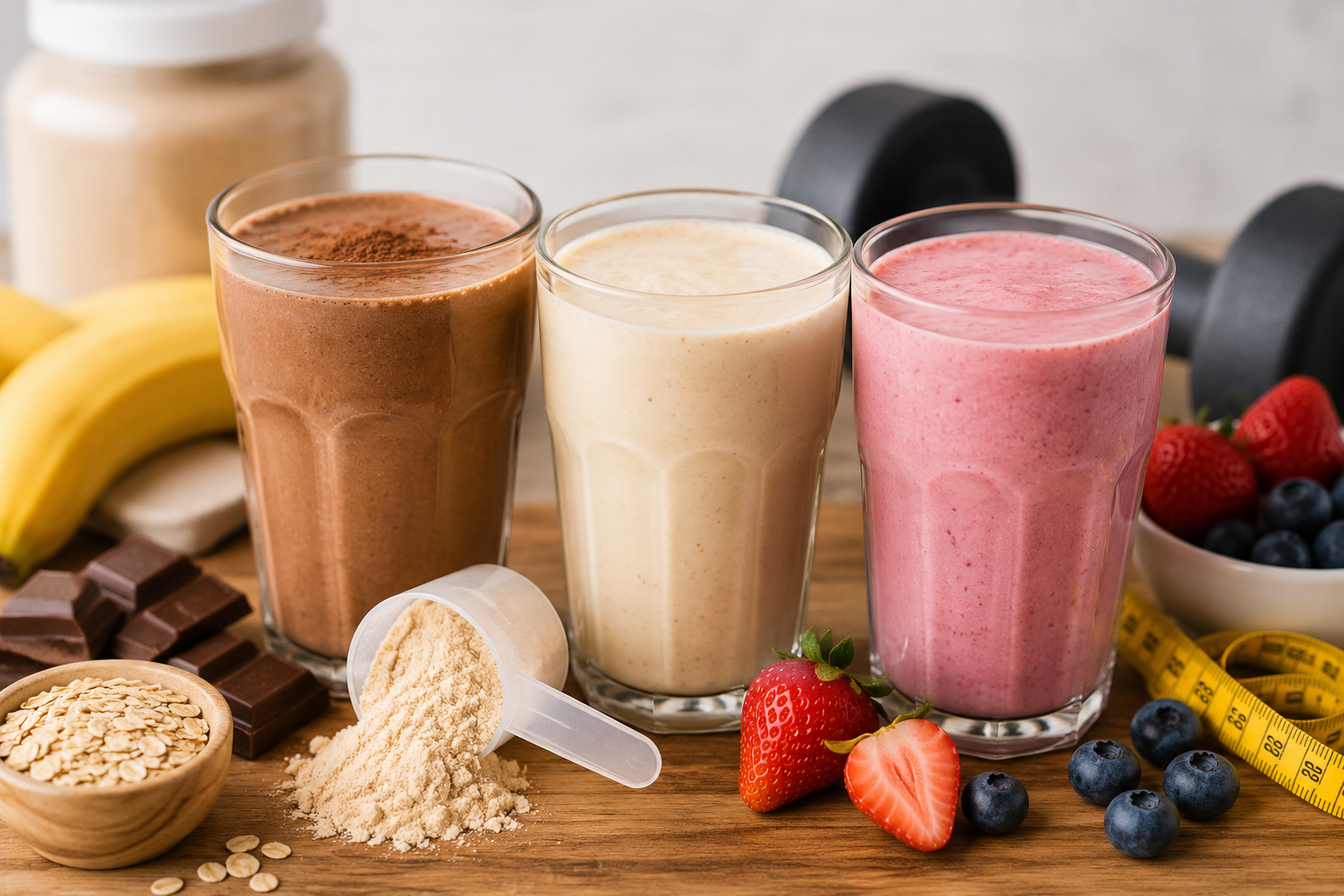
What are meal replacement shakes for weight loss? A meal replacement shake for weight loss is a nutritionally complete drink of 200 to 400 calories, with at least 20 grams of protein and 5 grams of fiber, formulated to replace one full meal per day while maintaining muscle mass during calorie restriction.
A meal replacement shake for weight loss is a nutritionally complete drink, usually 200 to 400 calories with 15 to 20+ grams of protein and 5+ grams of fiber, built to replace a full meal rather than supplement one. Used correctly, it lowers total calorie intake while protecting muscle mass, which is the actual difference between healthy weight loss and just losing weight. The best meal replacement shakes for weight loss share four traits:
- 20 to 25 grams of protein per serving from a named source
- 5 or more grams of fiber from real ingredients
- Under 8 grams of added sugar
- 200 to 400 calories per serving
What Makes the Best Meal Replacement Shakes for Weight Loss?
A meal replacement shake for weight loss is a nutritionally complete drink, usually 200 to 400 calories, designed to replace a full meal while keeping protein high and added sugar low. The best ones deliver 20 to 25g protein, 5g or more fiber, and a full micronutrient profile. The best meal replacement shakes for weight loss share four characteristics that separate genuine options from the noise.
- Protein content. You want at least 15 to 20 grams per serving, and ideally 25 grams if the shake is replacing a full meal. Protein keeps satiety hormones elevated, preserves lean muscle tissue during caloric restriction, and prevents the metabolic slowdown that makes long-term weight loss so hard to sustain. Without enough protein, the weight you lose comes partly from muscle, which raises your set point and makes everything harder from that point forward.
- Calorie range. A true meal replacement should sit between 200 and 400 calories. Below that and it is a snack, not a meal. Above that and it starts working against the deficit you need.
- Ingredient quality. Look for at least 5 grams of fiber, a complete micronutrient profile, and limited added sugar. If sugar or a sugar synonym sits in the first three ingredients, keep looking. The best rated theseshakes for weight loss tend to have clean, readable labels.
- Carbohydrate-to-fiber ratio. A shake with 30 grams of carbs and 2 grams of fiber will spike your blood sugar and leave you hungry within two hours. A shake with 20 grams of carbs and 8 grams of fiber behaves completely differently in your body. That ratio matters more than total carbs alone.
For a broader look at what supplements have clinical backing versus what is mostly marketing noise, BodEvolve’s guide on natural supplements for weight loss is one of the most practical resources on the blog.
High Protein Meal Replacement Shakes for Weight Loss: Why This Is Not Optional
Protein is not just one variable among many. It is the variable. When you cut calories, your body has a metabolic choice: break down fat for fuel, or break down muscle. Adequate dietary protein tips that equation toward fat loss. This is why protein meal replacement shakes for weight loss outperform lower-protein alternatives in virtually every clinical comparison.
For someone using these shakes for weight loss without surgical intervention, a daily protein target of 60 to 80 grams is a reasonable floor, depending on body weight and activity. If two shakes are replacing two meals each day, those shakes should ideally cover 40 to 50 grams of that target between them.
Whey protein isolate tends to be the most bioavailable option with the best amino acid profile. For those avoiding dairy, a combination of pea protein and brown rice protein provides comparable coverage. Individual plant proteins used alone, pea protein by itself for example, are not complete proteins and miss key essential amino acids that matter for muscle retention.
Casein protein digests more slowly and produces a longer satiety window, which is useful for shakes used at dinner or in the evening. Whey digests faster and performs better post-workout. For general daily use, blended protein sources tend to perform best overall. The best high protein these shakes for weight loss will often note the specific protein source or blend on the label and it is worth reading.
Best Meal Replacement Shakes for Women’s Weight Loss
Women have specific nutritional needs that the generic “best shakes” lists almost never address. Hormonal fluctuations across the menstrual cycle affect appetite, energy, cravings, and water retention in ways that matter when you are building a consistent routine around shakes.
When evaluating the best meal replacement shakes for women’s weight loss, a few things go beyond the basics. Iron is one. Many women are mildly deficient and do not know it, and even mild iron deficiency makes exercise feel harder, recovery take longer, and energy stay lower than it should. A shake that includes meaningful iron or that you supplement alongside can genuinely change how the process feels.
Calcium and vitamin D matter for women over 35 in particular. Any significant caloric restriction should be accompanied by adequate intake of both to protect bone density, especially since estrogen changes at perimenopause already affect how bone tissue responds.
These shakes for weight loss female users managing PCOS or insulin resistance, glycemic response is the main consideration. Shakes with lower sugar, moderate protein, and strong fiber content stabilize blood glucose in ways that high-carb options simply do not. That blood sugar stability reduces cravings, supports more consistent energy, and makes the hormonal environment more favorable for fat loss.
The best shakes for weight loss for women are not a separate product category from what is good in general. They are just the subset of good shakes where the micronutrient profile is particularly well-matched to what women’s bodies actually need.
How to Use Meal Replacement Shakes for Weight Loss Without Plateauing
This is where most people go wrong. They replace two meals a day, drop 8 to 12 pounds in a month, and then the scale stops moving. They assume the shakes failed. Usually the approach just needs calibration.
- Start with one meal replacement, not two. Breakfast is the easiest starting point because it tends to be habitual and quick. Once one-meal replacement feels routine, consider adding a second.
- Vary your calorie intake slightly from day to day. Eating the same calorie count every day trains your metabolism to match it. Adding 200 to 300 calories two days per week can keep your metabolic rate more responsive over time.
- Time the shake around your workout if possible. Post-workout protein use is significantly more efficient for muscle repair and metabolic support.
- Do not skip whole food meals entirely. The best protocol for how to use these shakes for weight loss sustainably is one to two shakes alongside one balanced whole food meal built around lean protein and vegetables. All-shake approaches tend to create micronutrient gaps that catch up with you.
- Track what is not the shake. The most common reason shakes produce early results and then stop is that the calories saved at one meal get unconsciously replaced elsewhere. What you drink with the shake, what you snack on mid-morning, what goes into the one solid meal. It adds up.
For guidance on what to drink between meals without undermining your progress, BodEvolve’s breakdown of low calorie drinks for weight loss covers hydration choices that actually support the process rather than stall it.
Best Vegan and Plant-Based Meal Replacement Shakes for Weight Loss
The plant-based shake market has improved significantly. Five years ago, the honest answer was to just use whey if muscle retention and satiety mattered to you. Today, the best vegan meal replacement shakes for weight loss genuinely hold their own.
The critical issue with plant-based shakes is protein completeness. Pea protein alone is incomplete. It is missing or low in specific essential amino acids, particularly methionine and the branched-chain amino acids that matter for muscle protein synthesis. This is why the best plant-based formulations combine sources: pea and brown rice is the most common and most effective pairing. Some brands add leucine specifically because it is the amino acid most directly responsible for triggering muscle growth and retention.
For fiber, chia seeds, flaxseed, and psyllium husk are meaningful additions. For fat, small amounts of MCT oil or flaxseed oil in a shake improve satiety and support fat-soluble vitamin absorption.
Best plant-based these shakes for weight loss will typically list a combined protein source rather than a single one. If you see “pea protein isolate” as the only protein source and it is not paired with anything, the shake will work for general nutrition but is not optimal for muscle retention during weight loss.
Organic labeling is worth considering if pesticide residue is a personal concern, but do not let “organic” become a shortcut for reading the label. An organic shake with 17 grams of added cane sugar is still a poor product regardless of its sourcing.
When people ask which are the best vegan meal replacement shakes for weight loss, the answer comes down to one test: is the protein complete? A single-source pea or rice protein fails that test on its own. The best plant-based meal replacement shakes for weight loss pair two or more sources so the amino acid profile holds up during a calorie deficit.
Quick way to read a label:
- Two or more protein sources (pea plus brown rice is the gold standard)
- 20g protein or more per serving
- 5g fiber or more from real sources like chia, flax, or psyllium
- Added leucine listed separately is a green flag for muscle retention
- Under 8g added sugar, no matter how “organic” the front label looks
Top Meal Replacement Shakes for Weight Loss: What to Look For on the Shelf
When people ask about the top meal replacement shakes for weight loss, they usually want brand names. The more useful answer is a framework, because product formulations change every 12 to 18 months and what’s optimal today may not be by next year.
Instead of naming products, here is the four-part test that will stay true regardless of what’s on the shelf:
1. Protein above 20g per serving from a named source (not a “blend”).
2. Fiber above 5g from real ingredients like chia, flax, oats, or psyllium.
3. Added sugar below 8g, ideally under 5g.
4. A calorie count between 200 and 400 so it functions as a real meal.
Any product that clears all four is a genuine option. Any product that fails two or more is being sold to you, not built for you.
Homemade Meal Replacement Shake Recipes for Weight Loss
Making your own gives you complete control over ingredients, macros, and taste without the preservatives, artificial sweeteners, or padding ingredients that packaged products often include. These meal replacement shake recipes for weight loss cover different nutritional profiles depending on what your body needs.
- The High-Protein Classic
One scoop vanilla or unflavored whey protein isolate, one cup unsweetened almond milk, one tablespoon natural almond butter, one small frozen banana, and a handful of ice. Approximately 350 calories, 30 grams of protein, 35 grams of carbohydrates, and 10 grams of fat. Best as a post-workout meal replacement in the morning. - The Low-Carb Option
One scoop unflavored or chocolate whey, one cup unsweetened coconut milk, one tablespoon MCT oil, two tablespoons of avocado or half a small avocado, and one tablespoon of unsweetened cocoa powder. Approximately 310 calories, 27 grams of protein, 6 grams of net carbohydrates, and 18 grams of fat. Works well within a keto or low-carb approach. - The Plant-Based High-Fiber Option
One scoop pea and rice protein blend, one cup unsweetened oat milk, one tablespoon flaxseed, half a cup of frozen blueberries, half a cup of fresh spinach, and one tablespoon of chia seeds. Approximately 330 calories, 22 grams of protein, 38 grams of carbohydrates, and 12 grams of fiber. One of the most filling options on this list and well-suited for those who find themselves hungry quickly after other shakes.
These best meal replacement shake recipes for weight loss are a starting point. Adjust to your own taste, but keep added sugar minimal. If you need sweetness, a small amount of raw honey or two to three Medjool dates add natural sweetness with some fiber included.
Is There a Vitamin That Curbs Appetite? What the Research Actually Shows
It’s a fair question, especially if you’ve seen ads promising a vitamin that curbs appetite on its own. The honest answer is that no single vitamin has strong clinical evidence for suppressing hunger by itself. What the research does support is more nuanced.
Vitamin D deficiency is common in people carrying excess weight, and low vitamin D levels have been linked to higher ghrelin activity, the hormone that drives hunger. Correcting a deficiency will not make appetite disappear, but it helps the hormones that regulate hunger work the way they are supposed to.
B vitamins, particularly B12, do not suppress appetite directly. They support energy metabolism, and low energy is often mistaken for hunger.
The nutrient with the most consistent evidence for appetite control is not a vitamin at all. It’s fiber, specifically soluble fiber like glucomannan, which expands in the stomach and slows digestion to create genuine fullness. This is why the fiber content of a shake matters as much as protein, and why the best meal replacement shakes for weight loss are built around both rather than leaning on a single “appetite vitamin” that doesn’t really exist.
Best Meal Replacement Shakes for Weight Loss and Muscle Gain: Can You Do Both?
You can pursue both goals simultaneously, particularly if you are carrying significant excess weight and are relatively new to structured exercise. The caloric deficit needed for fat loss does not have to come at the cost of muscle, provided protein is high enough and training is consistent.
The best shakes for weight loss and muscle gain need to deliver at least 25 grams of protein per serving with leucine present either through whey protein or explicitly added. Post-workout timing, within 30 to 60 minutes after training, is more important for muscle support than many people realize.
If energy is also a concern alongside both fat loss and muscle retention, look for shakes that include B vitamins (particularly B12 and B6) and adequate iron. These support energy metabolism at a cellular level and are among the nutrients most commonly depleted during extended caloric restriction. The best these shakes for weight loss and energy will usually include a full B-complex alongside a solid protein and fiber foundation rather than relying on caffeine as the primary energy mechanism.
What to Watch Out For: Ingredients That Quietly Undermine Your Results
Are meal replacement shakes good for weight loss? Yes, genuinely, when they are formulated correctly. But a meaningful portion of what fills store shelves is built to taste good and sell well, not to support lasting results. Here is what to skip.
- High added sugar. Anything above 8 to 10 grams of added sugar per serving is working against you. Some popular products contain as much as 18 grams, which is close to a dessert.
- Artificial sweeteners in large amounts. Occasional small amounts are unlikely to be a significant issue. But shakes heavily sweetened with sucralose or aspartame may affect gut microbiome diversity over time and increase cravings for sweet foods in some individuals.
- Proprietary blends without disclosed amounts. If the label says “weight loss blend” without specifying how much of each ingredient is included, that is a red flag regardless of how good the ingredients sound.
- Ultra-low calorie options under 150 calories. These are snacks sold as meals. They will not satisfy hunger, they will not deliver meaningful nutrition, and over time they contribute to muscle loss and metabolic adaptation that makes future progress harder.
- High sodium. Some mass-market products contain 500 to 700 mg of sodium per serving. For anyone managing blood pressure or cardiac health, that is a meaningful amount across two shakes daily.
Are meal replacement shakes healthy for weight loss? Yes, with the right product. The distinction between a useful shake and a waste of money often lives in the ingredient list, not the front-of-package marketing.
When these Shakes for Weight Loss Are Not Enough
Here is the part most shake-focused content never reaches: for a significant portion of the people reading this,these shakes for weight loss are a tool, not a solution. They help reduce calories. They raise protein intake. They make the discipline of eating less slightly more manageable day to day. But for people with a BMI above 35, for those managing type 2 diabetes or sleep apnea alongside excess weight, or for those who have lost the same 40 pounds four different times only to watch it return, the underlying physiology eventually overrides every conventional tool in the stack.
This is not a character issue. It is a biological one. Hunger-regulating hormones, the body’s tendency to defend its higher weight, insulin resistance that makes fat metabolism harder than it should be. These are real physiological mechanisms, not motivational failures.
Gastric bypass and gastric sleeve surgery address these mechanisms directly. They change the hormonal environment governing hunger and metabolism in ways that no shake, supplement, or discipline-based approach can replicate. The outcomes for appropriate candidates are not incremental. They are transformative.
At BodEvolve Bariatric Surgery Center, dr Frenzel and Dr. Brian Holt evaluate each patient on the full picture: metabolic history, co-existing conditions, surgical candidacy, and long-term lifestyle fit. There is no assembly-line approach here. The goal is a result that holds. They serve patients across Arlington, Richardson, Dallas, and Texarkana, with a full support structure from pre-operative preparation through long-term follow-up care.
If cost or insurance coverage has felt like a barrier, more plans cover bariatric surgery than most people expect. Getting clarity on coverage is often the first step. You can find a detailed walkthrough of the process on our page on how to get insurance to cover revision bariatric surgery.
If meal replacement shakes for weight loss are part of your current approach and you are wondering what the next step looks like, BodEvolve Bariatric Surgery Center offers consultations at locations in Arlington, Richardson, Dallas, and Texarkana. The first conversation is free. Start there.
