
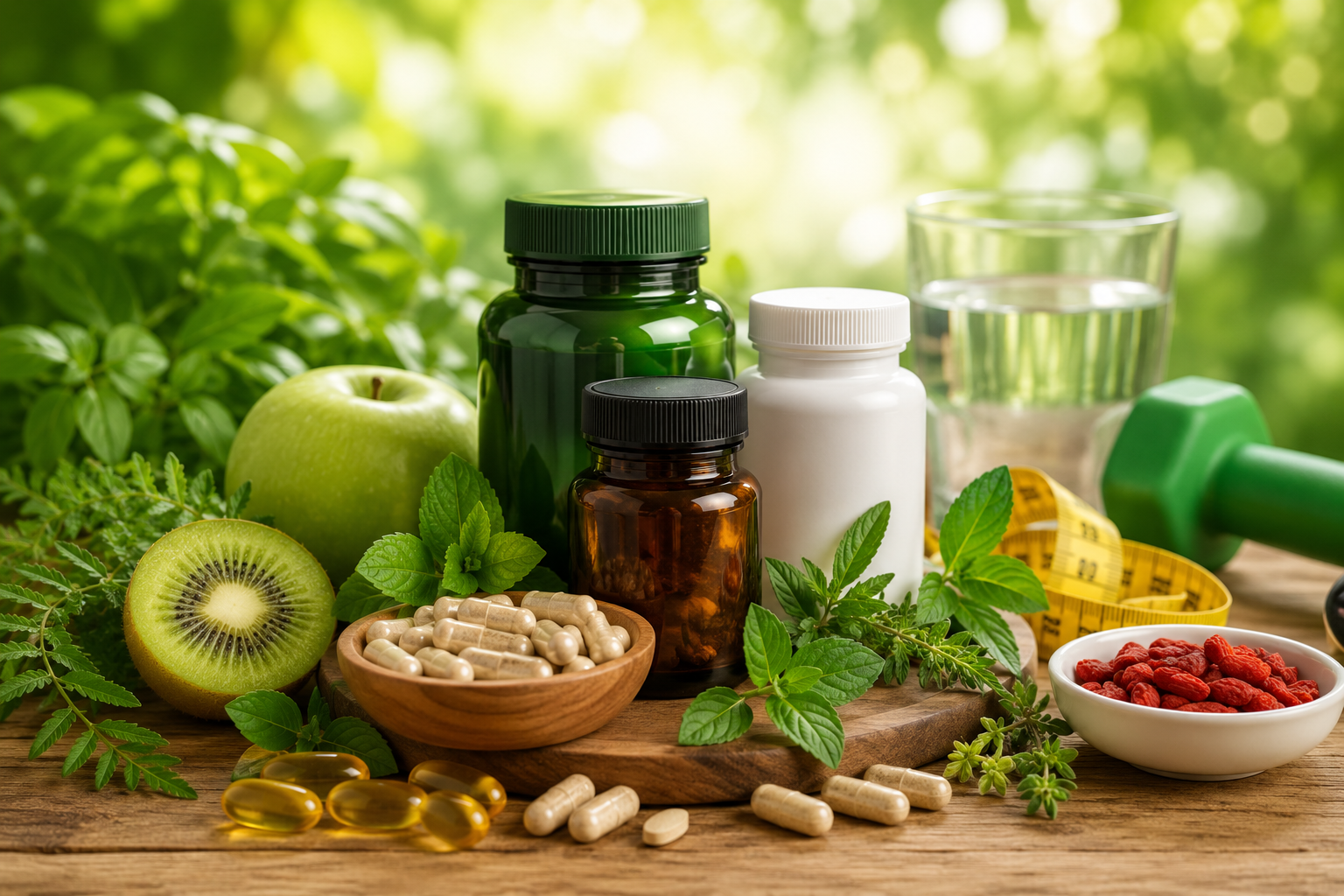
Natural supplements for weight loss are plant-based or nutrient compounds that modestly support fat loss when combined with a calorie-controlled diet and regular exercise. The six with the strongest 2026 clinical evidence are glucomannan, berberine, green tea extract, whey protein, magnesium, and psyllium husk. None replaces medical weight management for BMI over 35.
They won’t replace a healthy diet or consistent movement. They won’t substitute for a medical evaluation if you’re dealing with significant obesity. But when used correctly and with the right expectations some of them genuinely support the process.
Natural supplements for weight loss are plant-based or nutrient compounds that support fat loss when combined with a calorie-controlled diet and regular physical activity. The most evidence-backed options include:
- Glucomannan – reduces appetite by expanding in the stomach before meals
- Berberine – improves insulin sensitivity and regulates blood sugar
- Green Tea Extract (EGCG) – mildly increases calorie burn through thermogenesis
- Whey Protein – preserves lean muscle during a calorie deficit
- Magnesium – corrects a deficiency linked to impaired metabolism
- Psyllium Husk – supports gut health and reduces post-meal blood sugar spikes
These supplements work best as one part of a medically supervised weight loss plan, not as standalone solutions.

Why Good Natural Supplements for Weight Loss Are Only Part of the Answer
Weight loss is genuinely hard and that’s not a personal failing. It’s biology. Hunger hormones, metabolic adaptation, insulin resistance, poor sleep, and stress-driven cortisol. These are real physiological forces working against anyone trying to lose weight through willpower alone.
That’s why people go looking for help. The appeal of natural supplements for weight loss is understandable: they feel safer than prescription drugs, they’re accessible, and the marketing is designed to make them sound effortless. The truth is more nuanced but some of them genuinely have a role to play as support tools.
The key word is support. No supplement will do what bariatric surgery, structured lifestyle change, or metabolic medicine can do. But for someone who is in the earlier stages of their weight loss journey or looking to complement existing efforts, the right natural options can help.
6 Best Natural Supplements for Weight Loss, Backed by Clinical Research
1. Glucomannan (Konjac Fiber)
Glucomannan is probably the most underrated supplement in this space. It’s a soluble dietary fiber derived from the konjac plant, and it works simply: when consumed before a meal with water, it expands in your stomach and creates a feeling of fullness. Multiple studies, including several reviewed by the European Food Safety Authority, confirm that it helps reduce caloric intake when used consistently.
If you’re looking for natural dietary supplements for weight loss that address hunger rather than just metabolism, glucomannan is one of the most evidence-backed options available.
2. Berberine
Berberine has quietly become one of the most talked-about compounds in metabolic health research. It’s a plant alkaloid found in herbs like barberry and goldenseal, and it activates an enzyme called AMPK, sometimes nicknamed the “metabolic master switch,” which plays a key role in regulating blood sugar, fat storage, and insulin sensitivity.
For people dealing with insulin resistance (a common driver of weight gain, especially around the midsection), berberine may help address the root cause rather than just the symptom. Some studies have compared its effects to metformin in terms of blood sugar regulation. That said, berberine is a potent compound and should be used under medical supervision, especially for anyone on diabetes medications.
You can learn more about how insulin resistance connects to weight and metabolic health in our in-depth overview on the BodEvolve blog it’s one of our most-read posts for good reason.
3. Green Tea Extract (EGCG)
Green tea extract, particularly its active compound EGCG (epigallocatechin gallate), is one of the most studied natural compounds for fat metabolism. Research shows it can modestly increase thermogenesis the process by which your body produces heat and burns calories and may enhance fat oxidation during exercise.
The effect isn’t dramatic, but it’s consistent across multiple studies. For people incorporating natural weight loss supplements for women into a broader health routine, green tea extract is one of the safer and better-researched options. Caffeine sensitivity matters here most green tea extracts contain some caffeine, so timing and dosage matter.
4. Protein Supplementation (Especially Whey)
Protein isn’t always categorized as a “weight loss supplement,” but it arguably deserves that label. High-protein diets consistently outperform lower-protein approaches for fat loss, muscle preservation, and satiety. If you’re not getting enough protein from food which is extremely common a quality protein supplement can help close that gap.
This is especially important for people who have had bariatric surgery. Post-operative nutrition almost always requires protein supplementation, particularly after gastric bypass or gastric sleeve procedures, For adults trying to lose weight without surgery, protein is arguably the single most effective intervention available. Studies from the American Journal of Clinical Nutrition consistently show that shifting from 15 percent of calories from protein to 30 percent increases satiety, reduces total daily intake by roughly 400 calories on average, and preserves lean muscle mass during a deficit. Whey isolate is the most bioavailable option. Plant-based patients can substitute pea protein or a pea-rice blend without meaningful loss of results. Aim for 0.7 to 1.0 gram per pound of goal body weight, split across three meals.
5. Magnesium
Magnesium deficiency is surprisingly common especially in people who are overweight or have metabolic syndrome and low magnesium is associated with poor insulin sensitivity, disrupted sleep, and increased cortisol. None of those things help weight loss.
Supplementing with magnesium (particularly magnesium glycinate or citrate, which absorb better than magnesium oxide) won’t cause dramatic weight loss on its own. But for someone whose biology is quietly working against them, addressing a deficiency can help restore the conditions in which healthy weight management becomes more achievable.
6. Psyllium Husk
Another fiber-based option, psyllium husk is one of the most well-established natural dietary supplements for weight loss available. It slows digestion, stabilizes blood sugar after meals, reduces cholesterol, and helps you feel fuller longer. It’s also inexpensive, widely available, and well-tolerated by most people.
Consistency matters with psyllium daily use over weeks and months is where the benefit accumulates, not from occasional use.
Can You Take Psyllium Husk and Berberine Together?
A question we hear often at our Arlington and Dallas clinics: berberine or psyllium husk for weight loss, which one should I actually take? The honest answer is that they solve very different problems, and the right choice depends on what is driving your weight gain in the first place.
Choose berberine if: you have insulin resistance, prediabetes, PCOS, or notice most of your weight sits around your midsection. Berberine works on the metabolic level. It activates AMPK, improves how your cells respond to insulin, and can reduce fasting blood sugar. It is one of the few good natural supplements for weight loss with a mechanism this well studied. Typical dose is 500 mg, three times a day with meals.
Choose psyllium husk if: your bigger struggle is appetite, portion control, constipation, or blood sugar spikes after meals. Psyllium is a soluble fiber that expands in your stomach, slows digestion, and stabilizes glucose. It also lowers LDL cholesterol, which berberine does not do as directly. Start with 5 g in a glass of water before your largest meal.
Can you take both? Yes, and for many patients this combination makes sense. Take them at least two hours apart, because psyllium can bind to some compounds and reduce their absorption. Always run this by your physician if you are on any prescription medication, particularly diabetes or blood pressure drugs.
Natural Plant Based Weight Loss Supplements vs. Synthetic Options: What’s the Real Difference?
Natural plant based weight loss supplements come from whole plant sources like konjac root (glucomannan), the barberry shrub (berberine), or camellia sinensis leaves (green tea extract).
Synthetic weight loss aids, including prescription drugs like semaglutide, are lab-manufactured molecules designed to hit specific receptors with predictable potency.
The trade-off is real. Plant based options are gentler on the body, have longer safety records, and rarely cause the intense side effects associated with prescription weight loss drugs. The downside, they’re also less potent, work more slowly, and demand consistency to show results.
For patients in the early stages of their weight loss journey, or those with 20 to 40 pounds to lose without significant metabolic disease, natural plant based weight loss supplements can be a sensible starting point. For patients with a BMI over 35, uncontrolled diabetes, or years of failed dieting behind them, plants alone rarely move the needle enough. That’s a biology problem, not a willpower one, and it’s the conversation we have daily at our Arlington, Richardson, Dallas, and Texarkana clinics.
Is Berberine the Natural Ozempic? What to Know Before You Try It
The comparison between berberine and Ozempic has taken off on TikTok, and the science behind it is more interesting than the hype. Both compounds influence blood sugar regulation. Both can reduce appetite. But the mechanism is different, and so is the effect size.
Ozempic (semaglutide) is a GLP-1 receptor agonist. It directly mimics the gut hormone GLP-1, slows gastric emptying, and produces roughly 12 to 15 percent body weight loss over 68 weeks in clinical trials. Berberine works upstream. It activates AMPK, the enzyme that regulates cellular energy use, which improves insulin sensitivity and modestly reduces appetite. Trials show berberine produces around 2 to 5 percent body weight loss over 12 weeks, closer to metformin than semaglutide.
Calling berberine a “natural Ozempic” oversells it. Calling it a useful natural alternative for someone with early insulin resistance or PCOS is accurate. If you are considering it because Ozempic is out of reach, that is a reasonable starting point. If you are considering it because you have significant obesity and years of failed dieting, berberine will not close that gap on its own, and a bariatric evaluation is a more honest next step.
Natural Weight Loss Supplements, Plant Based: What’s Actually Effective
Not every supplement on this list comes from a plant, and that distinction matters to a growing number of patients who specifically want plant-based options. Here’s what qualifies and what doesn’t.
Glucomannan comes from the root of the konjac plant. Berberine is extracted from plants like barberry, goldenseal, and Oregon grape. Green tea extract is, obviously, plant-derived. Psyllium husk comes from the seeds of the Plantago plant. Of the six supplements covered above, four are genuinely plant based.
The two exceptions are whey protein, which is dairy-derived, and magnesium, which is a mineral rather than a plant compound. If a fully plant-based approach matters to you, pea protein or brown rice protein can substitute for whey, and magnesium glycinate is still mineral-based regardless of source, since magnesium doesn’t come from plants in a meaningful supplement form.
The evidence quality doesn’t change based on plant origin. Berberine’s research is just as strong whether you think of it as “natural” or “plant based.” The distinction matters more for personal or dietary reasons than for expected results.
Best Natural Weight Loss Products vs. Prescription: Wegovy Compared
Wegovy produces an average weight loss of around 15 percent of body weight over roughly 68 weeks, driven by GLP-1 receptor activity that suppresses appetite. Natural supplements for weight loss, including berberine and glucomannan, typically produce 2 to 8 percent weight loss through gentler mechanisms like fiber bulk and improved insulin sensitivity. Natural options don’t require a prescription, but they also don’t match Wegovy’s clinical effect size for significant weight loss.
Natural supplements for weight loss work through different, generally milder mechanisms. Glucomannan physically fills stomach space. Berberine activates AMPK, similar to how metformin works, but at a fraction of Wegovy’s effect on appetite signaling. Most clinical trials on natural supplements show single-digit percentage weight loss over similar timeframes, not the 15 percent range.
That gap matters. Natural supplements aren’t a substitute for Wegovy in people who need significant, rapid metabolic intervention. But they’re also not competing products. Someone in the early stages of a weight loss journey, or someone managing mild insulin resistance, may get real value from berberine or glucomannan without needing a prescription. Someone with a BMI over 35 and existing comorbidities is a different clinical picture entirely, and that’s a conversation worth having with a bariatric team rather than deciding alone.
| Wegovy (Semaglutide) | Natural Supplements | |
|---|---|---|
| Average weight loss | ~15% body weight (68 weeks) | 2–8% body weight, varies by supplement |
| Mechanism | GLP-1 receptor agonist, suppresses appetite | Varies: fiber bulk, AMPK activation, thermogenesis |
| Prescription required | Yes | No |
| Best fit for | Significant obesity, comorbidities | Early-stage support, mild insulin resistance |
| Medical supervision | Required | Recommended, especially with berberine |
Naturopathic Supplements for Weight Loss in Women: What the Research Shows
Hormonal factors including estrogen fluctuations, PCOS, perimenopause, and thyroid function affect weight in ways that are genuinely different from men’s experiences. Some supplements that get marketed as natural weight loss supplements for women specifically play on this (often with little evidence), while others do have real relevance.
Inositol (particularly myo-inositol) has growing evidence for women with PCOS and insulin resistance. Magnesium and vitamin D are often deficient in women with thyroid issues. And the role of the gut microbiome in weight regulation an area of active research may be relevant to probiotic supplementation.
What we’d caution against is assuming that a product labeled “for women” is meaningfully different from a general supplement. Read the ingredients, look for published research, and talk to a healthcare provider particularly one with metabolic medicine experience.
What Even the Best Natural Supplements for Weight Loss Cannot Do
There’s an honest conversation we need to have here: the best natural supplements for weight loss available cannot replicate what structural metabolic change can accomplish. They can’t override a severely dysregulated metabolism. They can’t produce the kind of sustained, significant fat loss that many people with obesity genuinely need to restore their health.
If you’ve been struggling with weight for years tried every diet, every supplement, every program, then it may be time to explore options that address the metabolic root of the problem rather than working around it.
Bariatric surgery including gastric sleeve and gastric bypass procedures isn’t the “easy way out.” It’s a metabolic intervention that fundamentally changes how your body processes food, regulates hunger hormones, and uses energy. For the right patient, the results are life-changing.
Our blog post on GLP-1 medications and weight loss is another resource worth reading it’s been one of our most-visited pages because it answers a question a lot of patients are asking right now: where do medications fit in, and how do they compare to surgical options?
When Natural Weight Loss Supplements Are Not Enough: A Turning Point
Here’s a simple rule of thumb: if you’ve been consistently using diet, exercise, and good natural supplements for weight loss for six months or more and haven’t seen meaningful, lasting results, that’s a signal not a failure. It’s information.
It may mean your metabolism is more complex than lifestyle changes alone can address. It may mean there’s an underlying issue insulin resistance, thyroid dysfunction, sleep apnea that’s undermining your efforts. Or it may mean that surgery or medication-assisted weight management is genuinely the right tool for your situation.
The BodEvolve Bariatric team, led by dr Frenzel, provides comprehensive evaluations that go beyond BMI. As a triple board-certified bariatric surgeon and dual fellowship-trained specialist, dr Frenzel and his team look at the whole picture metabolic health, comorbidities, history, goals and build a plan that actually matches your biology.
BodEvolve Bariatric serves patients across the Dallas-Fort Worth area and beyond, with locations in Arlington, Richardson, Dallas, and Texarkana. Whether you’re curious about surgery, want to understand your options, or simply want a medical evaluation of your current approach, a consultation is the right first step.
Quick Reference: Good Natural Supplements for Weight Loss
| Supplement | Primary Benefit | Evidence Level |
| Glucomannan | Fullness / appetite suppression | ★★★★☆ Strong |
| Berberine | Blood sugar / insulin sensitivity | ★★★★☆ Strong |
| Green Tea Extract (EGCG) | Thermogenesis / fat oxidation | ★★★☆☆ Moderate |
| Protein (Whey) | Satiety / muscle preservation | ★★★★★ Very Strong |
| Magnesium | Metabolic support / sleep | ★★★☆☆ Moderate |
| Psyllium Husk | Fiber / blood sugar stability | ★★★★☆ Strong |
Is It Time to Go Beyond Natural Supplements for Weight Loss?
If supplements and lifestyle changes haven’t gotten you where you want to be, it’s not because you’re not trying hard enough. It may simply be that your body needs a different kind of support.
The BodEvolve Bariatric team serving patients in Arlington, Richardson, Dallas, and Texarkana offers comprehensive evaluations that look at your full metabolic picture. Led by dr Frenzel, the team helps patients understand whether surgery, medication, nutrition optimization, or a combination is the right path forward. A consultation isn’t a commitment it’s a conversation.
