
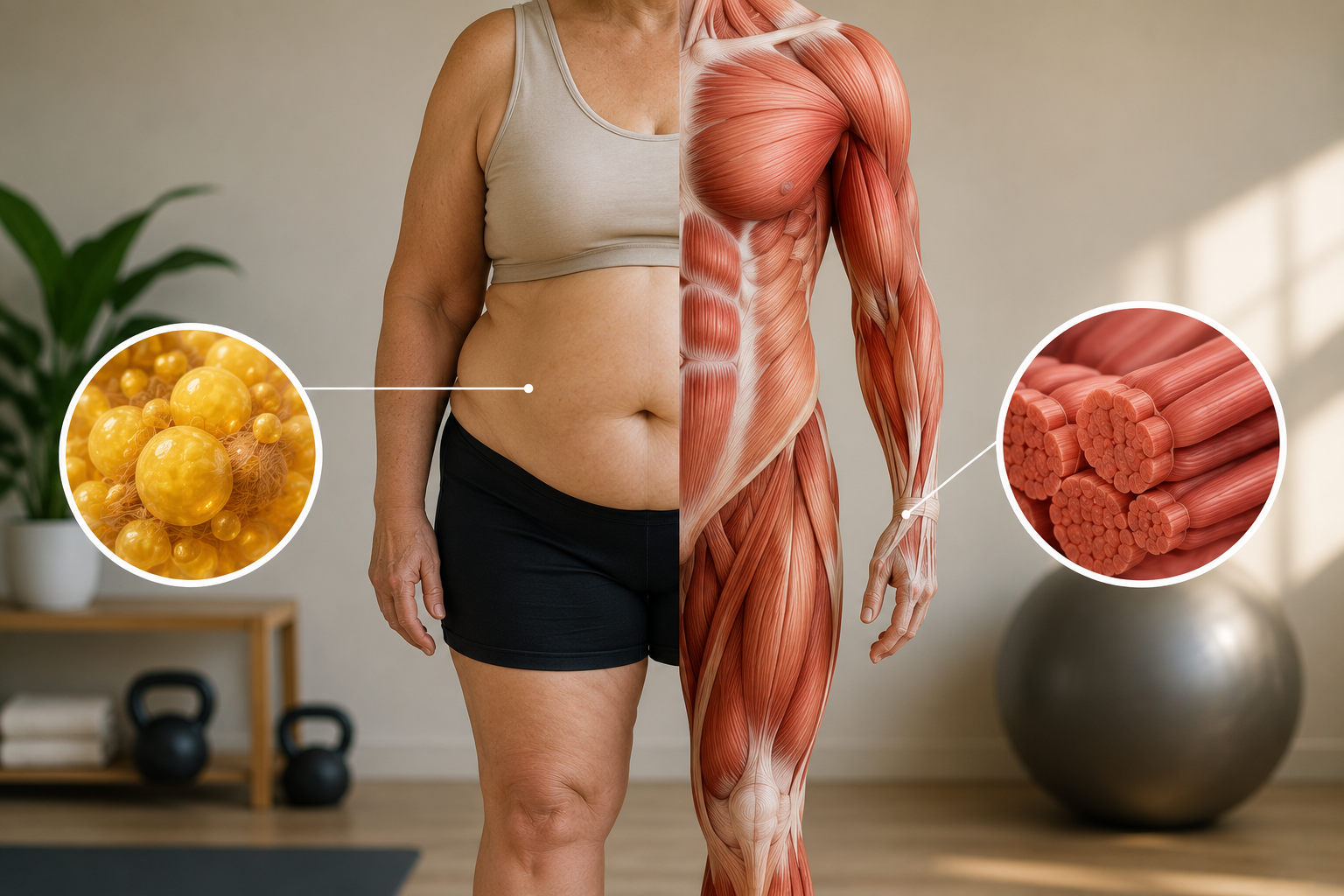
Sarcopenic obesity is a condition where a person carries too much body fat while losing significant muscle mass and strength at the same time. It sits at the crossroads of two problems once studied separately, and doctors now see it often in adults over forty, in people who have gained weight gradually over the years, and in patients recovering from long illnesses. If you have felt weaker despite the scale going up, or noticed that everyday tasks like carrying groceries or climbing stairs tire you faster than they used to, this article is worth reading through. At BodEvolve Bariatric, our team led by Dr. Clayton Frenzel and Dr. Brian Holt sees this pattern regularly, and we help patients turn it around with care that focuses on what your body is actually made of.
What is sarcopenic obesity
Sarcopenic obesity is not just about being heavy. It is a very specific mix of two body composition problems that show up together, and each one makes the other worse over time.
The muscle side of the equation
Muscle mass naturally declines with age, at about one percent per year after age thirty for most adults. When that drop speeds up because of poor nutrition, low activity, hormonal changes, or medical stress, sarcopenia sets in. You feel it as slower walking, a weaker grip, and difficulty getting up from a low chair.
The fat side of the equation
On top of the muscle loss, extra fat starts to accumulate. It often hides inside the muscles themselves, a pattern doctors call fatty infiltration, which makes the muscle look normal on the outside but perform poorly. Weight can stay steady on the scale even as the mix inside your body shifts in a harmful direction.
Why the combination is dangerous
Together the two conditions raise the risk of falls, fractures, type 2 diabetes, cardiovascular disease, and longer hospital stays. Doctors treat sarcopenic obesity as more urgent than obesity alone because the loss of function is what limits daily life, not the weight itself.
Sarcopenia and sarcopenic obesity
People often mix up the two terms, and the difference matters when you are choosing a treatment plan or setting realistic goals for the year ahead.
How sarcopenia begins
Sarcopenia usually starts quietly. A person may notice they cannot lift what they used to, or that their walking pace has dropped. Blood tests may still look fine. It is a body composition issue, not something you feel overnight, so it can go undiagnosed for years.
The overlap with obesity
When sarcopenia shows up in someone who is also carrying extra fat, the mix becomes sarcopenic obesity. The muscle loss is often masked by the weight, so patients and even some doctors miss it until symptoms become serious.
Sarcopenia vs Sarcopenic Obesity
| Feature | Sarcopenia | Sarcopenic Obesity |
| Muscle mass | Low | Low |
| Body fat | Normal or low | High |
| Common age of onset | Sixty and above | Forty and above |
| Visible on the scale | Weight often stable | Weight often high |
| Main risk | Frailty | Frailty plus metabolic disease |
Does obesity cause sarcopenia
Yes, in many cases obesity plays a direct role in muscle loss, and understanding why helps patients take action early rather than waiting for symptoms to pile up.
Fat tissue and muscle loss
Fat cells release chemical signals called cytokines, and when there is too much fat tissue in the body, those signals create chronic low-level inflammation. Muscles do not build or repair well in that environment, and existing muscle fibers can shrink over time.
Hormonal shifts and inflammation
Insulin resistance often shows up alongside heavier weight, and it blocks the process that normally feeds muscle after a meal. Testosterone and growth hormone tend to drop as well, which slows the repair cycle that keeps muscle strong.
Lifestyle factors that speed things up
Sitting for long hours, cutting protein too low during dieting, poor sleep, and skipping strength training all push muscle loss faster than the years would on their own.
Common risk factors
| Factor | Effect on muscle |
| Sedentary work | Rapid muscle atrophy |
| Low protein diet | Poor muscle repair |
| Crash dieting | Loss of muscle along with fat |
| Chronic inflammation | Blocked muscle growth |
| Insulin resistance | Reduced nutrient uptake |
Diagnosis of sarcopenic obesity
Diagnosis needs more than a bathroom scale, and this is where working with a specialized team makes a real difference in your final care plan.
Physical assessment
Doctors first check gait speed, chair stand ability, and grip strength using a handheld dynamometer. These simple tests reveal weakness even in people who look fit at first glance.
Body composition tests
A DEXA scan or bioelectrical impedance analysis separates fat mass from lean mass. This confirms whether muscle is truly low, not just hidden under layers of fat.
Strength and function tests
Timed walks, sit to stand counts, and balance tests fill in the picture of daily function, showing how the condition is affecting real life.
Common diagnostic tools
| Test | What it measures |
| DEXA scan | Fat and muscle by region |
| Grip strength | Upper body power |
| Gait speed | Lower body function |
| BIA | Quick body composition estimate |
| Sit to stand | Leg strength and endurance |
Sarcopenic obesity treatment
Treatment works best when it addresses nutrition, movement, and medical care together rather than tackling one at a time.
Nutrition first
Protein intake usually needs to rise, often to around one gram per pound of ideal body weight, spread across the day rather than loaded into one meal. Whole foods like eggs, chicken, fish, legumes, and dairy should lead the plate. Our blog on protein needs after weight loss has practical meal ideas.
Resistance training
Two to three sessions per week of proper strength work do more than any cardio routine can here. The goal is to rebuild muscle before it slips further, and even modest gains make everyday tasks easier.
Medical and surgical support
For patients with severe obesity, surgical options like gastric sleeve, gastric bypass, or duodenal switch can lower the fat load while a careful nutrition and training plan protects muscle. Our team also offers revision procedures for patients whose earlier surgery is no longer working well, and non-surgical weight loss support for those who want to try that route first.
Treatment approaches at a glance
| Approach | Best suited for |
| Diet and training only | Mild cases, early stage |
| Medication support | Metabolic issues present |
| Bariatric surgery | Severe obesity with health risks |
| Revision surgery | Weight regain after earlier procedure |
| Combined plan | Most sarcopenic obesity patients |
Moving forward with strength
Sarcopenic obesity is a condition you can turn around when the plan is built for both muscle and fat, not only weight loss on the scale. Dr. Clayton Frenzel and Dr. Brian Holt work with patients who want that complete approach, and the program at BodEvolve is designed to protect the muscle you already have while trimming the fat that is holding you back. If you are ready to speak with a team that treats the full picture, our clinics in Arlington, Richardson, Dallas, or Texarkana are open for consultations, and your first visit is where the real work begins.
