
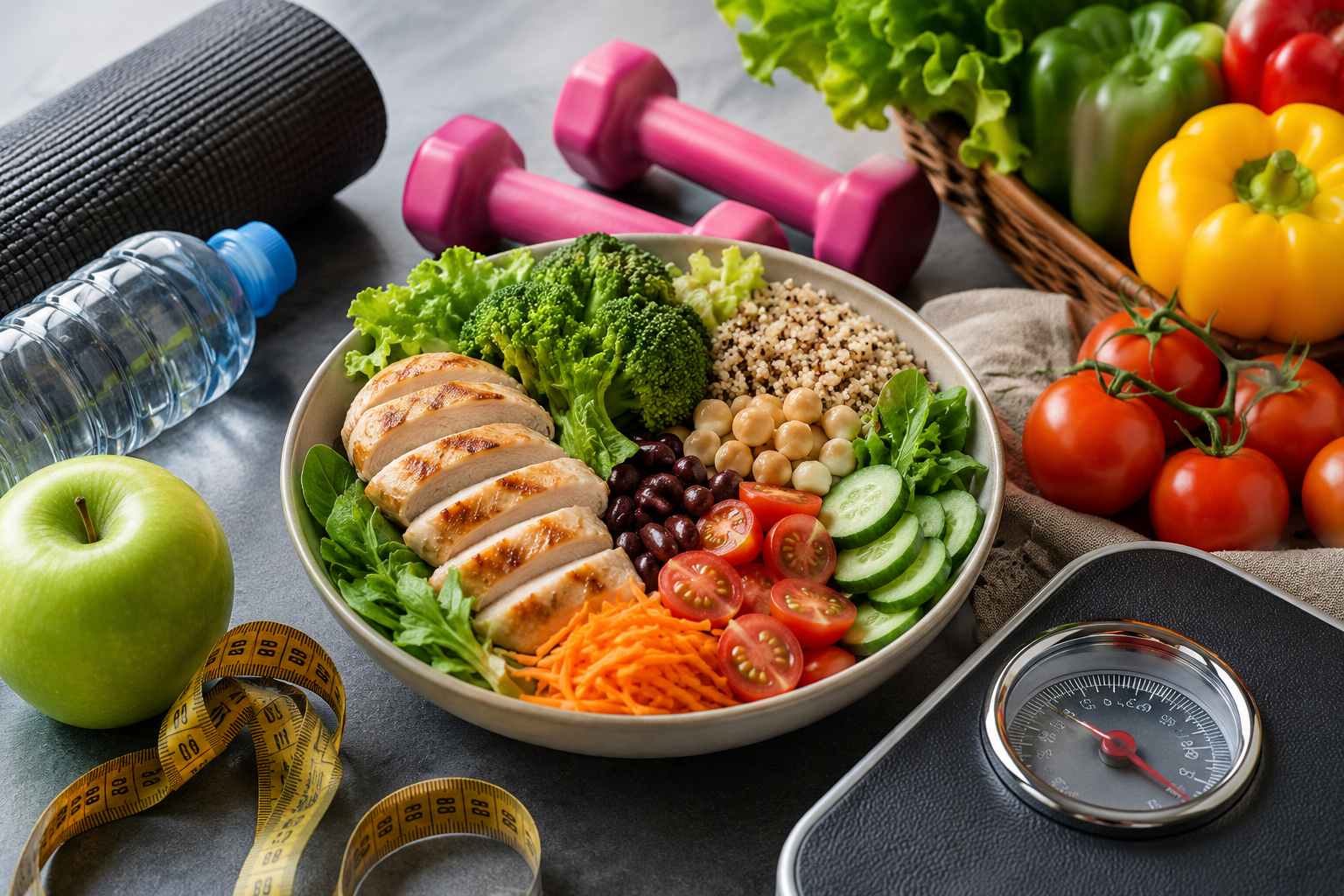
If you have typed “weight loss fitness diet” into Google more than once this year, you are not alone, and you are probably tired of generic advice that tells you to just eat less and move more. That advice is not wrong. It is just incomplete. A real weight loss fitness diet has to account for your actual metabolism, your schedule, and what happens when the scale stops moving even though you are doing everything right. This guide walks through the full picture, from daily meals to workout structure to the honest moment when diet and exercise alone stop being enough.
Fitness Diet Plans for Weight Loss: What Actually Works
Most fitness diet plans for weight loss fail for one simple reason. They are built around willpower instead of biology. A plan that depends on you never feeling hungry, never having a busy week, and never craving anything is a plan designed to fail by week three.
A plan that actually works has three non-negotiables. Protein at every meal, because it protects muscle and keeps you full longer than carbs or fat alone. A calorie deficit you can sustain for months, not days. And strength training at least twice a week, because muscle is what keeps your metabolism from slowing down while you lose weight. Everything else, whether that is intermittent fasting, low carb, or counting macros, is a delivery method for those three fundamentals.
Diet for Fitness and Weight Loss: Getting the Fundamentals Right
The right diet for fitness and weight loss is not about restriction. It is about sequencing. Eat protein first at every meal. Add fiber-rich vegetables next. Fill the rest of the plate with whole grains or starchy vegetables. This order alone slows digestion and blunts the blood sugar spike that leaves you hungry an hour later.
Hydration matters more than people expect. Thirst is frequently mistaken for hunger, and even mild dehydration can measurably slow your metabolic rate. Aim for half your body weight in ounces of water daily, more on workout days.
Sleep is the piece almost every diet for fitness and weight loss plan ignores. Under seven hours a night raises ghrelin, the hunger hormone, and lowers leptin, the fullness hormone. You can eat perfectly and still fight your own biology if sleep is broken.
Diet and Fitness Plan for Weight Loss: Building Your Weekly Structure
A workable diet and fitness plan for weight loss needs structure you can actually follow on a real week, not a fantasy week with unlimited time and energy.
- Training split: Three strength sessions (full body or upper/lower split), two to three cardio sessions (mix of steady state and intervals), and at least one full rest day.
- Meal structure: Three meals plus one or two protein-forward snacks, built around 25 to 35 grams of protein per meal, moderate carbs around training, and healthy fats spread throughout the day.
- Weekly check-ins: Weigh yourself two to three times a week at the same time of day, not daily. Daily fluctuations from water and sodium will mess with your head far more than they reflect real progress.
Fitness Diet for Weight Loss: A Sample Day
Here is what a real fitness diet for weight loss looks like on paper, using roughly 1,600 to 1,900 calories as a starting range for most adults (your specific target depends on your size, activity level, and goals):
- Breakfast: Greek yogurt with berries and a tablespoon of nut butter, or eggs with vegetables and whole grain toast
- Lunch: Grilled chicken or tofu, a large mixed salad, olive oil dressing, and a portion of quinoa or brown rice
- Snack: Protein shake or cottage cheese with fruit
- Dinner: Baked salmon or lean beef, roasted vegetables, and a small portion of sweet potato
- Evening (optional): Herbal tea or a small piece of dark chocolate if a sweet craving hits
This is a template, not a prescription. Swap proteins, vegetables, and grains freely based on preference and budget. The structure, protein at every meal, produce filling half the plate, is what matters.
Best Diet for Fitness and Weight Loss: Which Approach Actually Fits You
There is no single best diet for fitness and weight loss that works for everyone, and anyone claiming otherwise is selling something. What matters is which structure you can sustain.
Low carb works well for people who get hungry on higher carb intakes and want faster early results. Mediterranean-style eating suits people who want flexibility and long-term heart health alongside weight loss. Intermittent fasting appeals to people who prefer fewer, larger meals over frequent small ones. None of these outperform the others in long-term studies once total calories and protein are matched. Pick the one you can still be doing in a year.
Vegan Diet and Fitness for Weight Loss
A vegan approach to fitness and weight loss diets can absolutely work, but it requires more intentional planning around protein. Plant sources like lentils, tofu, tempeh, edamame, and plant-based protein powders need to be prioritized at every meal to hit the same protein targets that support muscle retention during a calorie deficit. Vitamin B12, iron, and omega-3 fatty acids also deserve attention, since they are harder to get from plant sources alone.
South Beach Diet and Fitness for Weight Loss
The South Beach diet approach, which limits refined carbs and emphasizes lean protein and healthy fats in structured phases, pairs reasonably well with a fitness routine because it keeps blood sugar stable, which supports consistent training energy. Like any structured diet, its long-term success depends less on the specific phase rules and more on whether the eating pattern still feels sustainable once the initial phase ends.
Most Effective Weight Loss Program With Fitness and Diet: When the Basics Stop Working
Here is the part most fitness blogs skip entirely, and it matters more than any of the meal plans above. Sometimes the most effective weight loss program with fitness and diet still is not enough, and that is not a willpower problem.
Conditions like insulin resistance, PCOS, and thyroid dysfunction can quietly work against a perfectly good diet and fitness plan. If you have been consistent with training and nutrition for three to six months and the scale genuinely will not move, it is worth understanding the early signs of insulin resistance, since this is one of the most common and most missed reasons diet and exercise plateau even when everything looks right on paper.
Best Weight Loss Diet and Fitness Combo: Putting It All Together
The best weight loss diet and fitness combo is simply the version of everything above that you will actually stick to for a year, not a month. Consistency beats optimization every time. A “good enough” plan followed for twelve months will always outperform a “perfect” plan abandoned after three weeks.
If you have hit a genuine plateau despite doing this consistently, medical options exist that were not available a decade ago. GLP-1 medications have changed the conversation significantly, and understanding how these medications work alongside diet and exercise is worth doing before assuming you have failed at something that was never going to work through willpower alone.
Fitness Coach, Weight Loss Nutrition, and Diet: When to Bring in Professional Support
A fitness coach paired with proper weight loss nutrition and diet guidance can shortcut a lot of trial and error, especially if you have never trained with structure before. A good coach adjusts your program as your body changes, catches form issues before they become injuries, and holds you accountable on weeks when motivation dips.
That said, a coach cannot diagnose a hormonal or metabolic issue. If your weight is not responding despite good coaching and good adherence, that is a conversation for a physician, not another program tweak.
Fitness Diet Chart for Weight Loss: A Simple Tracking Template
A basic fitness diet chart for weight loss does not need to be complicated. Track four things daily: protein grams, total calories, workout completed (yes or no), and hours of sleep. That is it. Most tracking apps handle the calorie and protein math automatically once you log meals. The goal is pattern recognition over weeks, not perfection over days.
When Diet, Fitness, and Willpower Aren’t Enough
For patients with a BMI over 35, or a BMI over 30 with conditions like Type 2 diabetes, high blood pressure, or sleep apnea, surgical options often produce results that diet and exercise alone cannot replicate, because procedures like gastric bypass and gastric sleeve surgery create structural changes to hunger and metabolism that persist long after the procedure, unlike a diet that only works while you are actively following it.
Cost is usually the first concern patients raise, and it is a fair one. Many patients do not realize insurance can cover a meaningful portion of surgical costs, including for patients who need a second procedure. If that applies to you, this guide on how to get insurance to cover revision bariatric surgery breaks down exactly what insurers look for.
Where to Get Help With Your Weight Loss Fitness Diet Plan
BodEvolve Bariatric works with patients across North Texas who have tried every diet and workout plan imaginable before finally getting real answers. The team, led by dr Frenzel, sees patients at clinics in Arlington, Richardson, Dallas, and Texarkana, offering everything from nutrition counseling to medically supervised weight management to surgical evaluation, depending on what your specific situation actually needs.
