
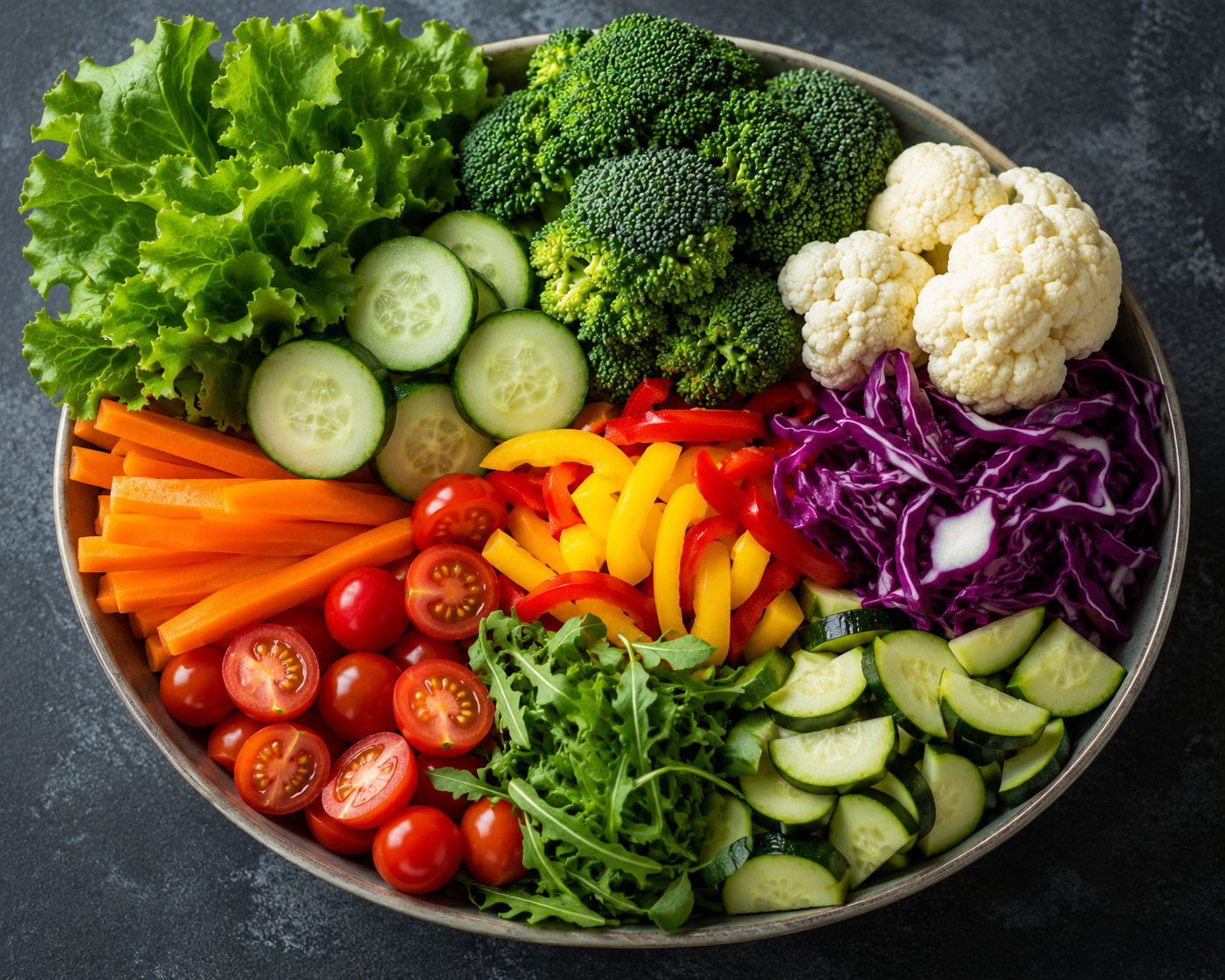
If you have ever finished a meal and still felt hungry twenty minutes later, volume eating might be the piece you have been missing. The idea is simple. You build your plate around foods that take up a lot of space and hold a lot of water and fiber, but do not carry many calories. You end up eating a large, satisfying amount of food while keeping your total intake in a comfortable range. It is not a crash diet or a gimmick. It is a practical way to feel full, eat real food, and still move steadily toward your weight goals.
What Is Volume Eating?
Volume eating is a way of choosing food based on how filling it is, not just how many calories it holds. A volume eater looks for meals that are heavy on the plate but light on calories, so hunger stays away for longer without a jump in daily intake.
Think of it this way. A handful of nuts and a giant bowl of roasted vegetables can carry the same calories, but one disappears in three bites and the other takes fifteen minutes to finish. The second option keeps your stomach busy and your brain satisfied. That is the whole principle in one sentence: choose food that gives you more to eat for every calorie you spend.
Most people who try this approach are not looking to feel deprived. They are tired of tiny portions that leave them hungry, and they want a way to eat that feels normal and sustainable.
How Volume Eating Works for Weight Loss
Weight loss comes down to a calorie deficit, meaning you take in slightly less energy than your body uses. The hard part is not the math. It is the hunger that usually comes with eating less. This is exactly where volume eating earns its place.
By filling your plate with high water and high fiber foods, you get the physical feeling of a full meal without the calorie load. Fiber slows digestion, water adds weight and bulk, and protein signals your brain that you have eaten enough. Put together, these three levers help you hold a deficit without white knuckling through the day.
So does volume eating work for weight loss? For most people, yes, because it makes a calorie deficit easier to live with over weeks and months, and consistency is what actually moves the scale. It works best when it is paired with enough protein and a realistic routine, not treated as a rule you have to follow perfectly.
The Best Foods for Volume Eating
The best foods for volume eating share a pattern. They are high in water or fiber, low in calorie density, and filling to eat. Here is a simple volume eating foods list to keep on hand.
- Leafy greens and salad bases like spinach, romaine, and cabbage
- Non starchy vegetables such as broccoli, cauliflower, zucchini, peppers, and mushrooms
- Broth based soups, which stretch a small amount of food into a large, warming bowl
- Berries and other high water fruits like melon and oranges
- Air popped popcorn as a light, high volume snack
- Potatoes and sweet potatoes, which rank among the most filling foods per calorie
The best vegetables for volume eating are the non starchy ones, because you can eat a large portion for very few calories. Pair these low calorie foods for volume eating with a protein source to stay full longer. That brings us to high protein volume eating, which matters more than most articles admit. Volume alone fills your stomach for an hour. Protein keeps hunger down for the rest of the afternoon. Eggs, chicken breast, plain Greek yogurt, tofu, white fish, and legumes all give you protein without a heavy calorie cost, and they turn a bowl of vegetables into an actual meal.
Volume Eating Breakfast Ideas
Breakfast sets the tone for how hungry you feel by lunch, so this is a smart place to start. A veggie packed egg white scramble with mushrooms, spinach, and peppers gives you a large, protein rich plate. Overnight oats made with a small amount of oats, a big scoop of Greek yogurt, and a pile of berries feels like far more food than the calories suggest.
If mornings after surgery feel confusing or your old habits no longer work, our guide to bariatric breakfast ideas walks through soft, high protein options that suit a smaller stomach.
Simple Volume Eating Snacks
Good volume eating snacks solve the mid afternoon slump without wrecking your day. Reach for a bowl of berries with cottage cheese, sliced cucumber and cherry tomatoes with a light dip, air popped popcorn, or a cup of broth based vegetable soup. Each one gives you something real to chew on and keeps your hands and mouth busy, which is often what a snack craving is really about.
Easy Volume Eating Recipes and Meals
You do not need complicated volume eating recipes to make this work. Most volume eating meals follow the same template. Start with a big base of vegetables, add a lean protein, and finish with a light sauce or seasoning for flavor.
A few examples of volume eating in practice: a stir fry loaded with cabbage, peppers, and mushrooms over a modest scoop of rice with shrimp; a giant salad with grilled chicken, chickpeas, and a light vinaigrette; a pot of vegetable and lentil soup you can portion across several days. The point is variety, not restriction. When the food tastes good and there is plenty of it, you are far more likely to stick with it.
Volume Eating Hacks That Actually Help
A few small volume eating hacks make a real difference. Drink a glass of water before meals so you start eating already partly satisfied. Serve food on a smaller plate so a modest portion looks generous. Start every meal with the vegetables or soup first, then move to the protein. Bulk up familiar dishes by folding in extra greens, cauliflower rice, or shredded cabbage so the meal grows without the calories. None of these are dramatic, but stacked together they quietly change how full you feel.
Does Volume Eating Stretch Your Stomach?
This is one of the most common worries, and it is where a lot of online advice gets it wrong. Your stomach is a muscular, elastic organ. It expands when you eat and returns to its resting size afterward, the same way it has your whole life. A large bowl of vegetables does not permanently enlarge it.
What can change over time is your appetite, meaning how much food feels normal to you, and that adjusts in both directions depending on your habits. For people who have had weight loss surgery the situation is different, because the stomach has been surgically reduced, so portion sizes and food choices should always follow the plan set by your surgical team rather than a general internet rule.
Where Volume Eating Fits After Bariatric Surgery
Here is the nuance most articles skip entirely. After weight loss surgery, your stomach holds far less, so eating a huge bowl of anything is neither possible nor the goal. This does not mean volume eating has nothing to offer. It means the priority flips. Instead of chasing sheer volume, you focus on nutrient density first, choosing high protein, high fiber foods that deliver the most nutrition in a very small portion, then adding gentle volume from vegetables where your plan allows.
At BodEvolve Bariatric Surgery Center in the Dallas and Fort Worth area, dr Frenzel, who is triple board certified, and Dr. Brian Holt, an ASMBS and ACS Fellow, build nutrition guidance around each patient rather than a one size fits all diet. Whether you are considering gastric bypass or a gastric sleeve, the way you apply these food principles is adjusted to your procedure and your recovery stage. Some patients also blend these ideas with other structured plans, like a keto diet meal plan, when it fits their goals and their care team agrees.
A Simple Volume Eating Meal Plan to Start
You do not need a rigid volume eating meal plan to benefit from this. Use these ideas as a flexible template and adjust portions with your dietitian, especially if you have had surgery.
- Breakfast: veggie egg white scramble with a side of berries
- Lunch: large chicken and chickpea salad with a light vinaigrette
- Snack: Greek yogurt with fruit, or a cup of broth based soup
- Dinner: vegetable stir fry with shrimp over a small portion of rice
Notice there are no strict calorie numbers here. The right amount depends on your body, your activity, and your medical history, which is why a personalized plan always beats a generic one.
Volume eating is one of the most livable ways to eat less without feeling like you are eating less, and it fits neatly alongside the medical and surgical care our team provides. If you want a nutrition plan built around your body and your goals, the BodEvolve team supports patients across Dallas, Arlington, richardson, and texarkana. Reach out to start a plan that actually fits your life.
