
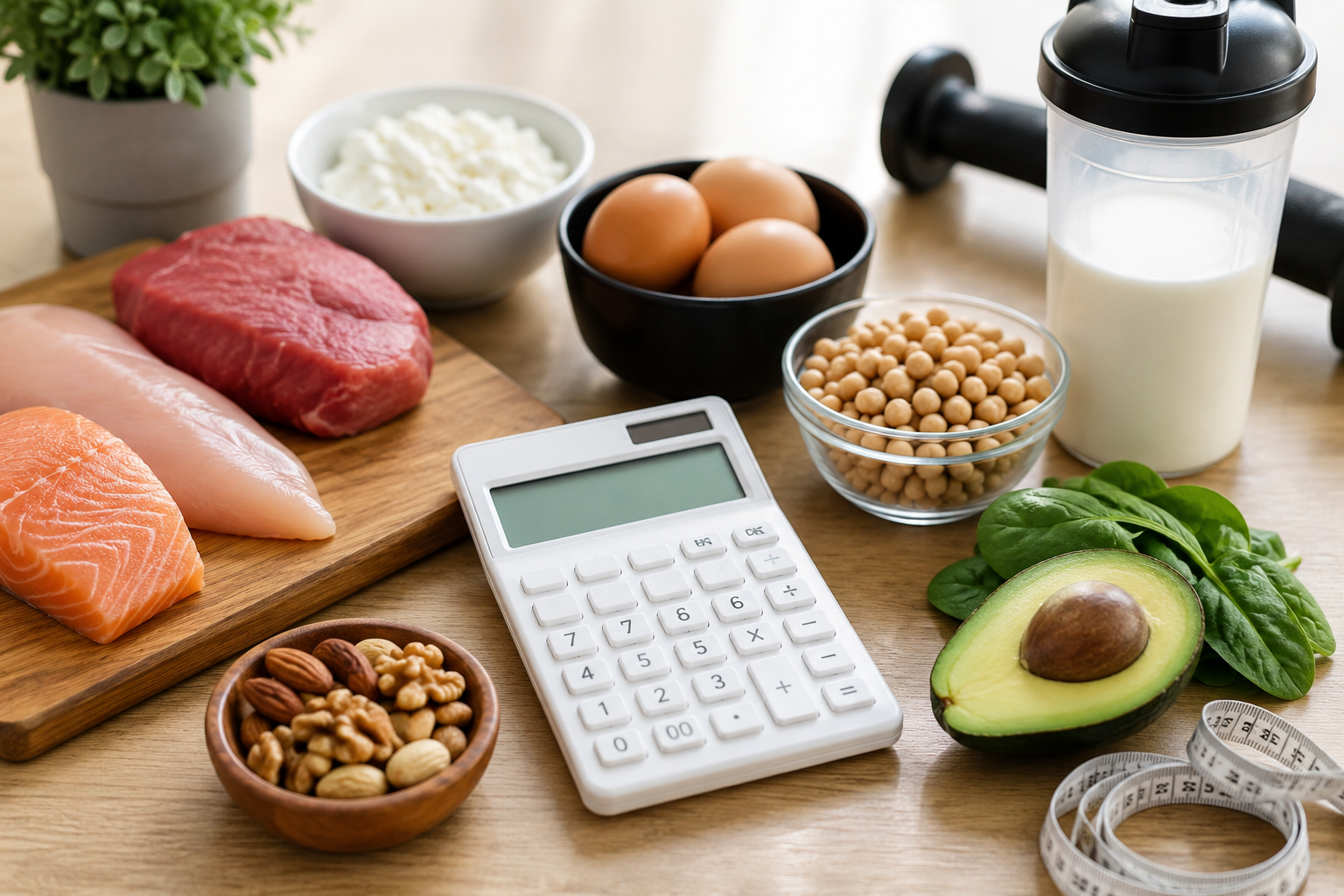
How much protein do you need for weight loss? To calculate protein for weight loss, multiply your goal body weight in pounds by your activity multiplier:
- Sedentary: 0.7 to 0.8 grams per pound
- Light activity (walks 3 to 4 days weekly): 0.8 to 0.9 grams per pound
- Moderate exercise (gym 3 to 5 days weekly): 0.9 to 1.0 grams per pound
- Heavy training or post-bariatric surgery: 1.0 to 1.2 grams per pound
Example: A 150-pound goal weight with moderate activity needs 135 to 150 grams of protein daily.
This guide fixes that. We’ve worked with patients across Arlington, Dallas, richardson, and texarkana for years, and the protein math we use in clinic is what you’ll find below. No email gates. No fluff. Just the number you actually need.
Protein Calculator for Weight Loss Female: Why Women Need Different Numbers
Women lose weight differently than men. That isn’t a marketing line, it’s biology. Lower muscle mass at baseline, different hormone patterns, and a tendency to lose lean tissue faster during a deficit if protein is too low.
The protein for weight loss female calculator approach we use accounts for three things at once: your goal weight (not current weight), your activity load, and whether you’re perimenopausal or postmenopausal. A 42-year-old woman trying to lose 30 pounds needs roughly 0.8 to 1.0 grams of protein per pound of goal body weight. So if your goal is 150 pounds, that’s 120 to 150 grams per day.
Most generic protein intake calculator for weight loss female tools online will give you 60 to 80 grams. That number will keep you alive. It will not protect your muscle, your metabolism, or your skin elasticity as you drop weight. Big difference.
Quick reality check from clinic: women who eat 100+ grams daily during weight loss report less hair shedding, fewer hunger crashes at 3 PM, and noticeably better outcomes after surgery if they go that route. The protein for weight loss female calculator free version below reflects that.
Protein Weight Loss Calculator: The Formula That Actually Works
A protein calculator for weight loss uses three inputs to find your daily target: your goal body weight, your activity level, and whether you are preserving muscle or just reducing fat. The formula works like this: multiply your goal weight in pounds by a number between 0.7 and 1.2 based on your activity. The result is your daily protein intake in grams. Someone with a 150-pound goal weight who works out three to four times per week should aim for 135 to 150 grams of protein daily.
Use this instead. It’s the same formula we walk patients through when they come in to meet dr Frenzel for their first consultation:
Step 1: Take your goal body weight in pounds.
Step 2: Multiply by your activity factor below.
Step 3: That’s your daily protein target in grams.
| Activity Level | Multiplier | Example (150 lb goal) |
| Sedentary, mostly desk work | 0.7 to 0.8 | 105 to 120 g |
| Light activity, walking 3 to 4 days | 0.8 to 0.9 | 120 to 135 g |
| Moderate, gym 3 to 5 days | 0.9 to 1.0 | 135 to 150 g |
| Heavy training or post-bariatric surgery | 1.0 to 1.2 | 150 to 180 g |
That’s it. No app needed. No subscription. This is the protein intake for weight loss calculator we hand to patients on a printout. The free protein calculator for weight loss tools that charge you ten bucks a month are running this exact math behind a paywall.
If you’re wondering how much protein for weight loss calculator results compare across different sites, the honest answer is: the trustworthy ones land within 10 to 15 grams of each other. If yours is way outside that range, something is off.
How Many Grams of Protein a Day Do You Actually Need?
For most adults trying to lose weight, protein needs land between 100 and 180 grams per day. The old federal RDA of 0.36 grams per pound was set for a healthy adult sitting on a couch, not someone in a calorie deficit trying to keep muscle. During weight loss, that number needs to roughly double.
Here is the honest range we use in clinic:
- Sedentary adult, small deficit: 0.7 grams per pound of goal weight
- Active adult, moderate deficit: 0.9 to 1.0 grams per pound of goal weight
- Post-bariatric or heavy lifter: 1.0 to 1.2 grams per pound of goal weight
A 160-pound woman aiming for 140 pounds who walks four days a week needs about 126 grams of protein daily. A 220-pound man dropping to 190 while lifting three days a week needs closer to 190 grams. The protein target for weight loss shifts with your goal, not your starting point.
Protein Calculator for Weight Loss and Muscle Gain: When You Want Both
This is the question we get most often from patients in their 30s and 40s. They want the scale to go down. They also want to look better in a swimsuit, which means keeping (or building) muscle while the fat comes off.
Here’s the thing: you cannot maximize both at the same time. You can do both, just not at full speed simultaneously. The body has to choose where to allocate energy.
That said, the protein calculator for weight loss and muscle gain math looks like this:
- For a slow, sustainable recomp: 1.0 g per pound of goal weight
- For aggressive fat loss while preserving muscle: 1.1 to 1.2 g per pound of goal weight
- For active muscle building during a small deficit: 1.0 to 1.1 g per pound of current weight
A 180-pound man wanting to drop to 165 while keeping his lifts strong should eat around 180 to 200 grams of protein daily. That sounds like a lot until you realize a chicken breast, two eggs, a Greek yogurt, and a scoop of whey already puts you at 110.
The best protein calculator for weight loss 2026 tools factor in resistance training frequency. If yours doesn’t ask whether you lift weights, it’s giving you generic advice.
Calorie and Protein Calculator for Weight Loss: Why the Two Work Together
Protein alone doesn’t make you lose weight. Calories do. Protein decides what kind of weight you lose.
The calorie and protein calculator for weight loss combo works like this:
- Find your maintenance calories (your goal weight times 14 to 15 is a decent starting estimate for most adults)
- Subtract 500 calories per day for roughly one pound of fat loss per week
- Lock in your protein number from the formula above
- Fill the remaining calories with carbs and fats in whatever ratio fits your life
So a woman with a 150-pound goal weight eats around 2,100 maintenance, drops to 1,600 for fat loss, hits 130 grams of protein (520 calories), and has about 1,080 calories left for everything else.
This protein and calorie calculator for weight loss approach beats the “eat 1,200 calories and pray” method every single time. We’ve watched hundreds of patients fail on aggressive low-calorie diets only to succeed when they raised protein and only modestly cut calories.
What Should Your Macros Look Like? Protein, Carbs, and Fat for Weight Loss
The classic 40/30/30 split isn’t wrong, it’s just one option. After working with bariatric patients across our Texas clinics, here’s what we’ve actually seen work:
For most women during weight loss:
- Protein: 30 to 35% of calories
- Fat: 30 to 35% of calories
- Carbs: 30 to 40% of calories
For men during weight loss:
- Protein: 30% of calories
- Fat: 25 to 30% of calories
- Carbs: 40 to 45% of calories
For post-bariatric patients (first 12 months):
- Protein: 40% of calories
- Fat: 30% of calories
- Carbs: 30% of calories
The carb protein fat ratio for weight loss calculator results you see online almost always default to a one-size split. Your body isn’t one size. Adjust based on what keeps you full and what doesn’t crash your energy at 3 PM.
High Protein Diet for Weight Loss: When to Push Your Daily Intake Higher
Some patients ask if they can go above 1.2 grams per pound. The high protein diet for weight loss calculator answer is: yes, but with caveats.
Going to 1.3 or 1.4 grams per pound of goal weight is safe for healthy kidneys and can help with appetite control. Above 1.5 g/lb, you stop getting additional benefit and you start displacing other nutrients. The protein goal for weight loss calculator ceiling for most people sits at around 1.4 g/lb of goal body weight.
If you have any kidney concerns, talk to a doctor first. Not a TikTok doctor. An actual one. This is doubly true after weight loss surgery, where protein needs are real but your remaining stomach has limits on how much you can physically consume.
Daily Protein Calculator for Weight Loss: Spreading It Across the Day
Hitting 130 grams in one sitting at dinner doesn’t work. Your body absorbs roughly 30 to 40 grams of protein per meal optimally. Beyond that, the curve flattens.
The daily protein calculator for weight loss math says: divide your total by 4 to 5 meals.
So 130 grams looks like:
- Breakfast: 30 g (3 eggs + Greek yogurt)
- Snack: 20 g (protein shake or cottage cheese)
- Lunch: 35 g (chicken salad with quinoa)
- Snack: 15 g (turkey roll-ups or jerky)
- Dinner: 30 g (salmon or lean beef with veggies)
This spread matters more after gastric sleeve or gastric bypass procedures because your stomach capacity is dramatically reduced. We coach post-op patients to eat 6 to 7 mini-meals daily during the first 6 months. Same total protein, more frequent intake.
Why Most Online Protein Calculators Fail Bariatric Surgery Patients
Here’s the gap nobody on page one of Google is filling. Standard protein calculators assume a normal stomach, normal digestion, and normal absorption.
After bariatric surgery, none of those are true.
Patients who have had a gastric sleeve procedure absorb protein differently. Bypass patients absorb even less. The general clinical guideline our team follows:
- Gastric sleeve patients: 60 to 80 grams of protein daily, minimum
- Gastric bypass patients: 80 to 100 grams of protein daily, minimum
- Revision patients: assessed individually, often higher
This isn’t a number any online protein intake calculator for weight loss will give you. It comes from clinical experience, lab work, and watching what actually keeps post-op patients healthy long-term.
If you’re considering surgery and wondering about coverage, our guide on how to get insurance to cover revision bariatric surgery walks through the documentation process most insurance plans require.
Real Sample Day: A Texas Patient’s 140g Plan
Let’s run a real example. Sarah, 38, lives in Dallas, current weight 195 pounds, goal weight 155 pounds, walks 4 days a week.
Her protein calculator for weight loss female free target: 155 x 0.9 = 140 grams of protein per day.
Her actual day looks like this:
7 AM: Two eggs scrambled with one egg white, half cup of cottage cheese (28 g)
10 AM: Protein shake with almond milk and one tablespoon of peanut butter (28 g)
1 PM: Grilled chicken breast (5 oz) on a salad with chickpeas (38 g)
4 PM: String cheese and turkey jerky (15 g)
7 PM: Salmon (5 oz) with roasted vegetables and a small sweet potato (32 g)
Total: 141 grams. Done.
This isn’t extreme. This isn’t expensive. This is what a working mom in Texas actually eats when she’s serious about losing 40 pounds without losing her muscle, her hair, or her sanity.
Free Protein Calculator for Weight Loss vs Paid Tools: Is There a Difference?
Honestly? Not really. The free protein calculator for weight loss tools and the paid ones run the exact same math. What you’re paying for is usually:
- A nicer interface
- Tracking and graphs
- Integration with a food log
- A meal plan PDF
None of that changes the actual number you need to eat. If you want the tracking, pay for the tracking. If you just need the number, you already have it from the table above.
The best protein calculator for weight loss isn’t a tool. It’s the formula plus consistency for 12 weeks.
When the Protein Calculator Isn’t Enough
We need to be honest about something. If you’re carrying 80 or 100 pounds of excess weight, a protein calculator for weight loss is a piece of the puzzle. It is not the whole puzzle.
Patients with BMIs above 35 who have tried diet and exercise repeatedly often need more than a calculator. They need a comprehensive plan. Sometimes that includes medical weight loss support, GLP-1 medications, or bariatric procedures like gastric bypass or gastric sleeve.
If you’ve spent the last five years on different diets and the scale keeps coming back up, that’s not a willpower problem. That’s a metabolic and physiological one. A consultation with dr Frenzel can help you figure out which path makes sense.
