
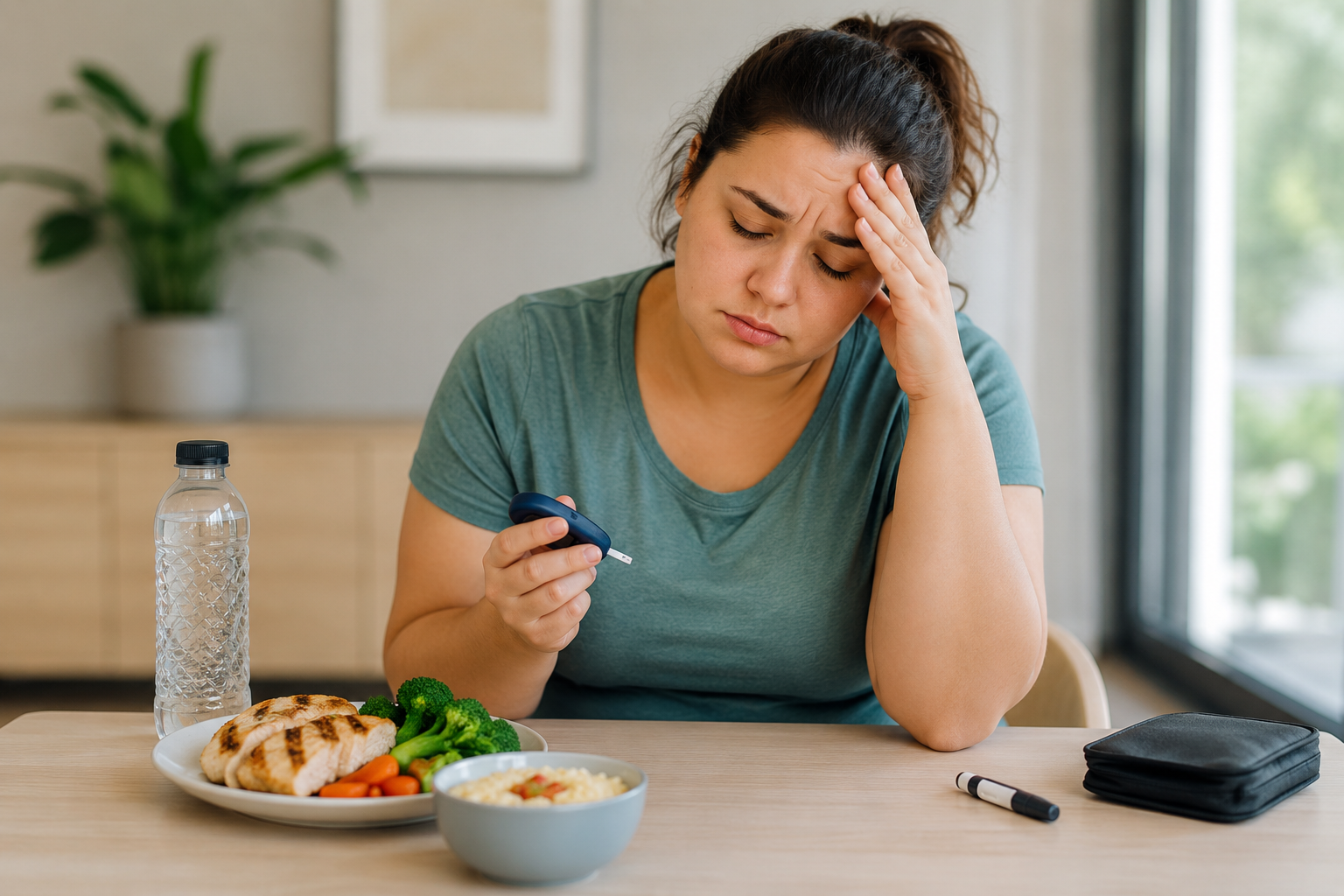
If you had a great meal, felt perfectly fine for an hour, and then suddenly your hands started shaking, your heart started racing, and you felt like you might pass out you’re not imagining it, and you’re not alone. Post bariatric hypoglycemia is one of those complications almost nobody warns you about before surgery, and it can be genuinely frightening the first time it happens, especially if you don’t know what’s causing it. The good news is that once you understand what’s actually going on in your body, it becomes a lot less scary and a lot more manageable. Let’s walk through why this happens, what to watch for, and what actually helps.
What Is Post-Bariatric Reactive Hypoglycemia?
Reactive hypoglycemia after bariatric surgery sometimes shortened to PBH in medical literature is a drop in blood sugar that shows up after you eat, typically one to three hours later. It sounds backwards. You just ate. Shouldn’t your blood sugar be going up, not crashing?
Here’s what’s actually happening. After gastric bypass or sleeve surgery, food moves through your digestive system differently than it used to. Instead of being slowly broken down in the stomach the way it once was, food (especially sugar and refined carbs) reaches your small intestine much faster. That rapid arrival of sugar triggers an exaggerated hormonal response a flood of insulin and gut hormones, GLP-1 being one of the biggest players, which we’ll get into shortly. Your body essentially overcorrects. Insulin floods in to deal with the sugar spike, and blood glucose plummets below normal a couple of hours later, sometimes hard and fast.
Doctors often refer to this as hyperinsulinemic hypoglycemia, and it tends to be more common after Roux-en-Y gastric bypass than after sleeve surgery, since bypass reroutes the digestive tract more dramatically. It’s also worth knowing that this isn’t usually an early complication. Most patients don’t notice it in the first few weeks or months after surgery. It tends to show up later, anywhere from six months to a few years post-op, often right around the time weight loss has really taken hold and the body’s metabolism has shifted significantly.
It’s also different from dumping syndrome, which people sometimes confuse it with. Dumping syndrome usually hits within the first hour after eating and comes with a wave of GI symptoms, cramping, nausea, diarrhea, alongside some blood sugar changes. Reactive hypoglycemia tends to show up later and center more specifically on neuroglycopenic symptoms, meaning your brain isn’t getting enough glucose, which produces a different symptom pattern entirely.
Post Bariatric Hypoglycemia Symptoms to Watch For
Symptoms generally fall into two categories, and it’s worth knowing both, because the second category is easy to miss, brush off, or misattribute to something else entirely, like anxiety or dehydration.
The early warning signs, essentially your body sounding the alarm, include:
- Shakiness or trembling in your hands
- Sudden sweating, even in a cool room
- A racing or pounding heart
- Sudden, intense hunger that comes out of nowhere
- A jittery, anxious feeling with no obvious trigger
- Irritability or a short temper that feels out of character
If blood sugar keeps dropping past that point, symptoms escalate into something more serious:
- Confusion or trouble thinking clearly
- Blurred or tunnel vision
- Slurred speech
- Dizziness, lightheadedness, or a feeling like you might faint
- Loss of coordination
- In severe cases, seizures or full loss of consciousness
Here’s the part that matters most: if you’re regularly hitting that second list, this isn’t a “push through it and hope it passes” situation. That level of symptom deserves a real medical evaluation, not another Google search at 2 a.m. Mild, early-stage episodes can often be managed at home once you’ve learned your personal triggers. But frequent or severe episodes, especially any that involve fainting or confusion, need a proper workup to rule out other causes and confirm what’s really going on.
Why GLP-1 Is Linked to Post Bariatric Surgery Hypoglycemia
This is where things get genuinely interesting, because GLP-1 shows up on both sides of this story, as a cause and, potentially, as part of the treatment.
GLP-1, short for glucagon-like peptide-1, is a hormone released by your gut in response to food. After bypass surgery in particular, GLP-1 levels spike much higher and much faster than they did before surgery, because food is reaching the small intestine so quickly. That surge is a major driver of the exaggerated insulin response we talked about earlier. So in one very real sense, GLP-1 is part of what causes post-surgical hypoglycemia in the first place.
But here’s the twist that’s been getting attention in bariatric and endocrinology circles over the last few years: GLP-1 receptor agonists, the same class of medication behind drugs like semaglutide and liraglutide, have also been studied as a potential treatment for this exact condition. It sounds contradictory, and honestly, researchers are still working out exactly why it seems to help in some patients. The leading theory is that a steady, controlled dose of a GLP-1 medication smooths out those wild insulin peaks instead of triggering one massive spike after a meal. Some studies and case reports have shown real improvement in hypoglycemic episodes with this approach. Others have shown mixed or inconclusive results, and the overall body of research is still considered limited.
What this means practically: GLP-1 therapy for hypoglycemia isn’t a first-line, do-it-yourself fix, and it’s not something to try just because you’ve heard it works for other people. It’s a conversation to have with a physician who understands both bariatric surgery and how these medications behave, especially since dosing and monitoring look very different when the goal is preventing lows rather than managing blood sugar highs, which is what these drugs were originally designed for.
Diet for Post Bariatric Hypoglycemia: What Actually Works
For most patients, diet is where the real, sustainable progress happens, often well before medication is ever on the table. A handful of changes tend to make the biggest difference:
- Cut back on simple sugars and refined carbohydrates. These digest fast and produce the sharpest insulin spikes. Fruit juice, white bread, sugary cereal, candy, and soda are the usual culprits worth trimming first.
- Pair carbs with protein and healthy fat every time you eat. Carbs eaten alone are what tend to set off the crash a couple of hours later. Protein and fat slow digestion and blunt that insulin surge.
- Eat smaller meals, more often. Five or six small meals spread through the day tends to keep blood sugar much steadier than three large ones, and it prevents the dramatic post-meal swings that trigger symptoms.
- Add more soluble fiber. Foods like beans, lentils, oats, and vegetables slow gastric emptying, which directly counters the “food moving too fast” problem that’s driving this whole issue.
- Avoid drinking liquids with meals. Liquids can push food through your pouch or sleeve faster, which is the opposite of what you want when speed is already the core problem.
- Limit alcohol, which can independently drop blood sugar and make symptoms harder to distinguish from a true hypoglycemic episode.
- Keep a fast-acting snack on hand for actual lows, something like glucose tablets or a small juice box, used only when you’re genuinely symptomatic rather than as a daily habit, since overcorrecting can restart the cycle.
Working with a registered dietitian who has specific experience with bariatric patients makes a real difference here. A generic low-sugar diet plan isn’t the same as one built around how your particular anatomy processes food post-surgery, and getting that tailored guidance early tends to shorten how long it takes to feel steady again.
How Is It Actually Diagnosed?
If you’re dealing with recurring symptoms, your care team will usually want more than just a description of how you feel. A proper workup often includes tracking blood glucose readings during symptomatic episodes (sometimes with a continuous glucose monitor worn for a week or two), reviewing your eating patterns and meal timing, and occasionally a supervised mixed-meal tolerance test, where your blood sugar and insulin levels are tracked closely after a controlled meal. This helps rule out other causes of your symptoms and confirms whether what you’re experiencing truly fits the pattern of post-bariatric hypoglycemia rather than something else with overlapping symptoms.
Does Gastric Bypass or Gastric Sleeve Affect Your Risk?
Not every bariatric procedure carries the same level of risk here. Gastric bypass reroutes the digestive tract more extensively, which is a big part of why it’s more commonly associated with reactive hypoglycemia. Food bypasses more of the stomach and reaches the small intestine faster, amplifying that hormonal cascade. Gastric sleeve surgery can still lead to hypoglycemia in some patients, but it tends to happen less frequently, since the anatomical rerouting involved is less dramatic.
This doesn’t automatically make one procedure “better” than the other across the board. Weight loss goals, existing health conditions, and personal risk factors all play into that decision. It just means your surgeon should be walking you through this specific risk as part of your consultation, based on your history and the procedure you’re actually considering.
When to Talk to a Bariatric Specialist
If you’re experiencing recurring symptoms, don’t just try to white-knuckle your way through it. This is a well-documented, well-studied complication, and there are real, effective strategies to manage it, but getting there usually takes someone who genuinely understands post-bariatric physiology, not just general nutrition advice.
Dr. Frenzel and the team at BodEvolve see this regularly and can help figure out whether your situation calls for dietary adjustments, a medication conversation, further testing, or some combination of all three.
Getting Care Near You in DFW
BodEvolve sees patients throughout the Dallas-Fort Worth area, including Arlington, Richardson, Dallas, and Texarkana. You don’t need to have had your original surgery with us to get help managing this. A lot of patients come to us specifically for complication management after having surgery elsewhere.
Will Insurance Cover Treatment for This?
If your hypoglycemia is tied to a complication from your original procedure, additional treatment or even a revision surgery might come into the picture, and a lot of patients assume insurance simply won’t help with that. It’s worth actually checking before assuming the worst. We’ve put together a full breakdown on how to get insurance to cover revision bariatric surgery that walks through exactly what to ask your provider and how to build a solid case for coverage.
If you’re dealing with symptoms like this and want an actual plan instead of another list of tips, our team can walk through your history and figure out exactly what’s driving it. Reach out to BodEvolve to get started.
