
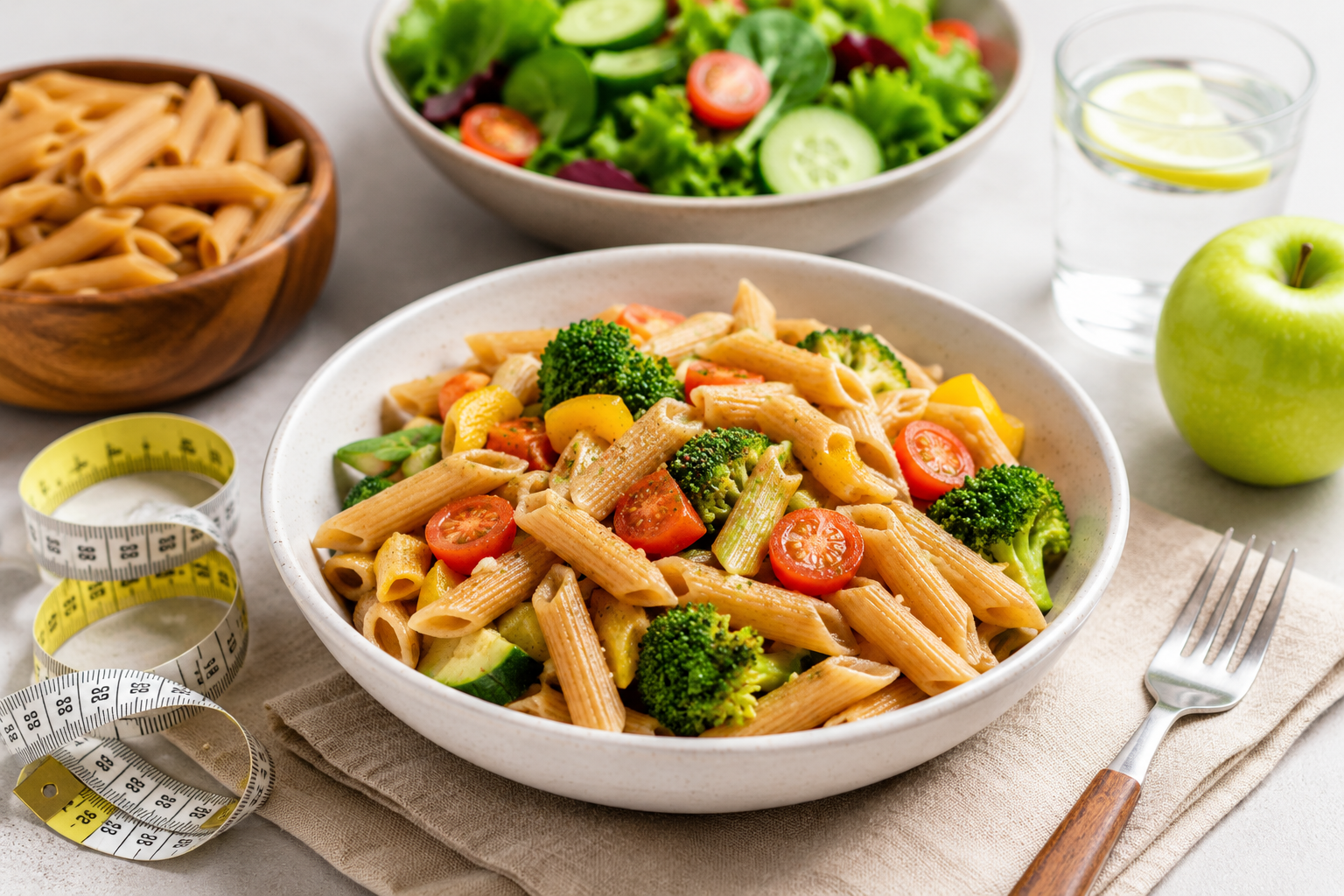
Is pasta good for weight loss? Yes, when you choose the right type and watch your portion, pasta can fit into a weight loss plan without derailing your progress. At BodEvolve, this question comes up constantly, especially from patients starting a calorie controlled diet or easing back into regular meals after gastric sleeve surgery or gastric bypass surgery. Pasta got lumped in with every “bad carb” on low carb diet lists for years, but that reputation falls apart once you look closer. The real story depends on the type of pasta, how much you eat, and what sits on top of it. This guide covers the pasta types worth keeping in rotation, the ones to limit, and how our surgeons approach carbohydrates in a real weight loss plan.
Is Pasta Good for Weight Loss? Understanding the Basics
The short answer is that pasta itself is not the problem most people think it is. A cup of cooked pasta runs around 200 to 220 calories, not far off from rice or potatoes. What changes the outcome is everything around it: the sauce, the portion, and how often it shows up on your plate. Dr. Clayton Frenzel often reminds patients that no single food derails a weight loss plan on its own.
Why Pasta Got a Bad Reputation
Pasta became a target during the low carb diet years, mostly because portion sizes crept up far beyond a single serving. A bowl that looks like one plate can easily hold three or four servings. That is a portion problem, not a pasta problem.
What Actually Determines Whether Pasta Helps or Hurts
Four things matter more than the pasta itself: your serving size, the type you choose, whether it is paired with protein and vegetables, and how heavy the sauce is. A cream based sauce can double the calorie count faster than the noodles ever could.
What This Means After Bariatric Surgery
Patients recovering from duodenal switch surgery or SADI-S surgery typically prioritize protein first, since these procedures change how the body absorbs nutrients. Pasta can still have a place on the plate, but it usually comes after protein and later in recovery. Every patient’s timeline looks different, which is why our team builds individualized nutrition plans instead of handing out a generic list.
Common Pasta Types at a Glance (approximate values per 1 cup cooked)
| Pasta Type | Calories | Carbs | Fiber | Protein |
| Regular white pasta | ~220 | ~43g | ~2g | ~8g |
| Whole wheat pasta | ~200 | ~40g | ~6g | ~8g |
| Whole grain pasta | ~200 | ~40g | ~6-7g | ~7g |
| Chickpea pasta | ~190 | ~32g | ~8g | ~13g |
| Lentil pasta | ~190 | ~33g | ~8g | ~13g |
Whole Grain Pasta for Weight Loss
Whole grain pasta keeps the bran and germ of the wheat kernel intact, which is where most of the fiber, B vitamins, and minerals live. That extra fiber is the biggest reason it tends to work better for weight loss than the refined version, since it slows digestion and keeps you full longer.
How Whole Grain Pasta Differs From Refined Pasta
Refined pasta strips away the bran and germ during processing, leaving mostly starch behind. Whole grain pasta keeps those layers, so it digests more slowly and has a gentler effect on blood sugar, a similar comparison to what we cover in our guide on whether rice is good for weight loss.
The Fiber and Blood Sugar Benefit
A cup of whole grain pasta delivers roughly 6 to 7 grams of fiber, compared to around 2 grams in refined pasta. That fiber slows the rise in blood sugar after a meal, which reduces the hunger spike that often leads to overeating an hour later.
How Much Whole Grain Pasta Fits Into a Weight Loss Meal
A reasonable serving lands around three quarters of a cup to one cup, cooked, taking up roughly a quarter of your plate, with the rest carrying lean protein and vegetables.
Whole Wheat Pasta for Weight Loss
Whole wheat pasta is often confused with whole grain pasta, and while they overlap, they are not always identical. Whole wheat pasta comes specifically from whole wheat flour, while whole grain pasta can be made from a wider range of grains.
Whole Wheat vs Whole Grain, What Is the Real Difference
Whole wheat pasta is technically a type of whole grain pasta, but not every whole grain pasta is made from wheat. Both keep the bran and germ intact, so nutritionally they are close cousins, and the difference usually comes down to taste and texture.
Nutritional Profile of Whole Wheat Pasta
One cooked cup runs roughly 180 to 250 calories depending on the brand, with about 6 grams of fiber and 7 to 9 grams of protein, a combination that keeps hunger at bay longer than white pasta does.
Simple Ways to Cook Whole Wheat Pasta So It Still Tastes Good
Cooking it just to al dente keeps the texture firmer than cooking it fully soft. Tossing it with olive oil, garlic, and roasted vegetables instead of a heavy cream sauce keeps the calorie count reasonable while the dish still feels indulgent.
Fiber and Glycemic Index Comparison
| Pasta Type | Fiber (per cup) | Glycemic Index | Best For |
| Regular pasta | ~2g | High | Occasional meals, small portions |
| Whole wheat pasta | ~6g | Medium | Everyday meals, more staying power |
| Whole grain pasta | ~6-7g | Medium | Similar to whole wheat, more grain variety |
| Chickpea pasta | ~8g | Low | Blood sugar management, higher protein needs |
Is Pasta Healthy for Weight Loss?
Healthy is a slightly different question than good for weight loss, and it is worth separating the two. Pasta made from refined flour is not inherently unhealthy, but it is not doing much nutritional work on its own. Whole grain, whole wheat, and legume based pasta bring more fiber and protein to the table, making them the stronger choice most days.
The Glycemic Index Factor and Why It Matters
White pasta has a moderate to high glycemic index, meaning it can cause a faster rise in blood sugar when eaten alone. Pairing it with protein, healthy fat, or vegetables blunts that spike, which matters even more for patients working through a medical weight management program.
Pairing Pasta With Protein and Vegetables
The healthiest version of any pasta dish has protein and vegetables outweighing the noodles, not the other way around. Grilled chicken, shrimp, or lean turkey alongside spinach or broccoli turns a carb heavy dish into a balanced one, without losing the comfort food factor pasta is known for.
When Pasta Can Work Against Weight Loss
Pasta becomes a problem when it is the entire meal, drowned in a heavy sauce, or eaten in restaurant sized portions several times a week. We flag this pattern in our foods to avoid for weight loss guide, and it is also something patients relying on meal replacement shakes during early recovery, or recovering from revision weight loss surgery, need to watch closely.
Chickpea Pasta for Weight Loss
Chickpea pasta has become one of the more popular swaps for patients focused on weight loss, and the nutrition numbers explain why. Made primarily from chickpea flour, it packs significantly more protein and fiber than traditional wheat pasta, while keeping a similar texture once cooked properly.
Why Chickpea Pasta Has Become a Favorite
A single serving can offer nearly double the protein of regular pasta, which matters for anyone trying to stay full longer and preserve muscle during weight loss. It is a useful option for patients further out from bariatric surgery working to hit daily protein targets.
Protein and Fiber Advantage
Chickpea pasta typically delivers around 13 grams of protein and 8 grams of fiber per serving, roughly double what regular pasta offers, which keeps hunger in check longer after a meal.
How to Use Chickpea Pasta Without It Tasting Like a Compromise
Chickpea pasta has a nuttier flavor and firmer bite, so it holds up well in heartier dishes like a bolognese or baked casserole, where the sauce and toppings carry most of the flavor.
Chickpea Pasta vs Traditional Pasta (per 1 cup cooked)
| Nutrient | Chickpea Pasta | Traditional Pasta |
| Calories | ~190 | ~220 |
| Protein | ~13g | ~8g |
| Fiber | ~8g | ~2g |
| Net Carbs | ~24g | ~41g |
Healthy Pasta Recipes for Weight Loss
Once you know which pasta works best for your goals, the next step is building meals around it. These three ideas balance protein, fiber, and flavor, following the same principles covered in our lean meats for weight loss guide.
Grilled Chicken and Whole Wheat Pasta Primavera
Whole wheat pasta tossed with grilled chicken breast, zucchini, bell peppers, and cherry tomatoes in a light olive oil and garlic sauce. Colorful, filling, and ready in under thirty minutes.
Chickpea Pasta With Turkey Meatballs and Spinach
Chickpea pasta paired with lean turkey meatballs, wilted spinach, and a simple marinara. The extra protein from both the pasta and the turkey makes this the most filling option on this list.
One Pot Veggie Pasta With Lean Protein
Whole grain pasta cooked in one pot with shrimp or diced chicken, broccoli, mushrooms, and a splash of low sodium broth. An easy weeknight option that keeps cleanup simple without cutting corners on nutrition.
Healthy Pasta Recipe Ideas
| Recipe | Key Ingredients | Approx. Calories | Protein |
| Grilled Chicken Whole Wheat Pasta Primavera | Whole wheat pasta, chicken breast, zucchini, bell pepper | ~420 | ~35g |
| Chickpea Pasta with Turkey Meatballs & Spinach | Chickpea pasta, ground turkey, spinach, marinara | ~450 | ~38g |
| One Pot Veggie Pasta with Lean Protein | Whole grain pasta, shrimp or chicken, broccoli, mushrooms | ~400 | ~32g |
Building a Pasta Friendly Weight Loss Plan With BodEvolve
Is pasta good for weight loss? In the right portion, made from the right ingredients, and paired with enough protein and vegetables, yes, it can stay on your plate. The goal was never to eliminate every carbohydrate, it is to build a plan you can sustain. That is the approach Dr. Clayton Frenzel and Dr. Brian Holt bring to every consultation at BodEvolve, whether a patient is exploring surgery or working through a non-surgical program like what we cover in our natural alternatives to Ozempic guide. If you want a nutrition plan built around your body and your goals instead of a generic list of banned foods, our team is ready to help at our Arlington, Richardson, Dallas, or Texarkana locations.
