
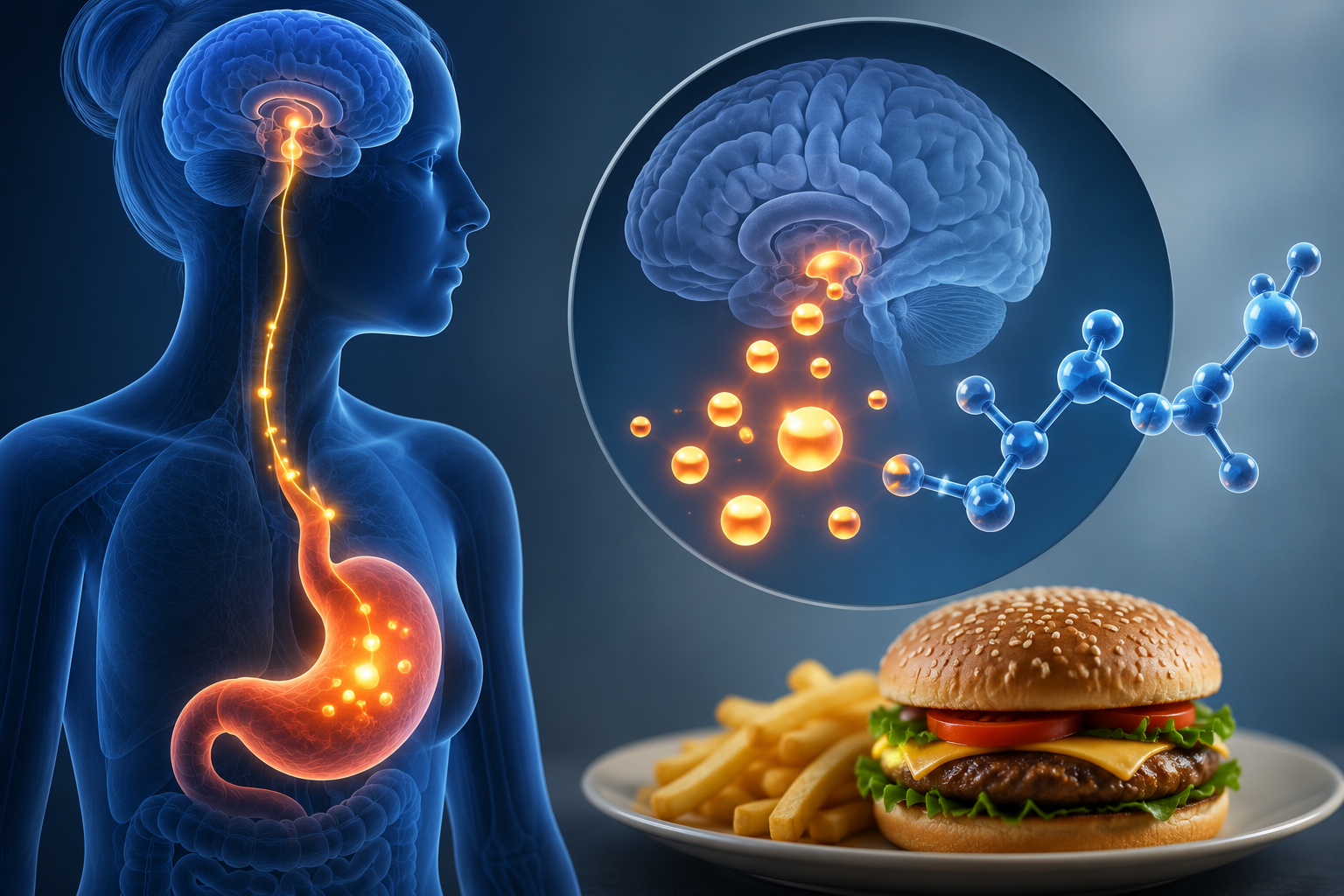
The hunger hormone ghrelin is a small peptide made mostly in the stomach lining that tells your brain when it is time to eat. It rises before meals, drops right after you finish eating, and plays a huge role in appetite, cravings, and long term weight patterns. For many people who struggle with weight, this hormone is quietly running the show in the background. At BodEvolve Bariatric, our team led by Dr. Clayton Frenzel and Dr. Brian Holt sees every day how ghrelin shapes hunger, food choices, and the results of any weight loss plan.
What Is Hunger Hormone
Ghrelin is the primary hunger signal your body uses to keep you fed and energized. It is not a bad hormone, it is simply doing its job. Problems begin when this signal fires too often or stays elevated for too long, which is common in people carrying extra weight, sleeping poorly, or living through years of on and off dieting.
Where It Is Made
Around 70 percent of ghrelin is produced in the fundus, the upper curve of the stomach. Small amounts also come from the pancreas and small intestine. This is one reason why procedures that reduce or bypass the fundus, like the gastric sleeve or gastric bypass, have such a strong effect on daily hunger.
The Signal It Sends
Once released, ghrelin travels to the brain and binds to receptors in the hypothalamus. This triggers the “I am hungry” feeling and often pushes people toward high calorie foods rather than balanced meals.
Why It Matters for Weight
When ghrelin stays high all day, willpower alone rarely wins. Understanding this helps patients stop blaming themselves and start focusing on the real biological driver behind their cravings.
Ghrelin Hormone
The ghrelin hormone follows a fairly predictable daily rhythm, though several things can knock it out of balance. Studying that pattern is often step one in building habits that actually last.
Daily Release Pattern
Ghrelin rises before your usual meal times and dips after eating. If you skip meals, your body still releases it at the normal times, which is why hunger can hit hard even when you promised yourself you would fast through the morning.
Common Triggers
Sleep loss, high stress, crash diets, and very low protein meals all push ghrelin up. Rapid weight loss without medical support also spikes it, which is one reason so many diets fail within a year.
Habits That Affect Ghrelin Levels
| Habit | Effect on Ghrelin |
| Skipping meals often | Raises levels |
| Poor sleep under 6 hours | Raises levels |
| High protein breakfast | Lowers levels |
| Regular strength training | Lowers levels |
| Chronic stress | Raises levels |
| Balanced meal timing | Keeps it steady |
What Does Ghrelin Hormone Do
What does ghrelin hormone do beyond making you hungry? Quite a lot actually. It touches almost every part of your metabolism and even influences your mood on tough days.
Controls Appetite
This is its headline job. Ghrelin drives the physical urge to eat and also increases cravings for sugary or fatty foods, which explains why bread and dessert feel so magnetic during a diet.
Slows Metabolism
When ghrelin stays high for long periods, your body burns fewer calories at rest. Weight loss becomes slower and regain becomes much easier, even when you feel like you are doing everything right.
Affects Fat Storage
Higher ghrelin over time is linked to more fat storage around the belly. Patients who work with our team often ask about this pattern, and we explain how procedures like the duodenal switch address both hormone regulation and calorie absorption together.
Ghrelin’s Main Jobs in the Body
| Function | What Happens |
| Appetite signal | Tells brain to eat |
| Reward pathway | Increases food cravings |
| Metabolism | Slows resting calorie burn |
| Fat storage | Encourages belly fat |
| Growth hormone | Supports GH release |
Ghrelin and Hunger
The link between ghrelin and hunger is direct but not always predictable. Two people can eat the same meal and feel very different levels of fullness, and hormones are usually the reason behind that gap.
Meal Timing Signals
Your body learns your eating schedule. If you always eat at noon, ghrelin will spike at noon whether you truly need fuel or not. This is called cephalic phase hunger and it is fully trainable.
Sleep and Stress Link
People sleeping under six hours a night often show 15 to 20 percent higher ghrelin the next day. Add ongoing stress on top and appetite becomes very hard to manage without help.
Diet Rebound Effect
After a strict diet, ghrelin can stay elevated for a year or longer. This is one big reason 80 to 95 percent of people regain weight after non surgical plans. Our team often shares this with patients considering revision bariatric surgery after earlier attempts stopped working.
Ghrelin Response to Different Weight Loss Methods
| Method | Effect on Ghrelin |
| Traditional dieting | Rises sharply over time |
| Weight loss medication | Small drop |
| Gastric sleeve | Drops 60 to 70 percent |
| Gastric bypass | Drops sharply after surgery |
| Gastric balloon | Small short term drop |
How to Stop the Hunger Hormone Ghrelin
Learning how to stop the hunger hormone ghrelin from running your appetite is possible with the right steps. Some are lifestyle based, others are medical, and for many patients a mix of both is what finally brings results that hold.
Eat Enough Protein
Protein is the most filling nutrient and quiets ghrelin longer than carbs or fats. Aim for 25 to 30 grams per meal. Our team walks patients through smart choices in our protein after bariatric surgery.
Prioritize Sleep and Stress
Seven to nine hours of sleep, daily movement, and simple stress tools like breathing exercises all help lower ghrelin naturally. Small changes here often add up faster than people expect.
Consider Surgical Options
When lifestyle steps are not enough, bariatric surgery offers a direct way to lower ghrelin at the source. Removing the fundus during a gastric sleeve procedure drops ghrelin significantly, which is why patients report far less hunger after surgery. For those not ready for a permanent step, the gastric balloon offers a non surgical option to reset eating habits.
Practical Steps to Lower Ghrelin
| Step | Daily Action |
| Protein first meals | 25 to 30g per meal |
| Consistent sleep | 7 to 9 hours nightly |
| Strength training | 3 sessions per week |
| Skip crash diets | Follow guided plans |
| Regular meal timing | Eat at similar times |
Take Control With BodEvolve Bariatric
Understanding the hunger hormone ghrelin is the first real step toward lasting weight loss, and having the right medical team behind you makes all the difference. Dr. Clayton Frenzel and Dr. Brian Holt at BodEvolve Bariatric have helped patients across Texas find hormone based solutions rather than short term fixes that fade in months. Whether you are just starting your journey or ready to explore surgery, our team offers care that respects both your health and your long term goals. Book a consultation at our Arlington, Richardson, Dallas, or Texarkana office and take the next step toward a lighter, healthier life.
