
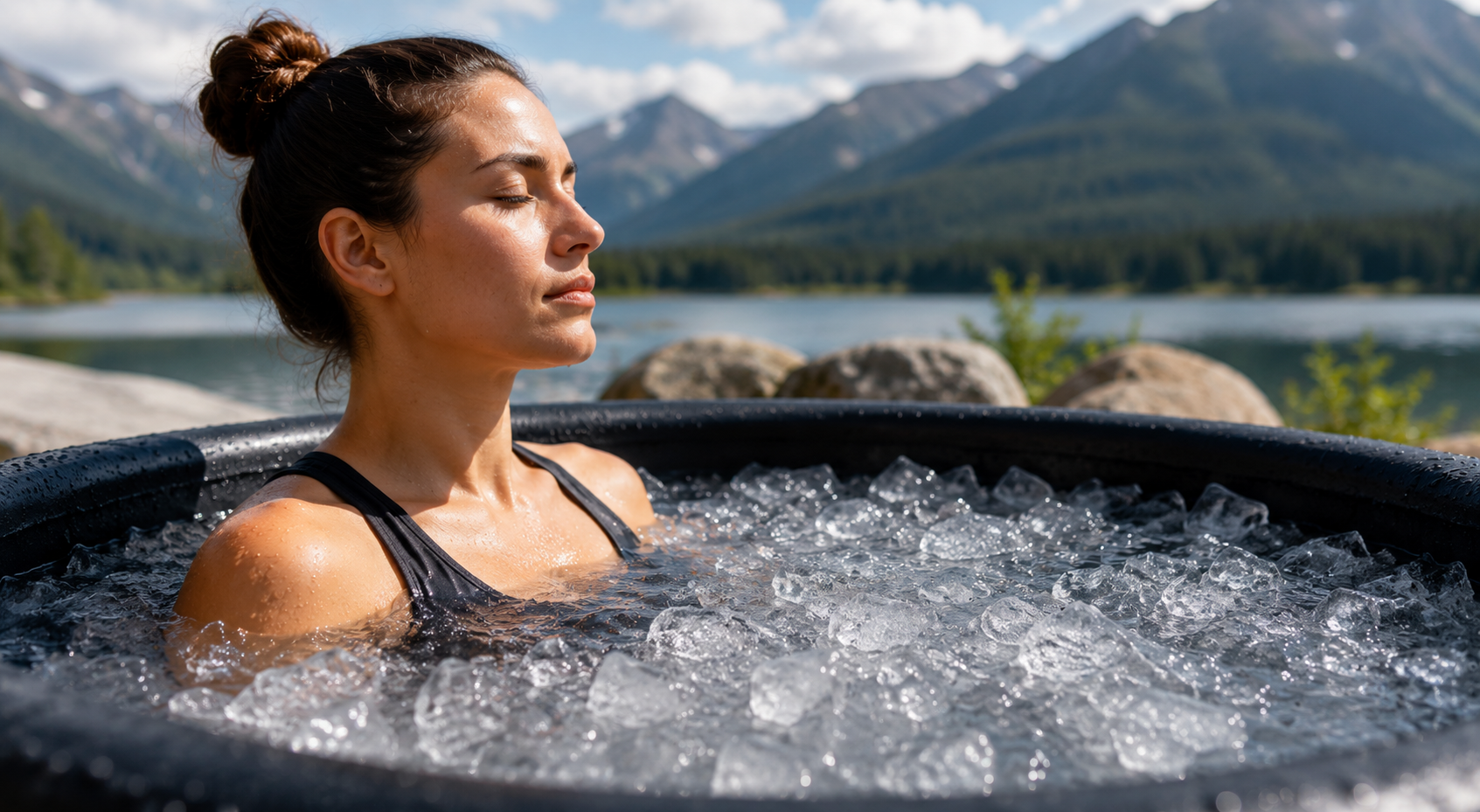
Do ice baths help you lose weight? Not the way social media wants you to believe, and that is the short, honest answer from a practice that watches real, measurable weight loss happen every week. Cold plunges are having a moment right now, gym locker rooms have them, wellness influencers swear by them, and half of Instagram seems to be filming someone gasping in a tub of ice water before sunrise. Dr. Clayton Frenzel gets asked about cold plunging almost as often as he gets asked about protein shakes, so here is what the research actually says, and where an ice bath fits if weight loss is the goal.
Do Ice Baths Burn Fat?
Technically, yes, a little. Practically, not enough to matter if fat loss is the actual goal. Cold exposure forces the body to generate heat to keep core temperature stable, and that process does burn a small number of extra calories. The confusion starts when people assume small automatically means significant.
How Cold Exposure Activates Brown Fat
The human body carries two types of fat tissue: white fat, which stores energy, and brown fat, which burns energy to produce heat. Cold exposure activates brown fat through non-shivering thermogenesis, which sounds impressive, but most adults only carry small, scattered deposits of it, mostly around the neck and upper back. Switching on a small tissue type for a few minutes a day was never going to compete with the metabolic demand of surgery, a structured diet, or consistent training.
Why the Numbers Don’t Add Up for Real Fat Loss
A pound of fat holds roughly 3,500 calories. Even generous estimates of what an ice bath burns land nowhere near what a person would need daily to see the scale move in a meaningful way. Our breakdown of the 30/30/30 rule for weight loss runs into the same wall: trendy protocols borrow solid physiology, then stretch the conclusion further than the biology can support.
Benefits of Ice Bath for Weight Loss
Here is where the story gets useful. Ice baths will not melt fat off the body, but they can support the habits that do.
Faster Recovery Means More Consistent Training
Sore, inflamed muscles are one of the top reasons people skip workouts two or three days in a row. Cold water immersion eases some of that post-exercise soreness, so a person shows up for the next session instead of skipping it. Consistency, not intensity, tends to drive results over months, something our guide to exercise after bariatric surgery covers in more depth.
Lower Stress and Better Sleep
Cold exposure triggers a strong nervous system response, and plenty of people report feeling calmer and sleeping better afterward. Poor sleep raises ghrelin, the hunger hormone, and lowers leptin, the hormone that signals fullness. Better sleep will not burn fat on its own, but it removes one more obstacle standing in the way.
Building the Discipline That Sticks
Climbing into cold water on purpose builds a kind of mental toughness that spills into other areas of life. Patients who stick with hard habits in one part of their routine tend to stick with their nutrition plan, their follow-ups, and their exercise routine long after surgery too. Small, repeatable habits are the common thread running through the weight loss strategies that actually work, cold exposure included.
| Benefit | What It Does | Why It Matters for Weight Loss |
| Reduced muscle soreness | Limits inflammation after exercise | Helps you train again sooner |
| Better sleep quality | Calms the nervous system | Supports hunger hormone balance |
| Lower stress response | Reduces cortisol spikes | Linked to stubborn belly fat storage |
| Mental resilience | Builds tolerance to discomfort | Carries into diet and workout habits |
Cold Plunge Weight Loss
Ice bath and cold plunge basically describe the same idea: water cold enough to trigger a strong physiological response, though a dedicated cold plunge tub usually holds a steadier temperature than a bathtub full of ice.
What a Regular Cold Plunge Habit Can Realistically Change
Consistent cold plunging can improve circulation, support recovery, and become a genuine mood booster once the body adjusts to it. Some patients say it curbs stress eating simply because the routine gives them a healthier outlet. Those are worthwhile changes in their own right. They are just not the same thing as fat loss.
Where Cold Plunge Fits, and Where It Doesn’t, in a Weight Loss Plan
For someone already eating well and training consistently, a cold plunge can be a nice addition to a recovery routine. For someone hoping it replaces a calorie deficit or a serious conversation about metabolic health, it will not get them there. Patients who hit a genuine wall usually need more than a wellness trend, which is exactly what our piece on weight loss stall after gastric sleeve walks through.
Does Cold Plunge Burn Fat?
Not in any way that shows up on the scale over time. This question comes up often enough to deserve its own answer, separate from the fat burning question above.
Non-Shivering Thermogenesis, Explained Simply
When the body senses cold, it has two ways to generate heat: shivering, which burns through glycogen fast, and non-shivering thermogenesis, which slowly recruits brown fat. Neither pathway torches stored body fat in any significant volume. Shivering mostly burns readily available fuel, not the stubborn fat stores most people actually want gone.
What Cold Plunge Will Not Do
It will not replace the metabolic and hormonal changes that come from gastric sleeve surgery or gastric bypass surgery, and it will not substitute for the malabsorptive advantage of duodenal switch surgery or SADI-S surgery. Those procedures change the biology behind hunger and fat storage at the source. A ten minute cold plunge just changes how someone feels that morning.
How Long Should You Ice Bath for Weight Loss?
There is no magic number that unlocks fat loss, but there is a range most people tolerate safely and consistently.
Ideal Temperature and Duration
Most recovery-focused protocols land somewhere between 50 and 59 degrees Fahrenheit for two to ten minutes. Beginners usually start at the warmer end for a shorter stretch and build tolerance over a few weeks.
| Experience Level | Water Temperature | Suggested Duration |
| Beginner | 55-59°F | 1-3 minutes |
| Intermediate | 50-55°F | 3-6 minutes |
| Experienced | 39-50°F | 6-10 minutes |
How Often to Do It Safely
Two to four sessions a week is a reasonable cadence for most healthy adults. Daily ice baths are popular online, but there is limited evidence that daily exposure beats a few well-placed sessions a week, and overdoing it can leave someone fatigued instead of recovered.
Do Ice Baths Burn Calories?
Yes, a modest amount, and putting a real number next to that claim clears up a lot of the hype.
The Real Number Behind the Myth
Small studies on cold water immersion suggest a single session burns somewhere in the range of an extra few dozen calories, mostly from shivering and the metabolic cost of rewarming afterward. That number shifts with water temperature, duration, and body composition, but it stays firmly in modest territory no matter how it gets calculated. Anyone curious where their own numbers stand can start with our calorie calculator for weight loss.
How That Stacks Up Against Real Weight Loss Tools
| Activity (10 minutes) | Approximate Calories Burned |
| Ice bath | 20-60 |
| Brisk walking | 40-60 |
| Moderate cycling | 80-100 |
| Bodyweight strength circuit | 70-100 |
None of these numbers come close to what patients see through a medical weight management program or revision weight loss surgery after previous efforts have plateaued. A single ice bath is a rounding error next to the 60 to 90 percent excess weight loss patients typically see after a properly matched procedure.
Do Ice Baths Help You Lose Weight? What the Evidence Really Shows
Add up everything above and the picture stays consistent. Cold exposure burns a handful of extra calories, nudges a small amount of brown fat into action, and helps with recovery, sleep, and stress along the way. None of that adds up to meaningful, lasting fat loss by itself. The people who see the best outcomes treat ice baths as one small piece of a bigger plan, not as the plan itself.
What to Do If the Scale Still Isn’t Moving
So, do ice baths help you lose weight in a way that actually lasts? Not on their own, and if a cold plunge routine has been standing in for an actual weight loss plan, this is the nudge to look at what works.
Ice baths are a genuinely good recovery tool, a mood booster, and a habit worth keeping for anyone who enjoys them. What they are not is a replacement for a clear-eyed look at your metabolism, your hormones, and the option that actually matches your goals. Our surgeons walk patients through the full range of weight loss surgery options every week, and the difference between a cold plunge and a properly matched plan usually comes down to one honest conversation.
| Approach | Typical Weight Loss Impact | Timeframe |
| Ice bath or cold plunge alone | Minimal, mostly indirect | Ongoing, no defined endpoint |
| Diet and exercise alone | Moderate, highly variable | Months to years |
| Bariatric surgery | 60-90% of excess weight | 12-18 months |
BodEvolve Bariatric works with patients across Arlington, Richardson, Dallas, or Texarkana, and every consultation starts with an honest look at your history, not a trend. If cold plunges have been part of the routine and the scale still is not moving, come talk to us. We will tell you honestly whether an ice bath, a lifestyle change, or a surgical option is the right next step for your body.
