
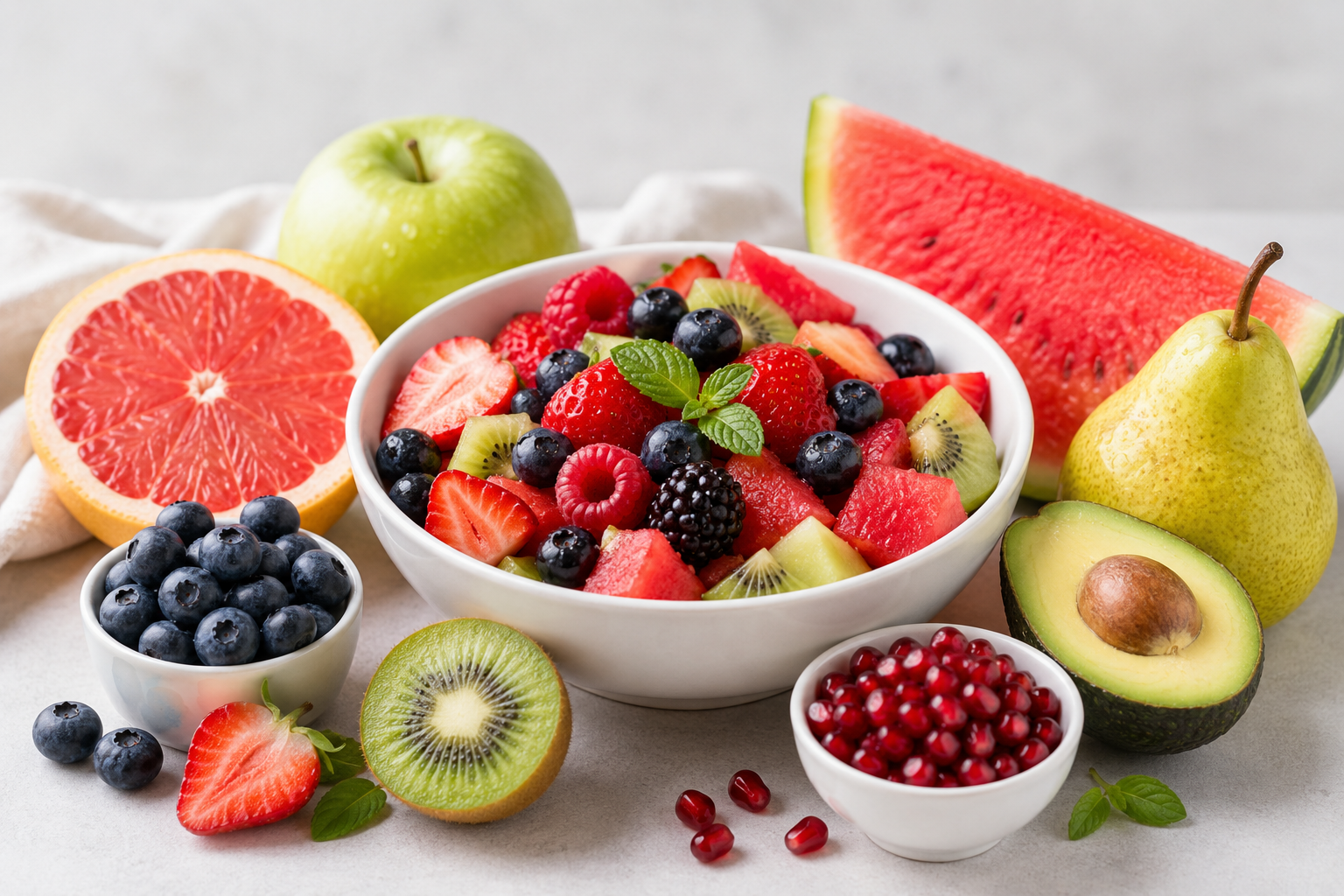
The best fruits for weight loss are ones that actually keep you full, not ones that spike your blood sugar and leave you hungry an hour later. At BodEvolve Bariatric Surgery Center, our team works with weight loss patients every day, and nutrition questions around fruit come up constantly. The short answer is yes, certain fruits genuinely help. They are high in fiber, low in calories, and support the kind of steady, sustainable weight loss that lasts well beyond a crash diet.
Best Fruits for Weight Loss You Need to Know
Not every fruit is created equal when it comes to dropping pounds. Some are loaded with fiber and water content that keeps hunger at bay. Others spike blood sugar quickly and leave you reaching for snacks an hour later. The best options tend to be low in calories, high in fiber, and rich in nutrients that actively support metabolism and fat burning.
Berries – Tiny but Mighty
Blueberries, strawberries, raspberries, and blackberries consistently rank among the top choices for weight management. They are low in calories – a full cup of strawberries has roughly 50 calories – yet packed with fiber and antioxidants. Raspberries in particular contain nearly 8 grams of fiber per cup, which is impressive for any food, let alone a fruit.
Fiber slows digestion, stabilizes blood sugar, and reduces the likelihood of overeating later in the day. For bariatric patients who are rebuilding their diet after procedures like gastric sleeve surgery or gastric bypass, berries are an ideal early food – soft, gentle on the stomach, and nutritionally dense.
Grapefruit – The Metabolism Booster
Grapefruit has been studied for its potential to support weight loss, and the results are genuinely interesting. Some research suggests compounds in grapefruit may help reduce insulin resistance, which plays a direct role in how the body stores fat. Half a grapefruit before meals has been shown in some studies to reduce overall calorie intake. It is also nearly 92% water, making it incredibly filling for its calorie count.
Just one word of caution – grapefruit can interfere with certain medications, so anyone on a prescribed regimen, including post-bariatric patients, should check with our care team before making it a daily habit.
Apples – A Classic That Actually Works
There is a reason “an apple a day” has stuck around. Apples are high in pectin, a type of soluble fiber that forms a gel in the stomach and slows digestion considerably. A medium apple has around 4 to 5 grams of fiber and roughly 95 calories – and the act of chewing it (rather than drinking juice) triggers satiety signals that liquid calories simply cannot replicate.
Eating an apple whole, with the skin on, gives you the full fiber benefit. Sliced apples with a tablespoon of almond butter make for a genuinely satisfying snack that doesn’t unravel a calorie deficit.
Fruits to Help Lose Weight: The Ones You Might Be Overlooking
Most people know about berries and apples, but a few underrated options deserve a spot in your grocery cart.
Kiwi – Small, Tart, and Surprisingly Powerful
Two kiwis have roughly 84 calories and contain more vitamin C than an orange. But what makes kiwi particularly interesting for weight loss is its enzyme content – actinidin – which aids protein digestion. For bariatric patients focusing on hitting protein targets after surgery, this is a subtle but meaningful benefit. Kiwi also has a relatively low glycemic index, meaning it won’t cause sharp blood sugar spikes.
Watermelon – High Volume, Low Calories
Watermelon is about 92% water, which means you can eat a generous portion for very few calories. A two-cup serving has around 80 calories but creates an impressive physical volume in the stomach. It also contains the amino acid arginine, which some research links to fat oxidation. On hot Texas days – relevant for BodEvolve’s patients across Richardson, Dallas and Texarkana – staying hydrated is a consistent challenge, and watermelon pulls double duty.
Pears – Underestimated and Underused
Pears are one of the highest-fiber fruits available, with around 5 to 6 grams per medium fruit. They are also high in fructose and sorbitol, which metabolize slowly and provide sustained energy rather than a quick spike. Like apples, pears are best eaten whole with the skin on for maximum benefit.
What Fruits Are Good for Weight Loss When You’re Post-Surgery?
This is a question that comes up constantly among patients at BodEvolve, and it is a smart one to ask. After bariatric surgery – whether that’s a duodenal switch, SADI-S, or a revision weight loss – your stomach’s capacity and digestion change significantly. Fruits need to be introduced carefully and prioritized based on:
Texture Matters Early On
In the early weeks after surgery, soft fruits are essential. Bananas, ripe cantaloupe, and berries pureed into smoothies are usually well-tolerated. Raw, fibrous skins and seeds may need to wait until your stomach adapts and your surgical team clears solid textures.
Prioritize Protein First
Dr. Clayton Frenzel, the triple board-certified, dual fellowship-trained surgeon at BodEvolve, consistently emphasizes that protein comes first – especially in the months following surgery. Fruits are a complement, not a centerpiece. They work best when they round out a meal that has already hit its protein target, rather than replacing protein-heavy foods.
Watch Portion Sizes
The stomach’s reduced size post-surgery means even small amounts of fruit fill the space quickly. Half a cup of berries or a few slices of peach may be the right starting portion, and that is completely fine – the goal is quality nutrition in a limited volume.
For a detailed, personalized breakdown of what to eat at each stage of recovery, BodEvolve’s team provides comprehensive nutritional guidance as part of our full-service program. You can learn more about what the journey looks like at weight loss surgery before and after.
What Fruits Help You Lose Weight by Supporting Gut Health?
The gut microbiome plays a bigger role in weight management than most people realize. Research in the past decade has increasingly linked gut bacteria diversity to metabolism, inflammation, and even cravings. Several fruits actively feed beneficial gut bacteria and improve the overall microbiome environment.
Bananas – Best When Slightly Green
Fully ripe bananas get a bad reputation in weight loss circles, but slightly green bananas are a different story. They are high in resistant starch, which functions like a prebiotic – feeding good gut bacteria rather than being rapidly digested. Resistant starch also produces short-chain fatty acids in the colon, which have been linked to improved insulin sensitivity and reduced fat storage.
Avocado – Yes, It’s a Fruit
Technically a fruit, avocado is one of the most nutrient-dense additions to any weight loss diet. It is high in monounsaturated fats, which increase feelings of fullness and support hormones involved in appetite regulation. Studies have shown that people who eat avocado regularly tend to have lower BMIs and smaller waist circumferences over time. Half an avocado added to a salad or a protein bowl is a satisfying, healthy fat that doesn’t derail progress – it supports it.
Pomegranate Seeds
Pomegranate seeds contain punicalagins and punicic acid, compounds that have demonstrated anti-inflammatory effects in studies. Since chronic low-grade inflammation is closely tied to obesity and metabolic dysfunction, reducing it through food is a meaningful strategy. A quarter cup of pomegranate seeds adds color, crunch, and a tart sweetness to salads or yogurt without a big calorie cost.
When Fruit Isn’t Enough: Getting the Right Medical Support
There is no question that smart food choices – including the right fruits – support weight loss. But for many people, diet and exercise alone are not sufficient to overcome the biological and hormonal barriers that make weight loss so difficult. If you have tried every approach and keep hitting the same wall, that frustration is valid, and it is not a personal failure.
The BodEvolve Bariatric Surgery Center was built for exactly this situation. Led by Dr. Clayton Frenzel and Dr. Brian Holt, the practice offers a full spectrum of solutions – from medical weight management for those who are not yet ready for surgery, to advanced bariatric procedures for those who are. With over 14,000 successful procedures and locations across the Dallas area including Arlington, the team brings both depth of experience and genuine patient-centered care to every consultation.
Your Next Step Toward Lasting Weight Loss
The best fruits for weight loss are a meaningful piece of the puzzle – but they are just one piece. Real, lasting transformation comes from a combination of the right nutrition, the right medical support, and a team that actually understands your situation. Whether you are just beginning to explore your options or are ready to take a significant step forward, BodEvolve is ready to help. Book a consultation directly to speak with a surgeon who will take the time to understand your goals. The fruit you eat matters – and so does the team you choose to support your journey.
