
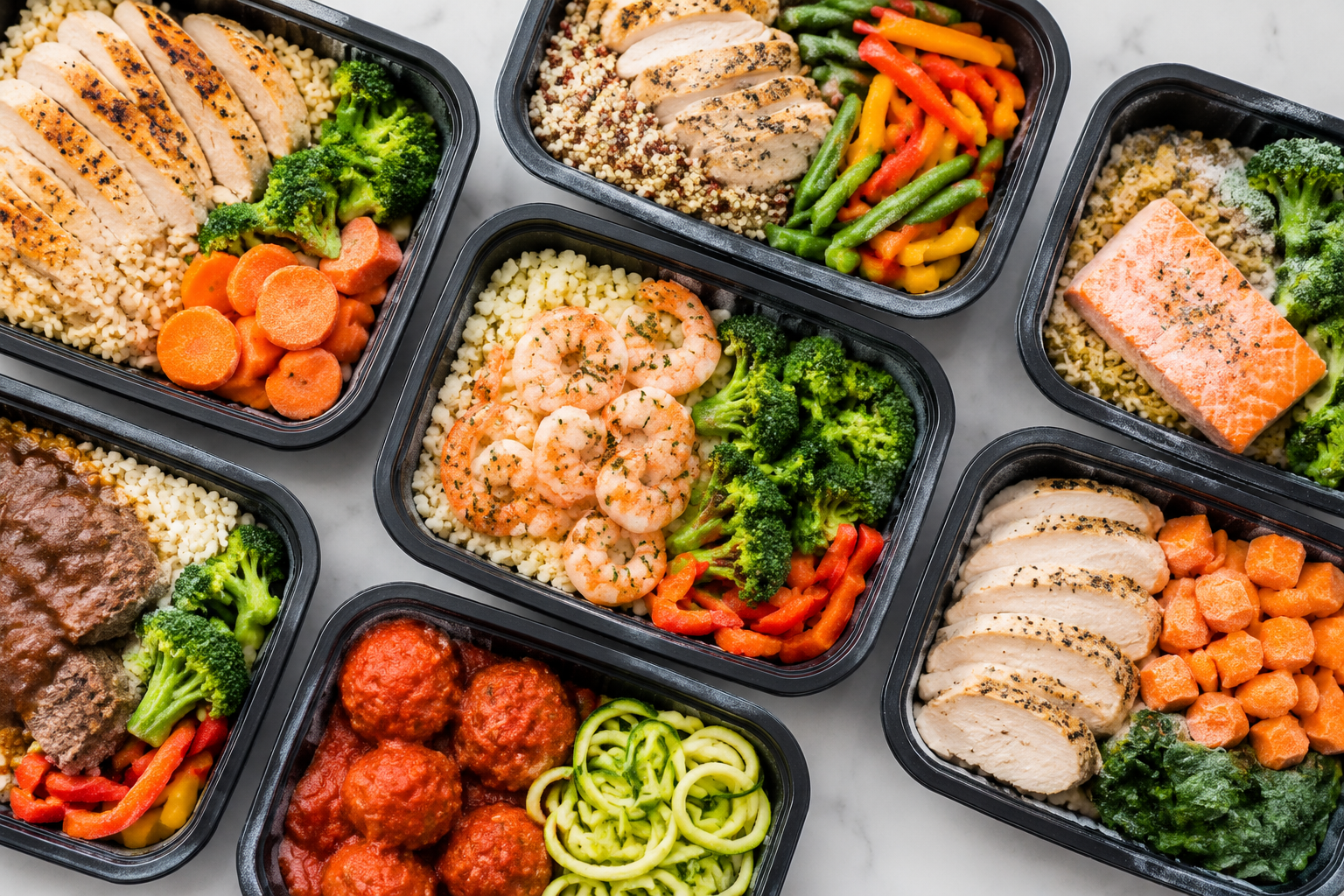
Most patients don’t fail their weight loss plan on a Sunday, when the fridge is stocked and the meal prep containers are lined up. They fail on a Tuesday at 8:47 p.m., after a long shift, when the only thing standing between them and a drive-through is what’s in the freezer. That is exactly why the best frozen meals for weight loss matter so much, and why I spend real clinic time talking about them with patients who’ve had, or are considering, weight loss surgery.
This guide is written for two kinds of readers: people trying to lose weight the old-fashioned way with better choices, and post-op patients from my practice who need protein-forward, portion-controlled options that don’t sabotage a sleeve or bypass. I’ve eaten most of these. I’ve read the backs of the boxes. And I’ve watched what happens on the scale when patients rely on them for two or three meals a week.
What Are the Best Frozen Meals for Weight Loss?
If you want a shortcut to the answer to what are the best frozen meals for weight loss, look for three things on the nutrition label before anything else. Aim for at least 20 grams of protein per meal, keep sodium under 600 milligrams, and keep total calories between roughly 300 and 450. Fiber over 4 grams is a bonus. That single filter kills about 80% of the freezer aisle, which is exactly the point.
The brands that consistently pass this filter in 2026 are Healthy Choice Power Bowls, Amy’s Light & Lean line, Real Good Foods entrees, Frontera Bowls, Kevin’s Natural Foods, and select Lean Cuisine Protein Kick meals. Everything else needs to be checked case by case, because “healthy” on the front of a box is a marketing word, not a nutrition standard.
For my post-bariatric patients, I add one more rule. Chew-friendly protein comes first. That means shredded chicken, ground turkey, salmon, eggs, or beans, not tough steak or dry chicken breast that turns to sawdust after a gastric sleeve or gastric bypass.
The best frozen meals for weight loss have at least 20 grams of protein, under 600 milligrams of sodium, and between 300 and 450 calories per serving. Based on 2026 nutrition labels, the top ten are:
- Realgood Chicken Enchiladas
- Trifecta Grilled Salmon
- Kevin’s Cilantro Lime Chicken
- Healthy Choice Power Bowl Chicken Feta
- Kevin’s Korean-Style BBQ Steak
- Frontera Chicken Chipotle Bowl
- Sweet Earth Protein Lovers Bowl
- Lean Cuisine Protein Kick
- Amy’s Light in Sodium Black Bean Enchilada
- Devour Buffalo Chicken Mac (occasional)
Best Supermarket Frozen Meals for Weight Loss
The best supermarket frozen meals for weight loss are the ones you can find in almost any grocery store in the country, not the niche ones you can only order online. Here’s what I’d put in a cart if I were shopping tonight:
- Healthy Choice Power Bowls (Chicken Feta and Farro): 260 calories, 20g protein, 590mg sodium. Real vegetables, real grains.
- Amy’s Light & Lean Sweet & Sour Asian Noodle Bowl: solid vegetarian option, tastes like takeout without the grease coma.
- Kevin’s Cilantro Lime Chicken: 250 calories, 26g protein. Paleo, gluten-free, and it doesn’t taste sad.
- Frontera Chicken Chipotle Bowl: 350 calories, 22g protein. Actual flavor, which matters more than people admit.
- Sweet Earth Protein Lovers Bowl: 340 calories, 26g protein. Vegetarian, filling, holds up in a work microwave.
The best frozen meals for weight loss at grocery store shelves change every few months because manufacturers reformulate. Turn the box over every single time. A brand you trusted a year ago may quietly have added 200 milligrams of sodium.
Best Frozen Meals for Weight Loss at a Glance
Here are the ten frozen weight loss meals I hand patients most often, ranked by protein-to-sodium ratio. Every one of these is available at a standard US grocery store or Walmart.
| Meal | Calories | Protein | Sodium | Best For |
|---|---|---|---|---|
| Realgood Chicken Enchiladas | 340 | 30g | 640mg | High-protein, post-op friendly |
| Trifecta Grilled Salmon | 280 | 32g | 380mg | Cleanest ingredient list |
| Kevin’s Cilantro Lime Chicken | 250 | 26g | 590mg | Paleo, low-carb |
| Healthy Choice Power Bowl (Chicken Feta) | 260 | 20g | 590mg | Budget pick |
| Kevin’s Korean BBQ Steak | 290 | 27g | 620mg | Flavor without takeout |
| Frontera Chicken Chipotle Bowl | 350 | 22g | 610mg | Real flavor, real veg |
| Sweet Earth Protein Lovers Bowl | 340 | 26g | 640mg | Vegetarian |
| Lean Cuisine Protein Kick Bowl | 320 | 24g | 660mg | Widely stocked |
| Amy’s Light in Sodium Black Bean Enchilada | 270 | 9g | 390mg | Low sodium, vegan |
| Devour Buffalo Chicken Mac | 400 | 26g | 780mg | Occasional treat |
Best Frozen Meals for Weight Loss at Walmart
Walmart carries almost every brand above, plus some private-label options that punch above their price. The best frozen meals for weight loss at Walmart, based on what my patients actually buy, come from the Great Value Fit line, the full Healthy Choice range, and the Realgood Chicken Enchiladas made from a chicken tortilla. That last one is 340 calories with 30 grams of protein, and it stays under $6.
If you’re feeding a family and need to keep costs down, Walmart is also where I steer patients toward frozen protein staples, not just prepared entrees. Frozen salmon fillets, frozen shrimp, frozen edamame, and frozen riced cauliflower turn a $4 frozen meal into a $6 meal that eats like a $15 one. This matters more than any single “diet” brand.
Best Low Calorie Frozen Meals for Weight Loss
There’s a category difference worth spelling out. “Diet” frozen meals like Lean Cuisine, Smart Ones, and Healthy Choice Simply Steamers were built around calorie counts. That’s helpful if calories are your only lever, but most people trying to lose real weight need protein more than they need 240-calorie ceilings. A 240-calorie meal with 9 grams of protein leaves you hungry in ninety minutes and reaching for chips.
The best frozen diet meals for weight loss in 2026 are the newer protein-forward SKUs from the same brands. Look specifically for Lean Cuisine Protein Kick (usually 22-27g protein), Healthy Choice Power Bowls, and Smart Ones Smart Creations Chicken Enchiladas Suiza. Skip the pasta-heavy classics unless you’re pairing them with a hard-boiled egg or a Greek yogurt on the side.
Best High Protein Frozen Meals for Weight Loss
If I had to name a single category that changes outcomes for patients, this is it. The best high protein frozen meals for weight loss hit 25 grams of protein or more per serving, which is the threshold where satiety actually kicks in for most adults.
My current shortlist:
- Realgood Chicken Enchiladas: 30g protein
- Kevin’s Korean-Style BBQ Steak: 27g protein
- Healthy Choice Power Bowls Chicken Marinara: 25g protein
- Devour Buffalo Chicken Mac & Cheese: 26g protein (higher sodium, use occasionally)
- Trifecta Meals grilled salmon single-serve: 32g protein
For post-op patients, protein isn’t a preference. It’s a prescription. Falling short leads to hair thinning, muscle loss, and a stalled scale, which is one of the most frustrating things I see in follow-up visits with dr Frenzel and our team.
Best Vegetarian Frozen Meals for Weight Loss
Meat is not required for weight loss. It’s just easier to hit protein targets with it. The best vegetarian frozen meals for weight loss usually lean on beans, tofu, edamame, or seitan, not on cheese and pasta.
Strong picks include Amy’s Light in Sodium Black Bean Vegetable Enchilada, Sweet Earth Protein Lovers Burrito (25g protein), Kashi Plant Powered Bowls, and Gardein Chick’n Scallopini paired with frozen vegetables. If you’re vegan, Daring Plant Chicken pieces can be added to any veggie frozen bowl to push protein above 25 grams without ultra-processed fillers.
A Sample Week Using Frozen Weight Loss Meals
This is roughly what I tell patients who want to lean on healthy frozen meals for weight loss without eating cardboard for seven straight nights.
- Monday dinner: Healthy Choice Power Bowl + side of frozen edamame
- Tuesday lunch: Kevin’s Cilantro Lime Chicken + microwaved frozen broccoli
- Wednesday dinner: Realgood Chicken Enchiladas + Greek yogurt on the side
- Thursday lunch: Amy’s Black Bean Enchilada + hard-boiled egg for protein
- Friday dinner: Trifecta grilled salmon + frozen riced cauliflower
That is five weight loss frozen meals in one week, all under 450 calories, all above 22 grams of protein once you add the side. Total grocery cost: usually $30 to $40.
Best Healthy Frozen Meals for Weight Loss
There’s a lot of overlap between “best healthy frozen meals for weight loss” and “best frozen healthy meals for weight loss” as search phrases, but the concept is the same: minimally processed ingredients, recognizable food, and macros that support you rather than fight you.
I steer patients toward brands using the “grandmother test.” Would your grandmother recognize the ingredient list? If it reads like a chemistry set, put it back. Kevin’s Natural Foods, Frontera, Amy’s, Evol, and Real Good Foods generally pass this test. Some Lean Cuisine and Smart Ones meals do too, but not all.
Where Frozen Meals Fit After Bariatric Surgery
This is where I part ways with most weight loss articles on the internet. If you’ve had, or are planning, weight loss surgery, frozen meals are a tool, not a foundation. In the first three months post-op, most of these are too dense, too seasoned, or too high in volume for a healing stomach. Once you’re cleared for regular textures, usually around month three or four, the right frozen meals become a lifeline for adherence.
Two rules I give patients:
- Split the meal. A 350-calorie entree is usually two post-op portions. Eat half, refrigerate half. This alone is why patients on frozen meals stay on protocol.
- Add a protein bump. Toss in a scoop of shredded rotisserie chicken, a hard-boiled egg, or a spoon of Greek yogurt on the side. Frozen meals rarely hit the 30 gram protein target most bariatric programs set.
Patients often ask if these meals are okay long-term. My answer: two to four per week is fine. Seven is not, because sodium accumulates and micronutrient variety collapses.
How to Read the Freezer Aisle in 60 Seconds
The freezer aisle is designed to confuse you. Big fonts for “high protein” hide small fonts for 890 milligrams of sodium. Here’s the sequence I teach:
- Protein grams first. Under 20, put it back.
- Sodium second. Over 700, put it back unless it’s a rare treat.
- Calories third. Between 300 and 450 is the sweet spot for most adults trying to lose weight.
- Fiber last. Above 4 grams is a small win.
- Ingredient list. If sugar (or a sugar synonym like maltodextrin, dextrose, cane juice) appears in the first five ingredients of a savory meal, put it back.
That’s it. Five checks, sixty seconds, better cart.
Two Related Reads Worth Your Time
If frozen meals are part of your weight loss plan, these two pieces on our blog pair well with what you just read. They cover the deeper “why” behind the protein and satiety math I keep coming back to. If frozen meals are part of your weight loss plan, these two pieces on our blog pair well with what you just read. They cover the deeper “why” behind the protein and satiety math I keep coming back to.
- High-protein foods that actually keep you full after bariatric surgery
- GLP-1 medications and what to eat while you’re on them
The Bottom Line
The freezer aisle is not the enemy of weight loss. It’s one of the most useful tools you have on the nights when willpower is thin and time is thinner. Pick meals with real protein, honest sodium, and ingredients you can pronounce. Split them if you’ve had surgery. Add a protein bump when the label falls short. Do that consistently and the scale moves.
If you’re in North or East Texas and want a real plan around real food, our team supports patients across Arlington, Richardson, Dallas, and Texarkana. Bring your grocery list. We’ll go through it together.
