
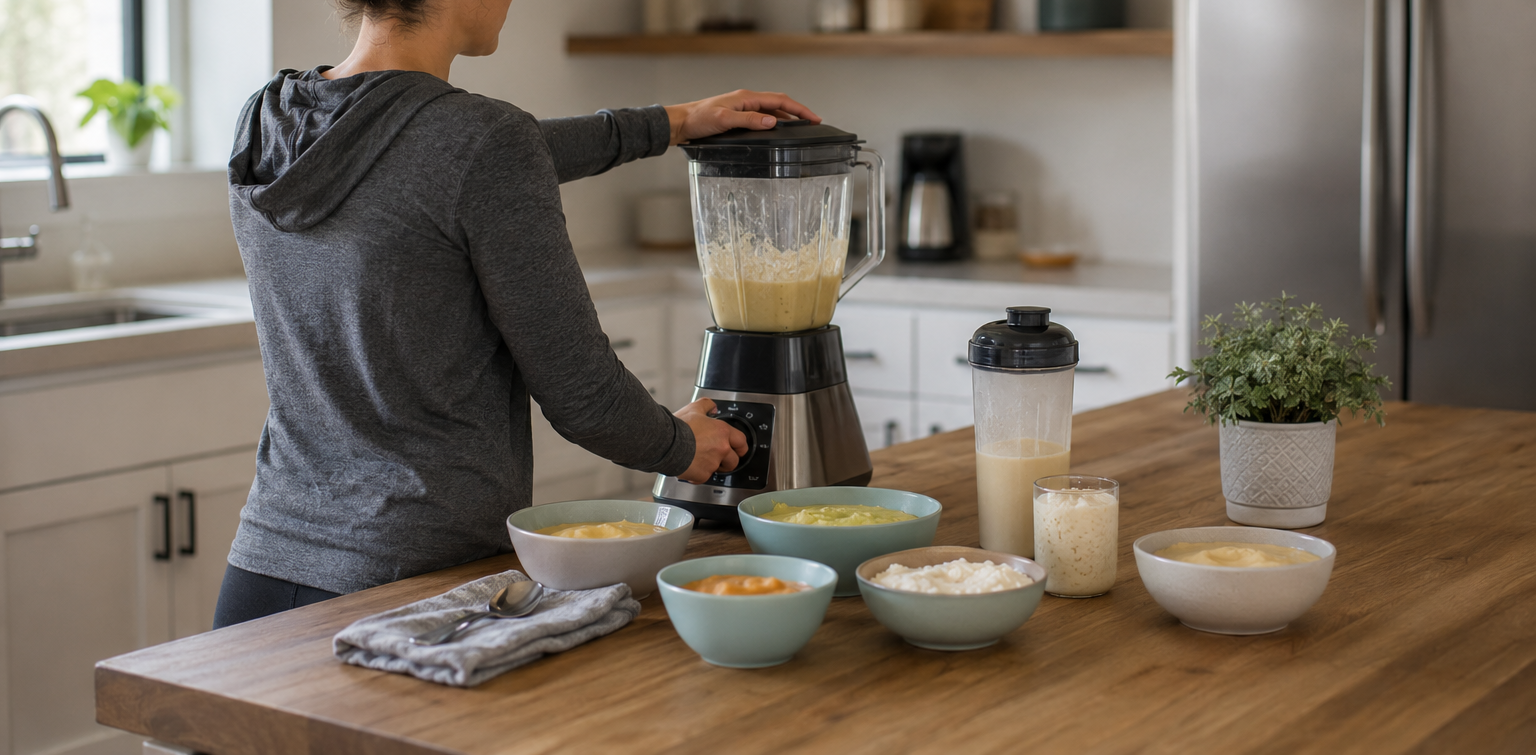
Bariatric puree recipes are one of the first things patients start searching for right after surgery, and honestly, that curiosity is a great sign. It means you are taking your recovery seriously. The puree phase, which typically falls between weeks two and four after a procedure like a gastric sleeve or gastric bypass, is not just about surviving on mushy food. It is a critical window where the right nutrition directly supports healing, helps protect muscle mass, and sets the tone for your long-term weight loss journey.
This guide walks you through what to eat, how to prepare it, and how to make the puree phase feel a lot less like a sentence and a lot more like a stepping stone.
What Is the Puree Phase and Why Puree Recipes After Bariatric Surgery Actually Matter
After bariatric surgery, your stomach needs time to heal before it can handle anything with texture. The puree phase bridges the gap between full liquids and soft foods. During this phase, everything you eat needs to be smooth, lump-free, and easy to digest. But here is what a lot of patients do not realize: this phase is also your first real chance to build solid eating habits that will carry you through the months ahead.
Dr. Clayton Frenzel, the triple board-certified, dual fellowship-trained bariatric and cosmetic surgeon at BodEvolve, emphasizes that what patients eat during recovery is just as important as the surgery itself. A well-planned puree phase means fewer complications, better energy levels, and a much smoother transition to solid foods later on. Many patients also find that pairing their food plan with the right supplements for weight loss makes a meaningful difference in energy and healing during these early weeks.
What to Blend and What to Avoid
During the puree phase, focus on foods that are naturally soft or that blend smoothly without fibrous strings or seeds. The table below gives you a quick reference so you are never guessing at the grocery store.
| Puree-Safe Foods | Foods to Avoid |
| Soft scrambled eggs (blended thin) | Chicken skin or gristle |
| Cooked and pureed chicken or fish | Raw vegetables with tough fibers |
| Cottage cheese blended with broth | Any food with seeds or peels |
| Pureed lentils or beans | Bread, rice, or pasta |
| Soft sweet potato or butternut squash | Stringy meats or deli cuts |
| Greek yogurt thinned with skim milk | Carbonated drinks or sugary liquids |
Even something as innocent-looking as a piece of chicken with gristle can cause real discomfort when your stomach pouch is still healing. When in doubt, if it does not blend smooth, it does not go in.
Bariatric Pureed Food Recipes You Can Actually Look Forward To
Let’s be real. Nobody wakes up excited about pureed food. But with a little creativity, these meals can be genuinely satisfying, and you can eat the same general foods your family is eating, just in a different form.
Savory Chicken and Broth Puree
This is one of the most popular bariatric pureed food recipes among BodEvolve patients. Simmer boneless chicken breast in low-sodium chicken broth until completely soft. Transfer everything to a blender, add a small dollop of plain Greek yogurt for extra protein and creaminess, and blend until completely smooth. Season with a pinch of garlic powder and a tiny bit of salt. The Greek yogurt adds a layer of protein without changing the flavor much, and the result is something that actually tastes like a proper meal.
Soft Blended Egg and Cottage Cheese
Scramble two eggs until soft, almost undercooked. Transfer to a blender with two tablespoons of full-fat cottage cheese and a splash of skim milk. Blend briefly. The texture should be smooth and pourable. This gives you a solid protein hit in a very small volume, which is exactly what your new stomach needs. If you find yourself still hungry between meals, high protein smoothies can fill that gap without putting stress on your healing stomach.
Pureed Lentil Soup
Cook red lentils until completely soft. Blend with a small amount of low-fat yogurt, a pinch of cumin, and enough broth to get a silky, soup-like consistency. Red lentils naturally become very smooth when cooked long enough, making them one of the easier ingredients to puree without any gritty texture. This recipe is especially good for patients who want something warm and filling during the evening.
High Protein Pureed Food Recipes Bariatric Patients Need Daily
Protein is the non-negotiable priority after bariatric surgery. The general recommendation from most bariatric teams, including the care team at BodEvolve, is to aim for 60 to 80 grams of protein daily during early recovery. When you are working with very small portion sizes, that means every single bite needs to count.
The table below breaks down the approximate protein content in some of the most practical puree ingredients, so you can plan your meals with confidence.
| Puree Ingredient | Serving Size | Approx. Protein | Blends Smoothly? |
| Silken tofu | 1/2 block (~150g) | 8g | Yes |
| Plain Greek yogurt (full fat) | 1/2 cup | 10g | Yes |
| Cottage cheese | 1/2 cup | 14g | Yes (with liquid) |
| Cooked chicken breast (blended) | 2 oz | 17g | Yes (with broth) |
| Unflavored whey protein isolate | 1 scoop | 20-25g | Yes (stir in) |
| Ricotta cheese | 1/4 cup | 7g | Yes |
| White fish (tilapia/cod, cooked) | 2 oz | 14g | Yes (with liquid) |
| Chicken liver (cooked, blended) | 2 oz | 16g | Yes (with olive oil) |
Silken Tofu Protein Bowl
Silken tofu is a secret weapon for bariatric patients. It is already smooth enough to eat straight, and it blends into an almost invisible, neutral-tasting puree that picks up whatever flavor you add to it. Blend half a block of silken tofu with a scoop of unflavored protein powder and a tablespoon of natural peanut butter. This gives you roughly 25 to 30 grams of protein in a very small volume.
Blended Cottage Cheese and Avocado
Blend a quarter cup of cottage cheese with a quarter of a ripe avocado and a small squeeze of lemon juice. The healthy fats from the avocado slow digestion slightly, which helps you feel satisfied for longer. Patients recovering after duodenal switch surgery especially benefit from meals that combine protein and healthy fat, since absorption dynamics are a bit different with this procedure.
Protein-Enriched Greek Yogurt Puree
Take plain, full-fat Greek yogurt and stir in a half scoop of unflavored whey protein isolate. You can thin it slightly with water. This is probably the fastest high-protein puree recipe you can make. No cooking, no blending required. Patients who are still feeling fatigued after surgery often rely on this one heavily in the first couple of weeks. It is also worth noting that patients who struggle to maintain consistent nutrition sometimes discover there are underlying medical reasons for not losing weight that go beyond food choices, so keeping your post-op appointments is just as important as the recipes you follow.
Bariatric Soft Food Recipes: Transitioning Out of Full Puree
As you move toward weeks four and five, many bariatric programs begin introducing soft foods alongside purees. The line between the two stages is blurry and varies by patient, which is why it is so important to follow the guidance of your own surgical team rather than a generic timeline you find online.
Soft Scrambled Eggs With Ricotta
Scramble one egg very gently in a nonstick pan over low heat. In the last minute of cooking, stir in a tablespoon of part-skim ricotta cheese. Remove from heat while still slightly glossy. This is soft enough to eat without full blending, and the texture makes it feel like real food again. Many patients say this recipe marks the moment recovery starts to feel manageable.
Baked Ricotta With Herbs
Mix half a cup of ricotta with one egg, a pinch of dried basil, and a tablespoon of Parmesan. Bake in a small ramekin at 350 degrees for about 15 minutes. The result is a tender, almost custard-like texture that sits well even on sensitive post-op stomachs. As your diet gradually expands, incorporating an anti-inflammatory diet to your food choices can further reduce post-surgical inflammation and support steadier weight loss through the months ahead.
High Protein Puree Recipes for Sustained Weight Loss
Getting enough protein during recovery is not just about healing the surgical site. It is about preserving the muscle tissue that keeps your metabolism working properly as the weight comes off. Patients who fall short on protein during the first few months often notice more fatigue and a slower rate of weight loss over time. There is also a real connection between proper nutrition and blood pressure, and research shows that losing weight can lower blood pressure significantly, which is one more reason to stay consistent with your protein goals from day one.
Pureed White Fish With Herb Oil
Bake a small piece of white fish like tilapia or cod until fully cooked. Place in a blender with two tablespoons of low-fat cream cheese, a splash of broth, and a tiny drizzle of olive oil. Blend until smooth. White fish is one of the best protein sources for the puree phase because it naturally breaks down almost completely with minimal effort.
Smooth Chicken Liver Pate (Bariatric Style)
This sounds fancy but it is actually simple. Saute chicken livers until fully cooked, blend with a small amount of olive oil, garlic powder, and a tablespoon of low-fat cream cheese. Chicken liver is one of the most nutrient-dense foods you can eat during recovery, high in iron, B12, and complete protein.
Discover Your Partner in Recovery
Bariatric puree recipes are just one piece of a much larger recovery picture. At BodEvolve, both Dr. Frenzel and Dr. Brian Holt take a deeply personalized approach to post-operative nutrition. Their team does not hand you a generic sheet and send you home. They walk alongside patients at every stage of the journey, from pre-operative preparation through the puree phase, soft foods, and beyond.
Whether you had a gastric sleeve, gastric bypass, SADI-S, or revision weight loss surgery, your dietary needs after the procedure are specific to you. BodEvolve serves patients across Dallas, Richardson, Arlington, and Texarkana, making expert post-op care accessible no matter where you are in the DFW area. These recipes are where so many patients begin finding their footing again. Small portions, big nutrition, and the right support system around you. That combination is what recovery really looks like.
