
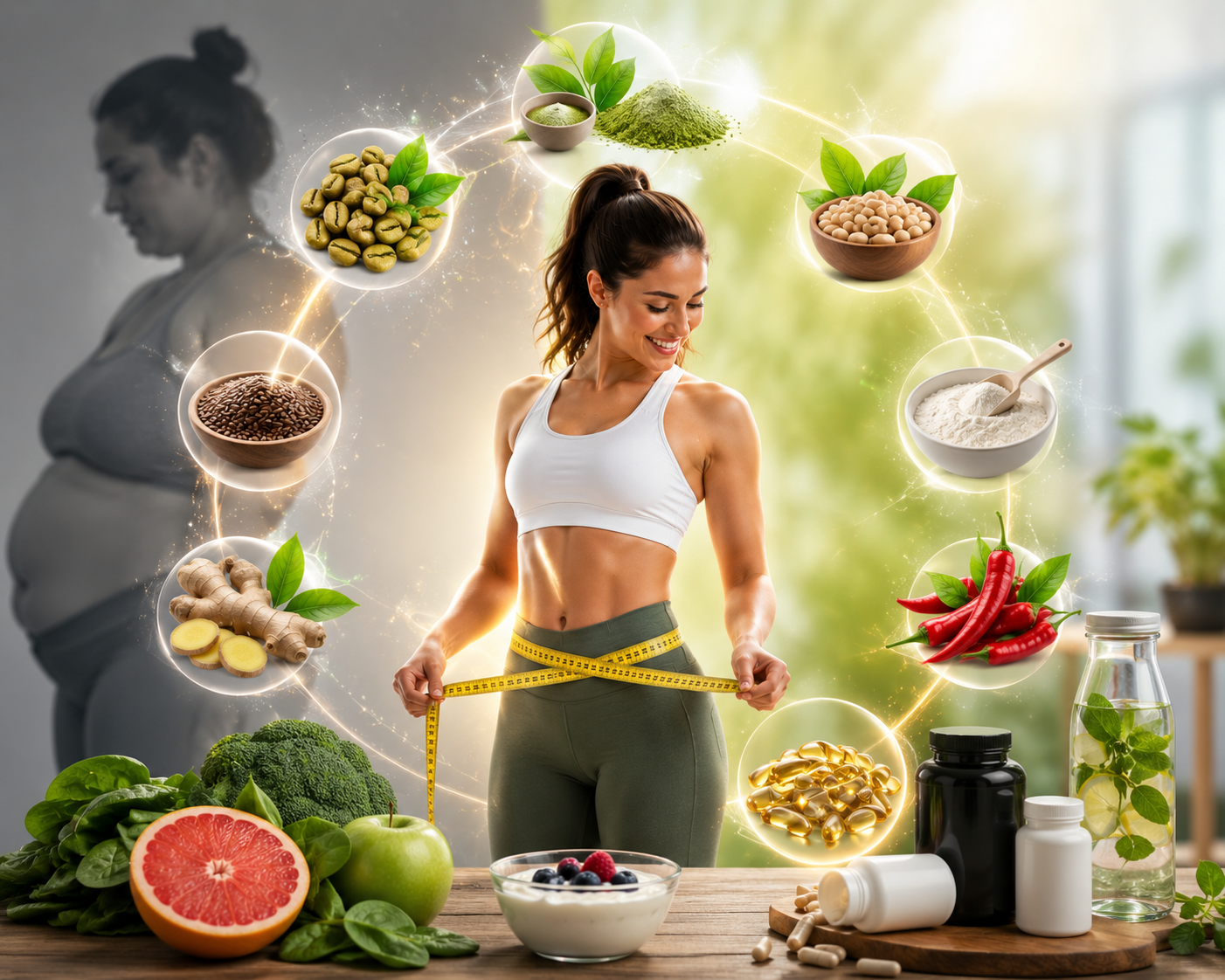
What supplements help with weight loss? The supplements with the strongest clinical evidence for weight loss are protein, soluble fiber (glucomannan and psyllium), green tea extract, caffeine, and certain probiotic strains. These work by reducing appetite, protecting muscle, or slightly boosting metabolism, but only when paired with a calorie-controlled diet and consistent movement.
The best supplements for weight loss, based on real clinical evidence, are:
- Protein powder (whey or plant): curbs hunger and protects muscle during fat loss
- Soluble fiber (glucomannan, psyllium): expands in the stomach to increase fullness
- Green tea extract: a small metabolism boost from catechins and caffeine
- Caffeine: modest increase in calorie burn, best paired with training
- Probiotics (Lactobacillus, Bifidobacterium): mild gut-driven effects in studies
None of these are a shortcut. They are small assists that only pay off alongside a calorie-controlled diet, protein-forward meals, and consistent movement.
Do Weight Loss Supplements Actually Work?
Let us start with the question people really mean. Not what is marketed, but what supplements actually help with weight loss when you look at the science.
The short list with the most consistent research is unglamorous: protein, fiber, caffeine, green tea extract, and certain probiotics. Protein helps you feel full and protects muscle while you lose fat. Soluble fiber like glucomannan or psyllium expands in the stomach and quiets appetite. Caffeine and green tea give a small bump in calorie burn. Probiotic strains like Lactobacillus and Bifidobacterium have shown effects, though in studies that often meant only a pound or two more than people who took nothing.
That is the part the listicles bury. The effect is small. A major review of 21 supplements found that none were backed by high-quality evidence, and even the better ones mattered little when taken alone. So if you are asking what supplements should i take to help with weight loss, the truthful frame is this: supplements are a nudge, not an engine. The engine is still food, movement, sleep, and for many people, medical support.
| Supplement | Evidence Level | Best For | Watch Out |
|---|---|---|---|
| Protein Powder | Strong | Satiety + muscle preservation | Calorie count still matters |
| Soluble Fiber (Glucomannan) | Moderate | Appetite control | Take with water |
| Green Tea Extract | Moderate | Small metabolism boost | Caffeine-sensitive? Avoid PM |
| Probiotics | Low–Moderate | Gut health + modest fat loss | Strain matters |
| Vitamin D | Corrective only | Energy, overall health | Only helps if deficient |
| Garcinia Cambogia | Weak | Nothing reliable | Liver concerns reported |
| Bitter Orange | Weak | Avoid | Cardiovascular risk |
What natural supplements help with weight loss?
This is the most searched version of the question, and for good reason. People want results without the side effects of stimulants. So what natural supplements help with weight loss without overpromising?
The natural options with at least some support are green tea extract, glucomannan and other soluble fibers, whey or plant protein, apple cider vinegar, chia seeds, and probiotics. These mostly work by helping you eat a little less or feel full a little longer. When patients ask me what natural supplement helps with weight loss the most reliably, my answer is usually protein and fiber, because they do the one thing that matters: they make a calorie-controlled diet easier to stick to.
What I steer people away from are the exotic “fat burner” botanicals with dramatic claims and thin research. Natural does not mean risk-free. Some plant extracts interact with medications or raise heart rate. If you want what are some supplements that help with weight loss in a way that is genuinely safe, simple and well-studied beats trendy every time.
Can Vitamins Help You Lose Weight?
Here is where a lot of money gets wasted. The marketing suggests vitamins burn fat. They do not. When you ask what vitamins or supplements help with weight loss, the accurate picture is that vitamins fix deficiencies that can quietly drag down your energy and metabolism, but they are not a weight-loss treatment on their own.
Vitamin B12 supports energy production and red blood cells, and being low can leave you exhausted, but no evidence shows B12 causes weight loss. Vitamin D is worth checking, because deficiency is common in people carrying extra weight, and correcting it supports overall health. Magnesium only helps with weight when you were actually deficient to begin with. Calcium, despite the old claims, has not held up in trials.
So what vitamin supplements help with weight loss? None directly. But what vitamins and supplements help with weight loss indirectly is a fair question, and the answer is the ones that restore what your body is missing so you feel well enough to stay active and consistent. If you are wondering what vitamin or supplement helps with weight loss for your specific bloodwork, that is a conversation for your doctor, not a guess at the pharmacy.
Best Supplements for Weight Loss: What the Evidence Shows
When we widen the lens to what dietary supplements help with weight loss, the category includes everything from protein powders to fiber capsules to probiotic blends. The federal Office of Dietary Supplements has reviewed these repeatedly, and the recurring conclusion is sobering: effects are modest, evidence quality is low to moderate, and these products are not regulated like medications.
That last point matters more than people realize. Dosages vary wildly between brands, and labels are not always accurate. So if you are choosing what supplements to help with weight loss, look for third-party tested products, skip proprietary “blends” that hide amounts, and treat any product promising rapid results as a red flag.
What herbal supplements help with weight loss?
Herbal products are where the biggest promises and the biggest cautions live. People ask what herbal supplements help with weight loss hoping for a clean, plant-based shortcut.
Green tea extract is the herbal option with the most respectable evidence, mostly from its catechins and caffeine. Garcinia cambogia shows up everywhere, but trials found it dropped body weight by under a kilogram on average in the short term, with some safety concerns. Bitter orange acts like a stimulant and deserves real caution for anyone with heart issues or high blood pressure. Glucomannan, a fiber from the konjac root, is one of the better-studied herbal-adjacent options for fullness.
My clinical take: a couple of these can offer a small assist, but several carry cardiovascular or digestive risks that outweigh a pound or two of benefit. Herbal does not mean gentle.
For over-the-counter shoppers, the real question behind what otc supplements help with weight loss and what over the counter supplements help with weight loss is which products you can buy without a prescription that have any legitimacy.
Most OTC “diet pills” are just caffeine and green tea extract in a capsule, so the evidence is the same as above: small and inconsistent. The one genuine exception is orlistat, sold over the counter as Alli, which is an FDA-approved medication rather than a supplement. It blocks some fat absorption and produces modest results, but the digestive side effects keep many people from staying on it. If you are asking what supplements will help with weight loss off the shelf, set your expectations low and read the safety warnings carefully.
How to Choose a Supplement to Help Lose Weight Safely
Before you spend money on any supplement to help lose weight, run it through three quick checks. First, look for third-party testing from NSF, USP, or Informed Choice on the label. Supplements are not regulated like medications, and independent testing is the closest thing to a safety net. Second, avoid proprietary “blends” that list a total dose without breaking down each ingredient, because that is usually where under-dosed or over-stimulated products hide. Third, screen for interactions with anything you already take, especially blood thinners, blood pressure medication, and thyroid medication.
A safe rule from clinical practice: if the label promises “melts fat” or “rapid results,” put it back on the shelf.
What is the best supplement for weight loss?
After years of working with patients across Dallas, Arlington, Richardson, and Texarkana, here is how we personally rank the supplements most people ask about. This is not evidence-only, it is what we have seen actually help patients in real practice.
1. Whey or plant protein: The single most useful supplement for the majority of patients. Preserves muscle, quiets hunger, easy to fit into any diet.
2. Soluble fiber (glucomannan, psyllium): Genuinely helps with fullness before meals. Cheap, safe, no stimulant load.
3. Vitamin D (if deficient): Not a fat burner. Corrects a common deficiency that drags down energy and mood.
4. Creatine monohydrate: Only if you are training. Preserves strength during a deficit.
5. Green tea extract: Small metabolic assist. Avoid the megadose “fat burner” versions.
Everything else on the shelf is either weak evidence, high risk, or both. Our team does not recommend garcinia, bitter orange, ephedra-derivatives, or thyroid-mimicking blends to any patient.
Supplements That Work for Weight Loss With PCOS
Weight loss with PCOS is a different challenge because insulin resistance is usually driving it. So what supplements help with pcos weight loss has a more specific, evidence-informed answer than the general category.
Myo-inositol has the most support for improving insulin sensitivity in women with PCOS, and vitamin D is worth checking and correcting since deficiency is common. Some patients and clinicians also use berberine for its effect on blood sugar, though it should be supervised because it can interact with medications. None of these replace a PCOS-aware nutrition and treatment plan, but they can be a reasonable part of one. This is firmly a “talk to your doctor first” situation.
If you have PCOS and have been struggling to lose weight despite trying supplements, diet changes, and medication, you are not failing. PCOS creates a physiological resistance to fat loss that goes beyond what any supplement can fix. At BodEvolve, we work with patients across the DFW area who have PCOS and are dealing with significant weight that has not responded to conventional approaches. Bariatric surgery, in the right candidate, can dramatically improve insulin sensitivity and with it, the hormonal picture that makes PCOS-related weight so stubborn. If that sounds like where you are, [schedule a consultation] and let us look at the full picture with you.
The Role of Fiber Supplements in Sustainable Weight Loss
Ask any bariatric surgeon which underrated tool moves the needle for real people, and a fiber supplement will come up quickly. Soluble fibers like glucomannan, psyllium husk, and inulin do something simple but powerful. They expand in the stomach, slow digestion, and blunt the blood sugar spikes that drive cravings a couple hours after a meal.
For patients across DFW who are trying to eat less without feeling starved, a daily fiber supplement is often the quiet difference between a sustainable week and a discouraging one. Most Americans get around 15 grams of fiber a day. The recommendation is 25 to 38 grams. That gap is where a fiber supplement earns its place.
A few honest guardrails. Start low and build up, drink water with every dose, and take fiber at least an hour away from medications so it does not interfere with absorption. If you have had bariatric surgery, always check with your team before adding one, because fiber behaves differently in a modified stomach.
What menopause and hormone supplements help with weight loss?
Hormonal shifts make this genuinely harder, which is why what menopause supplement helps with weight loss is such a common search after 45. I will be straight with you: there is no menopause pill that melts the weight that arrives with hormonal change.
What helps is protecting muscle with enough protein, checking vitamin D, prioritizing sleep, and addressing insulin resistance, often with medical guidance. And when people ask what hormone supplement helps with weight loss, I urge real caution. Unregulated “hormone balancing” supplements can be ineffective at best and risky at worst. Actual hormonal issues deserve actual medical evaluation, not a bottle from the internet.
Supplements That Help With Weight Loss and Muscle Gain
If your goal is body recomposition, losing fat while building or keeping muscle, the question shifts to what supplements help with weight loss and muscle gain, and here the evidence is friendlier.
Protein powder is the foundation, since it preserves and builds muscle during a calorie deficit. Creatine is one of the most studied supplements in existence and supports strength and lean mass, even though it does not burn fat directly. A little caffeine before training can help you push harder. This combination will not do the work of resistance training, but it genuinely supports it, which is more than most fat-loss supplements can claim.
When supplements are not enough: the part most articles skip
Here is the truth other supplement guides will not tell you, because they are trying to sell you the next bottle.
If you are carrying a significant amount of excess weight, with a BMI of 35 or higher, or 30 and above with conditions like type 2 diabetes, sleep apnea, or high blood pressure, then what helps with weight loss supplements is not the right question anymore. At that point, a probiotic or a green tea capsule is background noise. Severe obesity is a physiological condition, not a willpower problem, and it rarely responds to anything you can buy off a shelf.
This is exactly the wall our patients describe hitting before they came to us. Years of diets. Drawers full of supplements. The weight always returning. What finally changed things was a medically guided approach, and for many, surgery. Procedures like gastric bypass and gastric sleeve do something no supplement can. They change hunger hormones and the way your body regulates weight, which is why patients who struggled for decades finally see lasting results.
Our surgeons, led by Dr. Frenzel, evaluate each person individually, weighing BMI, health history, and goals to find the safest, most effective path. We see patients across the metroplex, with weight loss clinics in Arlington, Richardson, Dallas, and Texarkana. And if cost is your hesitation, including for a revision, start here with how to get insurance to cover revision bariatric surgery, because more is covered than most people assume.
The one time supplements truly matter: after bariatric surgery
Here is the part almost no general supplement article covers, and it is the most important one. After weight loss surgery, supplements stop being optional and become essential for life.
Because gastric bypass and gastric sleeve change how your body absorbs nutrients, every patient follows a lifelong supplement protocol: a bariatric-grade multivitamin, vitamin B12, vitamin D, calcium citrate, iron, and a daily protein target. This is not about losing weight. It is about staying healthy and energized while the weight comes off and stays off. It is the difference between a smooth recovery and avoidable complications, which is why our team monitors it closely at every follow-up.
So the full before-and-after picture looks like this. Before surgery, supplements were a frustrating attempt to force results that never came. After surgery, supplements finally do their real job, which is keeping a transformed body well-nourished for the long haul.
Ready for an answer that actually works?
If supplements and diets keep failing you, your body may be telling you it needs more. Schedule a consultation with Dr. Frenzel and the BodEvolve team in Arlington, Richardson, Dallas, or Texarkana today.
