
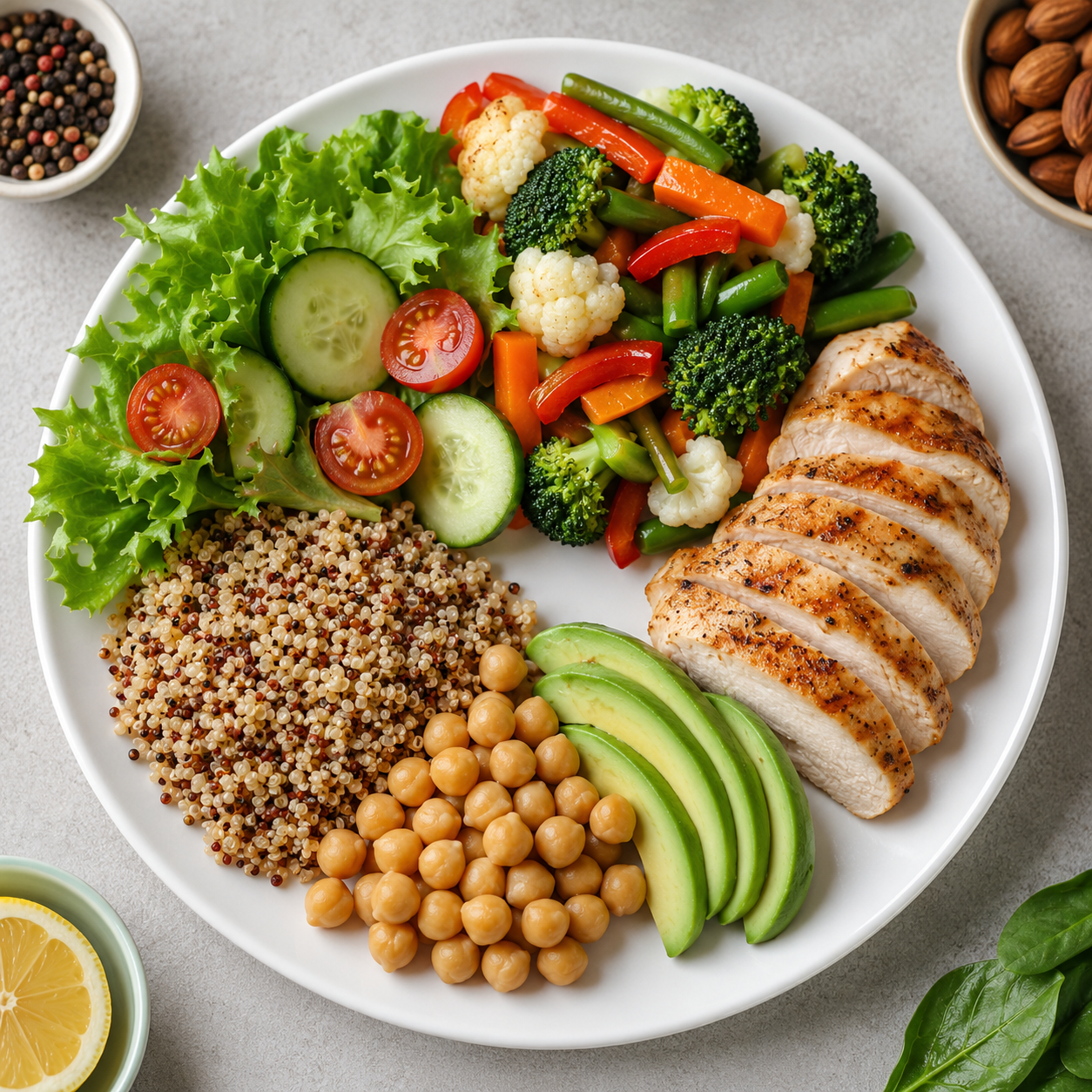
What is balanced diet for fat loss? A balanced diet for fat loss is an eating pattern built on lean protein, complex carbohydrates, healthy fats, fiber-rich vegetables, and consistent hydration, all within a modest caloric deficit. It supports metabolism, protects muscle, stabilizes hunger hormones, and delivers sustainable fat loss without the burnout of restrictive dieting.
Key components of a balanced diet for fat loss include:
- Lean protein at every meal (0.8 to 1 gram per pound of body weight)
- Complex carbs like oats, quinoa, and sweet potatoes
- Healthy fats from avocado, olive oil, and fatty fish
- Fiber-rich vegetables and low-sugar fruits
- 2 to 3 liters of water daily
What Does a Balanced Diet for Fat Loss Actually Mean?
The phrase gets thrown around a lot, but a balanced diet for fat loss isn’t just about eating less. It’s about eating in a way that supports your metabolism, preserves lean muscle, keeps hormones stable, and sustains a caloric deficit without making you feel deprived.
Here’s what that looks like in practice:
- Protein first, every meal. Protein is the single most important macronutrient for fat loss. It keeps you full, protects muscle tissue during a caloric deficit, and has the highest thermic effect of any food meaning your body burns more calories just digesting it. Aim for 0.8–1g per pound of body weight.
- Complex carbohydrates over simple ones. Oats, legumes, sweet potatoes, and whole grains provide steady energy without the blood sugar spikes that drive fat storage. These aren’t the enemy the dose and timing are what matter.
- Healthy fats in moderation. Avocados, olive oil, nuts, and fatty fish support hormone production, including the hormones that regulate hunger. Eliminating fat entirely is one of the most common mistakes people make on a fat loss plan.
- Vegetables and fiber as the base. Fiber slows digestion, feeds your gut microbiome, and creates satiety without adding significant calories.
- Hydration. This sounds basic because it is but most people are mildly dehydrated for most of the day, which suppresses metabolism and mimics hunger signals.
The framework is straightforward. The execution is where most plans fall apart not because of bad choices, but because hunger hormones, stress, sleep deprivation, and metabolic adaptation all work against you over time.

Balanced Diet for Belly Fat Loss: Why Spot Reduction Is a Myth (But Strategy Helps)
People searching for a balanced diet for belly fat loss are often chasing a specific outcome the visible, stubborn fat around the midsection. Here’s what you need to know.
You cannot target belly fat with specific foods. Fat loss is systemic, not local. When your body burns fat, it pulls from stores throughout the body based on genetics and hormonal factors not based on where you feel the burn during crunches.
What you can do is reduce the dietary patterns most associated with visceral (deep belly) fat accumulation:
- High sugar intake particularly fructose from processed foods and sweetened beverages is strongly linked to visceral fat storage.
- Alcohol, even in moderate amounts, is metabolized preferentially by the liver and promotes fat storage in the abdominal area.
- Chronic stress elevates cortisol, which specifically drives belly fat accumulation. Diet alone doesn’t fix this sleep, stress management, and lifestyle all matter.
- Refined carbohydrates (white bread, pasta, pastries) spike insulin, which signals the body to store rather than burn fat.
A balanced diet for belly fat loss focuses on anti-inflammatory whole foods, consistent protein intake, limited alcohol and added sugar, and caloric awareness not a single magic food or extreme restriction.
Weight Loss and Muscle Gain: Can You Really Do Both at Once?
This is one of the most searched and most misunderstood goals in nutrition: a balanced diet for fat loss and muscle gain simultaneously what researchers call “body recomposition.”
The short answer: it’s possible, but it’s harder than doing them separately, and it works best under specific conditions.
Who can realistically do both at the same time:
- People who are new to resistance training (beginners respond to stimulus more dramatically)
- People who are in a caloric surplus relative to their activity but new to structured exercise
- People returning from a long break from training
What the diet needs to look like for a balanced diet for muscle gain and fat loss:
- Protein intake high 1g per pound of bodyweight is the baseline; some research supports going higher
- Caloric intake at or just under maintenance a large deficit kills muscle gain; a large surplus increases fat storage
- Resistance training is non-negotiable diet alone cannot build muscle; progressive overload is required
- Carbohydrates timed around training pre- and post-workout carbs support performance and recovery without driving fat storage
The honest reality for most people chasing body recomposition: progress is slower than choosing one goal at a time. If fat loss is the priority which it is for most people who are significantly overweight the physiology of a larger body often makes it harder to reach and stay in the right caloric window.
Best Foods for Weight Loss: The Nutritional Building Blocks That Work
If a balanced diet for fat loss is the framework, the best foods for weight loss are the bricks. The right choices don’t just cut calories, they actively support metabolism, hormone balance, and appetite control.
Lean Proteins That Support Fat Loss and Satiety
Chicken breast, turkey, eggs, Greek yogurt, cottage cheese, salmon, tuna, and lean cuts of beef sit at the top. Plant-based options like lentils, tofu, tempeh, and edamame work equally well for anyone eating less meat. Protein has the highest thermic effect of food, meaning your body burns roughly 20 to 30 percent of protein calories just digesting it.
Complex Carbs That Won’t Spike Insulin
Oats, quinoa, brown rice, sweet potatoes, black beans, and chickpeas release energy slowly. These are the carbs that fuel workouts without triggering the insulin roller coaster that drives belly fat weight loss to a standstill.
Fats That Actually Help You Burn Fat
Avocado, extra virgin olive oil, walnuts, almonds, chia seeds, flaxseed, and fatty fish like salmon and sardines. These support the hormones that regulate hunger and metabolism. Removing fat entirely often backfires, especially for women.
Fiber-Rich Vegetables and Fruits
Leafy greens, broccoli, cauliflower, berries, apples, and cruciferous vegetables should make up the biggest portion of every plate. Fiber slows digestion, feeds the gut microbiome, and creates real satiety on fewer calories.
For most people trying to lose weight in Texas, the missing piece isn’t a fancy supplement, it’s consistent access to these foods across the week. Meal planning solves more fat loss problems than any single food ever will.
When a Balanced Diet Isn’t Enough: The Physiological Reality of Severe Obesity
Here’s where most diet blogs stop. They give you the framework, wish you luck, and send you off to count calories. But for a meaningful portion of the population particularly those with a BMI above 35–40 or those carrying obesity-related health conditions the equation is fundamentally different.
The research is clear: in severe obesity, the body’s hunger-regulating hormones (ghrelin, leptin, GLP-1) function abnormally. The brain resists fat loss through powerful compensatory mechanisms slowing metabolism, intensifying hunger, and increasing food-seeking behavior all in response to even modest weight loss.
This is not a discipline problem. It’s a biological one.
For these patients, a balanced diet for fat loss is still important but it often cannot overcome the physiological forces working against long-term weight maintenance. This is where bariatric surgery becomes a medically relevant option.
How Bariatric Surgery Works Alongside a Balanced Diet
Bariatric surgery doesn’t replace healthy eating. It changes the hormonal and mechanical landscape of the body in ways that make healthy eating actually work often for the first time in years.
Procedures like gastric sleeve reduce the stomach’s capacity and dramatically lower ghrelin levels the primary hunger hormone. Patients feel genuinely full on smaller portions, not because they’re forcing themselves, but because the hormonal signal has changed.
Gastric bypass goes further by rerouting the digestive tract, altering how the gut communicates with the brain, and producing metabolic changes that often resolve type 2 diabetes before significant weight loss has even occurred.
After surgery, patients still follow a carefully structured nutritional plan beginning with liquids, progressing through soft foods, and eventually reaching a regular diet built around the same principles outlined above: protein first, nutrient density, controlled portions, and consistent hydration. The difference is that the body is now working with the patient rather than against them.
What Bariatric Nutrition Looks Like Long-Term
The post-surgical diet at BodEvolve Bariatric follows a structured progression:
Phase 1 (Weeks 1–2): Clear liquids broth, water, sugar-free non-carbonated beverages, protein shakes Phase 2 (Weeks 2–4): Full liquids low-fat yogurt, blended soups, protein drinks Phase 3 (Weeks 4–6): Pureed and soft foods lean proteins blended or finely minced, cooked vegetables Phase 4 (Week 7+): Solid foods, with protein prioritized at every meal
Long-term, the nutritional principles for bariatric patients mirror a high-performance balanced diet for fat loss and muscle gain:
- 60–80g of protein daily minimum (and often higher)
- Vitamin and mineral supplementation (B12, iron, calcium, vitamin D)
- Small, frequent meals that emphasize protein, vegetables, and complex carbohydrates
- Avoidance of high-sugar and high-fat processed foods
- Consistent hydration between meals (not during, to avoid capacity issues)
Patients who maintain these habits long-term see outcomes that diet alone rarely produces 70–90% excess body weight loss in many cases, along with resolution of sleep apnea, blood pressure normalization, type 2 diabetes improvement, and dramatic improvements in joint health and energy.
BodEvolve Bariatric: Personalized Care Across DFW
At BodEvolve Bariatric, every patient starts with an honest, thorough evaluation surgical or non-surgical before a path is recommended. That’s a meaningful distinction from practices that have one answer for every patient.
The team is led by dr Frenzel, triple board-certified and dual fellowship-trained the only bariatric and cosmetic surgeon in DFW with that combination of credentials. He and Dr. Brian Holt, Fellow of the American Society for Metabolic and Bariatric Surgery (ASMBS) and the American College of Surgeons, have performed over 14,000 procedures together.
BodEvolve serves patients across the DFW area with convenient locations in Arlington, Richardson, Dallas, and Texarkana.
Is Bariatric Surgery Covered by Insurance?
One of the most common reasons people delay exploring surgery is the assumption that it’s out of reach financially. In reality, most major insurance plans cover bariatric procedures when medical criteria are met including documentation of BMI thresholds and obesity-related comorbidities.
BodEvolve’s team has helped hundreds of patients navigate this process. If you’re unsure where to start, this guide on how to get insurance to cover revision bariatric surgery walks through exactly what documentation you need and how to approach the approval process.
The Real Answer: Diet First, Surgery When Appropriate
A balanced diet for fat loss is always the right starting point. For people with moderate weight loss goals, it’s often sufficient. Clean protein, complex carbs, healthy fats, fiber, and consistent hydration combined with strength training and lifestyle changes produce real, lasting results.
But if you’ve been doing everything right and the weight keeps coming back, or if you’re carrying excess weight that’s beginning to create health complications, that’s not a willpower problem. That’s a physiological one and it may require a physiological solution.
Understanding bariatric surgery success rates and what bariatric surgery recovery time actually looks like are both important steps before making any decision. Both pages are worth reading if you’re at the stage where surgery is on the table.
The right path is the one that actually works for your body and finding it starts with an honest conversation.
If you’re in the DFW area and want that conversation, BodEvolve Bariatric is ready when you are.
