
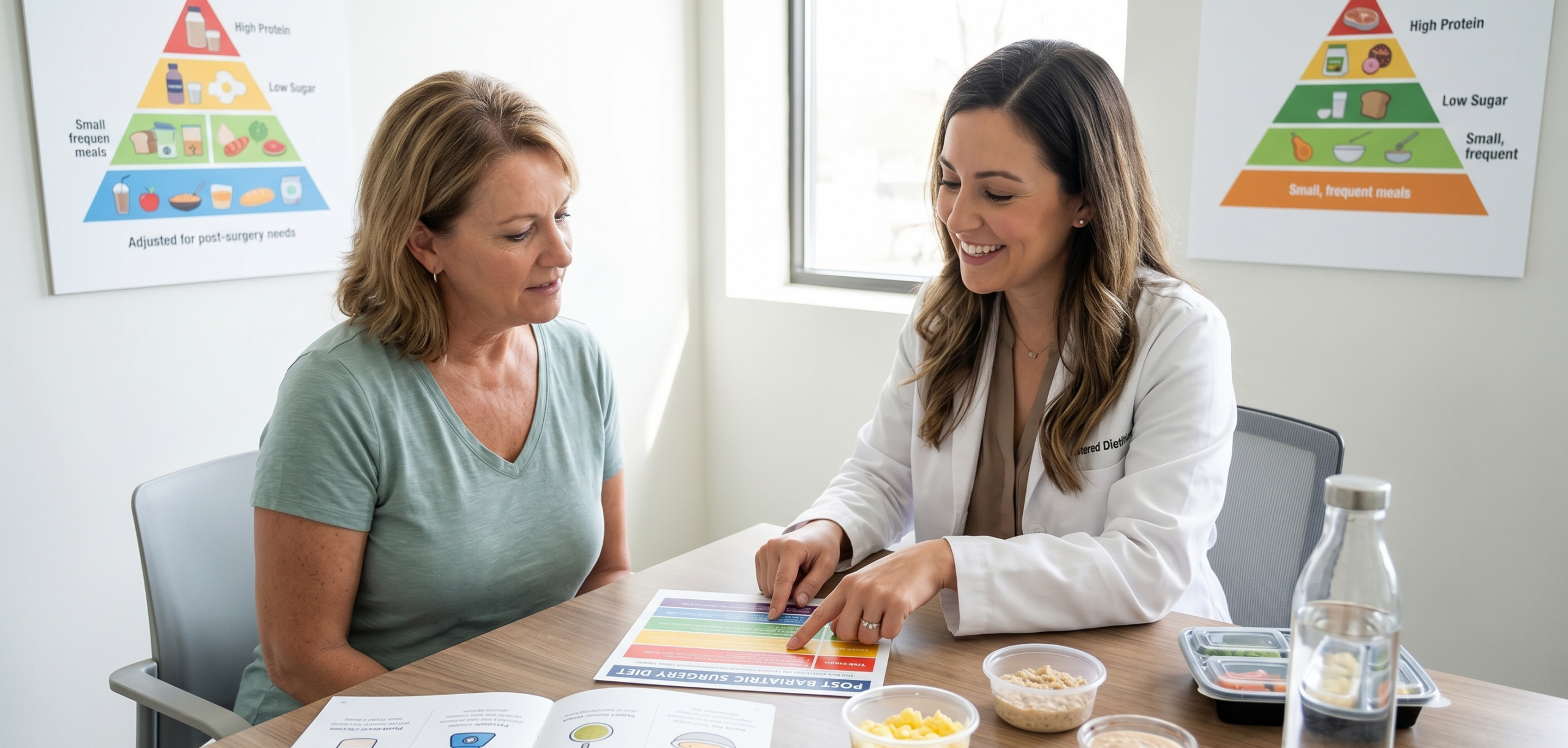
What Is the Post Bariatric Surgery Diet? The post bariatric surgery diet is a five-stage eating plan followed after weight-loss surgery: clear liquids (days 1–3), full liquids (weeks 1–2), pureed foods (weeks 2–4), soft foods (weeks 4–8), and a regular bariatric diet (week 8 onward) — with a daily protein target of 60 to 80 grams at every stage.
The post bariatric surgery diet is a five-stage eating plan that begins with clear liquids on day one and gradually progresses to regular solid foods by week eight. Each stage exists to protect your healing stomach and hit the 60 to 80 grams of daily protein your body needs to recover.
The 5 stages of the bariatric diet are:
1. Clear Liquids: Days 1 to 3
2. Full Liquids: Weeks 1 to 2
3. Pureed Foods: Weeks 2 to 4
4. Soft Foods: Weeks 4 to 8
5. Regular Bariatric Diet: Week 8 onwards
Understanding the Bariatric Surgery Diet Stages
The post bariatric surgery diet moves through five stages over roughly eight weeks: clear liquids, full liquids, pureed foods, soft foods, and a regular bariatric diet. Each stage protects your healing stomach while you rebuild toward solid food.
The post bariatric surgery diet moves through five clear stages:
- Stage 1 – Clear Liquids: Days 1 to 3
- Stage 2 – Full Liquids: Weeks 1 to 2
- Stage 3 – Pureed Foods: Weeks 2 to 4
- Stage 4 – Soft Foods: Weeks 4 to 8
- Stage 5 – Regular Bariatric Diet: Week 8 onward
Every surgeon has slightly different timelines. Dr. Frenzel and the BodEvolve team will give you a personalized plan based on your procedure type and recovery progress. Never rush from one stage to the next on your own your body will tell you when it isn’t ready, usually through nausea or pain.
Not sure which procedure you had, or which diet stage you should be on? Book a consultation with the BodEvolve team in Arlington, Richardson, Dallas, or Texarkana. Our surgeons and dietitians build your plan around your body, not a generic template.
Bariatric Surgery Liquid Diet Post Op (Stage 1 and Stage 2)
The first two weeks are all liquids, and yes, that feels like a long time when you’re hungry. But this is when your stomach is doing its most critical healing work.
Stage 1 Clear Liquids (Hospital and First Days Home)
The bariatric surgery liquid diet post op starts the moment you wake up from surgery. At first, you are only allowed clear, thin liquids with zero carbonation and zero sugar. Think:
- Water (sipped slowly, never gulped)
- Clear broth chicken or vegetable
- Sugar-free popsicles
- Decaf tea or diluted sugar-free drinks
- Sugar-free gelatin
Your entire stomach capacity at this point is roughly two to four ounces. Sip every fifteen minutes. Do not rush. Do not chug. This is not optional advice, it is how you avoid serious complications.
Stage 2 Full Liquid Diet
This is the liquid diet post bariatric surgery phase that most people find challenging. You move beyond clear liquids but everything must still pour through a straw. Good options include:
- Protein shakes (your best friend right now)
- Thinned cream soups no chunks
- Low-fat milk or unsweetened plant-based milk
- Greek yogurt blended smooth
- Sugar-free pudding
- Strained tomato or vegetable juice
Protein is your priority. You need 60 to 80 grams of protein daily from day one. Many patients underestimate how hard this is on liquids alone. Use protein shakes multiple times per day and track your grams obsessively during this phase.
Hydration is the other non-negotiable. Sixty-four ounces of fluid per day, minimum. Dehydration is one of the top reasons bariatric patients end up back in the hospital, and it is entirely preventable.
Gastric Bypass Post Op Diet: How It Differs
The gastric bypass post op diet follows the same liquid-to-solid progression as the sleeve, but a few rules matter more after a bypass. Because your small intestine is rerouted, your body absorbs fewer nutrients, so vitamin and protein tracking is even less optional than usual.
Sugar is the big one. The gastric bypass post op diet has to stay genuinely low in sugar because anything sweet can trigger dumping syndrome, that wave of nausea, cramping, and dizziness that follows a high-sugar meal. Most bypass patients learn this lesson exactly once.
You will also need lifelong B12, iron, and calcium supplementation, since the bypassed section of intestine is where a lot of that absorption used to happen. Your BodEvolve care team will set your exact doses based on your bloodwork, not a generic chart.
The 2 Week Post Bariatric Surgery Diet Checkpoint
The 2 week post bariatric surgery diet is a milestone many patients look forward to because it usually marks the transition into pureed foods. But “two weeks” is not a green light to rush it is an approximate checkpoint.
At two weeks post-op, most patients are noticing:
- Less swelling and discomfort when sipping
- Protein shakes becoming easier to get down
- Hunger returning (sometimes this feels alarming, but it is normal)
- Fatigue starting to ease slightly
This is also where many people hit their first emotional wall. The novelty of surgery has worn off, solid food still feels a million miles away, and the scale may have slowed from the initial rapid drop. This is completely normal. The bariatric diet post surgery in these early weeks is designed for healing, not for dramatic daily weight loss.
Stick to your plan. The results are coming.
Struggling to hit 80g of protein a day? You are not alone. Our dietitians work one on one with every BodEvolve patient to build a protein plan that fits your stage, your taste, and your schedule. Talk to our team.
Bariatric Food List: What You Can and Cannot Eat After Surgery
One of the most common questions after surgery is simple: what can I actually eat now? Here is a straightforward bariatric food list organized by food group to help you shop, plan, and avoid costly mistakes.
Proteins (Priority #1 always eat these first)
- Eggs (scrambled soft, poached, hard-boiled)
– Skinless chicken breast or turkey (grilled, baked, slow-cooked) - Canned tuna or salmon (in water, not oil)
- Low-fat cottage cheese
- Greek yogurt (plain, no added sugar)
- Tofu and edamame
- Lean ground beef or turkey (well-cooked, no added fat)
Vegetables (Cooked and Soft – avoid raw in early stages)
- Zucchini, carrots, green beans (steamed until tender)
- Spinach and kale (cooked down, not raw)
- Cauliflower and broccoli (fully cooked)
- Sweet potato (mashed or soft-baked)
- Avocado (soft, no cooking needed)
Fruits (Small amounts, no skin, no seeds)
- Banana (ripe)
- Melon (soft varieties)
- Berries (blended in early stages)
- Canned fruit in juice, not syrup
Dairy and Alternatives
- Low-fat cheese (in small amounts)
- Unsweetened almond or oat milk
- Low-fat ricotta
Foods to Always Avoid After Bariatric Surgery
- Carbonated drinks (including sparkling water)
- Fried or greasy foods
- White bread, rice, and pasta (slider foods with empty calories)
- Alcohol (especially in the first year)
- High-sugar drinks, juices, and desserts
- Tough or stringy meats like steak (in early stages)
- Popcorn and chips (dump syndrome risk)
This bariatric food list is a starting point. Your BodEvolve care team will fine-tune it based on your specific procedure, tolerance levels, and how your recovery is progressing.
Post Bariatric Surgery Pureed Diet Recipes (Stage 3)
Welcome to pureed foods arguably the stage patients either love or struggle with most. The goal here is simple: everything should be the consistency of smooth baby food. No chunks, no strings, no gristle.
Here are some genuinely enjoyable post bariatric surgery pureed diet recipes that are high in protein and low in effort:
Pureed Chicken and Broth Bowl Slow-cook chicken until very tender, shred finely, then blend with warm chicken broth until completely smooth. Season with garlic powder, a pinch of salt. Rich in protein, easy to digest, and surprisingly satisfying.
Blended Cottage Cheese with Fruit Full-fat cottage cheese blended smooth with a small amount of mashed banana or unsweetened applesauce. This hits your protein goal while giving you a touch of natural sweetness.
Smooth Avocado and Egg Blend Scramble eggs until very soft, then blend with ripe avocado and a small drizzle of olive oil. Season lightly. This is calorie-dense in the right way healthy fats, good protein, easy on the stomach.
Pureed Lentil Soup Cook red lentils with cumin, turmeric, and a splash of lemon juice. Blend completely smooth. Excellent plant-based protein option and it keeps well in the fridge for several days.
A few hard rules for this stage:
- No skins, seeds, or fibrous vegetables
- No dry foods that clump
- No sugar or high-fat, high-calorie bases
- Eat no more than a quarter cup at a sitting
- Always eat protein first
Post Bariatric Surgery Diet Guidelines: Bariatric Diet Rules That Last for Life
Whether you are in week two or year five, certain post bariatric surgery diet guidelines stay with you for life. These are not temporary restrictions. They are your new operating system.
Protein first, every single meal. Aim for 60 to 80 grams daily minimum. Without adequate protein, your body burns muscle instead of fat and your hair, skin, and energy all suffer for it.
Never drink with meals or immediately after. Wait at least 30 minutes before and after eating to drink anything. Liquids push food through your smaller stomach too fast and stretch the pouch over time.
Eat slowly and chew thoroughly. Twenty chews per bite is not an exaggeration. Your stomach can no longer handle chunks, and eating too fast is one of the top causes of vomiting and discomfort post-op.
Avoid carbonated drinks permanently. The gas stretches your new stomach and can cause real structural damage over time. This includes sparkling water and diet sodas.
Vitamins are not optional. Your stomach can no longer absorb nutrients at the rate it once did. Read about the what are the best vitamins to take after bariatric surgery to understand exactly what your body needs and which forms are most absorbable after surgery.
Stay away from empty calories. Slider foods crackers, chips, pretzels, anything that dissolves quickly are dangerous because they go down easy and pack on calories without giving you any nutrition.
Post Gastric Bypass Diet and Sleeve Diet: Key Differences
Both procedures share the same five stage diet framework, but the post gastric bypass diet demands stricter attention to dumping syndrome. Because bypass reroutes food past most of the stomach and part of the small intestine, sugar and high-fat foods can move too quickly into the intestine and trigger nausea, cramping, sweating, and diarrhea within 30 minutes of eating. Sleeve patients rarely deal with dumping in the same way, but they need to watch portion creep more carefully since the sleeve stomach can stretch over time.
If you had a gastric bypass, your diet will avoid added sugar almost entirely for life, not just during recovery. Sleeve patients have slightly more room for the occasional small sweet portion after the first year, though it is never encouraged. The gastric bypass diet also places heavier emphasis on B12, iron, and calcium supplementation because absorption is significantly reduced by the rerouted anatomy.
Dr. Clayton Frenzel and Dr. Brian Holt personalize both diet paths based on your specific procedure, labs, and how your body is healing. What works for one patient will not always work for another.
Post Bariatric Surgery Diet Menu: A Sample Day at Stage 5
Once you reach the post bariatric sleeve surgery diet or standard bariatric diet phase around weeks eight to ten, your meals start looking more recognizable. Here is what a realistic, solid-food day looks like:
Breakfast Two scrambled eggs with a small amount of sautéed spinach. No toast, no juice, no coffee for 30 minutes.
Mid-Morning Snack Half a cup of plain Greek yogurt with a few blueberries. Eat slowly.
Lunch Two to three ounces of grilled chicken with half a cup of soft-cooked carrots. Small portions, protein eaten first.
Afternoon Snack One low-fat cheese stick or a small serving of hummus with a few soft cucumber slices.
Dinner Three ounces of baked salmon with a small portion of mashed sweet potato. No rushing, no drinks until 30 minutes after.
Total protein for the day: approximately 70 to 80 grams. Total calories: approximately 700 to 900, depending on exact portions.
This post bariatric surgery diet menu is not meant to be exciting. It is meant to work. As your pouch continues to expand slightly over the coming months, variety and volume will both naturally increase.
How Long Does the Post Bariatric Surgery Diet Last?
The post bariatric surgery diet lasts approximately 8 to 10 weeks in structured stages, followed by a lifelong maintenance plan. Stage 1 (clear liquids) lasts 1 to 3 days, Stage 2 (full liquids) lasts 1 to 2 weeks, Stage 3 (pureed foods) lasts 2 to 4 weeks, Stage 4 (soft foods) lasts 4 to 8 weeks, and Stage 5 (regular bariatric diet) begins around week 8 and continues for life.
Stage 4 – Soft Food Post Bariatric Surgery Diet Recipes
The post bariatric surgery diet recipes that work best are high in protein, low in sugar, and easy on a healing stomach. Here are a few worth keeping in regular rotation during the soft food stage:
Ricotta Bake Mix part-skim ricotta cheese with one egg, a pinch of garlic powder, and dried Italian herbs. Bake at 375°F for 20 minutes. Soft, high in protein, and genuinely delicious.
Tuna Salad Without the Crunch Canned tuna mixed with a small amount of light mayo, lemon juice, and finely diced soft cucumber. Serve on its own skip the crackers entirely.
Soft Poached Eggs with Avocado Two poached eggs (completely set yolk) rested on mashed avocado. Easy to chew, high in protein, and filling for its size.
Cottage Cheese Pancakes Blend half a cup of cottage cheese with two eggs and a tablespoon of oat flour. Cook small rounds on a non-stick pan over low heat. High protein, low carb, and satisfying without stressing your stomach.
For more specific guidance on the post bariatric sleeve surgery diet, especially in the early solid food stages, the diet after gastric sleeve page covers sleeve-specific modifications in detail.
After Bariatric Surgery, When You Start Feeling Very Hungry, What Happens?
Hunger returning after bariatric surgery catches most patients off guard especially if it shows up around week two or three, right when you expected it to stay gone. Here’s what’s actually happening:
It’s rarely true stomach hunger – In the first month, your stomach pouch is too small and too swollen to generate the growling, empty-stomach hunger you remember pre-surgery. What you’re usually feeling is head hunger habit-driven cravings, boredom, or emotional eating triggers that surgery doesn’t remove, because surgery changes your stomach, not your relationship with food.
Hormones are shifting too – Ghrelin, the hormone that makes you feel hungry, drops sharply right after surgery and then slowly starts to rebalance over the following weeks and months. Some return of appetite is a normal, expected part of that hormonal recovery not a sign that the surgery “isn’t working.”
What to do about it:
- Drink your full 64 oz of fluid before assuming it’s real hunger thirst is frequently mistaken for hunger in the first few months
- Stick to your protein targets exactly; under-eating protein can trigger genuine physical hunger
- Wait 20–30 minutes before responding to a hunger urge head hunger usually passes, physical hunger doesn’t
- Bring it up at your next follow-up if it’s constant, not occasional your surgeon may adjust your plan
If hunger feels intense, constant, or is driving you to eat outside your stage’s guidelines, that’s worth a call to your BodEvolve care team rather than something to white-knuckle through alone.
Diet Advancement After Surgery
Diet advancement after surgery is not tied to a calendar. It is tied to how your body is responding. Two patients who had the same procedure on the same day can be at different stages three weeks out, and both can be doing everything right.
Signs you are ready to move to the next stage:
- You are tolerating your current stage without nausea for at least 3 consecutive days
- You are hitting your daily protein target consistently
- You are drinking 64 ounces of fluid without effort
- Your surgeon has cleared you at your follow-up visit
Signs to hold at your current stage:
- Any vomiting in the last 48 hours
- Sharp pain when you swallow
- Difficulty finishing even small portions
- Feeling exhausted after eating
How to Get 60 Grams of Protein a Day After Bariatric Surgery
Every BodEvolve patient hears the same number in their first post-op visit: 60 to 80 grams of protein a day, every day, starting from week one. It sounds simple until you’re staring at a two-ounce cup of broth wondering how on earth you’re supposed to fit that much protein into a stomach the size of an egg.
Here’s the honest answer on how to get 60 grams of protein a day after bariatric surgery: you plan for it before every meal, and you use protein shakes as a real tool, not a fallback.
How to Complete 60 Grams of Protein on Liquids
During Stage 1 and Stage 2, whole-food protein is off the table. This is where high-quality whey isolate or plant-based protein shakes do the heavy lifting. A single scoop typically delivers 20 to 25 grams of protein, so three shakes across the day get you to your target without stressing your healing stomach.
Practical breakdown for how to complete 60 grams of protein a day on liquids:
- 8 AM: 1 protein shake (25g)
- 12 PM: 1 protein shake mixed with unsweetened almond milk (25g)
- 4 PM: Blended Greek yogurt (12g)
- 8 PM: Warm chicken bone broth (10g)
Total: ~72 grams, spread across the day so you’re never overwhelming your pouch.
How to Cover 60 Grams of Protein Once You’re on Solids
Once you reach soft foods and Stage 5, the math shifts. Now you’re covering 60 grams of protein a day through smaller, protein-first meals eaten slowly. A realistic day looks like:
- 2 scrambled eggs (12g)
- ½ cup Greek yogurt (12g)
- 2 oz grilled chicken (14g)
- 3 oz baked salmon (21g)
That’s 59 grams from food alone, and one protein shake pushes you past 80. The rule stays the same for life: protein first, every single meal, no exceptions.
Foods to Avoid After Bariatric Surgery (And Why They Cause Problems)
Some foods are off the table not just for recovery, but for the long term. Eating the wrong things after bariatric surgery can cause dumping syndrome, pouch stretching, vomiting, and slow down your weight loss significantly.
Never eat or drink these after bariatric surgery:
- Carbonated drinks of any kind (including sparkling water and diet soda)
- Sugary drinks – juice, sweet tea, regular soda
- Slider foods – crackers, chips, pretzels, white bread
- Tough red meats that are hard to chew thoroughly
- Fried or greasy foods – they cause dumping and discomfort
- Alcohol – absorption is dramatically faster after surgery and far more dangerous
- Dried fruits, nuts with skins, and raw fibrous vegetables (in early stages)
If it goes down too easily without chewing, it’s probably not a food that’s helping you heal or lose weight.
When to Contact Your Surgeon
The bariatric post surgery diet should never feel like something you are figuring out alone. Call your care team immediately if you experience:
- Persistent vomiting after every meal
- Complete inability to keep liquids down
- Sharp pain when swallowing
- Significant weight loss stopping entirely before 6 months
These are signs that something needs attention, not signs to push through quietly.
Start Your Journey With BodEvolve
The post bariatric surgery diet and the post-bypass diet both require guidance, accountability, and a care team that stays with you through every stage, not just the surgery itself.
BodEvolve serves patients across Arlington, Richardson, Dallas, and Texarkana with comprehensive nutrition support, surgical follow-up, and long-term care that keeps patients on track well beyond the operating room.
Ready to take the next step? Reach out to the BodEvolve team today and get a personalized consultation with Dr. Frenzel one of Texas’s most experienced bariatric surgeons.
