
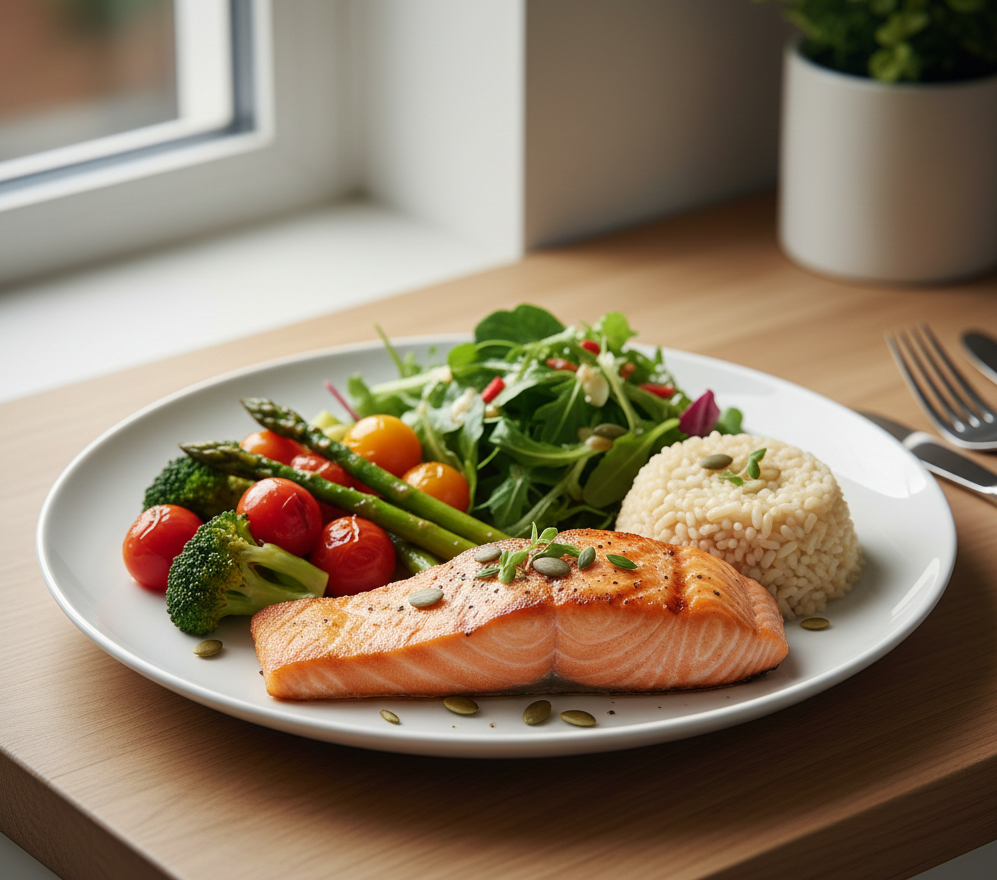
Surgery is the easy part. The diet after gastric sleeve surgery is where the real work happens. And where most patients either set themselves up for long-term success or accidentally undo what the gastric sleeve surgery gave them. The first year is a series of timed stages each with its own foods portion sizes and rules followed by a long-term eating pattern that lasts the rest of your life.
At BodEvolve Bariatric Surgery Center in Texas, Dr. Frenzel and our team have walked thousands of patients through this progression across the Dallas-Fort Worth area and we’ve seen the patterns that separate the patients who hit their goal weight from the ones who plateau early. This guide covers every phase. The day-after-surgery liquid diet through the 5-year long-term plan with sample meals, problem foods and honest answers about what slipping looks like.
Why the Diet After Gastric Sleeve Surgery Matters as Much as the Operation
The gastric sleeve surgery removes about 75% of your stomach. What’s left is a banana-shaped pouch that holds roughly 4 to 6 ounces of food. That anatomical change is permanent. Who reaches that point is partly determined before surgery ever happens the BMI for gastric sleeve surgery requirements shape which patients are cleared to proceed and patients closer to the borderline threshold often have the most to gain from getting the post-op diet right from day one. What isn’t permanent is whether your eating patterns match it.
The diet after sleeve surgery does three jobs:
1. Heals the staple line safely. The first 4-6 weeks of liquid and soft food protect a surgical wound. Solid food early can cause leaks, the most serious post-sleeve complication.
2. Builds the eating habits you’ll keep for life. Gastric sleeve patients who treat the -op diet as temporary regain weight. Gastric sleeve patients who treat it as the new permanent baseline keep their results.
3. Maximizes the metabolic window. The first 12-18 months are when fat loss is fastest. Strict diet adherence during this window translates to long-term outcomes.
Gastric sleeve patients who skip stages or rush the timeline see complications. Gastric sleeve patients who follow the protocol. Even when it feels excessively cautious. Consistently get the results.
Diet Stages After Gastric Sleeve- The Full Phase Breakdown
The standard gastric sleeve diet phases progress over 8 weeks then transition to a long-term eating pattern. Here’s the complete progression:
1. Stage 1- Clear Liquids (Days 1-3)
The first 72 hours after sleeve surgery are clear-liquid only. Your staple line is healing. Your stomach is too inflamed for anything else.
Allowed:
1. Water, ice chips
2. Sugar-free Crystal. Similar electrolyte drinks
3. Broth (chicken, beef, vegetable)
4. Sugar-free gelatin
5. Decaf herbal tea
6. Sugar-free popsicles
Volume: 1-2 ounces every 15-30 minutes. Sip, don’t gulp.
Watch for: nausea, severe pain, fever or inability to keep liquids down. These need immediate surgical team contact.
2. Stage 2- Full Liquids (Days 4-14)
Around day 4 you’ll graduate to liquids. Anything thats liquid at room temperature including denser protein-containing options.
Allowed:
a. Protein shakes (20-30g protein per serving under 5g sugar)
b. Strained, blended cream soups
c. Sugar-free pudding
d. Greek yogurt thinned with water or milk
e. Skim or low-fat milk
f. Sugar-free instant breakfast drinks
g. Continued clear liquids
Volume: 4-6 ounces per meal 5-6 meals per day. Protein target: 60-80 grams per day.
This is when many gastric sleeve patients start feeling normal. The hunger that comes back during this phase is usually thirst. Drink water before assuming it’s hunger.
3. Stage 3- Pureed Foods (Weeks 3-4)
Around week 3 you’ll begin the pureed diet after gastric sleeve phase. Foods must be the consistency of baby food. Smooth, no chunks.
Allowed:
A) Pureed chicken, fish or lean ground beef thinned with broth
B) Cottage cheese (fat blended smooth)
C) Mashed avocado
D) Pureed cooked vegetables (squash, potato, carrots)
E) Refried beans (no fat added)
F) Hummus
G) nut butters (1-2 tbsp)
H) Greek yogurt without fruit chunks
Volume: 4-6 oz per meal 4-5 meals. Protein target: 60-80g.
Sample Stage 3 day:
a. Breakfast: Greek yogurt blended with protein powder (4 oz)
b. Snack: Pureed cottage cheese (3 oz)
c. Lunch: Pureed chicken with broth (4 oz). Mashed avocado (1 tbsp)
d. Snack: Sugar- pudding (4 oz)
e. Dinner: Pureed fish with pureed potato (4 oz total)
f. Evening: Protein shake (8 oz sipped over 30+ minutes)
4. Stage 4- Soft Foods (Weeks 5-6)
The soft food diet after gastric sleeve introduces foods you can chew, but only those that mash easily with a fork.
Allowed:
a. Eggs (soft-boiled or poached)
b. Soft fish (tilapia, sole baked salmon)
c. Ground turkey or chicken
d. Cottage cheese with soft fruit
e. Soft cheeses
f. Cooked oatmeal
g. Soft cooked vegetables
h. Banana, ripe peach, melon
i. Beans and legumes
Volume: ½ to ¾ cup per meal 4-5 meals daily.
Avoid now: Bread, rice, pasta, raw vegetables, tough meats, anything fried.
5. Stage 5. Regular Solid Foods (Weeks 7-8 onward)
By week 7-8 gastric sleeve patients can begin reintroducing regular textures. Slowly one new food at a time.
Approach:
a. Add one food per day so you can track tolerance
b. Chew each bite 20-30 times
c. Stop eating when satisfied (not full)
d. Wait 30 minutes before drinking after meals
e. Each meal: ¾ to 1 cup volume
Foods to introduce cautiously: Steak, whole bread, raw vegetables, pasta, rice, popcorn. Some patients tolerate these well, others never do- both are normal.
Those patients who stick to their post-op diet always produce the best results. To learn more about how we can help you make a transformation through surgery, read our full gastric sleeve before and after guide.
Sample Gastric Sleeve Diet Meal Plan (3 Months Post-Op)
A day at the 3-month mark when you’ve fully reintroduced solid foods:
a. Breakfast (8 AM):
b. 2 scrambled eggs with 1 oz cheese
c. ¼ cup cottage cheese
d. Mid-morning (10:30 AM):
e. Protein shake (sipped slowly)
f. Lunch (1 PM):
g. 3 oz grilled chicken breast
h. ¼ cup cooked vegetables
i. Small side salad with light dressing
j. Afternoon (4 PM):
k. 1 string cheese + 6 almonds
l. Dinner (7 PM):
m. 3 oz baked fish
n. ¼ cup mashed cauliflower
o. ¼ cup steamed beans
Daily totals: ~900-1,100 calories, 80-90g protein focus on protein-first eating.
Long-Term Diet After Gastric Sleeve Surgery (1 Year and Beyond)
The long-term diet after gastric sleeve surgery is what separates the sleeve patients who maintain their loss from those who regain. After the 8-week structured phase you’re not on a “diet” anymore. You’re on an eating pattern.
Gastric Sleeve Diet After One Year
By 12 months most gastric sleeve patients can:
a. Eat ¾ to 1.5 cups of food per meal
b. Tolerate food textures
c. Drink 30 minutes before or after meals (never with)
d. Hit 60-80g protein daily without thinking about it
e. Eat 3 main meals + 1-2 small snacks
Foods to keep eating regularly:
1. Lean protein at every meal (chicken, fish, eggs, lean beef, Greek yogurt, cottage cheese)
2. Non-starchy vegetables
3. servings of complex carbs (sweet potato, quinoa, oats)
4. Healthy fats in moderation (avocado, nuts, olive oil)
Foods to keep limiting:
1. Refined sugar and sweets
2. carbs that “slide through” without making you full (chips, crackers, cookies)
3. Carbonated beverages
4. Alcohol ( in first year)
2 Years Post Op Gastric Sleeve Diet
At 2 years your relationship with food is the issue than the food itself. Gastric sleeve patients who maintain their results at 2+ years share patterns:
1. They weigh themselves regularly (not daily)
2. They keep tracking protein at minimum
3. They’ve identified their trigger foods” and minimize them
4. They’ve built activity into their routine (150+ minutes weekly)
5. They don’t drink calories. No juice, no soda, no specialty coffee drinks
6. They eat slowly. Stop when satisfied not stuffed
The 2-year mark is also when a bariatric revision surgery texas consultation can be useful for gastric sleeve patients who’ve experienced significant regain. Addressing it at year 2 is much easier than at year 5.
Foods to Avoid After Gastric Sleeve
Some foods cause problems for every gastric sleeve patient especially in the first year:
A) Bread, rice, pasta. They. Clog. Most gastric sleeve patients tolerate them poorly in the first 6 months
B) Carbonated beverages. Can stretch the sleeve and cause significant discomfort
C) Tough meats. Steak, pork chops, dry chicken breast often cause problems on
D) Raw fibrous vegetables. Celery, raw broccoli, cabbage raw kale can be hard to digest
E) Popcorn, chips, crackers. Slide-through carbs that don’t fill you up but add calories
F) Sugar and sweets. Can cause dumping syndrome in some sleeve patients (less common with gastric sleeve than bypass but it happens)
G) Dried fruit, granola bars. Concentrated sugar disguised as healthy
H) Fried foods. Rarely tolerated well
I) Skin, on poultry gristly meats. Chew thoroughly. Avoid
Can You Drink Diet Soda After Gastric Sleeve?
Diet soda is something that a lot of people ask about after having sleeve surgery. The truth is that most surgeons will tell you that diet soda is not an idea and I agree with them. The problem with diet soda is that it is carbonated, which can cause your sleeve to stretch over time. Also the artificial sweeteners in diet soda can make you want to eat more. Can affect how your body digests food.
Many patients ask when can I drink Diet Coke after gastric sleeve, and the realistic answer is that there’s no good time — even at 2 years post-op, the calories saved aren’t worth the long-term sleeve stretching risk.
If you absolutely need to, wait 12 months and let it go flat first.
Can You Do Keto or Carnivore After Gastric Sleeve?
Several patients ask about keto diet after gastric sleeve or carnivore diet after gastric sleeve. The short answer:
The answer to this is that a keto diet can be okay to follow after you have been recovering for six months or more. You should focus on eating a lot of protein and not too much fat. A carnivore diet is not usually recommended because it can be too restrictive and may not give you all the nutrients you need.
A low-carb diet is something that a lot of people with sleeves follow naturally.
Staying hydrated is very important after sleeve surgery. You should try to drink least sixty-four ounces of fluid every day. The challenge is that you cannot drink when you are eating. If you do the liquid can make your food pass through your sleeve quickly which can make you hungry again sooner.
Hydration After Gastric Sleeve
Hydration is the single most under-emphasized part of the post gastric sleeve diet. Aim for 64+ ounces of fluid daily. A good rule to follow is to stop drinking thirty minutes before you eat and then start drinking thirty minutes after you finish eating.
If you are not drinking water you may get dehydrated. Signs of dehydration include urine, headaches, dizziness, fatigue and constipation. These are all problems for people who have had gastric sleeve surgery especially in the first three months after surgery. Drinking water can usually help fix these problems.
Procedure-Specific Diet Notes
The post-op diet is broadly similar across procedures, but variations exist:
1. Gastric Sleeve: Standard 8-week progression as described above. No malabsorption issues, but vitamin supplementation is still required.
2. Gastric Bypass: Similar progression but stricter sugar restriction due to dumping syndrome risk.
3. The duodenal switch and SADI surgery : Higher protein requirements (80-100g+ daily), stricter long-term vitamin protocols due to malabsorption.
For patients evaluating which procedure best fits their goals, medical weight management can be a structured first step.
When the Diet Isn’t Working- Honest Troubleshooting
If you’re 6+ months post-sleeve and not losing weight, the issue is almost always one of these:
1. Liquid calories are creeping in- coffee with cream, fruit juice, alcohol
2. Snacking has replaced meals- small amounts of slider foods all day add up
3. Protein is below 60g- protein deficiency stalls weight loss
4. Carb portions have grown- bread, rice, and pasta have crept back in
5. Hydration is poor- chronic dehydration mimics hunger
6. Sleep and stress are off- both directly affect weight loss hormones
Patients struggling at 6-12 months should reconnect with their bariatric team rather than assume the surgery “didn’t work.” It almost always did — eating patterns just need recalibrating.
For patients considering body contouring after major weight loss, our plastic surgeons specializing in bariatric patients work in coordination with our bariatric team. Insurance coverage for revision procedures is also more accessible than many patients realize- here’s how to get insurance to cover revision bariatric surgery if your initial surgery hasn’t delivered expected results.
Bariatric Care Across Texas
BodEvolve serves sleeve patients across the Dallas-Fort Worth metroplex from four locations:
1. Arlington- serving Tarrant County
2. Richardson- our primary facility
3. Dallas- serving central Dallas County
4. Texarkana- serving East Texas and Southwest Arkansas
The diet after gastric sleeve is the difference between a good outcome and a great one. If you’re preparing for surgery or already navigating a stage and need a real plan tailored to your case, schedule a consultation with Dr. Frenzel and the BodEvolve team.
Book Your Consultation
