
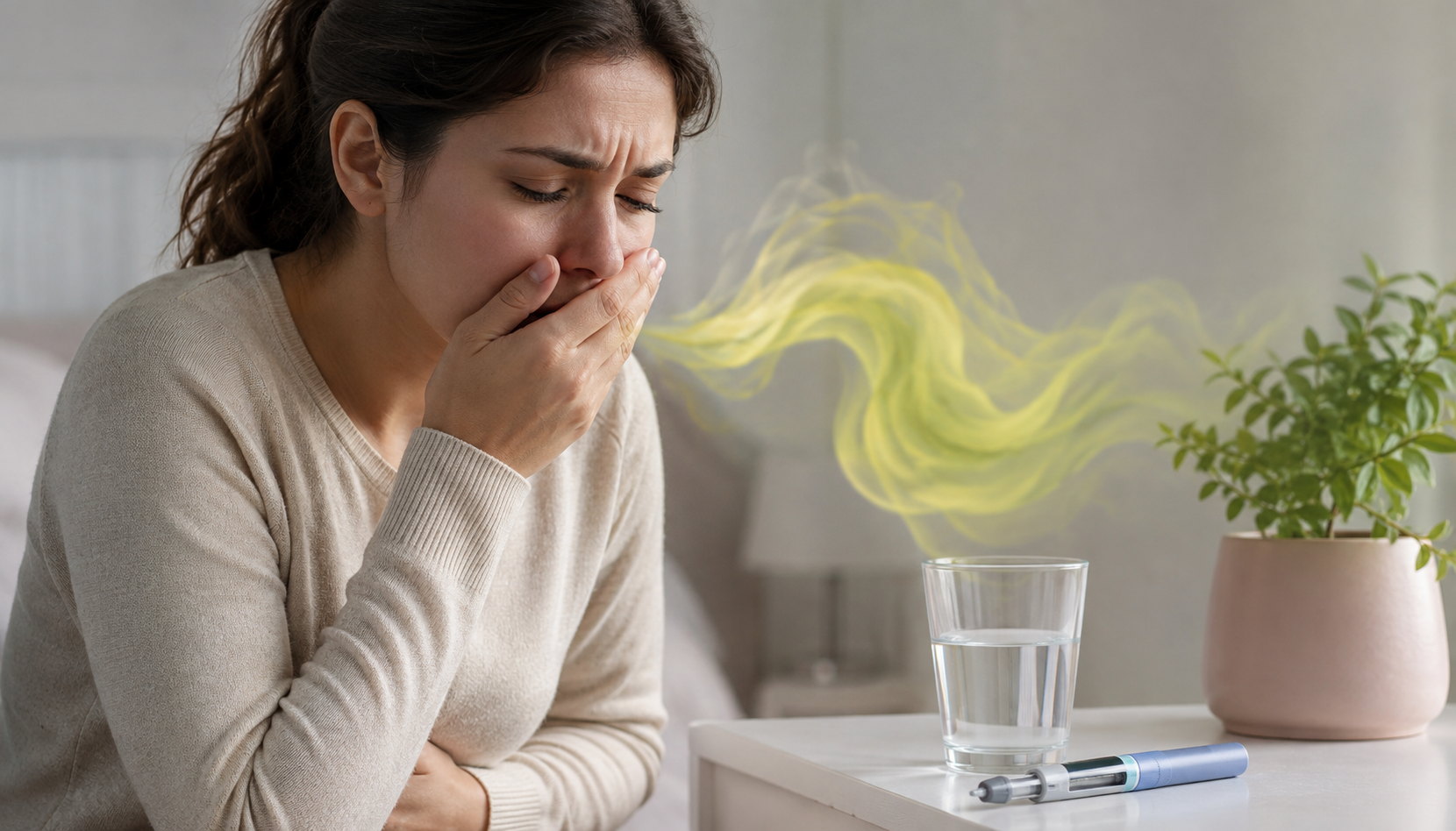
Sulfur burps on Ozempic are burps that smell like rotten eggs, caused by hydrogen sulfide gas building up in the stomach when semaglutide slows down digestion. This is one of the more common but under-discussed side effects of Ozempic, especially in the first 8 to 12 weeks of treatment or after a dose increase. The burps often come with bloating, nausea, and sometimes diarrhea. Most cases settle on their own as the body adjusts to the medication, but simple diet changes, over-the-counter remedies like Pepto-Bismol, and better meal timing can bring faster relief. Adjusting the dose with your doctor is another option when the burps become disruptive.
What Are Sulfur Burps on Ozempic?
Sulfur burps on Ozempic are burps that smell like rotten eggs or spoiled food. The smell comes from hydrogen sulfide gas, which forms when protein and sulfur-rich foods sit longer than usual in the stomach and start to ferment. Ozempic (semaglutide) slows down gastric emptying as part of how it works, so food takes 2 to 4 times longer to leave the stomach compared to normal digestion. When that food contains sulfur compounds (from eggs, meat, dairy, or cruciferous vegetables), the extended fermentation produces the classic rotten-egg smell. Learning how Ozempic works for type 2 diabetes and weight loss helps explain why this side effect happens.
Does Ozempic Cause Sulfur Burps?
Yes, Ozempic can cause sulfur burps, and it is one of the more common gastrointestinal side effects patients report. The effect is not officially listed as a primary side effect on the drug label because it falls under the broader category of “eructation” (medical term for burping), which does appear on the label. Real-world patient reports and clinician observations consistently connect sulfur-smelling burps to semaglutide use, especially during dose increases. The good news is that sulfur burps are not dangerous on their own. They are usually a signal that digestion has slowed, not a warning that something serious is happening in your body.
Why Does Ozempic Cause Sulfur Burps?
Ozempic causes sulfur burps because it dramatically slows stomach emptying. Under normal conditions, food leaves the stomach in about 2 to 3 hours. On semaglutide, that same meal can take 6 to 8 hours or more to fully clear. When protein-rich or sulfur-containing food sits in the warm environment of the stomach for that long, gut bacteria and enzymes break down the sulfur amino acids (cysteine and methionine) into hydrogen sulfide gas. That gas travels back up the esophagus as a burp with the unmistakable rotten-egg smell. The mechanism is similar for other GLP-1 medications, which is why tirzepatide works for weight loss users experience the same issue.
Sulfur Burps and Diarrhea on Ozempic
Sulfur burps and diarrhea on Ozempic often show up together, and there is a direct link between them. When food sits too long in the stomach, undigested particles eventually move into the small intestine in a rush rather than a steady flow. This sudden dumping overwhelms the intestines and triggers loose stools within 30 minutes to a few hours of the burps starting. The combination usually points to a meal that was too high in fat, protein, or sulfur-rich ingredients. Managing both together often means reviewing what you ate 6 to 12 hours earlier and cutting the specific food group that triggered it. If diarrhea lasts more than 48 hours, dehydration becomes a real concern and warrants a call to your doctor.
How to Get Rid of Sulfur Burps from Ozempic
To get rid of sulfur burps from Ozempic, the fastest approach is usually a two-step reset. First, stop eating the trigger food and switch to bland, low-sulfur options like plain rice, toast, bananas, or applesauce for the next 12 to 24 hours. Second, take an over-the-counter remedy such as bismuth subsalicylate (Pepto-Bismol), which binds directly to hydrogen sulfide gas and neutralizes the smell within an hour. Activated charcoal capsules work similarly, though they may interfere with the absorption of other medications, so take them at least 2 hours away from your Ozempic dose. Peppermint tea, ginger tea, and simethicone (Gas-X) also help by moving trapped gas through the digestive tract faster. Reviewing the full list of Ozempic foods to avoid prevents the next episode from happening.
How to Stop Sulfur Burps on Ozempic Fast
To stop sulfur burps on Ozempic fast, the quickest home remedy is 2 tablespoons of Pepto-Bismol or a comparable bismuth subsalicylate product, taken with a glass of water. Most patients notice the smell fade within 30 to 60 minutes. If Pepto-Bismol is not available, drinking a full glass of water with lemon juice and taking a 20 minute walk after eating helps clear trapped gas. Chewing on a piece of fresh ginger or sipping strong peppermint tea also brings quick relief for milder cases. Avoid lying down flat after meals for at least 2 to 3 hours, since gravity plays a real role in how quickly your stomach empties. Skipping the next high-sulfur meal (eggs, dairy, red meat, broccoli) prevents another wave.
Foods That Cause Sulfur Burps on Ozempic
Foods that cause sulfur burps on Ozempic are high in sulfur compounds that ferment during the slowed digestion process. The main triggers include eggs, milk, cheese, yogurt, red meat (especially beef and pork), garlic, onions, and cruciferous vegetables like broccoli, cauliflower, cabbage, and brussels sprouts. Whey protein shakes are a common hidden trigger for weight-loss patients trying to hit protein goals. Beer, wine, and cocktails made with sulfite preservatives also contribute. High-fat and fried foods slow digestion even further on top of Ozempic’s effect, doubling the fermentation window. This is one reason Ozempic and alcohol are not a great pairing for many patients. Switching to plant-based proteins, white fish, and lower-sulfur vegetables like zucchini, spinach, and cucumbers reduces the burps significantly.
How to Prevent Sulfur Burps on Ozempic
Preventing sulfur burps on Ozempic starts with meal size and timing. Eat smaller portions (about the size of your fist) 4 to 5 times per day instead of 3 large meals. Chew thoroughly, at least 20 to 30 times per bite, since slower chewing breaks down food before it hits your already-slowed stomach. Drink water between meals rather than during meals to avoid over-filling the stomach. Take a 15 to 20 minute walk after eating to help digestion move along. Time your protein carefully: pair sulfur-rich foods with fibre from vegetables and fruits that speed transit. If you use protein powders, try plant-based (pea or rice protein) instead of whey. Following a smart semaglutide dosing chart with your doctor also helps, since faster dose increases often trigger more digestive side effects.
How Long Do Sulfur Burps Last on Ozempic?
Sulfur burps on Ozempic usually last from a few hours to several days after they start, depending on what caused them and how quickly you make dietary changes. Individual episodes triggered by a single meal typically resolve within 24 to 48 hours once the trigger food is out of your system. Chronic sulfur burps that appear regularly usually peak in the first 8 to 12 weeks of treatment or in the 2 to 4 weeks after a dose increase, then gradually fade as the body adjusts to semaglutide. Some patients continue to experience occasional sulfur burps at the maintenance dose, especially after eating trigger foods. The full Ozempic timeline for weight loss also gives context on when side effects typically ease.
Home Remedies for Ozempic Sulfur Burps
Effective home remedies for Ozempic sulfur burps include several kitchen-cabinet options that work well for most patients. Pepto-Bismol (bismuth subsalicylate) is the most reliable, binding hydrogen sulfide directly and stopping the smell within an hour. Activated charcoal capsules absorb gas but should not be taken within 2 hours of Ozempic. Ginger tea (fresh sliced or steeped bags) settles the stomach and moves gas through the tract. Peppermint tea relaxes the esophageal sphincter, releasing trapped burps more comfortably. Apple cider vinegar (1 tablespoon in warm water before meals) may help some patients by boosting stomach acid to aid protein breakdown. Probiotics taken daily support gut bacteria balance over the long term. Simethicone (Gas-X) breaks up gas bubbles for immediate comfort. Test one remedy at a time to find what works for your body.
When to Call Your Doctor About Ozempic Sulfur Burps
Contact your doctor about Ozempic sulfur burps if the burps come with severe stomach pain, persistent vomiting, blood in stool, black or tar-like stools, signs of dehydration (dark urine, dizziness, dry mouth), or if diarrhea lasts more than 48 hours. These may signal something beyond typical Ozempic side effects, such as pancreatitis or a bowel obstruction, both of which are rare but serious. Your doctor may recommend pausing your next dose, slowing your titration schedule, or switching to a lower dose. In some cases, moving to an alternative GLP-1 medication is worth discussing. Exploring the best alternatives to semaglutide for weight loss with your provider helps you understand which options might cause fewer digestive side effects for your body.
Ozempic Sulfur Burps: When Bariatric Options Make More Sense
Sulfur burps on Ozempic are usually manageable, but for some patients they become severe enough to interrupt work, sleep, and social life. If side effects like sulfur burps, chronic nausea, or diarrhea are making it hard to stay on the medication, and if your BMI is above 35 (or above 30 with weight-related conditions like type 2 diabetes, sleep apnea, or high blood pressure), it may be worth exploring whether bariatric surgery offers a more durable solution. At BodEvolve Bariatric, our team helps patients across the Dallas-Fort Worth metro evaluate the full range of options, from medical weight management programs to gastric sleeve surgery and gastric bypass. We see patients at our offices in Arlington, Richardson, Dallas, and Texarkana. If sulfur burps and other Ozempic side effects have made your weight loss journey harder than it should be, book a consultation to talk through what might work better for you.
