
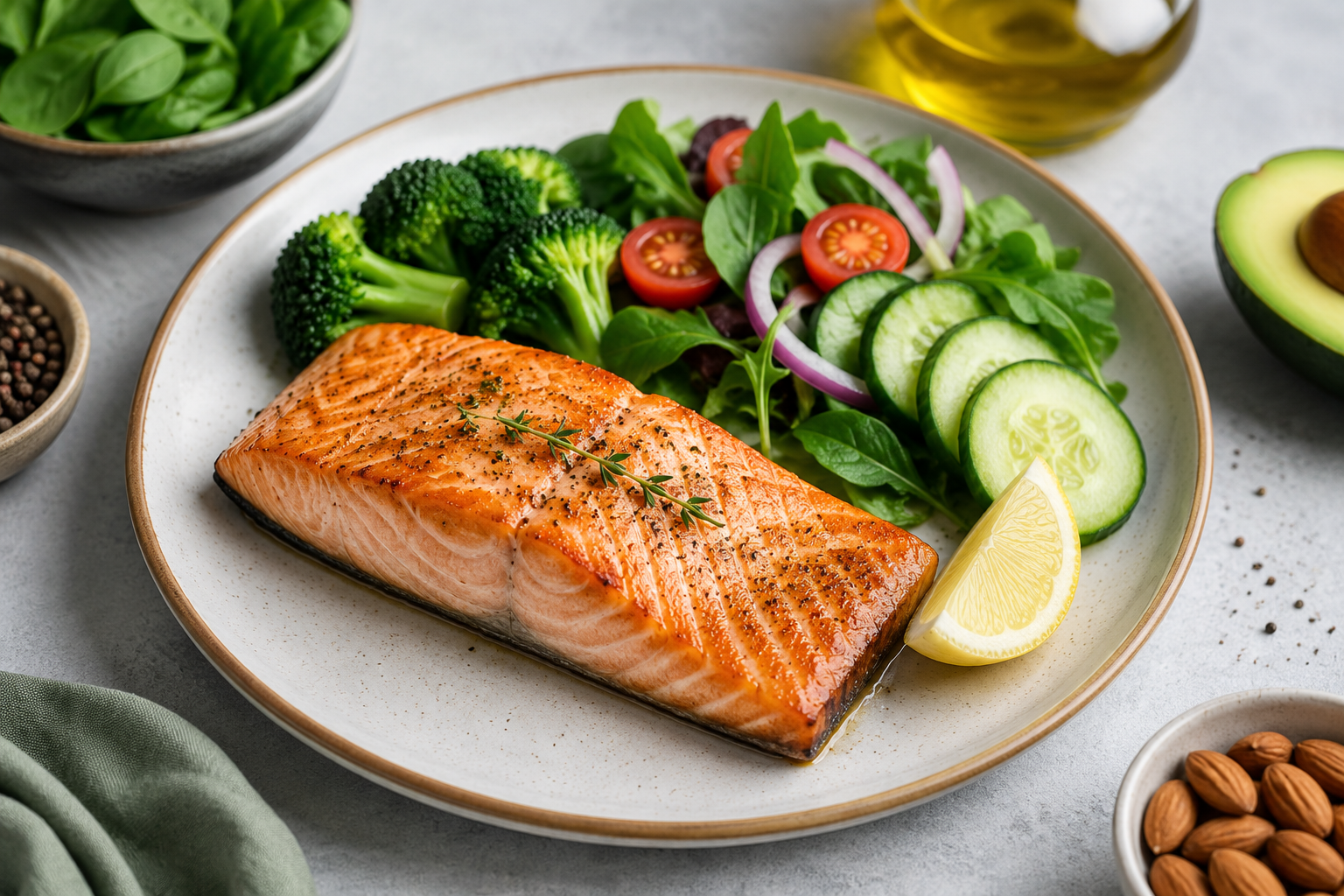
Salmon fish for weight loss is one of the most practical, protein-packed choices you can make if you’re trying to lose weight the right way, and the science behind it is honestly hard to argue with. Salmon isn’t a trendy superfood with vague promises attached to it. It’s a lean, omega-3 rich protein that fills you up, supports muscle retention, and fits almost every stage of a medically guided weight loss plan. This guide is medically reviewed with input from Dr. Clayton Frenzel, triple board-certified and dual fellowship-trained bariatric surgeon at BodEvolve Bariatric Surgery Center, along with Dr. Brian Holt, board-certified bariatric surgeon, so you’re getting information that lines up with what patients are actually told in clinic, not recycled internet advice.
Whether you’re just starting to clean up your diet, prepping for a procedure, or several months into recovery after gastric sleeve or gastric bypass surgery, salmon deserves a regular spot on your plate. Below we’ll walk through exactly why, what the research says, how it compares to other proteins, and how the team at BodEvolve builds it into real patient nutrition plans.
Is Salmon Good for Weight Loss
Yes, and the reason comes down to basic biology. Salmon is a high protein, moderate fat food that digests slowly and keeps you satisfied far longer than carbohydrate heavy meals. A standard serving delivers roughly 22 to 25 grams of protein, which directly supports the thermic effect of food, meaning your body burns more calories simply digesting it compared to fats or carbs.
There’s also the hormonal piece that most articles skip over. Protein triggers the release of satiety hormones like peptide YY and GLP-1, the same pathway that GLP-1 weight loss medications work through. Eating salmon regularly is essentially giving your body a natural, food-based nudge in that same direction. For patients managing weight through diet alone, or those combining nutrition with medical weight management, that appetite regulation matters enormously.
Quick Nutrition Snapshot
| Nutrient (per 100g cooked salmon) | Amount |
| Calories | 206 kcal |
| Protein | 22 g |
| Total Fat | 13 g |
| Omega-3 Fatty Acids | 2.3 g |
| Carbohydrates | 0 g |
Is Salmon Fish Good for Weight Loss
This question comes up constantly because people want to know if it’s specifically the fish, not just any protein, that makes the difference. The answer is that salmon fish for weight loss outperforms many other protein sources because of its unique fat profile. Most animal proteins come loaded with saturated fat. Salmon instead delivers omega-3 fatty acids, primarily EPA and DHA, which research has linked to reduced inflammation, improved insulin sensitivity, and better fat metabolism.
For someone who has undergone bariatric surgery, inflammation control is not a minor detail. Reduced inflammation supports faster healing, better nutrient absorption, and a lower risk of complications during recovery. This is one of the reasons the nutrition guidance at BodEvolve consistently points patients toward fatty fish rather than red meat during the reintroduction phases of the post-surgical diet.
Salmon vs. Other Common Proteins
| Protein (100g cooked) | Calories | Protein | Omega-3 |
| Salmon | 206 | 22g | 2.3g |
| Chicken Breast | 165 | 31g | 0.1g |
| Canned Tuna | 132 | 28g | 0.3g |
| Whole Eggs (2) | 143 | 12g | 0.1g |
Chicken and tuna edge out salmon on raw protein grams, but neither comes close on omega-3 content, and that fat profile is exactly what makes salmon such a strong addition to a weight loss focused plate rather than a replacement for other lean proteins.
Salmon for Weight Loss
Salmon for weight loss works best when it’s treated as a foundation food rather than an occasional treat. The goal isn’t to eat it once a month at a restaurant. It’s to build two to three servings a week into your normal rotation, the same way BodEvolve’s nutrition team recommends to patients following bariatric guidelines and Mediterranean-style eating patterns.
Why Portion Size Still Matters
Even a nutrient dense food like salmon needs to fit your calorie and portion targets, especially in the months after gastric sleeve surgery or gastric bypass surgery when stomach capacity is dramatically reduced. A 3 to 4 ounce serving, roughly the size of a deck of cards, is typically enough for post-surgical patients to feel full without overloading a smaller stomach pouch.
Cooking Methods That Keep It Weight-Loss Friendly
- Baked or air-fried with lemon and herbs, no breading
- Grilled with a light olive oil brush
- Poached in broth for very early post-op stages
- Avoid heavy cream sauces, butter basting, or deep frying
Sample Weekly Salmon Rotation
| Day | Meal | Preparation |
| Monday | Dinner | Baked salmon with roasted broccoli |
| Wednesday | Lunch | Lemon herb salmon over greens |
| Friday | Dinner | Grilled salmon with cauliflower rice |
Patients following structured meal plans like the ones in BodEvolve’s bariatric recipes high protein collection often rotate salmon in alongside chicken, eggs, and cottage cheese to hit daily protein goals without repeating the same meal every night.
Is Salmon Healthy for Weight Loss
Genuinely, yes, and not just for the omega-3 content. Salmon also delivers vitamin D, B12, selenium, and potassium, all nutrients that tend to run low in people managing obesity or recovering from bariatric surgery. Vitamin D deficiency in particular is common in bariatric patients and has been linked to slower metabolic progress, so a food that naturally supports those levels carries extra weight in a recovery-focused diet.
There’s also a mental health angle worth mentioning. Omega-3 fatty acids have documented effects on mood regulation, and weight loss journeys, whether surgical or non-surgical, are emotionally demanding. Patients who eat a nutrient-dense diet including fatty fish often report more stable energy and mood throughout their transformation, which supports the kind of long-term consistency that actually produces lasting results.
If you’re also exploring supportive nutrition strategies, the natural supplements for weight loss guide from BodEvolve breaks down which options have real evidence behind them, and salmon’s nutrient profile complements several of those recommendations rather than competing with them.
Is Smoked Salmon Good for Weight Loss
This is where things get more nuanced, and it’s important to be honest rather than blanket-endorsing every form of salmon. Smoked salmon is lower in calories than most people expect and still carries a solid protein punch, but it comes with a sodium load that regular baked or grilled salmon simply doesn’t have.
Fresh vs. Smoked Salmon Comparison
| Type (100g) | Calories | Protein | Sodium |
| Baked/Grilled Salmon | 206 | 22g | 59mg |
| Smoked Salmon | 117 | 18g | 672mg |
For most healthy adults, smoked salmon in moderation is a reasonable option, especially as a quick, no-cook protein source. For bariatric patients, particularly those managing blood pressure or in the early stages of recovery, the sodium content deserves attention. A small serving as an occasional addition to a salad or alongside eggs is fine. Making it a daily staple is where it can work against your goals, especially if you’re also watching sodium for other health reasons.
The Bottom Line on Salmon Fish for Weight Loss
Salmon fish for weight loss earns its reputation honestly. It’s high in protein, rich in anti-inflammatory omega-3s, low in carbohydrates, and flexible enough to fit almost any stage of a weight loss journey, from early lifestyle changes to years after a surgical procedure. It’s not a magic fix, and no single food ever is, but as part of a structured plan it does real, measurable work toward your goals.
For patients who have tried diet changes on their own without lasting results, food alone often isn’t the full answer. That’s exactly where BodEvolve Bariatric Surgery Center comes in. Dr. Clayton Frenzel and Dr. Brian Holt work with patients across gastric sleeve surgery and gastric bypass surgery, pairing surgical options with nutrition plans built around foods like salmon rather than restrictive fads. If you’re in the Dallas-Fort Worth area, including Arlington, Richardson, Dallas, or Texarkana, a consultation can help you figure out whether nutrition changes, medical weight management, or a surgical procedure is the right next step for your body and your goals.
