
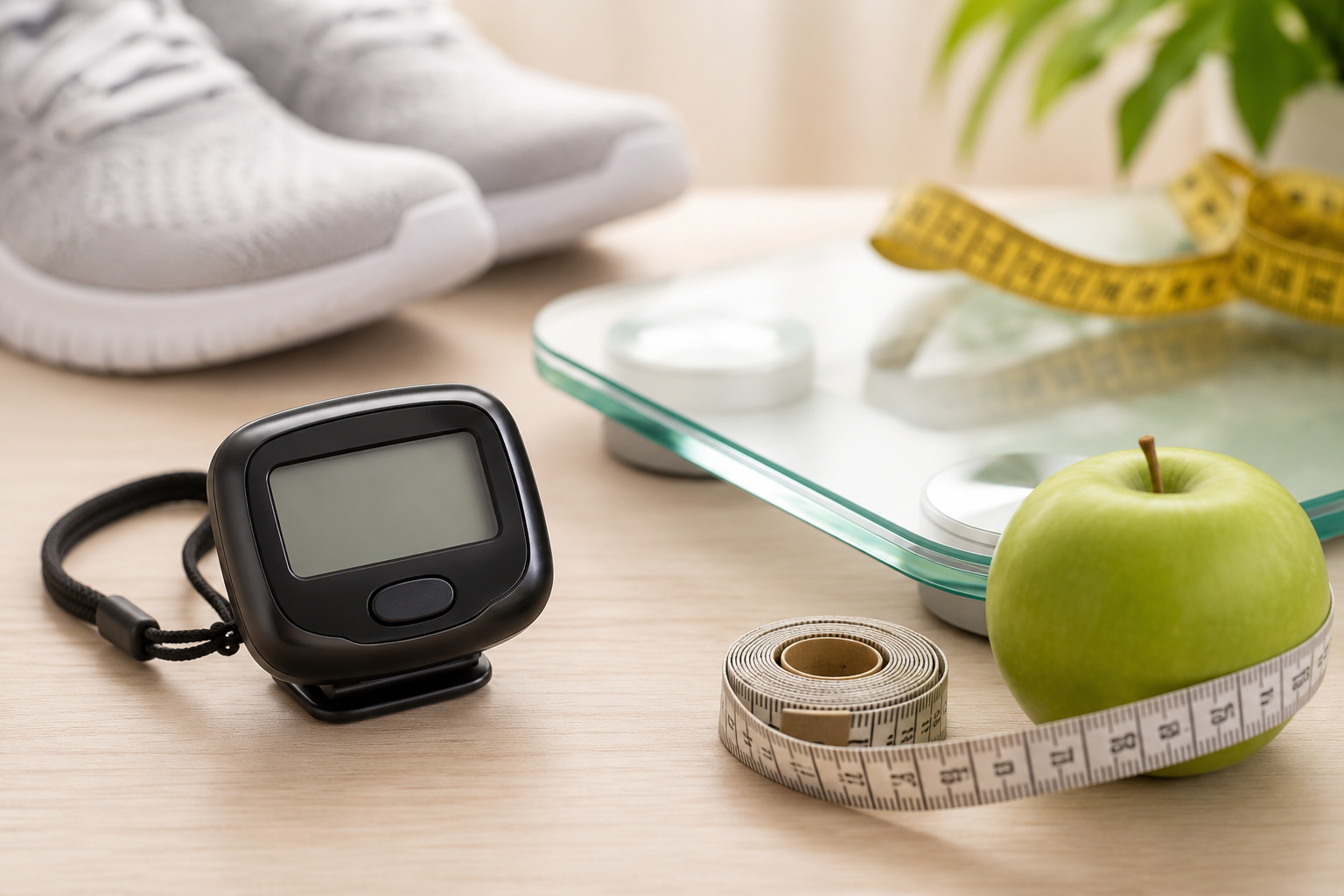
Pedometer and weight loss used to be a conversation reserved for fitness enthusiasts and marathon runners. That has completely changed. Today, a small device clipped to your waistband or a watch on your wrist quietly counts one of the most powerful predictors of long-term weight loss success, especially for people preparing for or recovering from bariatric surgery. If you’ve been told to “just walk more” without any real explanation of why or how much, this guide is for you. We’ll break down step goals that actually work, what recovery-phase walking looks like after surgery, and why generic 10,000-step advice sometimes does more harm than good.
Walking for Weight Loss: How Many Steps a Day Actually Move the Needle
The famous 10,000 steps a day figure did not come from a peer-reviewed study. It came from a 1960s Japanese marketing campaign for a pedometer brand called Manpo-kei, which literally translates to “10,000 steps meter.” The number stuck because it sounded ambitious. Research since then has painted a more useful picture.
A large 2023 meta-analysis published in the European Journal of Preventive Cardiology found that mortality risk drops significantly starting at just 3,867 steps per day. Weight-related benefits kick in around 6,000 to 8,000 steps daily for most adults. Beyond that, additional benefits taper off but do not disappear.
For someone with a BMI over 35 or living with obesity-related conditions like type 2 diabetes, sleep apnea, or hypertension, the story shifts. Walking alone rarely produces meaningful weight loss when the metabolic drivers of obesity are already in play. That does not mean walking is useless. It means walking works best as one part of a bigger clinical picture, which is exactly why bariatric programs weave step goals into every phase of care.
Steps Per Day to Lose Weight: What the Research Actually Shows
Let’s talk numbers that come from real studies rather than social media reels.
- 5,000 to 7,499 steps daily counts as low-active. This is where most sedentary office workers land without realizing it.
- 7,500 to 9,999 steps is considered somewhat active. This is where measurable weight and metabolic improvements begin.
- 10,000 to 12,499 steps is active. Consistent hits in this range correlate with modest weight loss over 12-week periods in overweight adults.
- 12,500 or more steps is highly active. This range is typically only reached by people with physically demanding jobs or dedicated walking routines.
Here is the part most articles skip. Step count alone does not create a calorie deficit large enough to move the scale for someone with severe obesity. A 30-minute walk at moderate pace burns roughly 150 to 200 calories for a person weighing 200 pounds. To lose one pound of body fat, you need a deficit of about 3,500 calories. Do the math and you can see why “just walk more” rarely works as a standalone strategy for people who need to lose 80, 100, or 150 pounds. This is where the conversation often turns to surgical options like gastric bypass or gastric sleeve, which change the underlying biology while walking supports the process.
If you want a deeper look at how physical activity fits into long-term outcomes, our guide on how to lose weight after bariatric surgery walks through the full timeline in detail.
Pedometer Benefits That Actually Matter for People With Obesity
Wearing a step counter creates something researchers call “the awareness effect.” Once you can see your actual daily movement, your behavior shifts almost automatically. Studies at Stanford and the University of Michigan have shown that people who track their steps walk an average of 27 percent more than untracked controls, without any other intervention.
For someone carrying significant excess weight, the value of a pedometer goes beyond calorie burn. It builds:
- Accountability without judgment. The device does not care how slow you walked. It just counts.
- Progress you can see. Weight fluctuates day to day. Step counts always go up when you move.
- Habit anchoring. Consistent step goals create routine, and routine is what separates the people who keep weight off from the people who regain it.
- Objective conversation with your care team. When you sit down with dr Frenzel or another bariatric specialist and can say “I averaged 6,200 steps this month,” that is real data your surgeon can work with.
The pedometer and weight loss relationship is also protective. People who track steps consistently are significantly less likely to fall into the sedentary trap that pulls so many post-op patients back toward weight regain at the three to five year mark.
Best Pedometer for Weight Loss and What to Actually Look For
You do not need the most expensive fitness tracker on the market. You need one you will actually wear. Here is what matters, ranked by how much it affects real-world use:
Wear comfort. A watch you find annoying comes off after two weeks. Look for lightweight bands, breathable straps, and a screen size that suits your wrist.
Battery life. Devices requiring daily charging get forgotten. Aim for at least a week of battery between charges. Fitbit Charge, Garmin vivosmart, and even basic Xiaomi Mi Bands hit this comfortably.
Water resistance. Showers, dishes, rain. Get something rated IP68 or 5 ATM at minimum.
Step count accuracy. Almost all modern trackers count wrist steps within 5 to 10 percent accuracy. That is close enough for weight loss purposes.
App simplicity. If the companion app is confusing, you will stop opening it. Test the app in the store before buying.
Skip smartwatches with 200 features you will never use. For most people, the goal is a device that reliably counts steps, syncs to a phone, and does not need constant fiddling. Even a basic clip-on pedometer from a pharmacy works if that is what you will actually wear.
Walking After Bariatric Surgery: Step Goals by Recovery Phase
This is where generic advice fails patients and where the pedometer and weight loss conversation becomes truly clinical. Post-op walking is not about hitting 10,000 steps. It is about phase-appropriate movement that protects healing while preventing serious complications like deep vein thrombosis.
Week 1 (Days 1 to 7):
Target: Short walks every hour while awake. Total daily step count often lands between 1,500 and 3,000. The goal is frequency, not distance. Getting up and walking for 5 to 10 minutes at a time, six to eight times per day, dramatically reduces blood clot risk after surgery. Your bariatric team will tell you exactly when to increase.
Weeks 2 to 4:
Target: 3,000 to 5,000 steps daily. Slightly longer walks, still broken into multiple sessions. Energy is often lower than expected during this phase. Do not push through pain or dizziness. Hydration matters enormously here.
Weeks 4 to 8:
Target: 5,000 to 7,000 steps daily. This is often when patients feel dramatically better and want to push harder. Resist the urge to overdo it. Consistent moderate movement outperforms sporadic intense effort.
Months 3 to 6:
Target: 7,000 to 10,000 steps daily. This is the sweet spot for accelerating weight loss during the honeymoon phase after gastric bypass or gastric sleeve surgery. Add light strength training if cleared by your care team.
Months 6 to 12 and beyond:
Target: 8,000 to 12,000 steps daily, ideally paired with two to three strength sessions per week. This is what long-term maintenance looks like. Patients who hit this range consistently at the one-year mark tend to preserve the highest percentage of excess weight loss at five and ten years post-op.
For a broader look at post-op exercise timing, our breakdown of the 30/30/30 rule for weight loss covers how morning protein, zone 2 cardio, and post-surgical eating rules interact.
Step Counter and Weight Loss Maintenance After Bariatric Surgery
The most sobering statistic in bariatric medicine is this: roughly 20 to 30 percent of patients experience significant weight regain by the five-year post-op mark. When researchers look at what separates regainers from non-regainers, physical activity tracking shows up almost every time.
A 2019 study in Obesity Surgery followed 300 bariatric patients for five years. Those who consistently tracked daily steps maintained an average of 68 percent of their initial excess weight loss. Those who stopped tracking or never started maintained only 41 percent. That gap is enormous. It is not that steps directly caused the difference. It is that step tracking correlated with the broader habit stack that keeps people healthy long term.
If you’re four or five years out from gastric sleeve or gastric bypass and feeling the weight creeping back, resuming step tracking is one of the simplest reset buttons available. No new gym membership. No new diet. Just a wearable and a daily target.
Common Mistakes When Using a Pedometer for Weight Loss
Chasing 10,000 without a foundation. If you’re currently averaging 2,000 steps a day, jumping straight to 10,000 usually leads to injury, burnout, or both. Increase by 500 to 1,000 steps per week until you reach your target.
Ignoring intensity. Ten thousand slow shuffling steps produce different results than 8,000 briskly walked steps. Aim for a pace where you can talk but not sing.
Only counting workout walks. The magic of the pedometer and weight loss connection lives in non-exercise activity thermogenesis. That means parking further away, taking the stairs, pacing during phone calls. Small movements throughout the day often outweigh the workout itself.
Neglecting protein and hydration. Steps burn calories. Without adequate protein, your body burns muscle along with fat. Post-op patients need 60 to 80 grams of protein daily minimum, plus 64 ounces of water. Steps without these two are working against you.
Quitting when the scale stalls. Weight loss is never linear. Trust the process, keep walking, and give your body eight to twelve weeks before making changes.
Final Thoughts
Pedometer and weight loss work together best when they’re part of a complete plan that addresses the medical reality of obesity, not just the movement side of the equation. If you’ve been walking, tracking, and trying and the scale still is not moving, that is real information, not a personal failing. It may mean your body needs a stronger intervention. At BodEvolve Bariatric, our team led by dr Frenzel builds personalized plans that combine surgical options like gastric bypass and gastric sleeve with realistic activity goals and long-term support. We serve patients across **Arlington**, Richardson, Dallas, and **Texarkana**. Book your consultation today and take the first real step toward a healthier, lighter life.
