
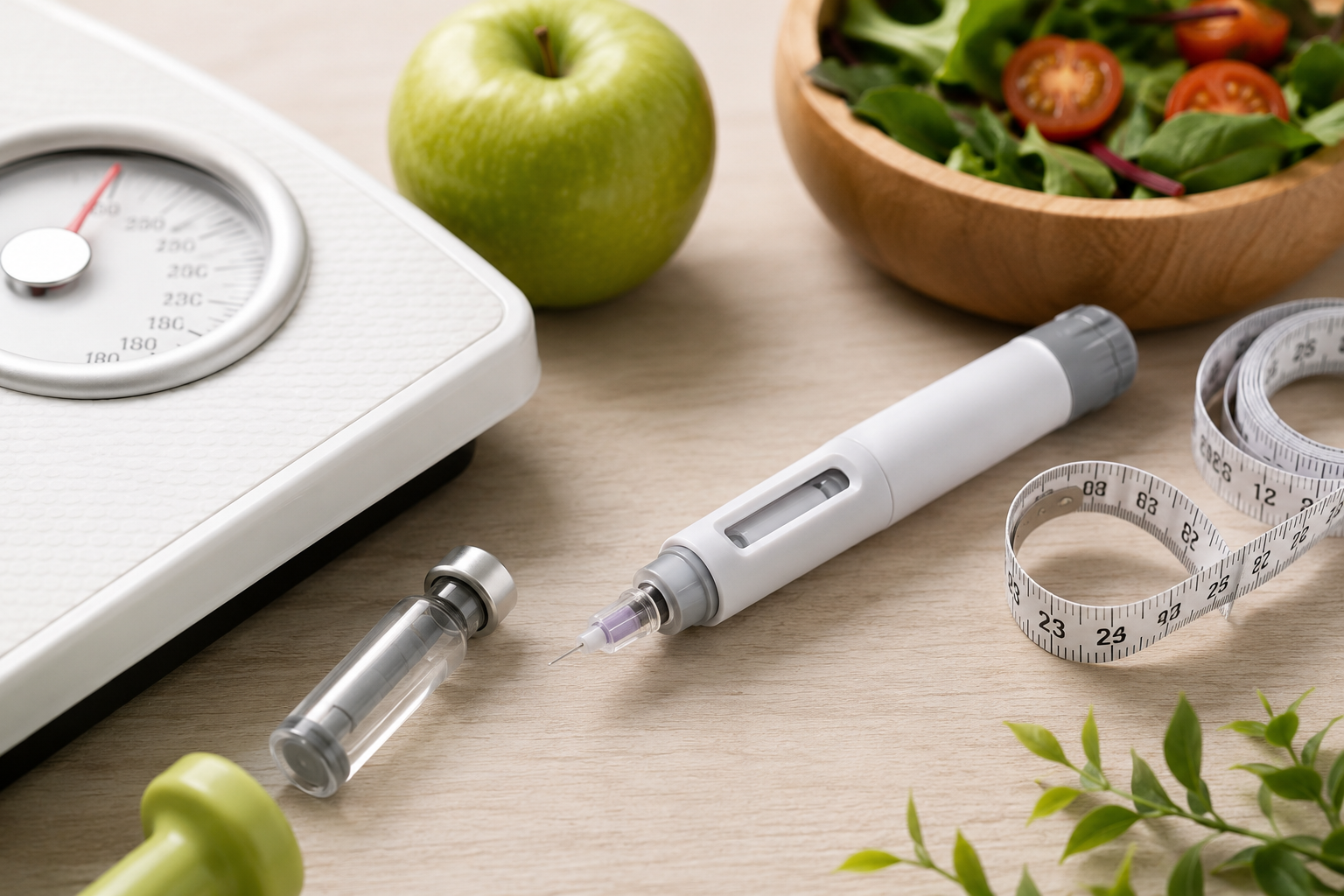
MariTide weight loss refers to the body weight reduction achieved with MariTide (maridebart cafraglutide), an investigational monthly injection from Amgen that helped adults with obesity lose up to 20 percent of their body weight over 52 weeks in Phase 2 trials. The drug is not FDA approved yet, and it works differently from Ozempic, Wegovy, or Zepbound. At BodEvolve, our surgeons Dr. Clayton Frenzel and Dr. Brian Holt follow every major development in obesity medicine closely, because our patients deserve honest answers about what is coming, what actually works today, and which option fits their health goals best. This guide breaks down the research in plain language and shows you where MariTide fits within a complete weight loss plan.
What Is the MariTide Weight Loss Drug?
MariTide is a long-acting peptide antibody conjugate developed by Amgen, previously known as AMG 133. Unlike weekly injections that dominate the market right now, MariTide is given once a month, and in some cases even less often. That single difference has generated enormous interest among patients who struggle with weekly injection routines.
A New Class of Obesity Medication
Most people know GLP-1 medications like semaglutide. MariTide belongs to a newer category. It combines a GLP-1 receptor agonist with a GIP receptor antagonist in one molecule. In simple terms, it activates one hunger-regulating pathway while blocking another, which researchers believe may produce durable weight loss without a plateau.
Where It Stands With the FDA
MariTide is still investigational. Amgen launched its Phase 3 MARITIME program to study the drug across obesity, type 2 diabetes, sleep apnea, and heart conditions, with 72-week chronic weight management trials currently underway. Approval, if it comes, is likely still a few years away. Anyone promising you MariTide today is not being straight with you, and that is exactly why guidance from a trusted medical team matters.
MariTide at a Glance
| Feature | Detail |
| Developer | Amgen |
| Drug type | GLP-1 agonist plus GIP receptor antagonist |
| Dosing schedule | Once monthly injection |
| Trial weight loss | Up to ~20% at 52 weeks (Phase 2) |
| FDA status | Not approved, Phase 3 trials ongoing |
Amgen Weight Loss Drug MariTide: How It Works
The Amgen weight loss drug MariTide takes a bold scientific gamble that seems to be paying off. Here is what makes its mechanism worth understanding before you compare it to anything else on the market.
Dual Action on Hunger Hormones
MariTide activates GLP-1 receptors, which slow digestion and reduce appetite, while simultaneously blocking GIP receptors. Interestingly, tirzepatide does the opposite with GIP by activating it, yet both approaches drive weight loss. Science has not fully explained why both directions work, which tells you how much the field is still learning.
Monthly Dosing Changes the Game
Because MariTide is built on an antibody backbone, it stays active in the body far longer than standard peptides. One injection a month could dramatically improve consistency for patients who forget or skip weekly doses. In Phase 2 trials, weight loss had not plateaued at 52 weeks, suggesting patients might keep losing beyond the first year.
Cardiometabolic Benefits Beyond the Scale
Trial participants saw meaningful improvements in blood pressure, triglycerides, and inflammation markers. Participants with type 2 diabetes lowered their HbA1c by up to 2.2 percentage points, which is a substantial change for a single medication.
MariTide vs Tirzepatide: How Do They Compare?
MariTide vs tirzepatide is the comparison everyone in obesity medicine is watching. Tirzepatide, sold as Zepbound and Mounjaro, is currently the strongest approved injectable, so it is the natural benchmark.
Efficacy Numbers Side by Side
Tirzepatide produced around 20 to 22 percent average weight loss in its major trials over 72 weeks. MariTide reached up to roughly 20 percent in just 52 weeks without plateauing. Direct head-to-head trials have not happened, so no one can crown a winner yet.
Convenience and Lifestyle Fit
Tirzepatide requires weekly injections. MariTide needs one dose a month. For busy patients, that difference alone could decide adherence and long-term success.
MariTide vs Tirzepatide Comparison
| Factor | MariTide | Tirzepatide |
| Mechanism | GLP-1 agonist, GIP blocker | GLP-1 and GIP agonist |
| Dosing | Monthly | Weekly |
| Reported weight loss | Up to ~20% at 52 weeks | 20-22% at 72 weeks |
| FDA status | Investigational | Approved |
| Availability | Trials only | Prescription |
For patients who cannot wait years for a new drug, our medical weight management program already offers physician-supervised options that work right now.
MariTide Weight Loss Side Effects Reported in Trials
MariTide weight loss side effects have been the biggest talking point in the drug’s development, and it is important to look at them honestly rather than just celebrating the efficacy numbers.
Gastrointestinal Reactions Dominate
Nausea and vomiting were the most common issues, especially after the first dose. In early Phase 2 dosing groups, vomiting rates were high enough that Amgen redesigned its Phase 3 plan around a gentler start.
Dose Escalation Made a Real Difference
When Amgen introduced lower starting doses with a stepped escalation over eight weeks, gastrointestinal tolerability improved substantially without reducing weight loss. Notably, no participants dropped out of the study because of stomach-related side effects once escalation was used.
Common Side Effects Observed in Phase 2
| Side Effect | Frequency Pattern |
| Nausea | Most common, usually early in treatment |
| Vomiting | Around 22-24% with escalated dosing |
| Constipation | Reported, generally mild |
| Reduced appetite | Expected treatment effect |
MariTide Side Effects vs Proven Surgical Options
MariTide side effects raise a fair question: if a medication causes months of nausea, requires indefinite use, and costs a premium price, how does it stack up against a one-time surgical solution with decades of safety data?
Medication Works Only While You Take It
Studies across the GLP-1 class show that most patients regain significant weight after stopping the drug. Surgery changes the anatomy and hormone signaling permanently. Procedures like the gastric sleeve deliver 60 to 70 percent excess weight loss, while gastric bypass reaches 70 to 80 percent with excellent diabetes resolution.
Surgery Delivers Stronger Results for Higher BMI Patients
For patients with severe obesity, even 20 percent total body weight loss from a drug may not be enough. The duodenal switch and SADI-S achieve 75 to 90 percent excess weight loss with the best diabetes remission rates available in medicine today.
You Do Not Have to Choose Just One
Modern obesity care often blends both. Some patients use medication before surgery, others use it afterward to protect their results, and patients with a prior procedure that stopped working can explore revision weight loss surgery combined with medical support.
MariTide Weight Loss and the BodEvolve Approach
MariTide weight loss research is genuinely promising, and our team welcomes every new tool that helps patients. What sets BodEvolve apart is that we never push a single solution. With over 14,000 successful procedures and a 98 percent patient satisfaction rate, our practice has built its reputation on matching each patient to the right treatment, not the trendiest one.
Expertise You Can Verify
Dr. Clayton Frenzel is a triple board-certified, dual fellowship-trained bariatric and cosmetic surgeon with more than 9,000 procedures behind him. Dr. Brian Holt is a board-certified bariatric surgeon and metabolic specialist who takes a comprehensive approach to obesity and its related diseases. When new drugs like MariTide reach the market, this is the kind of team you want interpreting the data for your specific body, history, and goals.
A Complete Program, Not Just a Prescription
Our patients receive nutrition counseling, psychological support, insurance guidance, and lifelong follow-up. If cost is a concern, many patients start by learning how to get insurance to pay for weight loss surgery, and our staff handles verification and documentation for you.
Your Options at BodEvolve Today
| Path | Best For | Typical Outcome |
| Medical weight management | Lower BMI, non-surgical preference | Steady medically supervised loss |
| Gastric sleeve | First-time surgical patients | 60-70% excess weight loss |
| Gastric bypass | Diabetes plus obesity | 70-80% excess weight loss |
| Duodenal switch / SADI-S | Severe obesity | 75-90% excess weight loss |
| Revision surgery | Prior surgery, regained weight | Restored results |
Ready to Explore Your Weight Loss Options in DFW?
MariTide weight loss may become an exciting option in the coming years, but your health does not have to wait for a drug that is still in trials. Proven, effective, and personalized treatment is available right now from a team that has guided thousands of North Texas patients to lasting transformation. Whether you are just starting to research or you are ready to book a consultation, BodEvolve makes it easy to meet with our experts near you in Arlington, Richardson, Dallas, or Texarkana. Schedule your consultation with Dr. Frenzel or Dr. Holt today and find out which path will finally get you the results you deserve.
