
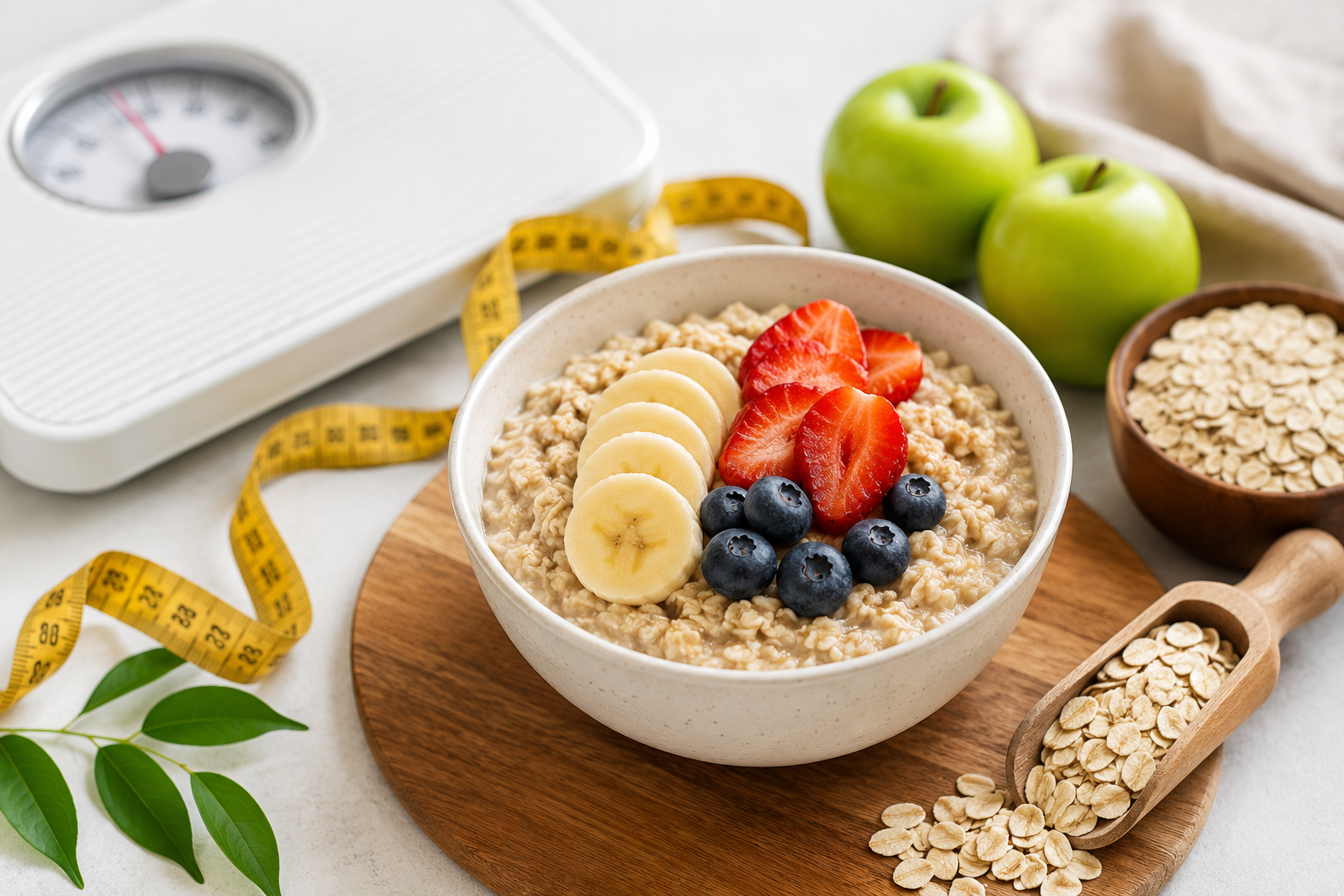
Is oatmeal good for weight loss? Yes, oatmeal is good for weight loss. Beta-glucan fiber in oats slows digestion, curbs appetite for 3 to 4 hours, and stabilizes blood sugar. Steel-cut and rolled oats work best. For maximum results, pair a half-cup bowl with 20 grams of protein such as Greek yogurt or whey.
Here’s the bottom line: oatmeal isn’t magic, but it’s not a myth either. When used correctly especially when combined with protein and paired with a structured medical weight loss plan it can be a genuinely powerful tool in your weight loss arsenal.
Let’s walk through what the science actually says, how preparation changes everything, and what bariatric surgery patients need to know before they take that first bite.
Is Eating Oatmeal Good for Weight Loss? Here’s What the Science Says
Is eating oatmeal good for weight loss? The short answer is yes but only when done right. Oatmeal is rich in beta-glucan, a type of soluble fiber that forms a thick gel in your digestive system. This gel slows down digestion, which means you stay full longer and your blood sugar rises more gradually. Both of these effects are directly tied to reduced calorie intake and better weight management.
Research confirms that oatmeal can increase fullness, decrease appetite, and reduce overall calorie intake three outcomes that matter enormously whether you’re managing your weight naturally or post-surgery.
But here’s what most blogs skip over: the type of oatmeal matters. Not all oats are created equal.
Steel-Cut vs. Rolled vs. Instant Oats: Which One Actually Helps?
If you’re asking which version delivers the most weight loss benefit, the answer is steel-cut oats, followed closely by old-fashioned rolled oats. These are the least processed forms, which means your body digests them more slowly, giving you prolonged satiety.
Is Rolled Oats Good for Weight Loss? Why It’s the Smart Middle Ground
Is rolled oats good for weight loss if you don’t want to wait 30 minutes for steel-cut to cook? Yes. Rolled oats sit in the sweet spot between convenience and blood sugar control. They cook in 5 minutes, hold up well in overnight oats, and still register a moderate glycemic index around 57. For most of our Texas bariatric patients who want a workday-friendly option, rolled oats are the pick we recommend most often.
Are Instant Oats Good for Weight Loss? What the Label Doesn’t Tell You
It depends. Plain instant oats are fine. The ones that come pre-flavored with brown sugar, maple syrup, or fruit purees? Those are loaded with added sugars that spike your insulin, increase hunger, and slow your weight loss progress. Always check the label and opt for unsweetened varieties.
| Oat Type | GI Index | Best For Weight Loss? |
| Steel-Cut Oats | Low (~42) | Best choice |
| Rolled / Old-Fashioned Oats | Medium (~57) | Excellent |
| Instant Oats (plain, unsweetened) | Medium-High (~66) | Acceptable |
| Instant Oats (flavored/sweetened) | High (~83+) | Avoid |
Is Oatmeal One of the Best Belly Fat Reducing Foods?
Oatmeal is one of the more effective belly fat reducing foods, but it doesn’t work in isolation — visceral fat responds to blood sugar control and calorie balance, not any single ingredient. Oatmeal’s beta-glucan fiber helps on both fronts: it slows glucose absorption (which limits insulin spikes tied to abdominal fat storage) and extends satiety so you naturally eat less across the day.
Which food reduce belly fat when paired with your oatmeal bowl? The pairings that make the biggest difference:
- Greek yogurt – adds protein that blunts insulin response
- Berries – low-sugar fiber that compounds the beta-glucan effect
- Chia or flaxseed – omega-3s linked to reduced abdominal inflammation
- Cinnamon – modest but real improvement in insulin sensitivity
- Green tea (on the side) – catechins that support fat oxidation
What about oatmeal alone, with no pairings? It still helps but the belly-fat-specific benefit is meaningfully smaller without a protein or healthy-fat partner on the plate.
Overnight Oats for Weight Loss: Prep-Ahead Protein Bowls
Overnight oats for weight loss have quietly become the most patient-friendly breakfast we recommend, especially for working parents in the DFW area who don’t have 20 minutes in the morning. You soak rolled oats in liquid overnight, and the cold-soaking process actually increases resistant starch, which further improves blood sugar control the next day.
The overnight oats formula that works:
- ½ cup rolled oats (not steel-cut, they stay too tough cold)
- ½ cup unsweetened almond milk or ½ cup Greek yogurt
- 1 tbsp chia seeds (adds omega-3 and thickens the mix)
- 1 scoop protein powder or ½ cup extra Greek yogurt
- ¼ cup berries, added the next morning
- Optional: 1 tsp cinnamon, 1 tbsp nut butter
Mix in a mason jar, refrigerate overnight, and eat cold the next morning. Total prep time is 3 minutes, total cost is under $2 per serving, and the finished bowl hits roughly 30 grams of protein and 10 grams of fiber. That’s the same satiety math as a bariatric-approved breakfast.
Oatmeal Calories: What Half a Cup Actually Costs You
One of the reasons oatmeal earned its reputation as a weight loss food is simple math. Half a cup of dry rolled oats runs about 150 calories, with 5 grams of protein and 4 grams of fiber. That is a genuinely modest starting point for a filling breakfast.
But the base calorie count is only half the story. What you add on top decides whether your bowl helps you lose weight or quietly stalls you.
Here is the honest calorie breakdown by oat type (½ cup dry):
- Steel-cut oats: 150 calories, 5g protein, 4g fiber
- Rolled oats: 150 calories, 5g protein, 4g fiber
- Plain instant oats: 150 calories, 5g protein, 4g fiber
- Flavored instant oats: 160 to 210 calories, 4g protein, 3g fiber
Notice something? The base oat calorie count barely changes. What changes is the added sugar, which can push a “healthy” packet close to a dessert.
Can You Build a Full Oatmeal Diet for Weight Loss?
A true oatmeal diet for weight loss isn’t “eat only oatmeal” — that approach is nutritionally incomplete and unsustainable. Instead, think of oatmeal as the anchor of one meal (almost always breakfast) inside a balanced day that still includes lean protein, vegetables, and healthy fats at lunch and dinner. Patients who try to build an entire day around oatmeal alone typically see early water-weight loss that stalls within two weeks, because they’re under-eating protein. The 5-day plan below shows what a properly structured oatmeal-anchored diet actually looks like.
Are Oats Good for Weight Loss? The Beta-Glucan Advantage
Are oats good for weight loss beyond just the oatmeal form? Yes, and the reason is a specific soluble fiber called beta-glucan. When beta-glucan hits your gut, it forms a thick gel that slows how quickly your stomach empties. That single mechanism drives most of the weight loss benefit people notice from any oat product, whether you eat it as porridge, in overnight oats, or blended into a smoothie.
The catch is dose. You need roughly 3 grams of beta-glucan per day to see meaningful appetite reduction, which works out to about ¾ cup of dry oats.
Oats support weight loss through 4 mechanisms:
1. Beta-glucan fiber slows stomach emptying
2. Low glycemic index prevents blood sugar crashes
3. High satiety reduces next-meal calorie intake by up to 111 calories
4. Complex carbs deliver energy without crashes
Is Oatmeal a Good Breakfast for Weight Loss? The First Meal of the Day Matters
Is oatmeal a good breakfast for weight loss? Absolutely breakfast sets the metabolic tone for your entire day. What you eat in the morning directly affects how hungry you’ll feel at lunch, how much energy you have, and how well you manage your calories through the afternoon.
Oatmeal checks nearly every box for an ideal weight loss breakfast:
- High fiber content keeps you full for 3-4 hours after eating
- Low glycemic index prevents blood sugar crashes that trigger cravings
- Whole grain carbohydrates provide sustained energy without a crash
- Versatile base that pairs well with protein for enhanced satiety
- Relatively low in calories (150 calories per ½ cup dry oats)
Think of it this way: a bowl of properly prepared oatmeal in the morning is far more likely to help you eat less throughout the day than skipping breakfast or grabbing something processed.
That said, the biggest mistake people make is eating it the wrong way. Adding too much brown sugar, honey, maple syrup, or flavored syrups can easily double the calorie count and undo the weight loss benefit entirely.
Best Toppings for Weight Loss Oatmeal
- Fresh or frozen berries (low sugar, high fiber)
- Sliced banana (energy-dense but portion-controlled)
- A handful of unsalted almonds or walnuts (healthy fats)
- Cinnamon (adds flavor without calories)
- Ground flaxseed (adds omega-3s and more fiber)
Is Oats Good for Weight Loss vs. Other Breakfast Grains?
Is oats good for weight loss when you compare it head-to-head with cornflakes, wheat toast, or granola? Yes, and it’s not close. In our clinic experience, patients who swap a bowl of cornflakes for a bowl of rolled oats without changing anything else in their day report feeling full 2 to 3 hours longer, and their afternoon snacking drops noticeably within the first week.
Here’s why oats out-perform:
- vs. cornflakes: Oats have 4x the fiber and a glycemic index roughly 25 points lower.
- vs. wheat toast: Oats deliver 3 grams of soluble beta-glucan; wheat toast delivers almost none.
- vs. store-bought granola: Plain oats have one-third the sugar and one-quarter the calories per serving.
- vs. protein cereal: Comparable protein when you add Greek yogurt, plus 4 grams more fiber.
That said, oats only win if you skip the flavored packets and the sweet toppings. Add a spoon of brown sugar and you’ve matched the sugar content of the cornflakes you were trying to avoid.
Is Protein Oatmeal Good for Weight Loss? The Real Game-Changer
Here’s the real power move that most oatmeal articles don’t talk about: standard oats contain only about 5 grams of protein per half-cup. That’s not enough on its own. But when you turn it into protein oatmeal by adding a quality protein source something remarkable happens.
Research shows that high-protein breakfasts can reduce calorie intake at the next meal by an average of 111 calories, increase feelings of fullness significantly, and decrease hunger throughout the day. That’s not a small benefit that’s the difference between losing weight and spinning your wheels.
Is protein oatmeal good for weight loss compared to regular oatmeal? Significantly better. It increases satiety more effectively, reduces calorie consumption at the next meal, and helps preserve lean muscle mass during weight loss which is essential for maintaining your metabolism.
How to Make Protein Oatmeal for Weight Loss
- Stir in a scoop of unflavored or vanilla protein powder (adds 20-25g protein)
- Mix in ½ cup Greek yogurt instead of milk (adds 10-12g protein)
- Add 2 egg whites while cooking (adds 7g protein, stays creamy)
- Top with ¼ cup cottage cheese (adds 7g protein, mild flavor)
At BodEvolve Bariatric, our team led by dr Frenzel frequently recommends protein-boosted breakfasts for patients in the pre-surgical optimization phase, because building the habit of high-protein meals early makes the post-surgical transition significantly smoother.
Weight Control Oatmeal: How to Build a Bowl That Actually Works
The phrase weight control oatmeal gets thrown around a lot, but here’s what it really means in practice: an oatmeal bowl designed to keep blood sugar steady, hunger low, and calorie intake in check for hours after you eat.
Most bowls people label as “healthy” fail this test because they’re
still 70% carbs. A true weight control oatmeal bowl balances
macronutrients so you don’t crash by 10 a.m.
The 40-30-30 Bowl Formula
Here’s the formula our team recommends for patients focused on
sustainable weight control:
- 40% complex carbs: ½ cup rolled or steel-cut oats
- 30% protein: 1 scoop protein powder, ½ cup Greek yogurt, or 2 egg whites
- 30% healthy fats and fiber: 1 tbsp nut butter, ¼ cup berries, 1 tbsp chia seeds
This ratio slows digestion, prevents the mid-morning crash, and keeps you full until lunch without needing snacks.
Common Weight Control Mistakes to Avoid
- Using flavored oatmeal packets thinking they’re “healthy”
- Adding sweeteners on top of already-flavored oats
- Skipping protein because “oats are enough”
- Eating the bowl too fast, which bypasses satiety signals
- Cooking with juice or sweetened milk instead of water or unsweetened milk
Oatmeal After Bariatric Surgery: What Patients in Texas Need to Know
If you’re considering or preparing for weight loss surgery, your relationship with oatmeal is going to change and that’s important to understand before you go under the knife.
Before Surgery
During the pre-op liquid diet phase, oatmeal is typically not permitted along with most solid foods. The goal of that phase is to reduce liver size through a high-protein, low-carbohydrate protocol that maximizes surgical safety. Your surgical team will tell you exactly when solid foods, including oatmeal, must stop.
After surgery, whether you’ve had a gastric bypass or a gastric sleeve, oatmeal can be reintroduced but only at the right stage and with the right preparation.
After Surgery: When Can You Eat Oatmeal?
Most bariatric programs allow oatmeal to be reintroduced during the pureed or soft food phase typically around 4-6 weeks post-op, starting with a very small portion (¼ cup cooked). Every program is different, so always follow your surgeon’s specific protocol.
The key things to remember post-surgery:
- Eat slow oatmeal is denser than it looks. Take small bites and give your body time to signal fullness.
- Prioritize protein first always eat your protein source before the oatmeal.
- Skip the sugars post-surgery, added sugars can cause dumping syndrome, especially after gastric bypass.
- Go steel-cut or rolled these digest more slowly and are gentler on a healing stomach.
What Most Oatmeal for Weight Loss Articles Get Wrong (And What to Do Instead)
Most articles on this topic treat oatmeal as a standalone solution. They tell you it’s high in fiber, good for cholesterol, and great for weight loss then stop there. That’s only half the story.
Here’s what they consistently miss:
- No discussion of protein pairing oatmeal alone is too carbohydrate-heavy for sustained weight loss.
- No guidance for people with severe obesity for BMI 35+, diet alone rarely produces lasting results.
- No mention of insulin resistance many people with excess weight are insulin resistant, and oatmeal preparation needs to account for this.
- No medical supervision context food choices exist within a broader treatment plan, not in isolation.
The truth is, if you’ve been trying to lose weight for years through diet changes alone and the scale isn’t moving, it’s not because you chose the wrong breakfast. It may be because diet alone isn’t enough for your body at this stage.
When Oatmeal Is Not Enough: Your Weight Loss Options in Texas
Oatmeal, protein, fiber all of these are genuinely helpful. But for many people, especially those with a BMI over 35 or obesity-related health conditions like type 2 diabetes, sleep apnea, or hypertension, surgical intervention may produce far more significant and lasting results than dietary changes alone.
That’s not a failure of willpower. That’s biology.
At BodEvolve Bariatric, we’ve helped hundreds of patients across the Dallas-Fort Worth area who had tried every diet including oatmeal, intermittent fasting, low-carb, and GLP-1 medications before coming to us. Many of them saw their first real, lasting change after surgery.
Bariatric Procedures That Change the Weight Loss Equation
Gastric Bypass – One of the most effective long-term solutions for sustained weight loss and type 2 diabetes resolution. For many patients in the Dallas-Fort Worth area, this procedure delivers results that years of dietary changes alone could not.
Gastric Sleeve – Reduces stomach capacity by roughly 75-80%, creating powerful portion control with a less complex surgical pathway. It’s the most commonly performed bariatric procedure at BodEvolve and a strong starting point for patients exploring surgical weight loss.
Medical Weight Management – For patients not yet ready for surgery, our medically supervised program combines nutrition planning, GLP-1 medications, and behavioral support oatmeal included as part of a structured meal plan.
A 5-Day Protein Oatmeal Breakfast Plan for Weight Loss
| Day | What to Eat | Protein Boost |
| Day 1 | Steel-cut oats + blueberries + cinnamon | 1 scoop vanilla protein powder |
| Day 2 | Rolled oats + sliced banana + almond butter (1 tbsp) | ½ cup Greek yogurt mixed in |
| Day 3 | Overnight oats with chia seeds + strawberries | 2 egg whites cooked in |
| Day 4 | Plain instant oats + walnuts + fresh raspberries | ¼ cup cottage cheese stirred in |
| Day 5 | Steel-cut oats + ground flaxseed + pumpkin seeds | 1 scoop unflavored whey protein |
Find a BodEvolve Bariatric Clinic Near You in Texas
BodEvolve Bariatric serves patients across the Dallas-Fort Worth Metroplex and beyond. We have clinics conveniently located across Texas:
- Arlington Serving the heart of the DFW area
- Richardson North Dallas patients welcome
- Dallas Our flagship location in the city
- Texarkana Serving East Texas and Southwest Arkansas patients
Does Insurance Cover Bariatric Surgery? Here’s What You Need to Know
One of the biggest concerns we hear from patients is cost. The good news is that many insurance plans do cover bariatric surgery when medical necessity criteria are met. For a detailed breakdown of coverage options, requirements, and how to advocate for yourself with your insurer, visit our guide on how to get insurance to cover revision bariatric surgery. Even if you’ve had a previous procedure, revision coverage may be possible.
Ready to Move Beyond Diet Tips? Take the Next Step.
Oatmeal is a great start. But if you’ve been making healthy food choices for years without the results you deserve, it’s time to have a different conversation.
At BodEvolve Bariatric, we meet you where you are whether that’s exploring surgical options, getting a nutrition consultation, or understanding what a medically supervised weight loss program actually looks like. Our team, led by dr Frenzel, a triple board-certified bariatric surgeon and dual fellowship-trained specialist, is here to help you find the right path forward. Find a clinic in Arlington, Richardson, Dallas, or Texarkana and schedule your free consultation today.
