
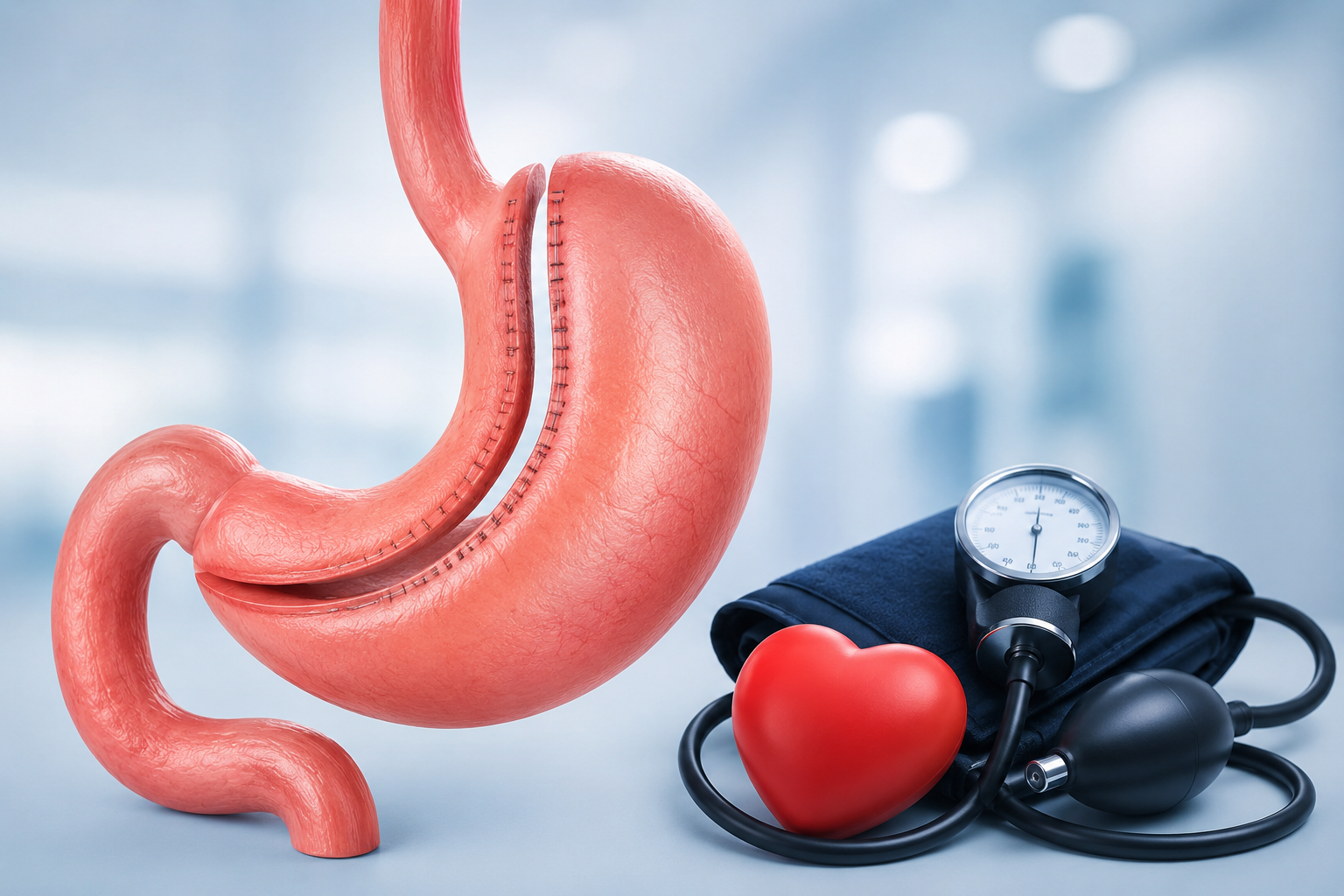
f you have been managing hypertension for years, watching your medication list grow, and still seeing your numbers climb at every check-up, you have probably heard that losing weight would help. That advice is accurate. But it sidesteps the harder question: what actually helps people carrying significant excess weight lose enough, and keep it off long enough, to produce a real difference in cardiovascular health? That is exactly where bariatric surgery for high blood pressure changes the conversation. Research consistently shows that weight loss surgery does not just help patients shed pounds. It produces measurable, often dramatic improvements in blood pressure, frequently within days of the procedure and well before patients reach their final goal weight.
Why Obesity and High Blood Pressure Are More Connected Than Most People Realize
The relationship between obesity and hypertension is not simply about carrying extra pounds. It involves a cascade of hormonal and structural changes that push blood pressure upward from multiple directions at once.
Excess body fat, especially visceral fat stored around the abdomen, forces your heart to pump blood through a larger circulatory network, raising cardiac output and vascular resistance. Adipose tissue also disrupts how your kidneys manage sodium and fluid, causing your body to hold onto more fluid than it should. Insulin resistance, which frequently develops alongside obesity, impairs endothelial function, meaning the walls of your blood vessels become stiffer and less responsive. And for a large number of patients, sleep apnea compounds the problem, causing repeated oxygen drops throughout the night that spike blood pressure in ways medications cannot fully counteract.
This means that for people managing obesity-related hypertension, medications are treating a symptom rather than the cause. Approaches like the DASH diet for blood pressure management help a meaningful number of patients, but they rarely produce durable results in those carrying significant excess weight for years. Surgery addresses the biological drivers of hypertension in a way that diet and medication cannot replicate.
Does Bariatric Surgery Actually Resolve High Blood Pressure?
The data here is stronger than many patients expect. Studies consistently show that bariatric surgery for high blood pressure produces one of two outcomes: full resolution, where patients come off all blood pressure medications entirely, or significant improvement, where fewer medications at lower doses deliver better control than before surgery.
Resolution rates vary by procedure and by how long a patient has had hypertension, but the published evidence is clear:
Gastric bypass produces complete hypertension resolution in approximately 63 to 75 percent of patients within one to two years. Gastric sleeve produces resolution in roughly 38 to 60 percent, with meaningful improvement in an additional 20 to 30 percent. Patients who have had hypertension for a shorter period tend to see better resolution rates than those who have managed it for a decade or longer. And patients who achieve greater total weight loss generally have better blood pressure outcomes.
One thing most bariatric content does not explain: why does blood pressure improve so rapidly after gastric bypass, sometimes within days of surgery and long before significant weight loss occurs? The answer lies in gut hormone changes. Gastric bypass triggers immediate shifts in peptides like GLP-1 and PYY that directly improve insulin sensitivity and vascular function. The weight loss amplifies these effects over time, but the metabolic shift begins within hours of leaving the operating room. This early, hormonal mechanism is specific to bypass and is one reason it consistently outperforms other procedures on hypertension resolution rates.
Gastric Sleeve vs Gastric Bypass for Hypertension: Which Produces Better Results?
Both procedures improve blood pressure. But when hypertension is a primary concern, gastric bypass holds a consistent advantage in the literature.
Gastric bypass reroutes the digestive tract in a way that drives hormonal changes beyond what weight loss alone explains. These shifts in gut peptides produce independent effects on blood pressure, insulin resistance, and cardiovascular risk, which is why resolution rates are higher and timelines are faster compared to sleeve patients.
Gastric sleeve removes approximately 80 percent of the stomach and produces significant hormonal effects as well, though less pronounced than bypass. It still delivers excellent hypertension outcomes for most patients, with a somewhat simpler post-operative anatomy that reduces the risk of dumping syndrome and certain nutritional deficiencies.
The right choice depends on your complete medical picture. Patients managing hypertension alongside type 2 diabetes or metabolic syndrome typically benefit more from gastric bypass given its more powerful metabolic impact. Patients whose primary concern is hypertension without significant comorbidities may do very well with gastric sleeve.
At BodEvolve, dr Frenzel evaluates each patient’s cardiovascular history, medication burden, BMI, and metabolic markers before making a procedural recommendation. There is no universal right answer, and the conversation during your surgical consultation matters a great deal.
How Long Does It Take for Blood Pressure to Improve After Surgery?
This is one of the most underserved questions in bariatric content. Patients deserve a real timeline, not a vague “results may vary.”
Here is what the evidence and clinical experience show for bariatric surgery for high blood pressure:
Within 1 to 4 weeks: Blood pressure often begins dropping within days of surgery, particularly for gastric bypass patients. This early improvement is hormonally driven, not caused by weight loss. Your care team will monitor your readings closely because blood pressure can drop enough that your current medication dose becomes too high. Hypotension at this stage is a real and manageable risk.
1 to 3 months: As weight loss accelerates, blood pressure continues to decline. Many patients reduce or eliminate one or more medications during this window. Close coordination with your primary care physician or cardiologist is essential here.
6 to 12 months: Most patients reach their best blood pressure outcomes within the first year. Those who will achieve full resolution typically have by this point. Those who still need medication are usually managing on significantly lower doses with better control than before surgery.
3 to 5 years and beyond: Long-term results depend substantially on sustained weight loss maintenance. Patients who regain significant weight often see some return of hypertension, which underscores the value of staying connected to your bariatric program long after your target weight is reached.
Will You Still Need Blood Pressure Medication After Weight Loss Surgery?
Many patients eventually come off all blood pressure medications. But this does not happen automatically, and stopping too quickly without medical supervision is dangerous.
As your blood pressure falls after surgery, your current medication dose can push readings too low. Signs that your dose may need adjustment include dizziness when standing, unusual fatigue, or readings consistently below 100/60. Do not self-adjust. Your BodEvolve team coordinates directly with your prescribing physician to manage medication changes safely as your body adapts.
A realistic outcome breakdown for patients coming into surgery on blood pressure medications:
A significant majority reduce their medication load within the first year. Roughly half to two-thirds of gastric bypass patients achieve full resolution. A smaller but still meaningful group sees improvement rather than complete resolution, particularly those with long-standing hypertension or kidney involvement. A very small percentage sees minimal blood pressure improvement, usually in cases where arterial stiffening has become structural rather than functional.
That last outcome is rarely addressed in competitor content. If your hypertension does not fully resolve after surgery, it is not a failure. Surgery still reduces your cardiovascular risk through weight loss, improved sleep apnea, better glucose control, and reduced inflammatory load. It is a different outcome than complete resolution, and it is still clinically significant.
Who Qualifies for Bariatric Surgery When High Blood Pressure Is the Main Concern?
Current ASMBS eligibility criteria allow bariatric surgery for patients with:
A BMI of 40 or higher with no additional conditions. A BMI of 35 or higher with at least one obesity-related comorbidity, including hypertension, type 2 diabetes, or sleep apnea. A BMI of 30 to 34.9 with metabolic disease, including hypertension that has not responded adequately to lifestyle changes and multiple medications.
That third category is where most competitors fall short. If your BMI is in the 30 to 34 range and you are managing difficult-to-control hypertension on two or more medications, you may still qualify for surgery under current expanded guidelines. Many patients assume they do not meet the threshold because they have not reached a BMI of 35, and that assumption is costing them years of avoidable cardiovascular strain.
Hypertension alongside type 2 diabetes, obstructive sleep apnea, or elevated cardiovascular risk significantly strengthens eligibility for patients in this BMI range. If you carry any of these alongside high blood pressure, a surgical consultation is worth having regardless of your current BMI.
How Insurance Handles Bariatric Surgery When Hypertension Is a Qualifying Condition
Hypertension is one of the most commonly cited comorbidities in insurance approvals for weight loss surgery. But the documentation has to be specific, and many applications get denied simply because the prior authorization packet was incomplete.
Documentation that strengthens an application citing hypertension includes: confirmed diagnosis in your medical records ideally spanning six months or more, evidence of treatment with at least one blood pressure medication, records showing that lifestyle interventions have been attempted, and notes from your primary care physician connecting hypertension to excess weight.
The BodEvolve resource on how to get insurance to cover revision bariatric surgery walks through the full prior authorization process, what to include in your packet, and how to handle an initial denial. Having hypertension clearly documented gives you one of the strongest possible comorbidity arguments for coverage.
What Texas Patients Should Know About the BodEvolve Approach to Hypertension
BodEvolve Bariatric Surgery Center treats hypertension as part of a broader metabolic picture, not a standalone data point. Preoperative evaluation for patients with high blood pressure includes cardiovascular risk assessment, medication review, and coordination with your existing care team so that post-operative adjustments happen safely from day one.
BodEvolve has four locations serving the Dallas-Fort Worth region and East Texas: Arlington, Richardson, Dallas, and Texarkana.
Patients managing hypertension alongside insulin resistance or thyroid-related metabolic disruptions may also want to review the BodEvolve guide on thyroid and metabolic weight management, which covers how hormonal imbalances compound blood pressure problems and what to address before moving toward surgery.
Final Thoughts
Bariatric surgery for high blood pressure is not a last resort. It is one of the most well-documented metabolic interventions available for patients whose hypertension has not responded adequately to medications, diet, and lifestyle changes, and the evidence behind it is consistent across procedure types, patient populations, and follow-up timelines. For patients across the Dallas-Fort Worth area who have been managing blood pressure for years without getting ahead of it, the real question is not whether surgery works. It is whether you are a candidate, and what the right procedure looks like for your specific cardiovascular history. A consultation with the BodEvolve team is the place to start.
