
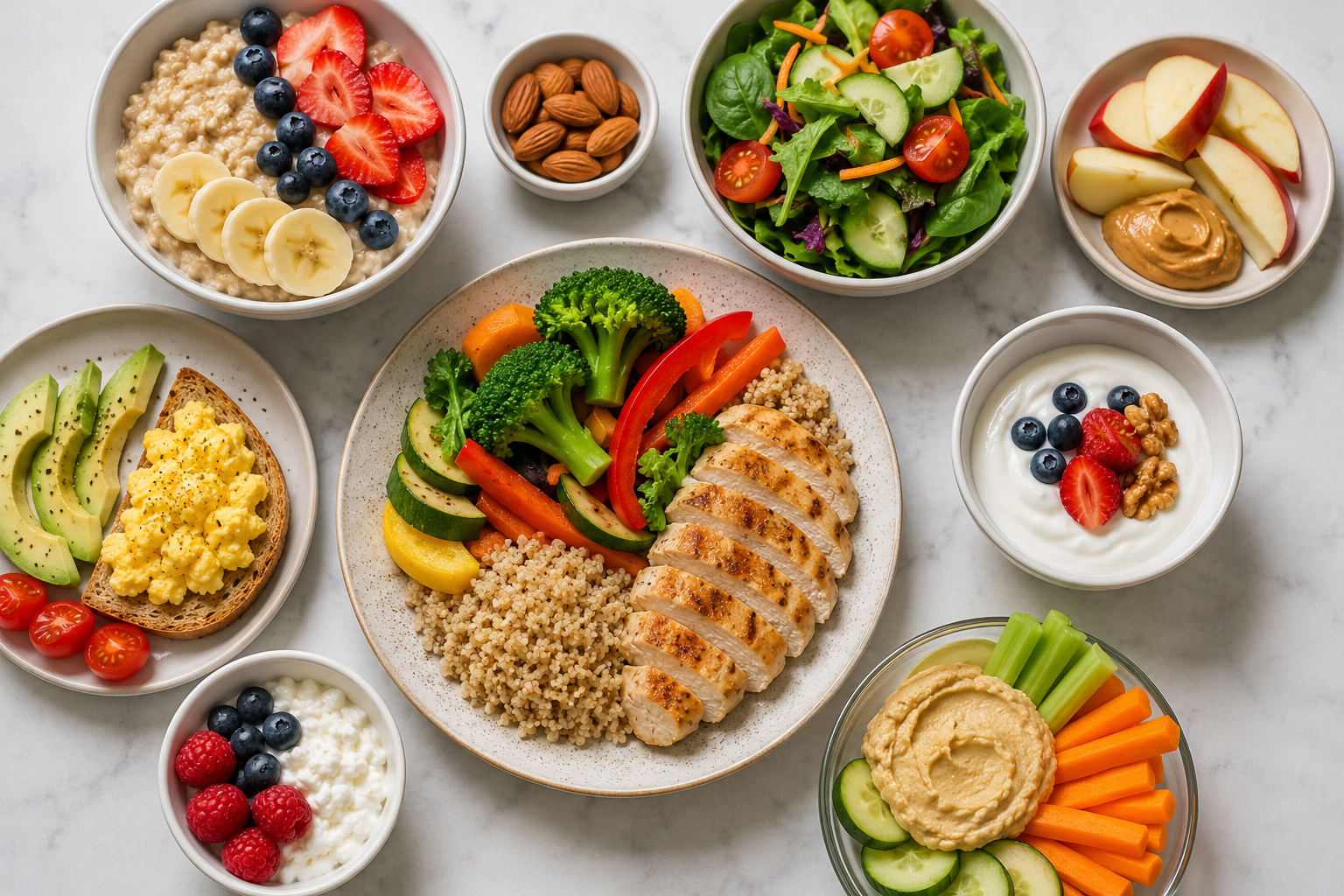
A 1500 calorie meal plan after bariatric surgery is not the same plan you would find on a general diet website, because your stomach now holds roughly four to six ounces instead of a liter. Hitting 1500 calories a day meal plan targets means eating small, dense, protein-led portions across five or six sittings rather than three large meals. Most patients reach this range somewhere between month six and month twelve post-op, once they have moved past the liquid and pureed stages and their capacity has settled. Get the structure right and the number takes care of itself.
Here is the part most articles skip. At 1500 calories with a surgically reduced stomach, every bite has to earn its place. There is no room for filler. A slice of bread that would be a throwaway on a standard diet can cost you a third of a meal’s capacity and leave you short on protein for the day. That is the whole game.
Why a 1500 calorie meal plan for weight loss looks different after surgery
Before surgery, a meal plan for 1500 calories a day is a math problem. You cut portions, you feel hungry, you push through. After a gastric sleeve or gastric bypass, the math still matters but the physical limits matter more.
Three things change:
- Capacity. You will feel full long before you have eaten 500 calories in one sitting. Trying to force it causes pain, nausea, or vomiting. This is why a 1500 calorie daily meal plan post-op gets split into smaller, more frequent feedings.
- Absorption. Bypass patients absorb fewer calories and fewer nutrients from the same plate. Two patients eating identical food will not end up in the same place metabolically.
- Tolerance. Foods you loved before may not sit well now. Rice, pasta, dry chicken breast, and anything greasy are common offenders. Sugar can trigger dumping syndrome in bypass patients, which is a strong argument for keeping added sugars low regardless of the calorie count.
At BodEvolve, dr Frenzel and the surgical team walk patients through this progression rather than handing over a printout and hoping for the best. The number on the plan is the easy part. Learning what your body will accept takes months.
Building a 1500 calorie high protein meal plan around your new stomach
Protein comes first. Always. Not as a preference, as a rule.
Most bariatric programs set a floor of 60 to 80 grams of protein per day, and some push higher depending on your starting weight and procedure. On a 1500 calorie meal plan high protein targets are what protect lean muscle while you lose fat. Skip protein and you lose weight, but a meaningful share of it comes off your muscle, which slows your metabolism and makes maintenance brutally hard two years down the line.
Practical sequencing that works:
- Eat your protein first at every single meal. Vegetables second. Starch last, if there is room.
- Stop drinking 30 minutes before meals and wait 30 minutes after. Fluid takes up the space you need for food.
- Aim for 20 to 25 grams of protein at your three main meals, with snacks covering the rest.
- Keep a protein shake on standby for days when solid food is not going down easily.
A high protein 1500 calorie meal plan usually lands around 120 to 140 grams of protein, 100 to 120 grams of carbohydrate, and 45 to 55 grams of fat. Your dietitian may shift those numbers based on your labs.
A simple 1500 calorie meal plan you can actually follow
Here is a sample 1500 calorie meal plan built for a post-op stomach. Portions are illustrative. Yours should come from your bariatric dietitian, because capacity varies enormously between patients and between months.
- Breakfast (approx. 280 cal, 26g protein)
Two scrambled eggs with a tablespoon of shredded cheese, plus a few slices of avocado. - Mid-morning (approx. 160 cal, 18g protein)
Three quarters of a cup of plain Greek yogurt with a small handful of berries. - Lunch (approx. 330 cal, 32g protein)
Three ounces of grilled chicken thigh, half a cup of roasted zucchini and peppers, a teaspoon of olive oil. - Afternoon (approx. 190 cal, 15g protein)
Half a cup of cottage cheese with sliced cucumber and a pinch of everything seasoning. - Dinner (approx. 350 cal, 34g protein)
Four ounces of baked salmon, half a cup of steamed green beans, two tablespoons of mashed sweet potato. - Evening (approx. 190 cal, 20g protein)
Protein shake made with unsweetened almond milk.
That comes in near 1500 calories with roughly 145 grams of protein. Notice how little volume that actually is. This is why an easy 1500 calorie meal plan for a bariatric patient looks almost nothing like the ones written for the general public.
1500 calorie meal plan with normal food, not diet food
You do not need specialty bariatric products, meal delivery, or anything with a marketing budget behind it. A 1500 calorie meal plan with normal food is entirely achievable with what is already in a Texas grocery store.
Rotisserie chicken. Eggs. Canned tuna. Greek yogurt. Cottage cheese. Frozen shrimp. Ground turkey. Refried beans. Cheese sticks. Frozen vegetables. That list will carry you through months of a 1500 calorie clean eating meal plan without a single specialty purchase.
Where patients get into trouble is the slider foods. Crackers, chips, pretzels, ice cream, and sweetened coffee drinks pass through a small stomach without triggering fullness. You can eat 600 calories of them and still feel like you have room. Nearly every regain story we see traces back to slider foods creeping in around month eighteen. Our guide on how to lose weight after bariatric surgery covers the behavioral side of this in more detail.
Understanding the 1500 calorie deficit meal plan math
A 500 calorie deficit per day is the classic benchmark, and it roughly translates to a pound of fat loss per week. If your maintenance intake is around 2000 calories, then 1500 puts you exactly there.
Two caveats that generic sites get wrong. First, your maintenance number drops as you lose weight, so a 1500 calorie deficit meal plan that produced steady loss in month eight may stall in month fourteen. That is arithmetic, not failure. Second, bariatric patients often run below 1500 in the early months without trying, then climb toward it as capacity returns. Both are normal.
Stalls at three to six weeks are so common they are practically a rite of passage. Weight loss after surgery is not linear and never has been. The before and after progression in our bariatric surgery before and after photos guide shows what a real timeline looks like once you strip out the marketing gloss.
1500 calorie diabetic meal plan adjustments
If you came into surgery with type 2 diabetes, your plan needs one extra layer. Many patients see blood sugar improve within days of surgery, sometimes before meaningful weight loss has even occurred, because the procedure changes gut hormone signaling directly.
For a 1500 calorie diabetic meal plan, spread carbohydrate evenly rather than clustering it at dinner, keep each meal’s carbs in the 15 to 25 gram range, and always pair carbohydrate with protein or fat. Check with your prescribing physician about medication dosing, because insulin and sulfonylurea doses frequently need to come down fast after surgery to avoid hypoglycemia.
1500 calorie vegetarian meal plan options
Hitting 120 grams of protein on a 1500 calorie vegetarian meal plan with a small stomach is genuinely difficult, but not impossible. Dairy and eggs do most of the heavy lifting: Greek yogurt, cottage cheese, ricotta, eggs, and whey or casein isolate.
Beans and lentils help but bring volume and carbohydrate along with them, which competes for limited space. Tofu, tempeh, and seitan are more efficient per ounce. Most vegetarian bariatric patients rely on at least one or two protein supplements daily, and there is nothing wrong with that.
The same principle applies to a 1500 calorie dairy free meal plan, where pea and soy isolates plus eggs, fish, and poultry carry the protein load.
Printable 1500 calorie meal plan: how to use it without getting stuck
A printable 1500 calorie meal plan is a starting scaffold, not a contract. Take a sample week, run it for two weeks, log what went down easily and what did not, then swap out the items your body rejected. Within a month you will have a personalized rotation of maybe fifteen meals you can prepare without thinking.
Do not chase perfection on the calorie total. Hitting your protein floor and staying hydrated matters more than landing on 1500 exactly.
When 1500 calories is the wrong target
This is worth saying plainly. Not every bariatric patient should be eating 1500 calories, and the number is not a badge of progress.
If you are in the first three months post-op, 1500 is likely too high and forcing it will make you sick. If you are a tall male with significant lean mass, 1500 may be too aggressive and could cost you muscle. If you are experiencing hair loss, persistent fatigue, dizziness, or cold intolerance, those are signals that intake or nutrient status needs review, not signs to cut further.
Your calorie target should come from your bariatric team based on your labs, your procedure, and your body composition. If a plan you found online conflicts with what your dietitian told you, your dietitian wins.
Patients who have had a prior procedure and are not seeing results sometimes need a revision rather than a stricter plan. If that is your situation, our page on how to get insurance to cover revision bariatric surgery walks through the documentation process.
Final
Building a sustainable 1500 calorie meal plan is far easier with a bariatric dietitian and surgical team who know your case. BodEvolve supports patients at every stage of recovery across North Texas, with weight loss clinics in Arlington, richardson, Dallas, and texarkana. Schedule a consultation to get a plan built around your procedure, your labs, and your life.
